
BuddhistCatholicContemplativeEvangelicalGeneral ChristianHinduJewishLatter-day SaintMuslimNew VisionsProgressive Christian
Beliefs
- Buddhist
- Catholic
- Contemplative
- Evangelical
- General Christian
- Hindu
- Jewish
- Latter-day Saint
- More Voices
- Muslim
- New Visions
- Pagan
- Progressive Christian
Topics
- Religion News
- Food and Religion
- Sports and Religion
- Religious Art
- Religious Music and Entertainment
- Religious Events
- History and Religion
- Style and Religion
- Politics and Religion
- Women in Religion
- Recreation Outdoors and Religion
- Business Finance and Religion
- Careers Workplace and Religion
- Education and Religion
- Family Parenting and Religion
- Health Fitness and Religion
- Home and Religion
- Relationships and Religion
- Technology and Religion
- Travel and Religion
Columnists
- Buddhist Columnists
- Business Finance and Religion Columnists
- Careers Workplace and Religion Columnists
- Catholic Columnists
- Contemplative Columnists
- Education and Religion Columnists
- Evangelists Columnists
- Family Parenting and Religion Columnists
- General Christian Columnists
- Health Fitness and Religion Columnists
- Hindu Columnists
- History and Religion Columnists
- Home and Religion Columnists
- Jewish Columnists
- More Voices Columnists
- Latter Day Columnists
- Muslim Columnists
- New Visions Columnists
- Nonreligious Columnists
- Pagan Columnists
- Politics and Religion Columnists
- Progressive Columnists
- Recreation Outdoors and Religion Columnists
- Relationships and Religion Columnists
- Religion News Columnists
- Religious Art Columnists
- Religious Events Columnists
- Religious Music and Entertainment Columnists
- Sports and Religion Columnists
- Style and Religion Columnists
- Technology and Religion Columnists
- Travel and Religion Columnists
- Women in Religion Columnists
Resource Library
- 2026 Calendar
- Library of World Religions
- The 100 Most Holy Places on Earth
- Patheos Answers
- Podcasts
- Videos
- Faith Leaders Database
- Anglican Episcopalian
- Bahai
- Baptist
- Buddhism
- Christianity
- Confucianism
- Eastern Orthodoxy
- Hinduism
- Holiness and Pentecostal
- ISKCON
- Islam
- Judaism
- Lutheran
- Methodist
- The Church of Jesus Christ of Latter-day Saints
- New Age
- Paganism
- Presbytarian and Reformed
- Protestantism
- Religion Behind the Scenes
- Roman Catholic
- Scientology
- Shia Islam
- Sikhism
- Sufism
- Sunni Islam
- Taoism
- Zen
- See all religions
Research Tools
 Ad-Free & Subscriber Log-In Subscription Support
Ad-Free & Subscriber Log-In Subscription Support
Follow Patheos 

- Trending:
- Forgiveness
- |
- Marriage
- |
- Consciousness
- |
- Death Penalty
- |
- Election
- |
- Halloween
 The Secular Spectrum
- Home
- Nonreligious
- Why Do We Question Vegetarianism When It’s a Personal Choice but Not When It’s Religiously-Motivated?
Why Do We Question Vegetarianism When It’s a Personal Choice but Not When It’s Religiously-Motivated?
Last updated on: April 18, 2019 at 11:36 am by Kate Harveston
Why Do We Question Vegetarianism When It’s a Personal Choice but Not When It’s Religiously-Motivated? 2019-04-18T11:36:53-05:00 Kate Harveston
Patheos Explore the world's faith through different perspectives on religion and spirituality! Patheos has the views of the prevalent religions and spiritualities of the world.
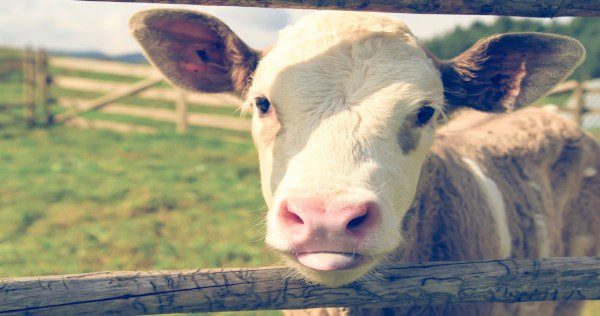
People sure do love their double standards. You probably know how true this is if you’ve ever been judged for your dietary choices.
Consider the range of responses you might receive if you “out yourself” as a vegan or vegetarian. No matter how well-researched and reasoned your decision might be, somebody is going to decide to make it a problem for you. You’ll be asked if you’re “feeling well” and if you’re getting enough protein. Others will accuse you of being a “bleeding-heart liberal” or even a “pacificist.”
Now, consider the range of responses if you cite religion for abstaining from eating meat. It’s a whole different ballgame. In fact, it would normally be considered downright disrespectful to question a decision like that. Why does this double standard exist? Why will so many people defend and justify a religiously-motivated decision, but not a purely morally-motivated one? And aren’t these, to some extent, one and the same?
The decision to avoid meat is a personal one. It is also, in the age of impending global ecological collapse, an increasingly urgent one to make. There are tons of compelling, practical, and ethical reasons why the human race should be eating vastly fewer animals than we are today — or, ideally, none at all. And none of those reasons need to have anything to do with God in order to be valid.
A Thought Experiment for Meat-Eaters
Suppose you’d been raised eating plants only, and had never come across an animal before. Somebody takes you to a field and points out across the landscape at a chicken, a cow and a pig going about their business.
They ask: “Which one of these would you prefer to eat?”
If you’d never seen an animal before, one hopes you’d be left dumbstruck by this question. You might answer: “But these look like living things! They appear sentient and even appear to make basic decisions for themselves. Why on earth would I want to eat any of them?”
Thousands and thousands of years of habit are tough to shake, though. We’ve been eating animals for long enough that it’s second nature. We cozy up to our cats, dogs and bunnies, content in the knowledge that they’re “just a little bit like us.” We pretend we’ve never heard the news about pigs and cows demonstrating charisma, intelligence and long memories — and pretend it’s just humans who live emotionally charged lives and are easily traumatized.
Most of us have been eating animals for as long as we can remember. And this means that when we’re taken to that field to bear witness to the charming and unassuming autonomy of pigs and cows, we don’t respond with horror when somebody suggests we dismember and then broil them.
Why We Eat Meat
On whom does the “burden of proof” rest in this debate? In other words, who has to work harder to justify their lifestyle: the “bleeding-heart” live-and-let-live folks, or the folks calling for more abattoirs? And does it matter who believes in God or not, so long as their position is justified by research and reason?
It feels clear that the burden of proof in justifying the eating of animals lies squarely on the shoulders of meat eaters. It is meat eaters, not vegetarians, who have normalized the act of eating another being’s flesh. The eating of plants to sustain and repair our bodies does not require justification of any kind.
I am not here today to excoriate or judge meat-eaters. This behavior has been the norm ever since our primitive ancestors first learned how to blend a carnivorous and herbivorous diet. And as they did so, they realized many benefits, such as putting the nutrients in meat to work growing larger brains.
The trouble is, in the year 2019, the benefits of eating meat are redundant at best when most of the world can get the nutrients it needs from the earth’s rich and delicious selection of plant matter. And you won’t just “hold the line” on personal health, either. Vegetarians and vegans enjoy a long list of long-term health benefits when they successfully carve meat out of their diets and supplement or replace their animal proteins with plant-derived ones:
- Lower cholesterol levels
- Far lower risk of developing heart disease and high blood pressure
- Lower risk of developing cancer
- Vastly lower likelihood of being overweight and obese
Veganism and vegetarianism aren’t great for the business models of vast animal agricultural concerns like Purdue Farms, who in any given 30-day period may run as many as 2144 advertisements across mainstream media outlets. Our “news” outlets and the corporations that underwrite them don’t want Americans to believe that eating less meat is the healthy and ethical choice. No — they want eating meat to be seen as quintessentially “American” and “manly.” And much of the public is, well, eating it right up.
But there’s nothing terribly brave or admirable about preying on a weaker lifeform. Yet, as the public has turned against animal agriculture and looked for ways to curb the number of animals we keep and slaughter for food, the “eating meat is manly” crowd seems to have only dug its heels in. “You’ll NEVER take my Game Night wings away!” is just a hop and a skip away from becoming the new “You’ll NEVER take my guns!” or “America has ALWAYS been a Christian nation!”
Why Is God’s Nutritional Advice Acceptable, But Not Our Own?
Why do we defer to religious axioms instead of practical and scientific ones, when it comes to swearing off meat? We know unchecked animal agriculture is helping strangle the planet to death. We know cows and pigs surprise us regularly with feats of memory and character.
Many world religions forbid the eating of certain kinds of animals. So, why does it take God for us to recognize a good idea when we see one? Why is it only socially acceptable to forego eating these creatures when it’s labeled as a religious choice, or even one related to diet and weight loss?
I have a friend who recently got on the paleo diet in order to lose some weight. Our friends have been incredibly supportive of him throughout his journey, as research does show that this diet has an array of positive health effects. Why, then, when research shows that vegetarianism and veganism can be just as — if not, more — beneficial to your health, do people so often respond so defensively?
Meat-eating has nearly been elevated to cult status in America. When you’ve been in a cult long enough, it takes a deprogramming intervention to get you out again. If any of us wants to make a change lasting enough to positively impact future generations, something has to change about how we teach our children to view the natural world — including its many “edible” animal varieties.
All living beings have dignity. Full stop. If you need to imagine the presence of God to come to that conclusion, that’s just fine. But the phrase “Good Without God” exists for a reason — and atheists and agnostics everywhere, who’ve chosen veganism or vegetarianism, understand this.


Browse Our Archives
Select a Category Ableism Activism Addiction and Recovery Agnosticism Anti-intellectualism Arts Atheism Beauty Catholicism Charles Darwin Children China Christianity Church/State separation churchgoing communication compassionate humanism Creationism critical thinking Culture death disaster response doubt education Egypt Entertainment Environment ethics evolution Existence of God Exploration fear Foundation Beyond Belief Free speech God Health History Human rights humanism identity India Interfaith Islam labels Language LGBT Love Meaning Media Medicine Middle East misconceptions mixed belief marriage Moral argument Morality Myths Near-Death Experience Nonreligious parenting Parody Persecution complex Philosophy Poetry Politics prayer Psychology Rationality Religion religious atheists Religious privilege Republican Party Satire Schools science secular parenting Spirituality The Unpigeonholeables Uncategorized United Kingdom Wonder
Select a Month March 2021 August 2020 March 2020 January 2020 September 2019 July 2019 June 2019 April 2019 February 2019 January 2019 December 2018 November 2018 October 2018 September 2018 August 2018 July 2018 June 2018 May 2018 April 2018 March 2018 February 2018 January 2018 December 2017 November 2017 October 2017 September 2017 August 2017 July 2017 March 2017 February 2017 January 2017 December 2016 November 2016 October 2016 September 2016 August 2016 July 2016 June 2016 May 2016 April 2016 March 2016 February 2016 January 2016 December 2015 November 2015 October 2015 September 2015 June 2015 March 2015 February 2015 January 2015 December 2014 November 2014 October 2014 September 2014
Follow Us!
TAKE THE
Religious Wisdom Quiz
Why did God command the Israelites to eat unleavened bread?
Select your answer to see how you score.
It was the only bread they knew how to make It was a symbol of humility They had to leave Egypt quickly Yeast was considered unclean
Related posts from The Secular Spectrum

Yasir Qadhi's Elitist Ruse to Conceal the Obscure...

How Religion Can Impact Mental Health in Good...

On Cognitive Dissonance and the Thought Patterns Behind...
Understanding Cultures of Unbelief for Religious
TRENDING AT PATHEOS Nonreligious

Dethroning Jesus and Enthroning Yourself
Jesus Never Asked to Be Worshipped. He Asked to Be Understood. Christianity...

Why Most Christians are Really Paulians and Jobians
I Don't Care, But It Matters Let's get this out of the...

Essential Tips to Successfully Navigate the Selling Process
Selling a house can feel overwhelming, but it doesn’t have to be....

To Make Remote Work Effective, Think About Others
The COVID-19 pandemic forced many companies to rapidly transition to remote work....

Flexibility Is Key to Solving Problems of Tomorrow
The world of work is undergoing a dramatic transformation. The COVID-19 pandemic...
view all Nonreligious blogs
Ad-Free & Subscriber Log-In Subscription Support
- About Us
- 2026 Calendar
- Videos
- Podcasts
- Library of World Religions
- Faith In Media Tracker
- Advertise With Us
- Write for Us
- Privacy Policy
- Terms of Service
- Do Not Sell My Data
- Contact Us
- Radiant Digital
- Manage Newsletter Subscriptions
- Unsubscribe From Notifications
- Sitemap
Copyright 2008-2026, Patheos. All rights reserved.
Subscription Support Ad-Free & Subscriber Log-In
Follow Patheos