
BuddhistCatholicContemplativeEvangelicalGeneral ChristianHinduJewishLatter-day SaintMuslimNew VisionsProgressive Christian
Beliefs
- Buddhist
- Catholic
- Contemplative
- Evangelical
- General Christian
- Hindu
- Jewish
- Latter-day Saint
- More Voices
- Muslim
- New Visions
- Pagan
- Progressive Christian
Topics
- Religion News
- Food and Religion
- Sports and Religion
- Religious Art
- Religious Music and Entertainment
- Religious Events
- History and Religion
- Style and Religion
- Politics and Religion
- Women in Religion
- Recreation Outdoors and Religion
- Business Finance and Religion
- Careers Workplace and Religion
- Education and Religion
- Family Parenting and Religion
- Health Fitness and Religion
- Home and Religion
- Relationships and Religion
- Technology and Religion
- Travel and Religion
Columnists
- Buddhist Columnists
- Business Finance and Religion Columnists
- Careers Workplace and Religion Columnists
- Catholic Columnists
- Contemplative Columnists
- Education and Religion Columnists
- Evangelists Columnists
- Family Parenting and Religion Columnists
- General Christian Columnists
- Health Fitness and Religion Columnists
- Hindu Columnists
- History and Religion Columnists
- Home and Religion Columnists
- Jewish Columnists
- More Voices Columnists
- Latter Day Columnists
- Muslim Columnists
- New Visions Columnists
- Nonreligious Columnists
- Pagan Columnists
- Politics and Religion Columnists
- Progressive Columnists
- Recreation Outdoors and Religion Columnists
- Relationships and Religion Columnists
- Religion News Columnists
- Religious Art Columnists
- Religious Events Columnists
- Religious Music and Entertainment Columnists
- Sports and Religion Columnists
- Style and Religion Columnists
- Technology and Religion Columnists
- Travel and Religion Columnists
- Women in Religion Columnists
Resource Library
- 2026 Calendar
- Library of World Religions
- The 100 Most Holy Places on Earth
- Patheos Answers
- Podcasts
- Videos
- Faith Leaders Database
- Anglican Episcopalian
- Bahai
- Baptist
- Buddhism
- Christianity
- Confucianism
- Eastern Orthodoxy
- Hinduism
- Holiness and Pentecostal
- ISKCON
- Islam
- Judaism
- Lutheran
- Methodist
- The Church of Jesus Christ of Latter-day Saints
- New Age
- Paganism
- Presbytarian and Reformed
- Protestantism
- Religion Behind the Scenes
- Roman Catholic
- Scientology
- Shia Islam
- Sikhism
- Sufism
- Sunni Islam
- Taoism
- Zen
- See all religions
Research Tools
 Ad-Free & Subscriber Log-In Subscription Support
Ad-Free & Subscriber Log-In Subscription Support
Follow Patheos 

- Trending:
- Forgiveness
- |
- Marriage
- |
- Consciousness
- |
- Death Penalty
- |
- Election
- |
- Halloween
 The Secular Spectrum
- Home
- Nonreligious
- The Intertwined Pull of the Secular and Religious in a Divided America
The Intertwined Pull of the Secular and Religious in a Divided America
Last updated on: February 12, 2019 at 8:22 pm by Fr. Carl Chudy
The Intertwined Pull of the Secular and Religious in a Divided America 2019-02-12T20:22:26-05:00 Fr. Carl Chudy
Patheos Explore the world's faith through different perspectives on religion and spirituality! Patheos has the views of the prevalent religions and spiritualities of the world.
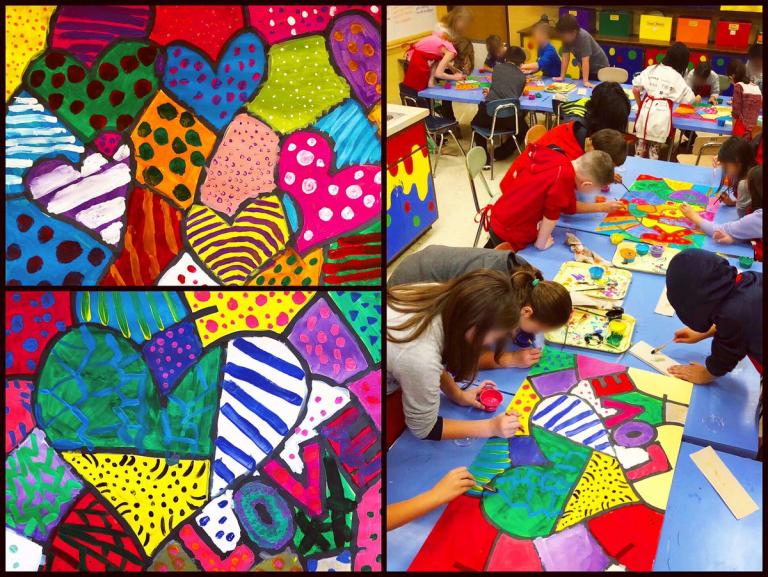
Tweet of art teacher at Hemenway School: In light of the awful events happened in our school, we plan on devoting the rest of this week to creating artwork filled with #ACCEPTANCE and #LOVE. We will shower Hemenway with #KINDNESS, and give our students a way to express their love through Art � #HemenwayKindness @MrsBrown_Art
On Wednesday, January 16th, at the Adam’s Middle School in a small, bedroom community in Holliston, Massachusetts, a community conversation was held entitled, “Why Hate? Why Here? Why Now? What’s next?” The impetus of this gathering centered around the discovery of a swastika carved into the slide of the school playground.
One of the panelists, Rabbi Jennifer Rudin injected, “When incidents like this happen, all that fear, rational or irrational, comes back.” Some months before, the painful memory of the mass shooting at Tree of Life Synagogue in Pittsburgh seemed to loom over the event.
The discussion among some of the parent’s of the children ranged in concerns from innocuous pranks of children to a culture of antisemitism that still often pervades many communities. Their concerns centered around how we help our children celebrate and honor our diversity in faiths, secular views, race, and culture and more.
In Framingham, a larger city not far from Holliston, a possible hate crime was reported in another elementary school last November 2018 when threatening letters were discovered in the school locker of a ten-year-old Muslim girl. The second letter directly threatened her and called her a “terrorist.”
These two experiences exemplify not only the creeping Antisemitism and Islamophobia present throughout the country in one form or another, but it also symbolizes the dis-ease Americans in many places in the country have with our diversity and pluralism, amplified in social media, with ongoing conversations with our children trying to help them feel safe, when they do not.
Alongside these sad events, are purposeful efforts to unite our communities out of compassion and in service to our common humanity. In Holliston, among the faith communities in and around town we formed a coalition called the Metrowest Interfaith Dialogue Project, consisting of Christian, Jewish, and Muslim communities along with other interested religious and nonreligious friends.
Soon after the swastika event on the Middle School playground, we met as a coalition with the superintendent of schools for the town of Holliston. In that meeting, as representatives of religious communities, we needed a common ground by which to have a meaningful exchange between us and officials of the public-school system. This for us was a religious concern, but it is also a secular one as well.
We needed a secular translation of our concerns of faith so that we could talk of a meaningful role we could make in partnership with our public schools. That spelled out as seeking to support the children of our town, their families and helping to encourage dialogue among us, and a renewed appreciation for our diverse neighbors who all live together in a decidedly secular culture. This is what Jurgen Habermas, a secular sociologist, calls a “postsecular consciousness.”
Dr. Michele Dillon of the University of New Hampshire, in her latest book, Postsecular Catholicism, agrees with Habermas, that the realities of Western modernity require a change in public consciousness and an appreciation of religion. A postsecular consciousness recognizes that while secularization is the settled reality, religion has public relevance and culturally useful resources for addressing contemporary societal ills.
She says, “Postsecularity does not mean that we have moved beyond secularism or that secularization has not occurred. And nor does it denote the return of religion, as religion never, in fact, disappeared from Western society. Rather, postsecularity requires appreciation of the mutual relevance and intertwined pull of the religious and the secular.”
She goes on to assert that “this dialogue is not intended to persuade the other of the rightness of one’s own convictions, or to ignore or to paper over differences. The goal, rather, is to forge new understandings and to integrate differences, however partially, in ways that can help society move forward in addressing its challenges.”
So, religious communities coming together with the civic secular institutions in Holliston is a postsecular opportunity and one that asserts the mutual relevance of all the civic and religious niches that together help sustain the community and its interdependence.
_________________________________________________
 FR. CARL CHUDY is a Catholic priest and member of an international Catholic religious order, the Xaverian Missionaries USA, who are very involved in interfaith and intercultural dialogue. He holds a Masters in Divinity from Catholic Theological Union in Chicago with a cross-cultural specialization, a Masters of Arts in Transformative Leadership & Spirituality from Hartford Seminary, and is presently a candidate for the Doctor of Ministry program at Hartford Seminary that focuses on religious and nonreligious engagement. He has worked with some local and national interfaith and secular associations, including the Yale Humanist Community, American Humanist Association, The British Humanist Association, and The Humanist Society Scotland.

Browse Our Archives
Select a Category Ableism Activism Addiction and Recovery Agnosticism Anti-intellectualism Arts Atheism Beauty Catholicism Charles Darwin Children China Christianity Church/State separation churchgoing communication compassionate humanism Creationism critical thinking Culture death disaster response doubt education Egypt Entertainment Environment ethics evolution Existence of God Exploration fear Foundation Beyond Belief Free speech God Health History Human rights humanism identity India Interfaith Islam labels Language LGBT Love Meaning Media Medicine Middle East misconceptions mixed belief marriage Moral argument Morality Myths Near-Death Experience Nonreligious parenting Parody Persecution complex Philosophy Poetry Politics prayer Psychology Rationality Religion religious atheists Religious privilege Republican Party Satire Schools science secular parenting Spirituality The Unpigeonholeables Uncategorized United Kingdom Wonder
Select a Month March 2021 August 2020 March 2020 January 2020 September 2019 July 2019 June 2019 April 2019 February 2019 January 2019 December 2018 November 2018 October 2018 September 2018 August 2018 July 2018 June 2018 May 2018 April 2018 March 2018 February 2018 January 2018 December 2017 November 2017 October 2017 September 2017 August 2017 July 2017 March 2017 February 2017 January 2017 December 2016 November 2016 October 2016 September 2016 August 2016 July 2016 June 2016 May 2016 April 2016 March 2016 February 2016 January 2016 December 2015 November 2015 October 2015 September 2015 June 2015 March 2015 February 2015 January 2015 December 2014 November 2014 October 2014 September 2014
Follow Us!
TAKE THE
Religious Wisdom Quiz
I am the final plague that caused Pharaoh to finally let the Israelites go. What am I?
Select your answer to see how you score.
The plague of darkness The plague of blood Death of the firstborn The plague of locusts
Related posts from The Secular Spectrum

Despite "Pro-Life" Claims, Stem Cell Therapy Has Very...
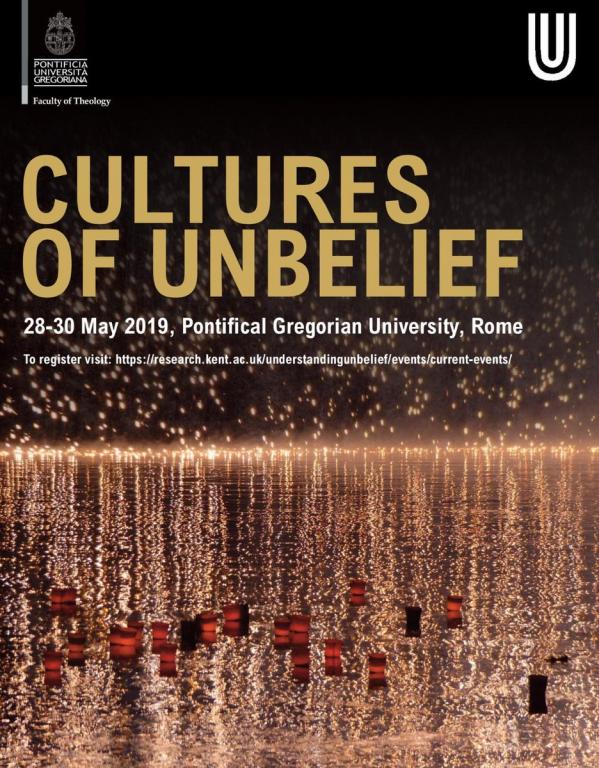
Understanding Cultures of Unbelief for Religious

Why Do We Question Vegetarianism When It's a...
Storytelling while Secular: Writing about Loss in an...
TRENDING AT PATHEOS Nonreligious

Dethroning Jesus and Enthroning Yourself
Jesus Never Asked to Be Worshipped. He Asked to Be Understood. Christianity...

Why Most Christians are Really Paulians and Jobians
I Don't Care, But It Matters Let's get this out of the...

Essential Tips to Successfully Navigate the Selling Process
Selling a house can feel overwhelming, but it doesn’t have to be....

To Make Remote Work Effective, Think About Others
The COVID-19 pandemic forced many companies to rapidly transition to remote work....

Flexibility Is Key to Solving Problems of Tomorrow
The world of work is undergoing a dramatic transformation. The COVID-19 pandemic...
view all Nonreligious blogs
Ad-Free & Subscriber Log-In Subscription Support
- About Us
- 2026 Calendar
- Videos
- Podcasts
- Library of World Religions
- Faith In Media Tracker
- Advertise With Us
- Write for Us
- Privacy Policy
- Terms of Service
- Do Not Sell My Data
- Contact Us
- Radiant Digital
- Manage Newsletter Subscriptions
- Unsubscribe From Notifications
- Sitemap
Copyright 2008-2026, Patheos. All rights reserved.
Subscription Support Ad-Free & Subscriber Log-In
Follow Patheos