
BuddhistCatholicContemplativeEvangelicalGeneral ChristianHinduJewishLatter-day SaintMuslimNew VisionsProgressive Christian
Beliefs
- Buddhist
- Catholic
- Contemplative
- Evangelical
- General Christian
- Hindu
- Jewish
- Latter-day Saint
- More Voices
- Muslim
- New Visions
- Pagan
- Progressive Christian
Topics
- Religion News
- Food and Religion
- Sports and Religion
- Religious Art
- Religious Music and Entertainment
- Religious Events
- History and Religion
- Style and Religion
- Politics and Religion
- Women in Religion
- Recreation Outdoors and Religion
- Business Finance and Religion
- Careers Workplace and Religion
- Education and Religion
- Family Parenting and Religion
- Health Fitness and Religion
- Home and Religion
- Relationships and Religion
- Technology and Religion
- Travel and Religion
Columnists
- Buddhist Columnists
- Business Finance and Religion Columnists
- Careers Workplace and Religion Columnists
- Catholic Columnists
- Contemplative Columnists
- Education and Religion Columnists
- Evangelists Columnists
- Family Parenting and Religion Columnists
- General Christian Columnists
- Health Fitness and Religion Columnists
- Hindu Columnists
- History and Religion Columnists
- Home and Religion Columnists
- Jewish Columnists
- More Voices Columnists
- Latter Day Columnists
- Muslim Columnists
- New Visions Columnists
- Nonreligious Columnists
- Pagan Columnists
- Politics and Religion Columnists
- Progressive Columnists
- Recreation Outdoors and Religion Columnists
- Relationships and Religion Columnists
- Religion News Columnists
- Religious Art Columnists
- Religious Events Columnists
- Religious Music and Entertainment Columnists
- Sports and Religion Columnists
- Style and Religion Columnists
- Technology and Religion Columnists
- Travel and Religion Columnists
- Women in Religion Columnists
Resource Library
- 2026 Calendar
- Library of World Religions
- The 100 Most Holy Places on Earth
- Patheos Answers
- Podcasts
- Videos
- Faith Leaders Database
- Anglican Episcopalian
- Bahai
- Baptist
- Buddhism
- Christianity
- Confucianism
- Eastern Orthodoxy
- Hinduism
- Holiness and Pentecostal
- ISKCON
- Islam
- Judaism
- Lutheran
- Methodist
- The Church of Jesus Christ of Latter-day Saints
- New Age
- Paganism
- Presbytarian and Reformed
- Protestantism
- Religion Behind the Scenes
- Roman Catholic
- Scientology
- Shia Islam
- Sikhism
- Sufism
- Sunni Islam
- Taoism
- Zen
- See all religions
Research Tools
 Ad-Free & Subscriber Log-In Subscription Support
Ad-Free & Subscriber Log-In Subscription Support
Follow Patheos 

- Trending:
- Forgiveness
- |
- Marriage
- |
- Consciousness
- |
- Death Penalty
- |
- Election
- |
- Halloween
 The Secular Spectrum
- Home
- Nonreligious
- American Pluralism: Its Promises and Struggles
American Pluralism: Its Promises and Struggles
Last updated on: November 30, 2018 at 12:22 pm by Fr. Carl Chudy
American Pluralism: Its Promises and Struggles 2018-11-30T12:22:21-05:00 Fr. Carl Chudy
Patheos Explore the world's faith through different perspectives on religion and spirituality! Patheos has the views of the prevalent religions and spiritualities of the world.
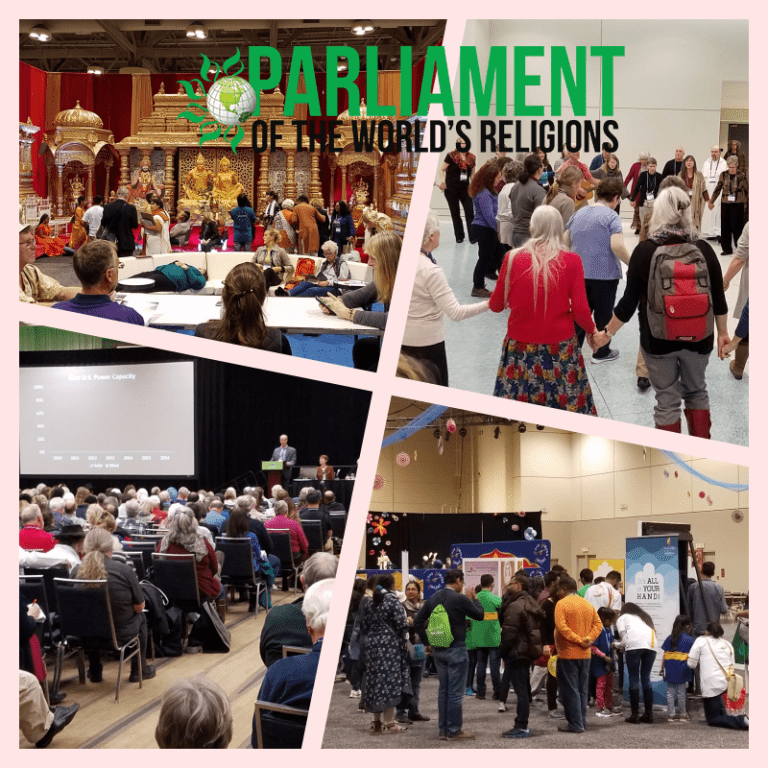
On November 1 – 7, 2018, more than 10,000 people from all over the world representing more than 200 different faith traditions and spiritualities gathered at Toronto, Canada for the Parliament of World’s Religions. The 7th Parliament since 1893 in Chicago The 7th Parliament featured more than 500 programs and events across six major tracks:
- The Women’s Track: The Dignity of Women Across the World’s Wisdom Traditions
- Countering War, Hate & Violence Track: Peace and Love: Not War, Hate & Violence
- Climate Action Track: Care for Our Earth, Responsibility for Our Future
- The Indigenous Peoples’ Track: The Spiritual Evolution of Humanity & Healing Our Mother Earth
- The Next Generations Track: Interfaith Has No Age, Youth Voices for Change
- Justice: Advancing Concrete Change Toward a Just, Peaceful, and Sustainable World
The promises of a pluralism of faiths, secular worldviews and cultures as our greatest gift also offers the possibility to tackle together some of the great “cancers” that inflicts our world: war and violence, hate and bias, care for the earth and the dignity of women, the power of our youth and justice toward a more sustainable world. With such great, sweeping challenges, only a concerted and collaborative effort among all faiths and worldviews will do, driven by each of our values that demand dialogue and collaboration.
What was striking at this Parliament was the amount and depth of conversation and learning around the relationship of secularity, fluid identities, and religiosity, and the frame of a post-secular culture many of us find ourselves in. Sessions such as: Expanding the Terminology of Our Work: From ‘Interfaith” to “Religious, Secular, and Spiritual;” The Nuns and Nones; A Global Ethic Without Guidance: “Spiritual but not Religious:” Millennials and the Search for Justice; Two Atheists and a Priest Walk into a Bar and the Most Unlikely Coalition Happens; The Spiritual but not Religious Among the Abrahamic Faiths; and more dominated a great deal of connecting and organizing for people.
The Contentious History of a Founding Ideal
These promises of interfaith collaboration and solidarity mirror our own history as Americans where we are indeed one of the most pluralistic nations in the world. William R. Hutchison contends that whereas diversity happened to American religion in the first half of the 19th century, pluralism of the kind people now discuss did not arrive until the second half of the twentieth. We are now coming to terms with what our diversity means as a nation in an environment of national populism. America has a long history of cycles of intolerance, tolerance, acceptance, and intolerance once again, reaching back to colonial days. (Hutchison, 2003).
In the early years of American founding, the predominate populations were Protestant Europeans that settled in different parts of the country. Many saw the arrival of Jews, Catholics, and others as an invasion and threat to founding ideals. It was “Anglo-Saxon” America. Eboo Patel speaks of the an organization called the National Conference of Christians and Jews (NCCJ) in the late 1920’s, who in response to the anti-Semitism and anti-Catholicism of the KKK, created a new narrative called “Judeo-Christianity.” (Eboo Patel, 2018) Patel states:
“The leaders of the NCCJ believed that the Protestant nation narrative needed to be expanded to include the growing numbers of Jews and Catholics in the United States. To accomplish their goal, they created a campaign that has become so woven into the American story that we forget that someone at some point made it up. “Judeo-Christian America” is a civic invention, and a genius one at that. The history is beautifully recounted in Kevin Schultz’s book, Tri-Faith America.”
Need of a New National Narrative
The civic invention “Judeo-Christian America” did good work for 80-some years. But we now live in a nation with appreciable numbers of Muslims, Sikhs, Hindus, Buddhists, Baha’i’s, Jains, Atheists, Seekers and more, and in a moment where the forces of religious prejudice are on the rise. As Patel relates, we need a new national narrative that directly combats prejudice and proactively welcomes the contributions of these various groups to the American Table.
Underneath the veneer, deep fractures remain in our society. In many communities, many Americans have different views views of diversity. They show us that the uptick in hate crimes for 2017, according to the FBI, has risen 17%. That a fifth grade Muslim child in Framingham, Massachusetts in November of this year can receive letters in her locker calling her a terrorist and that she will be killed, or eleven people killed in a Pittsburgh synagogue be two of many incidences that shows the urgency of much needed calm, respect, and dialogue. The greatest barrier to pluralism in the US is not the expansion of differences in our midst, but the reluctance to accept that there are indeed differences that matter.
It is in a culture of encounter, religious and secular literacy, opportunities to come together as neighbors, and as communities across the country that we come to know each other, beyond our straw-man caricatures and distorted prejudice. Pope Francis, in a homily given in 2013, where he encourages the faithful to be fearless in the ways in which they look beyond their own needs and wants to those of others. He says that “in this ‘stepping out’ [of ourselves] it is important to be ready for encounter.
The philosopher Enrique Dussel, who hails from Argentina along with the pope, adds much to an understanding of encounter. In his book Introducción a la filosofía de la liberación (Introduction to the Philosophy of Liberation), Dussel explains that two people encountering one another involves action, a give and take. But even more importantly, it involves openness to mystery and relationship. To encounter another person is to realize that no matter the depths to which we may get to know each other, the well of mystery will never be exhausted.
The Parliament of World’s Religions is a historic opportunity to tap our human mystery of encounter and to continue to redefine ourselves as the kind of people our faith traditions and secular worldviews say we want the world to be. I spoke with many there, whose passion for unity in the midst of our diversity was the common ground we all stood on. It underlines what thousands of people in many more institutions and organizations across the globe are doing to encourage dialogue and collaboration. Diana Eck, of the Harvard University Pluralism Project says this:
- First, pluralism is not diversity alone, but the energetic engagement with diversity.
- Second, pluralism is not just tolerance, but the active seeking of understanding across lines of difference. Tolerance is a necessary public virtue, but it does not require Christians and Muslims, Hindus, Jews, and ardent secularists to know anything about one another. In the world in which we live today, our ignorance of one another will be increasingly costly.
- Third, pluralism is not relativism, but the encounter of commitments. The new paradigm of pluralism does not require us to leave our identities and our commitments behind. It means holding our deepest differences, even our religious differences, not in isolation, but in relationship to one another.
- Fourth, pluralism is based on dialogue which means both speaking and listening, and that process reveals both common understandings and real differences. Dialogue does not mean everyone at the “table” will agree with one another. Pluralism involves the commitment to being at the table — with one’s commitments.
_________________________________________________
 FR. CARL CHUDY is a Catholic priest and member of an international Catholic religious order, the Xaverian Missionaries USA, who are very involved in interfaith and intercultural dialogue. He holds a Masters in Divinity from Catholic Theological Union in Chicago with a cross-cultural specialization, a Masters of Arts in Transformative Leadership & Spirituality from Hartford Seminary, and is presently a candidate for the Doctor of Ministry program at Hartford Seminary, Connecticut that focuses on religious and nonreligious engagement. He has worked with some local and national interfaith and secular associations, including the Yale Humanist Community, American Humanist Association, The British Humanist Association, and The Humanist Association of Scotland.
Previous Post

November 29, 2018
The Power of Potentialism
Next Post

December 19, 2018 Why Aren't You a Trump Supporter?
Browse Our Archives
Select a Category Ableism Activism Addiction and Recovery Agnosticism Anti-intellectualism Arts Atheism Beauty Catholicism Charles Darwin Children China Christianity Church/State separation churchgoing communication compassionate humanism Creationism critical thinking Culture death disaster response doubt education Egypt Entertainment Environment ethics evolution Existence of God Exploration fear Foundation Beyond Belief Free speech God Health History Human rights humanism identity India Interfaith Islam labels Language LGBT Love Meaning Media Medicine Middle East misconceptions mixed belief marriage Moral argument Morality Myths Near-Death Experience Nonreligious parenting Parody Persecution complex Philosophy Poetry Politics prayer Psychology Rationality Religion religious atheists Religious privilege Republican Party Satire Schools science secular parenting Spirituality The Unpigeonholeables Uncategorized United Kingdom Wonder
Select a Month March 2021 August 2020 March 2020 January 2020 September 2019 July 2019 June 2019 April 2019 February 2019 January 2019 December 2018 November 2018 October 2018 September 2018 August 2018 July 2018 June 2018 May 2018 April 2018 March 2018 February 2018 January 2018 December 2017 November 2017 October 2017 September 2017 August 2017 July 2017 March 2017 February 2017 January 2017 December 2016 November 2016 October 2016 September 2016 August 2016 July 2016 June 2016 May 2016 April 2016 March 2016 February 2016 January 2016 December 2015 November 2015 October 2015 September 2015 June 2015 March 2015 February 2015 January 2015 December 2014 November 2014 October 2014 September 2014
Follow Us!
TAKE THE
Religious Wisdom Quiz
In Jude, what are believers told to build themselves up in?
Select your answer to see how you score.
Christian community The fear of the Lord The knowledge of God Their most holy faith
Related posts from The Secular Spectrum


Storytelling while Secular: Writing about Loss in an...

What We Talk About When We Talk About...
TRENDING AT PATHEOS Nonreligious

Dethroning Jesus and Enthroning Yourself
Jesus Never Asked to Be Worshipped. He Asked to Be Understood. Christianity...

Why Most Christians are Really Paulians and Jobians
I Don't Care, But It Matters Let's get this out of the...

Essential Tips to Successfully Navigate the Selling Process
Selling a house can feel overwhelming, but it doesn’t have to be....

To Make Remote Work Effective, Think About Others
The COVID-19 pandemic forced many companies to rapidly transition to remote work....

Flexibility Is Key to Solving Problems of Tomorrow
The world of work is undergoing a dramatic transformation. The COVID-19 pandemic...
view all Nonreligious blogs
Ad-Free & Subscriber Log-In Subscription Support
- About Us
- 2026 Calendar
- Videos
- Podcasts
- Library of World Religions
- Faith In Media Tracker
- Advertise With Us
- Write for Us
- Privacy Policy
- Terms of Service
- Do Not Sell My Data
- Contact Us
- Radiant Digital
- Manage Newsletter Subscriptions
- Unsubscribe From Notifications
- Sitemap
Copyright 2008-2026, Patheos. All rights reserved.
Subscription Support Ad-Free & Subscriber Log-In
Follow Patheos