
BuddhistCatholicContemplativeEvangelicalGeneral ChristianHinduJewishLatter-day SaintMuslimNew VisionsProgressive Christian
Beliefs
- Buddhist
- Catholic
- Contemplative
- Evangelical
- General Christian
- Hindu
- Jewish
- Latter-day Saint
- More Voices
- Muslim
- New Visions
- Pagan
- Progressive Christian
Topics
- Religion News
- Food and Religion
- Sports and Religion
- Religious Art
- Religious Music and Entertainment
- Religious Events
- History and Religion
- Style and Religion
- Politics and Religion
- Women in Religion
- Recreation Outdoors and Religion
- Business Finance and Religion
- Careers Workplace and Religion
- Education and Religion
- Family Parenting and Religion
- Health Fitness and Religion
- Home and Religion
- Relationships and Religion
- Technology and Religion
- Travel and Religion
Columnists
- Buddhist Columnists
- Business Finance and Religion Columnists
- Careers Workplace and Religion Columnists
- Catholic Columnists
- Contemplative Columnists
- Education and Religion Columnists
- Evangelists Columnists
- Family Parenting and Religion Columnists
- General Christian Columnists
- Health Fitness and Religion Columnists
- Hindu Columnists
- History and Religion Columnists
- Home and Religion Columnists
- Jewish Columnists
- More Voices Columnists
- Latter Day Columnists
- Muslim Columnists
- New Visions Columnists
- Nonreligious Columnists
- Pagan Columnists
- Politics and Religion Columnists
- Progressive Columnists
- Recreation Outdoors and Religion Columnists
- Relationships and Religion Columnists
- Religion News Columnists
- Religious Art Columnists
- Religious Events Columnists
- Religious Music and Entertainment Columnists
- Sports and Religion Columnists
- Style and Religion Columnists
- Technology and Religion Columnists
- Travel and Religion Columnists
- Women in Religion Columnists
Resource Library
- 2026 Calendar
- Library of World Religions
- The 100 Most Holy Places on Earth
- Patheos Answers
- Podcasts
- Videos
- Faith Leaders Database
- Anglican Episcopalian
- Bahai
- Baptist
- Buddhism
- Christianity
- Confucianism
- Eastern Orthodoxy
- Hinduism
- Holiness and Pentecostal
- ISKCON
- Islam
- Judaism
- Lutheran
- Methodist
- The Church of Jesus Christ of Latter-day Saints
- New Age
- Paganism
- Presbytarian and Reformed
- Protestantism
- Religion Behind the Scenes
- Roman Catholic
- Scientology
- Shia Islam
- Sikhism
- Sufism
- Sunni Islam
- Taoism
- Zen
- See all religions
Research Tools
 Ad-Free & Subscriber Log-In Subscription Support
Ad-Free & Subscriber Log-In Subscription Support
Follow Patheos 

- Trending:
- Forgiveness
- |
- Marriage
- |
- Consciousness
- |
- Death Penalty
- |
- Election
- |
- Halloween
 The Secular Spectrum
- Home
- Nonreligious
- Religion Has Absolutely No Place in a Non-Religious Workplace
Religion Has Absolutely No Place in a Non-Religious Workplace
Last updated on: October 25, 2018 at 9:26 am by Kate Harveston
Religion Has Absolutely No Place in a Non-Religious Workplace 2018-10-25T09:26:36-05:00 Kate Harveston
Patheos Explore the world's faith through different perspectives on religion and spirituality! Patheos has the views of the prevalent religions and spiritualities of the world.

Belief in magic might be the very last taboo left on earth. In fact, it’s so universal that most people who study such things will tell you we’re probably vastly underestimating the number of people in the world who don’t identify with any particular religion. You are a believer until you prove otherwise. Until you out yourself. Thankfully, the price for outing yourself as a non-believer isn’t as steep in America as it is elsewhere in the world.
The point is, there are persecuted people in the world — but Christian Americans are not among them. And yet, many Christian Americans either don’t care or aren’t aware that many of their leaders and their ethos continue to condone and defend just about every form of major and minor bullying.
I recently had a friend experience this kind of bullying, so I feel the need to get on my soapbox about the topic of religion and the workplace for a hot second. There are lessons worth taking from the pages of world religions. Unfortunately, there are also many places in America — the family dinner table and the workplace, to name two big ones — where religion itself is still used as a weapon.
What Does the Law Say About Religion in the Workplace?
There are, of course, several ways in which a fair interpretation of standing law might result in a religious persecution ruling against an employer.
The first is if the employee feels their ability to practice their religion is being impinged upon. Employers are required by law to make a reasonable effort to accommodate people of all faiths, so long as doing so doesn’t create “undue hardship” for the business. A financial burden, in other words. Examples include “required” days off for holy observances and clashes with company dress codes. In some cases, restrictions of religious garb are made in the name of safety.
Title VII of the Civil Rights Act says employees cannot fire or discriminate against employees due to disagreements over religion. And, of course, the U.S. Constitution’s first amendment explicitly provides for freedom of worship.
It’s fairly cut and dried: religion is quite clearly not intended to be a cultural “pillar” in the workplace. That’s not to say religion is being “removed” from the workplace or that employees cannot discuss it civilly among themselves. But in no way is it meant to be a litmus test for somebody’s employment fitness.
Recent Precedent Concerning Religious ‘Accommodations’
In 2015, a supreme court case in the U.S. provided a reminder to both believers and critics of religion. After being turned down for a job after an otherwise successful interview, Samantha Elauf, whose religion involves wearing a head scarf, found her telephone wasn’t ringing. She made some calls — and she discovered that her head scarf was the reason she hadn’t gotten the job. More specifically: because it “clashed” with the retailer’s dress code. One might’ve expected a clothing store proprietor could’ve thought outside the box and arrived at a different solution.
But they didn’t, and the case eventually made it to the supreme court — after Abercrombie first won an appeal of the original ruling. SCOTUS came to the correct conclusion that the employer was wrong to refuse to hire Samantha Elauf on these grounds. They also reminded businesses everywhere of the importance of being specific about how you intend to account for, or accommodate, people of all religions — including any reasonable grounds you have for denying the use of religious garb.
But why and how did Abercrombie & Fitch win that appeal in the meantime, before SCOTUS got involved? By arguing that Ms. Elauf should have been clear and up-front about her need to wear a head scarf at work. This is almost certainly disingenuous — the rest of the case seems to confirm that the reason Ms. Elauf didn’t continue past the orientation phase of her employment wasn’t because she wasn’t polite enough. In other cases, the employer was able to demonstrate that they had grounds apart from religion that swayed their hiring (or firing) decision. That wasn’t the case here.
Is Workplace Religious Friction Unavoidable?
The point of discussing all of this is to remind both “sides” in this, one of the greatest of debates, that there is always going to be friction in public places when it comes to the worship of one god over another. In fact, it happens so regularly that we clearly need to remind ourselves all over again that monotheism (versus plural deities) was probably designed in the first place to encourage rivalry and infighting. We’re letting it do ugly work when we fail to hold the door open for somebody — literally or figuratively — because they wear slightly different garb than we do and it might “clash” with the corporate logo.
It is also unreasonable, no matter how powerful the magic you believe in, to turn away happily paying customers because their lifestyle is not compatible with the one you read about in your holy book. In 1993, the U.S. passed the Religious Freedom Restoration Act — which served as ammunition for those bigoted bakers in the now-infamous “gay wedding cake” fiasco.
The zealous bakers won, proving that even self-destructive religious freedom is protected in this country. And maybe they’ve also made an important point about the autonomy that privately-owned businesses tend to enjoy. But this victory also proved that you must “out yourself” as small-minded and petty anytime you have to retreat behind the State to enforce your god’s will. We’ll happily defend, with our laws, prayers prayed to gods of peace and love. But if intolerance is His message, we’ll find ways to drown Him out.
Don’t Forget Casual Faith-Based Animosity in the Workplace
There are, of course, other ways — beyond legal entanglements and SCOTUS cases — that religious intolerance can make itself known in the workplace. This one, too, cuts both ways.
All of us are guilty, one way or another, of judging other people for what they believe in or don’t believe in. Whatever kind of preaching you like to do, just know that it’s like showing people slideshows of metaphysical vacation photos when they don’t want to see them. We weren’t there. We can’t relate. If you inherited religion from your family, you have to want to sustain it, or you have to want to let it go. And if you don’t believe in religion at all, that’s great. But don’t give in to arrogance just because you’re more comfortable saying “I know” or “I don’t know” than somebody else.
And both of you: knock off the preaching in the workplace. Better yet: practice what you preach instead. Live the values you claim to serve — which means living in peace. With every new supreme court flashpoint, the “battle” over god in the workplace seems more rote and perfunctory than ever. Every time, there are fewer people in mainstream society who still have a stomach for bullies and cosmic authoritarians.

Next Post

October 29, 2018 On Religion and Human Need
Browse Our Archives
Select a Category Ableism Activism Addiction and Recovery Agnosticism Anti-intellectualism Arts Atheism Beauty Catholicism Charles Darwin Children China Christianity Church/State separation churchgoing communication compassionate humanism Creationism critical thinking Culture death disaster response doubt education Egypt Entertainment Environment ethics evolution Existence of God Exploration fear Foundation Beyond Belief Free speech God Health History Human rights humanism identity India Interfaith Islam labels Language LGBT Love Meaning Media Medicine Middle East misconceptions mixed belief marriage Moral argument Morality Myths Near-Death Experience Nonreligious parenting Parody Persecution complex Philosophy Poetry Politics prayer Psychology Rationality Religion religious atheists Religious privilege Republican Party Satire Schools science secular parenting Spirituality The Unpigeonholeables Uncategorized United Kingdom Wonder
Select a Month March 2021 August 2020 March 2020 January 2020 September 2019 July 2019 June 2019 April 2019 February 2019 January 2019 December 2018 November 2018 October 2018 September 2018 August 2018 July 2018 June 2018 May 2018 April 2018 March 2018 February 2018 January 2018 December 2017 November 2017 October 2017 September 2017 August 2017 July 2017 March 2017 February 2017 January 2017 December 2016 November 2016 October 2016 September 2016 August 2016 July 2016 June 2016 May 2016 April 2016 March 2016 February 2016 January 2016 December 2015 November 2015 October 2015 September 2015 June 2015 March 2015 February 2015 January 2015 December 2014 November 2014 October 2014 September 2014
Follow Us!
TAKE THE
Religious Wisdom Quiz
James says that trials of many kinds test what, producing perseverance?
Select your answer to see how you score.
Your faith Your character Your patience Your love
Related posts from The Secular Spectrum

Yasir Qadhi's Elitist Ruse to Conceal the Obscure...
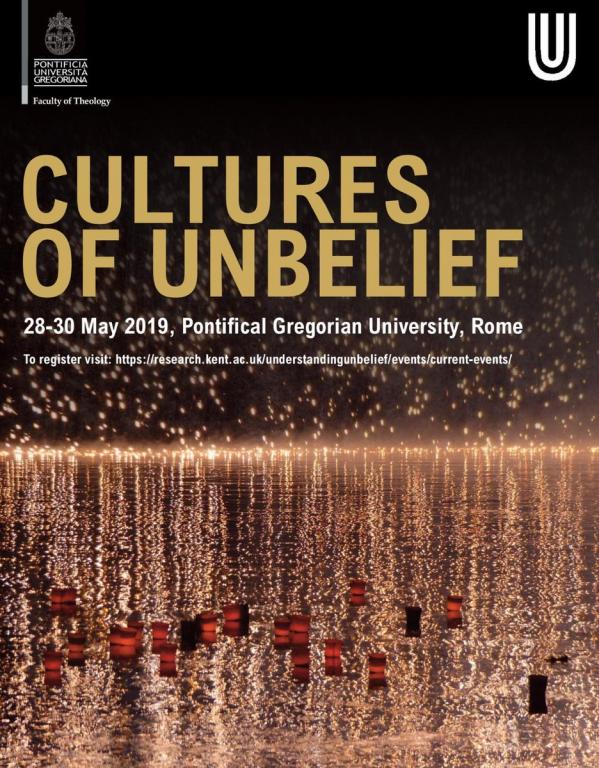
Understanding Cultures of Unbelief for Religious

Trump Admin's Prioritization of Religion Over Health Care...

Why Do We Question Vegetarianism When It's a...
TRENDING AT PATHEOS Nonreligious

Dethroning Jesus and Enthroning Yourself
Jesus Never Asked to Be Worshipped. He Asked to Be Understood. Christianity...

Why Most Christians are Really Paulians and Jobians
I Don't Care, But It Matters Let's get this out of the...

Essential Tips to Successfully Navigate the Selling Process
Selling a house can feel overwhelming, but it doesn’t have to be....

To Make Remote Work Effective, Think About Others
The COVID-19 pandemic forced many companies to rapidly transition to remote work....

Flexibility Is Key to Solving Problems of Tomorrow
The world of work is undergoing a dramatic transformation. The COVID-19 pandemic...
view all Nonreligious blogs
Ad-Free & Subscriber Log-In Subscription Support
- About Us
- 2026 Calendar
- Videos
- Podcasts
- Library of World Religions
- Faith In Media Tracker
- Advertise With Us
- Write for Us
- Privacy Policy
- Terms of Service
- Do Not Sell My Data
- Contact Us
- Radiant Digital
- Manage Newsletter Subscriptions
- Unsubscribe From Notifications
- Sitemap
Copyright 2008-2026, Patheos. All rights reserved.
Subscription Support Ad-Free & Subscriber Log-In
Follow Patheos