
BuddhistCatholicContemplativeEvangelicalGeneral ChristianHinduJewishLatter-day SaintMuslimNew VisionsProgressive Christian
Beliefs
- Buddhist
- Catholic
- Contemplative
- Evangelical
- General Christian
- Hindu
- Jewish
- Latter-day Saint
- More Voices
- Muslim
- New Visions
- Pagan
- Progressive Christian
Topics
- Religion News
- Food and Religion
- Sports and Religion
- Religious Art
- Religious Music and Entertainment
- Religious Events
- History and Religion
- Style and Religion
- Politics and Religion
- Women in Religion
- Recreation Outdoors and Religion
- Business Finance and Religion
- Careers Workplace and Religion
- Education and Religion
- Family Parenting and Religion
- Health Fitness and Religion
- Home and Religion
- Relationships and Religion
- Technology and Religion
- Travel and Religion
Columnists
- Buddhist Columnists
- Business Finance and Religion Columnists
- Careers Workplace and Religion Columnists
- Catholic Columnists
- Contemplative Columnists
- Education and Religion Columnists
- Evangelists Columnists
- Family Parenting and Religion Columnists
- General Christian Columnists
- Health Fitness and Religion Columnists
- Hindu Columnists
- History and Religion Columnists
- Home and Religion Columnists
- Jewish Columnists
- More Voices Columnists
- Latter Day Columnists
- Muslim Columnists
- New Visions Columnists
- Nonreligious Columnists
- Pagan Columnists
- Politics and Religion Columnists
- Progressive Columnists
- Recreation Outdoors and Religion Columnists
- Relationships and Religion Columnists
- Religion News Columnists
- Religious Art Columnists
- Religious Events Columnists
- Religious Music and Entertainment Columnists
- Sports and Religion Columnists
- Style and Religion Columnists
- Technology and Religion Columnists
- Travel and Religion Columnists
- Women in Religion Columnists
Resource Library
- 2026 Calendar
- Library of World Religions
- The 100 Most Holy Places on Earth
- Patheos Answers
- Podcasts
- Videos
- Faith Leaders Database
- Anglican Episcopalian
- Bahai
- Baptist
- Buddhism
- Christianity
- Confucianism
- Eastern Orthodoxy
- Hinduism
- Holiness and Pentecostal
- ISKCON
- Islam
- Judaism
- Lutheran
- Methodist
- The Church of Jesus Christ of Latter-day Saints
- New Age
- Paganism
- Presbytarian and Reformed
- Protestantism
- Religion Behind the Scenes
- Roman Catholic
- Scientology
- Shia Islam
- Sikhism
- Sufism
- Sunni Islam
- Taoism
- Zen
- See all religions
Research Tools
 Ad-Free & Subscriber Log-In Subscription Support
Ad-Free & Subscriber Log-In Subscription Support
Follow Patheos 

- Trending:
- Forgiveness
- |
- Marriage
- |
- Consciousness
- |
- Death Penalty
- |
- Election
- |
- Halloween
 The Secular Spectrum
- Home
- Nonreligious
- Religious and Secular Literacy: Dialogue in a Liberal Democracy
Religious and Secular Literacy: Dialogue in a Liberal Democracy
Last updated on: August 21, 2018 at 1:51 pm by Fr. Carl Chudy
Religious and Secular Literacy: Dialogue in a Liberal Democracy 2018-08-21T13:51:10-05:00 Fr. Carl Chudy
Patheos Explore the world's faith through different perspectives on religion and spirituality! Patheos has the views of the prevalent religions and spiritualities of the world.
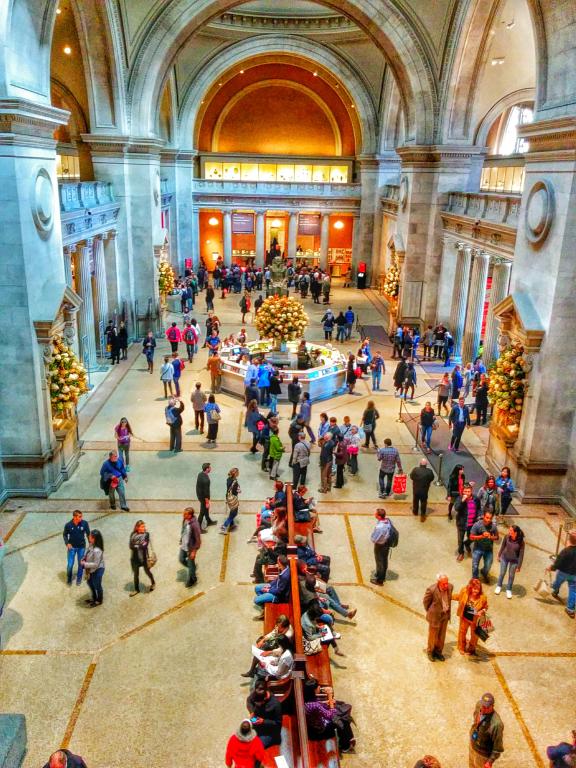
In May of 2018, the Council on Foreign Relations organized a workshop on “Religious Literacy in Global Affairs,” as part of their Religion and Foreign Policy Workshop. The CFR Religion and Foreign Policy program serves as a resource for the faith community, bringing together congregational and lay leaders, religion scholars, and representatives of faith-based organizations for conversations on issues at the intersection of religion and global affairs. I daresay, it is a useful resource for nonreligious people as well. I was fortunate to take part and the subject and I wanted to share some insights from that conversation which has something to say to both secular and religious people.
The deepening divides across our cultural and religious identities as a nation does not take into serious account the blurring of lines between the secular and religious, as well as the important differences among religious believers who share the same faith, and among secular worldviews who share disbelief in divinity in a variety of ways. The manufactured hate of right extremist communities between races, cultures, and religions are very different in many ways, and yet they share a common symptom: populist resistance to the diversity of our country that is both secular and religious, multi-racial, and multi-cultural. In is in this mix that we see the source of power as a people that transforms communities throughout the nation.
For those of us active in interfaith dialogue and collaboration, how we help each other understand our religious and secular worldviews goes a long way to dispelling fear over the distorted ideas of each other. In doing so, we come to understand the necessary relationship of religious and secular sources. In fact, only a general understanding of beliefs and tenets are but a small fraction of what is required in interfaith literacy.
In the Religious Literacy Project of Harvard University, Professor Diane Moore asserts that there is a distinction between devotional assertions of religious belief from the faith practitioners and leaders, and the study of or engagement of diverse practices. She asserts that understanding the diversity within the same religious traditions is the way we come to religious literacy, and the same could be said for those whose worldviews of secular humanists, agnostics, and others.
We understand the power of both religious and secular points of view in human experiences by seeing that there is no singular assertion of what all Christians believe or Muslims, or any other religious tradition. As there are many “Christianities” and “Islams”, in turn there are many “Atheisms” and “Humanisms.” Understanding this diversity is a step toward understanding their role in the social and religious landscape of our liberal democracy.
Another important feature to understand about religiosity and secularity in the United States is that both evolve and change. Religious and secular expressions are culturally and historically embedded in the fabric of our communities, and in this way they may be understood as “living traditions.” They are not static belief systems, but faith tenets that seek expression in the ever changing social and political culture around it. It is the attempts at these expressions that underline how different one Christian can be from another, one Muslim from another, or one Atheist from another.
The ongoing changes in America’s religious identity can be seen, for example, in a recent study of the *Public Religion Research Institute’*s (PRRI) 2017 report, America’s Changing Religious Identity, directed by Daniel Cox, PhD amd Robert P. Jones, PhD. Similarly, Joseph Baker and Buster Smiths’ American Secularism: Cultural Contours of Nonreligious Belief Systems shows how changes to American society have fueled shifts in the non-religious landscape and examines the diverse and dynamic world of secular Americans.
Finally, the discussion also surfaced a fundamental fact about both religiosity and secularity in our liberal democracy, and that religions and secular worldviews are embedded in all dimensions of human experience and can’t be removed from their political, economic, social and cultural moorings. Religious and nonreligious often speak about each other as some how independent of the cultural shifts in the country and then tend to fall into distorted straw man caricatures about each other.
If we are interested in understanding the power of religion and secularity we must challenge the notion that these vital forces in our liberal democracy are either summarily positive or negative forces. Both of them are needed vital forces that effect all of our lives. It also debunks the idea that all people of faith or non-faith hold particular views of anything that may be in common, let alone the particular views of their own religious or secular belief.
Taking seriously the secular and religious forces that shape our country and how we come to understand them more deeply is a crucial part of citizenry. Neither one is going anywhere. In religious and secular literacy, the workshop conversations reminds me that we need to pay attention to the diversity of those representations, not necessarily to challenge the legitimacy of one or the other, but to actually look at their power, that their internal diversity does shape policy and the conversations about faith and secular life in the United States. Isn’t that what is at the heart of our liberal democracy, the richness and power of our diversity that seeks the common good?
__________________________________________
 FR. CARL CHUDY is a Catholic priest and member of an international Catholic religious order, the Xaverian Missionaries USA, who are very involved in interfaith and intercultural dialogue worldwide. He holds a Masters in Divinity from Catholic Theological Union in Chicago with a cross-cultural specialization, a Masters of Arts in Transformative Leadership & Spirituality from Hartford Seminary, and is presently a candidate for the Doctor of Ministry program at Hartford Seminary, Connecticut that will focus on religious and nonreligious engagement. He has worked with some local and national interfaith and secular associations, including the Yale Humanist Community, American Humanist Association, The British Humanist Association, and The Humanist Association of Scotland.
Previous Post

June 22, 2018
Bible-Shaming Won't Work: The Love Thy Neighbour Problem
Next Post
July 8, 2018 "You're Not Angry Enough": Humanist Outrage and... Grace?
Browse Our Archives
Select a Category Ableism Activism Addiction and Recovery Agnosticism Anti-intellectualism Arts Atheism Beauty Catholicism Charles Darwin Children China Christianity Church/State separation churchgoing communication compassionate humanism Creationism critical thinking Culture death disaster response doubt education Egypt Entertainment Environment ethics evolution Existence of God Exploration fear Foundation Beyond Belief Free speech God Health History Human rights humanism identity India Interfaith Islam labels Language LGBT Love Meaning Media Medicine Middle East misconceptions mixed belief marriage Moral argument Morality Myths Near-Death Experience Nonreligious parenting Parody Persecution complex Philosophy Poetry Politics prayer Psychology Rationality Religion religious atheists Religious privilege Republican Party Satire Schools science secular parenting Spirituality The Unpigeonholeables Uncategorized United Kingdom Wonder
Select a Month March 2021 August 2020 March 2020 January 2020 September 2019 July 2019 June 2019 April 2019 February 2019 January 2019 December 2018 November 2018 October 2018 September 2018 August 2018 July 2018 June 2018 May 2018 April 2018 March 2018 February 2018 January 2018 December 2017 November 2017 October 2017 September 2017 August 2017 July 2017 March 2017 February 2017 January 2017 December 2016 November 2016 October 2016 September 2016 August 2016 July 2016 June 2016 May 2016 April 2016 March 2016 February 2016 January 2016 December 2015 November 2015 October 2015 September 2015 June 2015 March 2015 February 2015 January 2015 December 2014 November 2014 October 2014 September 2014
Follow Us!
TAKE THE
Religious Wisdom Quiz
My walls crumbled after seven days of marching, shouting, and trumpet blasts. What city am I?
Select your answer to see how you score.
Bethel Jericho Ai Jerusalem
Related posts from The Secular Spectrum

Despite "Pro-Life" Claims, Stem Cell Therapy Has Very...
Understanding Cultures of Unbelief for Religious
The Intertwined Pull of the Secular and Religious...

Christians Are Divided on the Legalization of Cannabis....
TRENDING AT PATHEOS Nonreligious

Dethroning Jesus and Enthroning Yourself
Jesus Never Asked to Be Worshipped. He Asked to Be Understood. Christianity...

Why Most Christians are Really Paulians and Jobians
I Don't Care, But It Matters Let's get this out of the...

Essential Tips to Successfully Navigate the Selling Process
Selling a house can feel overwhelming, but it doesn’t have to be....

To Make Remote Work Effective, Think About Others
The COVID-19 pandemic forced many companies to rapidly transition to remote work....

Flexibility Is Key to Solving Problems of Tomorrow
The world of work is undergoing a dramatic transformation. The COVID-19 pandemic...
view all Nonreligious blogs
Ad-Free & Subscriber Log-In Subscription Support
- About Us
- 2026 Calendar
- Videos
- Podcasts
- Library of World Religions
- Faith In Media Tracker
- Advertise With Us
- Write for Us
- Privacy Policy
- Terms of Service
- Do Not Sell My Data
- Contact Us
- Radiant Digital
- Manage Newsletter Subscriptions
- Unsubscribe From Notifications
- Sitemap
Copyright 2008-2026, Patheos. All rights reserved.
Subscription Support Ad-Free & Subscriber Log-In
Follow Patheos