
BuddhistCatholicContemplativeEvangelicalGeneral ChristianHinduJewishLatter-day SaintMuslimNew VisionsProgressive Christian
Beliefs
- Buddhist
- Catholic
- Contemplative
- Evangelical
- General Christian
- Hindu
- Jewish
- Latter-day Saint
- More Voices
- Muslim
- New Visions
- Pagan
- Progressive Christian
Topics
- Religion News
- Food and Religion
- Sports and Religion
- Religious Art
- Religious Music and Entertainment
- Religious Events
- History and Religion
- Style and Religion
- Politics and Religion
- Women in Religion
- Recreation Outdoors and Religion
- Business Finance and Religion
- Careers Workplace and Religion
- Education and Religion
- Family Parenting and Religion
- Health Fitness and Religion
- Home and Religion
- Relationships and Religion
- Technology and Religion
- Travel and Religion
Columnists
- Buddhist Columnists
- Business Finance and Religion Columnists
- Careers Workplace and Religion Columnists
- Catholic Columnists
- Contemplative Columnists
- Education and Religion Columnists
- Evangelists Columnists
- Family Parenting and Religion Columnists
- General Christian Columnists
- Health Fitness and Religion Columnists
- Hindu Columnists
- History and Religion Columnists
- Home and Religion Columnists
- Jewish Columnists
- More Voices Columnists
- Latter Day Columnists
- Muslim Columnists
- New Visions Columnists
- Nonreligious Columnists
- Pagan Columnists
- Politics and Religion Columnists
- Progressive Columnists
- Recreation Outdoors and Religion Columnists
- Relationships and Religion Columnists
- Religion News Columnists
- Religious Art Columnists
- Religious Events Columnists
- Religious Music and Entertainment Columnists
- Sports and Religion Columnists
- Style and Religion Columnists
- Technology and Religion Columnists
- Travel and Religion Columnists
- Women in Religion Columnists
Resource Library
- 2026 Calendar
- Library of World Religions
- The 100 Most Holy Places on Earth
- Patheos Answers
- Podcasts
- Videos
- Faith Leaders Database
- Anglican Episcopalian
- Bahai
- Baptist
- Buddhism
- Christianity
- Confucianism
- Eastern Orthodoxy
- Hinduism
- Holiness and Pentecostal
- ISKCON
- Islam
- Judaism
- Lutheran
- Methodist
- The Church of Jesus Christ of Latter-day Saints
- New Age
- Paganism
- Presbytarian and Reformed
- Protestantism
- Religion Behind the Scenes
- Roman Catholic
- Scientology
- Shia Islam
- Sikhism
- Sufism
- Sunni Islam
- Taoism
- Zen
- See all religions
Research Tools
 Ad-Free & Subscriber Log-In Subscription Support
Ad-Free & Subscriber Log-In Subscription Support
Follow Patheos 

- Trending:
- Forgiveness
- |
- Marriage
- |
- Consciousness
- |
- Death Penalty
- |
- Election
- |
- Halloween
 The Secular Spectrum
- Home
- Nonreligious
- Why Skydiving Only Feels Like A Religious Experience
Why Skydiving Only Feels Like A Religious Experience
Last updated on: March 13, 2018 at 2:28 pm by Rick Snedeker
Why Skydiving Only Feels Like A Religious Experience 2018-03-13T14:28:10-05:00 Rick Snedeker
Patheos Explore the world's faith through different perspectives on religion and spirituality! Patheos has the views of the prevalent religions and spiritualities of the world.

Sarah Scoville, “Adrenaline Rush,” Flickr.com, CC BY-NC 2.0.
What do skydivers and mystics, for example, have in common?
Their thrilling payoffs are completely psychological and almost identical.
This fascinating nexus between fear and faith—and their close cousin, pain—is investigated in a thoughtful recent essay by Guy Claxton in the e-zine Aeon, which calls itself an online “sanctuary for serious thinking.”
The gist of the essay is that skydivers, self-harming teens, people paralyzed with depression, deeply religious folks and countless other searchers are all after exactly the same thing. They seek release—from the dispiriting agonies of boredom, psychic pain and existential confusion.
Take Jez, for instance, a 25-year-old from Plymouth Hoe in coastal southern England. In his teens, he and his mates routinely jumped off the local 65-foot sea wall into what is appropriately known as “Dead Man’s Cove.” It’s called “tombstoning,” and in the past nine years 20 British kids have died and 70 more were paralyzed for life in the practice, whose primary nemeses are submerged rocks and wrenching currents.
So, why do these kids do it at all, much less with such mindless enthusiasm? Claxton contends they are motivated, naturally, by primal adolescent peer pressure, but also the hope to experience “strong—if ephemeral—feelings of solidarity, closeness and respect” that the group activity bestows on participants. But there’s something else: they also want to “go clear.”
Interviewed by The Guardian newspaper in 2006 when he was 16 and deep into tombstoning, Jez explained the appeal:
“You spend the whole day in school doing boring stuff … you still want to do something that will give you a rush … Jumping does that. Just for a second you forget all the boring bits of your day and feel free.”
A fellow tombstoner, Steve, then 18, told The Guardian:
“It’s a way of getting out of your mind for a moment or two without taking drugs or drinking alcohol. When you are out there in mid-air, you don’t think of anything—your head goes clear.”
This is the same private experience people of faith and spirituality long for, especially mystics, who have a strong desire to psychically, even physically, achieve a divine connection. Devoted transcendental meditation practitioners call it nirvana, Buddhism’s final beatitude, a realm beyond pain, care or even the reality outside self.
It’s “runner’s high,” the supercharged bliss of a young snowboarder flying down the slopes, the instant relief felt by a despondent person cutting his own flesh, a teen girl seeking love in recklessly random sex, and Mother Theresa sensing God talking directly to her. All comprise the same phenomenon of existential release from life’s unrewarding tediums, terrors and inflictions.
A young girl told the Guardian piece in another 2006 article:
“I was 12 years old when I began, and pretty depressed, angry and isolated. One day, I accidentally hit my hand really hard against my bed and experienced this sudden feeling of relief. Then for some reason I decided to cut myself, to see if I could make the good feelings last longer.”
Claxton writes that feelings of bliss are not only sought by the young, but everyone, and that they sometimes occur in utterly spontaneous ways seemingly disconnected from everything. He told of a London commuter one day 50 years ago who—out of the blue—experienced a powerful, epiphany-like emotion while he sat quietly in a train compartment. The commuter wrote later:
“I cannot remember any particular thought processes which may have led up to the great moment. For a few seconds only (I suppose) the whole compartment was filled with light. I felt caught up into some tremendous sense of being within a loving, triumphant and shining purpose … In a few moments the glory had departed—all but one curious, lingering feeling. I loved everybody in that compartment.”
Of relevance here, drugs and mental illness can produce the same sensations.
The point is that these otherworldly feelings manifestly appear to be very worldly in nature, exclusively residing in the folds of our brains, not netherworlds. They are the same when we do things, and when we do nothing, artifacts of human cognition.
True believers like to think these soaring episodes are proof of the divine, but skeptics are convinced they are just a function of our human DNA, firing exactly as the imperatives of our evolution intend or misfiring in error.
So what skydivers and mystics have in common is their humanity, their deep longing—as we all have—to transcend life’s often agonizing trials and tribulations. Nothing mystical about it.
Previous Post

March 7, 2018
Down-To-Earth Reasons Explain Religion's Endless Existence
Next Post

March 15, 2018 Elected officials serve as enforcers of religious faith
Browse Our Archives
Select a Category Ableism Activism Addiction and Recovery Agnosticism Anti-intellectualism Arts Atheism Beauty Catholicism Charles Darwin Children China Christianity Church/State separation churchgoing communication compassionate humanism Creationism critical thinking Culture death disaster response doubt education Egypt Entertainment Environment ethics evolution Existence of God Exploration fear Foundation Beyond Belief Free speech God Health History Human rights humanism identity India Interfaith Islam labels Language LGBT Love Meaning Media Medicine Middle East misconceptions mixed belief marriage Moral argument Morality Myths Near-Death Experience Nonreligious parenting Parody Persecution complex Philosophy Poetry Politics prayer Psychology Rationality Religion religious atheists Religious privilege Republican Party Satire Schools science secular parenting Spirituality The Unpigeonholeables Uncategorized United Kingdom Wonder
Select a Month March 2021 August 2020 March 2020 January 2020 September 2019 July 2019 June 2019 April 2019 February 2019 January 2019 December 2018 November 2018 October 2018 September 2018 August 2018 July 2018 June 2018 May 2018 April 2018 March 2018 February 2018 January 2018 December 2017 November 2017 October 2017 September 2017 August 2017 July 2017 March 2017 February 2017 January 2017 December 2016 November 2016 October 2016 September 2016 August 2016 July 2016 June 2016 May 2016 April 2016 March 2016 February 2016 January 2016 December 2015 November 2015 October 2015 September 2015 June 2015 March 2015 February 2015 January 2015 December 2014 November 2014 October 2014 September 2014
Follow Us!
TAKE THE
Religious Wisdom Quiz
True or False: Paul told the Thessalonians that those who are unwilling to work should not eat.
Select your answer to see how you score.
FALSE TRUE
Related posts from The Secular Spectrum

Yasir Qadhi's Elitist Ruse to Conceal the Obscure...
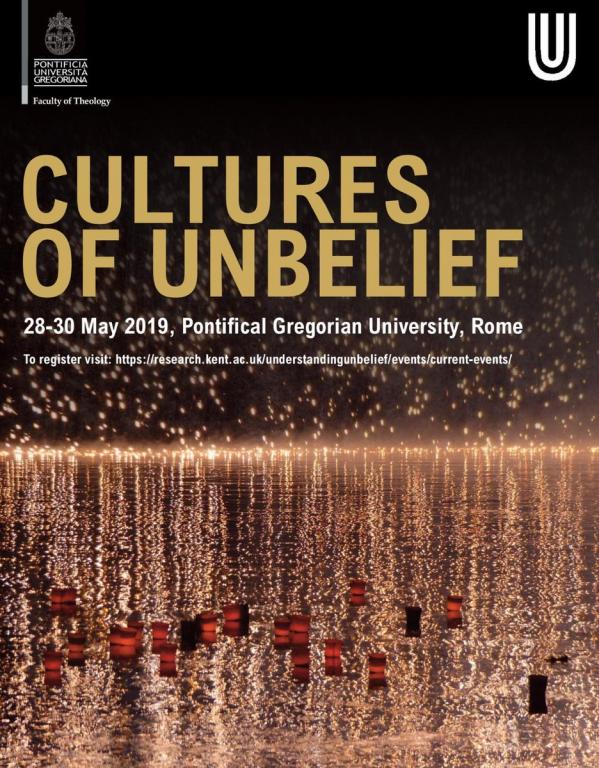
Understanding Cultures of Unbelief for Religious

Why Do We Question Vegetarianism When It's a...

"At-Will Employment" — Just Another Way Employers Use...
TRENDING AT PATHEOS Nonreligious

Dethroning Jesus and Enthroning Yourself
Jesus Never Asked to Be Worshipped. He Asked to Be Understood. Christianity...

Why Most Christians are Really Paulians and Jobians
I Don't Care, But It Matters Let's get this out of the...

Essential Tips to Successfully Navigate the Selling Process
Selling a house can feel overwhelming, but it doesn’t have to be....

To Make Remote Work Effective, Think About Others
The COVID-19 pandemic forced many companies to rapidly transition to remote work....

Flexibility Is Key to Solving Problems of Tomorrow
The world of work is undergoing a dramatic transformation. The COVID-19 pandemic...
view all Nonreligious blogs
Ad-Free & Subscriber Log-In Subscription Support
- About Us
- 2026 Calendar
- Videos
- Podcasts
- Library of World Religions
- Faith In Media Tracker
- Advertise With Us
- Write for Us
- Privacy Policy
- Terms of Service
- Do Not Sell My Data
- Contact Us
- Radiant Digital
- Manage Newsletter Subscriptions
- Unsubscribe From Notifications
- Sitemap
Copyright 2008-2026, Patheos. All rights reserved.
Subscription Support Ad-Free & Subscriber Log-In
Follow Patheos