
BuddhistCatholicContemplativeEvangelicalGeneral ChristianHinduJewishLatter-day SaintMuslimNew VisionsProgressive Christian
Beliefs
- Buddhist
- Catholic
- Contemplative
- Evangelical
- General Christian
- Hindu
- Jewish
- Latter-day Saint
- More Voices
- Muslim
- New Visions
- Pagan
- Progressive Christian
Topics
- Religion News
- Food and Religion
- Sports and Religion
- Religious Art
- Religious Music and Entertainment
- Religious Events
- History and Religion
- Style and Religion
- Politics and Religion
- Women in Religion
- Recreation Outdoors and Religion
- Business Finance and Religion
- Careers Workplace and Religion
- Education and Religion
- Family Parenting and Religion
- Health Fitness and Religion
- Home and Religion
- Relationships and Religion
- Technology and Religion
- Travel and Religion
Columnists
- Buddhist Columnists
- Business Finance and Religion Columnists
- Careers Workplace and Religion Columnists
- Catholic Columnists
- Contemplative Columnists
- Education and Religion Columnists
- Evangelists Columnists
- Family Parenting and Religion Columnists
- General Christian Columnists
- Health Fitness and Religion Columnists
- Hindu Columnists
- History and Religion Columnists
- Home and Religion Columnists
- Jewish Columnists
- More Voices Columnists
- Latter Day Columnists
- Muslim Columnists
- New Visions Columnists
- Nonreligious Columnists
- Pagan Columnists
- Politics and Religion Columnists
- Progressive Columnists
- Recreation Outdoors and Religion Columnists
- Relationships and Religion Columnists
- Religion News Columnists
- Religious Art Columnists
- Religious Events Columnists
- Religious Music and Entertainment Columnists
- Sports and Religion Columnists
- Style and Religion Columnists
- Technology and Religion Columnists
- Travel and Religion Columnists
- Women in Religion Columnists
Resource Library
- 2026 Calendar
- Library of World Religions
- The 100 Most Holy Places on Earth
- Patheos Answers
- Podcasts
- Videos
- Faith Leaders Database
- Anglican Episcopalian
- Bahai
- Baptist
- Buddhism
- Christianity
- Confucianism
- Eastern Orthodoxy
- Hinduism
- Holiness and Pentecostal
- ISKCON
- Islam
- Judaism
- Lutheran
- Methodist
- The Church of Jesus Christ of Latter-day Saints
- New Age
- Paganism
- Presbytarian and Reformed
- Protestantism
- Religion Behind the Scenes
- Roman Catholic
- Scientology
- Shia Islam
- Sikhism
- Sufism
- Sunni Islam
- Taoism
- Zen
- See all religions
Research Tools
 Ad-Free & Subscriber Log-In Subscription Support
Ad-Free & Subscriber Log-In Subscription Support
Follow Patheos 

- Trending:
- Forgiveness
- |
- Marriage
- |
- Consciousness
- |
- Death Penalty
- |
- Election
- |
- Halloween
 The Secular Spectrum
- Home
- Nonreligious
- Down-To-Earth Reasons Explain Religion’s Endless Existence
Down-To-Earth Reasons Explain Religion’s Endless Existence
Last updated on: March 7, 2018 at 3:05 pm by Rick Snedeker
Down-To-Earth Reasons Explain Religion’s Endless Existence 2018-03-07T15:05:59-05:00 Rick Snedeker
Patheos Explore the world's faith through different perspectives on religion and spirituality! Patheos has the views of the prevalent religions and spiritualities of the world.
How American Christianity Perpetuates
Reason #1: Skeptics Inadvertently Enable It

Matthew Beckler, “Please bring your Bible to Math and Science,” informal sign at a Lutheran school band rehearsal, Flickr.com, CC BY-SA 2.0.
As I read the new March 2018 edition of Church & State, the monthly magazine of Americans United for Separation of Church and State, I was reminded of one important reason Christianity so relentlessly perpetuates in America: committed secularists often feel they must enlist Christians to advance their secular agendas. And in doing so, they inadvertently endorse faith.
This is the endemic virus of politics (religious or otherwise)—the need to get everyone possible on board, even outliers and wingnuts. Everyone makes some measure of Faustian bargain by collaborating with rivals, no matter how practical it may seem at the time.
In her first Church & State column, Americans United’s new executive director, Rachel K. Laser, proclaims a critical need for meaningful alliances among secularists and religionists to “amass the power to win the hearts and minds of policymakers, the courts and importantly, our fellow citizens.”
“Together, we will stay true to our principles and find winning strategies. … With our beautiful medley of faces on full display, we will make clear what’s at stake. We have a lot of work to do, but our diversity makes us unconquerable, and our voices carry the conviction of righteousness.”
Laser’s primary “principle” in this context arguably is keeping church and state separate. In that pursuit it’s clearly rational to join in common cause with religionists who equally fear any government involvement in Americans’ religious affairs threatens an erosion of independence for secularists and faithful alike.
However, keeping church and state at a long arm’s length, while laudable and necessary, is but a red-herring distraction from the core issue: Religion should be kept out of government because its fundamental beliefs are not real, not just because the Constitution and our Founding Fathers’ fervent fears demand it. As such, faith in supernatural beings and realms poses an unreliable—even dangerous—basis for public policy, as history has proven ad nauseum. Conversely, government should be kept out of religion not to protect its unassailable “truths” but to safeguard the inalienable right of adults to believe whatever they want, free of outside coercion, no matter how unsubstantiated or ill-advised.
In her editorial, Laser queried a state senator she knows personally and a Christian pastor, both Oklahomans, about why conservative voters in their state recently voted down a state constitutional amendment that would have allowed government placement of the Ten Commandments in public venues. Both said they believed Oklahoma voters felt the amendment could ultimately erode religious freedom by allowing governments to make religious decisions (e.g., which religion’s symbols to place where). Certainly, a rational worry.
But by making common cause secularists must necessarily appear neutral about their co-collaborators’ religious ideologies. Which is also fair enough in the context of church-state separation.
The problem is we can’t then fairly discuss the real elephant in the room: Separating church and state implies each are equivalent “non-overlapping magisteria” (Stephen J. Gould’s words) entitled to equal respect and treatment. Yet, by that reasoning, belief in Voodoo spirits and alien abductions, for instance, would also be due the same deference as our essential, tactile republican democracy.
At some point, even people who are just trying to keep government out of religion, and vice versa, should (but rarely do) unambiguously acknowledge that “religion” is actually just superstition with a more culturally agreeable name. Just because a belief is thousands of years old and still boasts billions of fervent adherents does not mean it’s not utter nonsense. Only reason can tell us that. And, regarding Christianity, reason so far has spectacularly failed confirm its particulars.
So, while I wish Rachel Laser well in keeping government out of the religion business and religion out of our public affairs, I’m concerned that religion’s indivisibly superstitious nature will continue to get a pass.
That’s one way it perpetuates in our culture, largely unnoticed, as even religious skeptics (seeking faithful allies) decline to call belief in the supernatural by its real name—superstition—thus further enabling it.
Previous Post

February 26, 2018
Was God necessary for creation? Science suggests no.
Next Post
March 13, 2018 Why Skydiving Only Feels Like A Religious Experience
Browse Our Archives
Select a Category Ableism Activism Addiction and Recovery Agnosticism Anti-intellectualism Arts Atheism Beauty Catholicism Charles Darwin Children China Christianity Church/State separation churchgoing communication compassionate humanism Creationism critical thinking Culture death disaster response doubt education Egypt Entertainment Environment ethics evolution Existence of God Exploration fear Foundation Beyond Belief Free speech God Health History Human rights humanism identity India Interfaith Islam labels Language LGBT Love Meaning Media Medicine Middle East misconceptions mixed belief marriage Moral argument Morality Myths Near-Death Experience Nonreligious parenting Parody Persecution complex Philosophy Poetry Politics prayer Psychology Rationality Religion religious atheists Religious privilege Republican Party Satire Schools science secular parenting Spirituality The Unpigeonholeables Uncategorized United Kingdom Wonder
Select a Month March 2021 August 2020 March 2020 January 2020 September 2019 July 2019 June 2019 April 2019 February 2019 January 2019 December 2018 November 2018 October 2018 September 2018 August 2018 July 2018 June 2018 May 2018 April 2018 March 2018 February 2018 January 2018 December 2017 November 2017 October 2017 September 2017 August 2017 July 2017 March 2017 February 2017 January 2017 December 2016 November 2016 October 2016 September 2016 August 2016 July 2016 June 2016 May 2016 April 2016 March 2016 February 2016 January 2016 December 2015 November 2015 October 2015 September 2015 June 2015 March 2015 February 2015 January 2015 December 2014 November 2014 October 2014 September 2014
Follow Us!
TAKE THE
Religious Wisdom Quiz
Who was Samson's mother?
Select your answer to see how you score.
Manoah's wife Delilah Hannah Ruth
Related posts from The Secular Spectrum

Yasir Qadhi's Elitist Ruse to Conceal the Obscure...

Trump Admin's Prioritization of Religion Over Health Care...
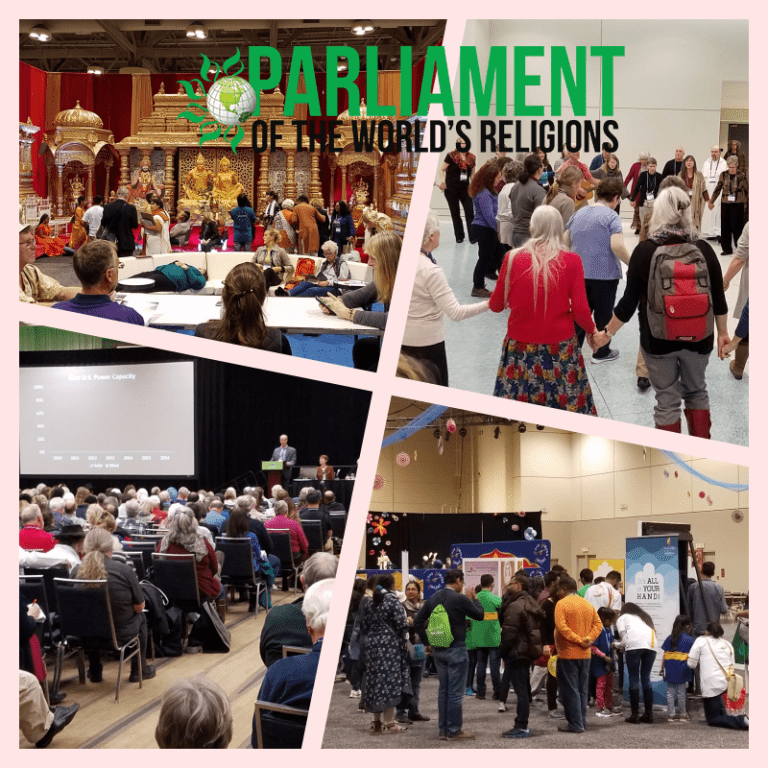
American Pluralism: Its Promises and Struggles

TRENDING AT PATHEOS Nonreligious

Dethroning Jesus and Enthroning Yourself
Jesus Never Asked to Be Worshipped. He Asked to Be Understood. Christianity...

Why Most Christians are Really Paulians and Jobians
I Don't Care, But It Matters Let's get this out of the...

Essential Tips to Successfully Navigate the Selling Process
Selling a house can feel overwhelming, but it doesn’t have to be....

To Make Remote Work Effective, Think About Others
The COVID-19 pandemic forced many companies to rapidly transition to remote work....

Flexibility Is Key to Solving Problems of Tomorrow
The world of work is undergoing a dramatic transformation. The COVID-19 pandemic...
view all Nonreligious blogs
Ad-Free & Subscriber Log-In Subscription Support
- About Us
- 2026 Calendar
- Videos
- Podcasts
- Library of World Religions
- Faith In Media Tracker
- Advertise With Us
- Write for Us
- Privacy Policy
- Terms of Service
- Do Not Sell My Data
- Contact Us
- Radiant Digital
- Manage Newsletter Subscriptions
- Unsubscribe From Notifications
- Sitemap
Copyright 2008-2026, Patheos. All rights reserved.
Subscription Support Ad-Free & Subscriber Log-In
Follow Patheos