
BuddhistCatholicContemplativeEvangelicalGeneral ChristianHinduJewishLatter-day SaintMuslimNew VisionsProgressive Christian
Beliefs
- Buddhist
- Catholic
- Contemplative
- Evangelical
- General Christian
- Hindu
- Jewish
- Latter-day Saint
- More Voices
- Muslim
- New Visions
- Pagan
- Progressive Christian
Topics
- Religion News
- Food and Religion
- Sports and Religion
- Religious Art
- Religious Music and Entertainment
- Religious Events
- History and Religion
- Style and Religion
- Politics and Religion
- Women in Religion
- Recreation Outdoors and Religion
- Business Finance and Religion
- Careers Workplace and Religion
- Education and Religion
- Family Parenting and Religion
- Health Fitness and Religion
- Home and Religion
- Relationships and Religion
- Technology and Religion
- Travel and Religion
Columnists
- Buddhist Columnists
- Business Finance and Religion Columnists
- Careers Workplace and Religion Columnists
- Catholic Columnists
- Contemplative Columnists
- Education and Religion Columnists
- Evangelists Columnists
- Family Parenting and Religion Columnists
- General Christian Columnists
- Health Fitness and Religion Columnists
- Hindu Columnists
- History and Religion Columnists
- Home and Religion Columnists
- Jewish Columnists
- More Voices Columnists
- Latter Day Columnists
- Muslim Columnists
- New Visions Columnists
- Nonreligious Columnists
- Pagan Columnists
- Politics and Religion Columnists
- Progressive Columnists
- Recreation Outdoors and Religion Columnists
- Relationships and Religion Columnists
- Religion News Columnists
- Religious Art Columnists
- Religious Events Columnists
- Religious Music and Entertainment Columnists
- Sports and Religion Columnists
- Style and Religion Columnists
- Technology and Religion Columnists
- Travel and Religion Columnists
- Women in Religion Columnists
Resource Library
- 2026 Calendar
- Library of World Religions
- The 100 Most Holy Places on Earth
- Patheos Answers
- Podcasts
- Videos
- Faith Leaders Database
- Anglican Episcopalian
- Bahai
- Baptist
- Buddhism
- Christianity
- Confucianism
- Eastern Orthodoxy
- Hinduism
- Holiness and Pentecostal
- ISKCON
- Islam
- Judaism
- Lutheran
- Methodist
- The Church of Jesus Christ of Latter-day Saints
- New Age
- Paganism
- Presbytarian and Reformed
- Protestantism
- Religion Behind the Scenes
- Roman Catholic
- Scientology
- Shia Islam
- Sikhism
- Sufism
- Sunni Islam
- Taoism
- Zen
- See all religions
Research Tools
 Ad-Free & Subscriber Log-In Subscription Support
Ad-Free & Subscriber Log-In Subscription Support
Follow Patheos 

- Trending:
- Forgiveness
- |
- Marriage
- |
- Consciousness
- |
- Death Penalty
- |
- Election
- |
- Halloween
 The Secular Spectrum
- Home
- Nonreligious
- Identity: The New Political Religion
Identity: The New Political Religion
Last updated on: January 9, 2018 at 2:28 pm by Guest Contributor
Identity: The New Political Religion 2018-01-09T14:28:47-05:00 Guest Contributor
Patheos Explore the world's faith through different perspectives on religion and spirituality! Patheos has the views of the prevalent religions and spiritualities of the world.

By Brandon Kaiser
When you step into the voting booth in any local, state, or national election, have you ever asked yourself why you are there in the first place? Are you truly voting for the candidate and their positions, or simply the big ‘R’ or ‘D’ placed next to it?
Chances are the reason behind your decision is the latter. Sure, voters care about the candidate’s stance on abortion, taxes, or whether or not they support the new playground being built down the street. But political science professor Shanto Iyengar of Stanford University concluded that party affiliation is a stronger voting indicator than even race or ethnicity.
Published in the European Journal of Public Research, the study found that participants were more likely to discriminate against those in political parties ideologically distant from their own. Partisan discrimination far exceeded that of religious, ethnic, or racial groups.
Notice how the study focuses on the partisan discrimination of outgroups instead of the support within groups. This means that parties would rather bully their opposition before they support members of their own affiliation.
Does this behavior sound familiar? The leader of any religious organization appears to be more likely to condemn the behavior of their enemies before taking care of their flock. Such is true of Joel Osteen refusing shelter to Hurricane Harvey victims, or Australian extremist Al-Wahwah denouncing the invasion of Iraq while also calling for an Islamic caliphate against Israel.
These men are on the fringe of mainstream religious affiliation. However, the point is that both partisan politics and religious identity share the same tactics. There is more to this than a simple ‘us vs. them’ narrative. This type of discrimination invokes disgust instead of fear. Your enemy is not just the opposite of you, but they should disgust you.
In the United States, the evangelical Christians clearly hold a significant amount of political power. They’re quite vocal about their positions. We all know them by now: anti-science, pro-life, anti-gay, creationism in schools, etc. So, this would mean that their votes would go towards the candidates with the same ideals.
But then there’s their beloved president Donald Trump. The casino owner with two divorces that quoted a Bible passage as “Two Corinthians.” This is the candidate that they endorsed in 2016 and continue to support him as president.
It comes as no surprise that evangelicals overwhelmingly vote Republican. But the 2016 election proves that party identification was more important than their so-called Christian values. While Mike Pence was there to secure the religious vote, their fierce endorsement of Trump himself is all evidence we need.
I would be interested to see if Trump would have won with evangelicals without Pence. It is likely that many simply could not endorse a pro-choice candidate. We saw this recently with Alabama Christians sticking with Republican candidate Roy Moore.
Remember, this partisan discrimination is true on both sides of the aisle. I personally get annoyed every time I hear a liberal say that Republicans don’t love their country or that time when Black Lives Matter crashed a Bernie Sanders rally. In fact, the Left seems to be more intense about their identities than that of the Right.
Whether it’s those Republican voters who think wealthy tax cuts will benefit them or the Democrats who think Islam is promoting women’s rights, Americans are voting against their own interests because of political identity. We must return to common values of liberty, free speech, and tolerable political discourse. There used to be a time when you were an American first and a Democrat/Republican second. Today, you might as well be a God-loving, gun toting conservative or an Antifa supporting social justice warrior who thinks Halloween costumes are racist.
Identity might be important in social situations. There’s a sense of community and acceptance among your group. When those identities consume our political institutions, influence the media, and blur the lines of fact and truth, we as Americans must draw the line. Yes, you should take this personally. There is too much at stake to think otherwise.
We are a nation divided between black and white, rich and poor, oppressed and oppressors, religious and secular, job creators and job killers, elitists and populists, and Americans against Americans.
George Washington warned the country of a dark future in which political identity would end up “destroying afterwards the very engines which have lifted them to unjust dominion.” I would like to think that those engines have not yet been destroyed. Time will tell, but in the meantime, listen to your enemies, vote for principle over party, and live an examined life.
Image by Tsahi Levent-Levi via Flickr | CC BY 2.0
 Brandon Kaiser is a writer studying Political Science at Florida Gulf Coast University. He currently writes for three regional newspapers in Florida and New Jersey. A former Catholic, Brandon lost his faith at 10 years old. His main interests are in philosophy, government, journalism, and secularism. Above all, he champions the ideals of free speech and inquiry, while maintaining an emphasis on truth and conversation. Brandon hopes to extend into many forms of media such as podcasting, film-making, and public speaking.
Previous Post

December 4, 2017
How the Corporate Media Idealizes Science
Next Post

January 10, 2018 Why Do We Believe in the Unbelievable? It’s Natural
Browse Our Archives
Select a Category Ableism Activism Addiction and Recovery Agnosticism Anti-intellectualism Arts Atheism Beauty Catholicism Charles Darwin Children China Christianity Church/State separation churchgoing communication compassionate humanism Creationism critical thinking Culture death disaster response doubt education Egypt Entertainment Environment ethics evolution Existence of God Exploration fear Foundation Beyond Belief Free speech God Health History Human rights humanism identity India Interfaith Islam labels Language LGBT Love Meaning Media Medicine Middle East misconceptions mixed belief marriage Moral argument Morality Myths Near-Death Experience Nonreligious parenting Parody Persecution complex Philosophy Poetry Politics prayer Psychology Rationality Religion religious atheists Religious privilege Republican Party Satire Schools science secular parenting Spirituality The Unpigeonholeables Uncategorized United Kingdom Wonder
Select a Month March 2021 August 2020 March 2020 January 2020 September 2019 July 2019 June 2019 April 2019 February 2019 January 2019 December 2018 November 2018 October 2018 September 2018 August 2018 July 2018 June 2018 May 2018 April 2018 March 2018 February 2018 January 2018 December 2017 November 2017 October 2017 September 2017 August 2017 July 2017 March 2017 February 2017 January 2017 December 2016 November 2016 October 2016 September 2016 August 2016 July 2016 June 2016 May 2016 April 2016 March 2016 February 2016 January 2016 December 2015 November 2015 October 2015 September 2015 June 2015 March 2015 February 2015 January 2015 December 2014 November 2014 October 2014 September 2014
Follow Us!
TAKE THE
Religious Wisdom Quiz
Thrown into a muddy cistern for prophesying doom, I sank into the mire until rescued. What was my crime?
Select your answer to see how you score.
Prophesying Jerusalem's fall False prophecy Treason Blasphemy
Related posts from The Secular Spectrum

Yasir Qadhi's Elitist Ruse to Conceal the Obscure...

How Religion Can Impact Mental Health in Good...
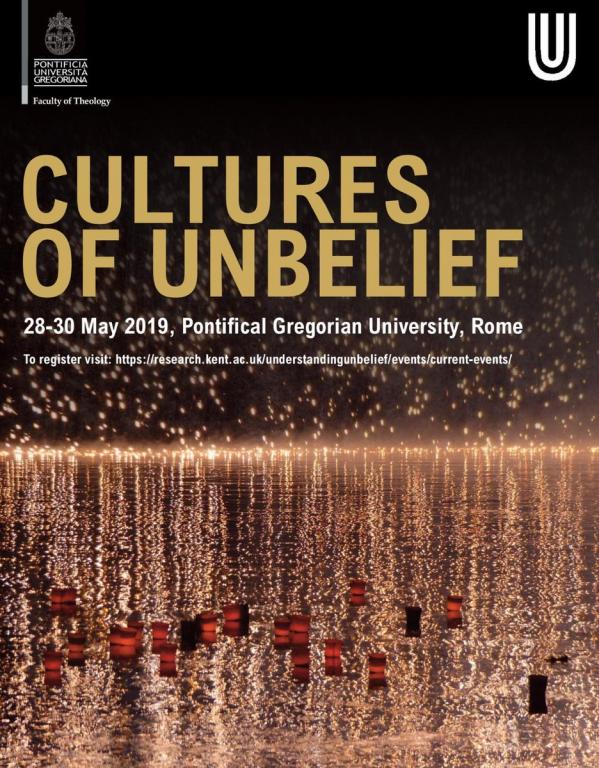
Understanding Cultures of Unbelief for Religious

Trump Admin's Prioritization of Religion Over Health Care...
TRENDING AT PATHEOS Nonreligious

Dethroning Jesus and Enthroning Yourself
Jesus Never Asked to Be Worshipped. He Asked to Be Understood. Christianity...

Why Most Christians are Really Paulians and Jobians
I Don't Care, But It Matters Let's get this out of the...

Essential Tips to Successfully Navigate the Selling Process
Selling a house can feel overwhelming, but it doesn’t have to be....

To Make Remote Work Effective, Think About Others
The COVID-19 pandemic forced many companies to rapidly transition to remote work....

Flexibility Is Key to Solving Problems of Tomorrow
The world of work is undergoing a dramatic transformation. The COVID-19 pandemic...
view all Nonreligious blogs
Ad-Free & Subscriber Log-In Subscription Support
- About Us
- 2026 Calendar
- Videos
- Podcasts
- Library of World Religions
- Faith In Media Tracker
- Advertise With Us
- Write for Us
- Privacy Policy
- Terms of Service
- Do Not Sell My Data
- Contact Us
- Radiant Digital
- Manage Newsletter Subscriptions
- Unsubscribe From Notifications
- Sitemap
Copyright 2008-2026, Patheos. All rights reserved.
Subscription Support Ad-Free & Subscriber Log-In
Follow Patheos