
BuddhistCatholicContemplativeEvangelicalGeneral ChristianHinduJewishLatter-day SaintMuslimNew VisionsProgressive Christian
Beliefs
- Buddhist
- Catholic
- Contemplative
- Evangelical
- General Christian
- Hindu
- Jewish
- Latter-day Saint
- More Voices
- Muslim
- New Visions
- Pagan
- Progressive Christian
Topics
- Religion News
- Food and Religion
- Sports and Religion
- Religious Art
- Religious Music and Entertainment
- Religious Events
- History and Religion
- Style and Religion
- Politics and Religion
- Women in Religion
- Recreation Outdoors and Religion
- Business Finance and Religion
- Careers Workplace and Religion
- Education and Religion
- Family Parenting and Religion
- Health Fitness and Religion
- Home and Religion
- Relationships and Religion
- Technology and Religion
- Travel and Religion
Columnists
- Buddhist Columnists
- Business Finance and Religion Columnists
- Careers Workplace and Religion Columnists
- Catholic Columnists
- Contemplative Columnists
- Education and Religion Columnists
- Evangelists Columnists
- Family Parenting and Religion Columnists
- General Christian Columnists
- Health Fitness and Religion Columnists
- Hindu Columnists
- History and Religion Columnists
- Home and Religion Columnists
- Jewish Columnists
- More Voices Columnists
- Latter Day Columnists
- Muslim Columnists
- New Visions Columnists
- Nonreligious Columnists
- Pagan Columnists
- Politics and Religion Columnists
- Progressive Columnists
- Recreation Outdoors and Religion Columnists
- Relationships and Religion Columnists
- Religion News Columnists
- Religious Art Columnists
- Religious Events Columnists
- Religious Music and Entertainment Columnists
- Sports and Religion Columnists
- Style and Religion Columnists
- Technology and Religion Columnists
- Travel and Religion Columnists
- Women in Religion Columnists
Resource Library
- 2026 Calendar
- Library of World Religions
- The 100 Most Holy Places on Earth
- Patheos Answers
- Podcasts
- Videos
- Faith Leaders Database
- Anglican Episcopalian
- Bahai
- Baptist
- Buddhism
- Christianity
- Confucianism
- Eastern Orthodoxy
- Hinduism
- Holiness and Pentecostal
- ISKCON
- Islam
- Judaism
- Lutheran
- Methodist
- The Church of Jesus Christ of Latter-day Saints
- New Age
- Paganism
- Presbytarian and Reformed
- Protestantism
- Religion Behind the Scenes
- Roman Catholic
- Scientology
- Shia Islam
- Sikhism
- Sufism
- Sunni Islam
- Taoism
- Zen
- See all religions
Research Tools
 Ad-Free & Subscriber Log-In Subscription Support
Ad-Free & Subscriber Log-In Subscription Support
Follow Patheos 

- Trending:
- Forgiveness
- |
- Marriage
- |
- Consciousness
- |
- Death Penalty
- |
- Election
- |
- Halloween
 The Secular Spectrum
- Home
- Nonreligious
- Scientific Progress, GMOs, and Racism: The Ugandan Food Crisis Seen Through Western Eyes
Scientific Progress, GMOs, and Racism: The Ugandan Food Crisis Seen Through Western Eyes
Last updated on: October 18, 2017 at 8:13 am by Shem the Penman
Scientific Progress, GMOs, and Racism: The Ugandan Food Crisis Seen Through Western Eyes 2017-10-18T08:13:14-05:00 Shem the Penman
Patheos Explore the world's faith through different perspectives on religion and spirituality! Patheos has the views of the prevalent religions and spiritualities of the world.
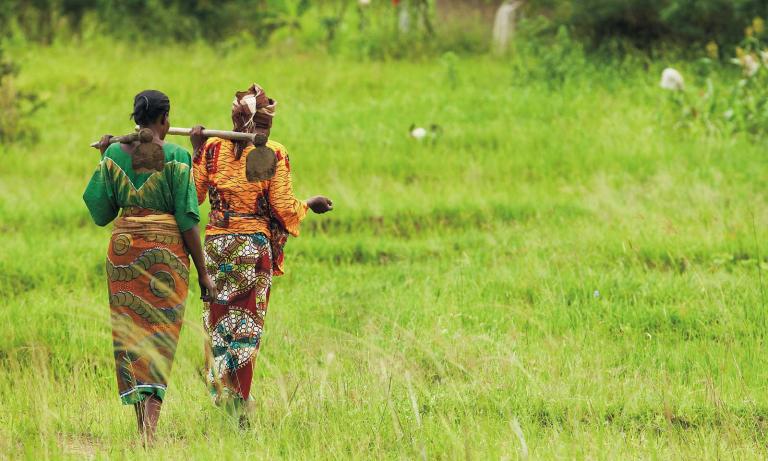
The matter of GMOs in Africa expose the alliance between science and big business; discussions about it show the racism in the science-fan blogosphere.
African Famine, and What Else Is New?
The Ugandan Parliament, faced with a food crisis, recently passed the National Biotechnology and Biosafety Bill. This legislation allows for the regulated use of GMO crops in this drought-stricken African nation. The controversy surrounding this legislation was fierce, but what was it all about?
According to a columnist at a certain Patheos channel, it was science denial, plain and simple. The columnist talks about problems such as drought and Bacterial Banana Wilt that plague the agricultural population, touts GMOs as the solution to the problems, and then describes the opposition to GMOs in Uganda:
GMOs are solutions to these problems, and agricultural laborers should be allowed to have direct access to a wide variety of resistant strains during a time when they need them the most.
Unfortunately, Ugandans have not had access to these varieties of GMOs due to government restrictions against access to genetically modified crops (alongside most other countries in the region). This restricts Ugandan’s access to non-wilting crops during a time of desperate need, and prevents farmers from having access to more strains that will help farmers and ranchers weather the drought. […]
Unfortunately, pseudoscience drastically effects this already vulnerable population. Anti-GMO sentiment has infected Ugandan politics for years, and plagued the discourse on these life-saving biotechnologies that can help the country’s impoverished citizens. Upon a casual look, these anti-GMO arguments don’t seem to diverge significantly from any other GMO arguments we are familiar with in the West. They use an appeal to nature, they conflate hybrids and crossbreeding with GMOs, and they demand proof that there is zero risk involved in introducing GMOs before moving forward (as if there is ever 0% risk for anything we do). It would not be surprising if anti-science propaganda and scaremongering through organizations such as Greenpeace have made it from the West to Africa, and created a political barrier preventing vulnerable populations from getting the help that they deserve.
Science and Corporate Interests
First off, there’s no evidence that GMOs can simply solve the problem of food insecurity. As the Guardian‘s Emma Hockridge notes , “The future of feeding a growing world population, in the face of all of the challenges of climate change and resource depletion that face us, is crop variety, soil fertility, and farming systems like organic which don’t rely on costly inputs. Not chemical and agribusiness controlling the research and food markets of a GM-inspired future.”
Furthermore, the controversy over the GMO bill in Uganda didn’t seem to have much to do with superstitious opposition to “these life-saving biotechnologies that can help the country’s impoverished citizens.” In fact, the opposition to GMOs was motivated by concerns about a corporate shakedown of these impoverished citizens. The corporate sponsors of the GMOs being introduced into the Ugandan ecosystem are going to change the entire agricultural practice of rural farmers in Uganda by forcing them to buy patented seeds rather than being able to reuse seeds as in the past. In the Ugandan Observer, a columnist describes the economic disaster waiting to happen in Uganda:
However, scientists were not honest to equally tell the MPs and the entire world the financial and legal ramifications of adopting GMOs. For instance, most ordinary farmers (not commercial farmers) cannot afford to buy seeds whenever it is planting time.
What GM seeds actually do is that they lock the farmer and seed and fertiliser entrepreneur in unconscionable contract. The GM seeds do not give a chance to farmers to harvest and create or preserve some seeds (as it used to be in olden days) for the next planting season.
Just like computer scientists make money by creating the need to further insulate oneself against harmful malware by introducing new antidotes such “super” antivirus for a fee, so will be the case with GMOs.
The farmers or users will be inflexibly tied to the controls of these seed producers for solutions and thereby create an infinite market for their products. Will that really solve poverty in Uganda? Will that make the lives of Ugandans better? I have my doubts!
Interviewed for New Vision in Uganda, Bridget Nabikolo, a programme coordinator at the Centre for Development Initiatives (CDI) of the African Biodiversity Network of South Africa, describes the anti-GMO sentiment in economic terms too:
“Patented seeds mean that seed saving is forbidden and we must buy new seeds each season,” she said. Many small-scale farmers, will be unable to bear the additional cost of buying expensive patented seed each season,” added Nabikolo. She said the likely fear of contaminating our agriculture and seed with GM0s would lead to loss of export markets to countries that have already rejected GM foods. Nabikolo added that this would lead to the perpetual enslavement of small farmers by corporations that is to say by controlling all the seed and forcing us to buy on their terms, season upon season.
GMOs do not address the real problems of food insecurity in Uganda. “GMO seeds will cause total dependence of the farmer on the corporations. If we are forced to buy seed every season, and lose our seed saving practices and seed heritage, we will lose ownership, sovereignty, independence and our dignity. We will have no choice over our seed and be forced to accept only what is on the market,” she added.
It seems like the stereotype of the primitive, superstitious African resonates in the science fan’s imagination. It’s difficult for science cheerleaders to acknowledge that scientific progress takes place in a cultural and economic context, and that while GMOs may be safe for consumers and the environment, they’re not a cure-all for Uganda’s food insecurity. It’s much easier to blame all opposition to GMOs on pseudoscientific propaganda and ignorant suspicion rather than admit that these African farmers see a future where starvation is only one of their problems.
At least in this instance, scientific progress and corporate domination go hand in hand.
When questioned, the blogger at Patheos simply asserted that the economic aspect of the Ugandan controversy is separate from the science of GMOs. I suppose that’s true. But it’s disturbing that he wouldn’t have mentioned, even in passing, the concerns about corporate control of the seed legacy that authorities and observers in Africa considered so important in the case of the National Biotechnology and Biosafety Bill.
What do you think? Is characterizing all anti-GMO sentiment as pseudoscientific nonsense only telling one part of the story? Is the science fan’s outrage at the way developing nations resist Western science based on fact or bias?
Previous Post

October 16, 2017
The Scientific Mindset and the Exclusion of Meaning

Browse Our Archives
Select a Category Ableism Activism Addiction and Recovery Agnosticism Anti-intellectualism Arts Atheism Beauty Catholicism Charles Darwin Children China Christianity Church/State separation churchgoing communication compassionate humanism Creationism critical thinking Culture death disaster response doubt education Egypt Entertainment Environment ethics evolution Existence of God Exploration fear Foundation Beyond Belief Free speech God Health History Human rights humanism identity India Interfaith Islam labels Language LGBT Love Meaning Media Medicine Middle East misconceptions mixed belief marriage Moral argument Morality Myths Near-Death Experience Nonreligious parenting Parody Persecution complex Philosophy Poetry Politics prayer Psychology Rationality Religion religious atheists Religious privilege Republican Party Satire Schools science secular parenting Spirituality The Unpigeonholeables Uncategorized United Kingdom Wonder
Select a Month March 2021 August 2020 March 2020 January 2020 September 2019 July 2019 June 2019 April 2019 February 2019 January 2019 December 2018 November 2018 October 2018 September 2018 August 2018 July 2018 June 2018 May 2018 April 2018 March 2018 February 2018 January 2018 December 2017 November 2017 October 2017 September 2017 August 2017 July 2017 March 2017 February 2017 January 2017 December 2016 November 2016 October 2016 September 2016 August 2016 July 2016 June 2016 May 2016 April 2016 March 2016 February 2016 January 2016 December 2015 November 2015 October 2015 September 2015 June 2015 March 2015 February 2015 January 2015 December 2014 November 2014 October 2014 September 2014
Follow Us!
TAKE THE
Religious Wisdom Quiz
In the Gospel of Luke, how does the Virgin Mary learn of her pregnancy?
Select your answer to see how you score.
From Elisabeth From the wise men From the Angel Gabriel Joseph
Related posts from The Secular Spectrum

Despite "Pro-Life" Claims, Stem Cell Therapy Has Very...

On Cognitive Dissonance and the Thought Patterns Behind...

Reaching 'Faith Healers' Is an Urgent Public Health...

Christians Are Divided on the Legalization of Cannabis....
TRENDING AT PATHEOS Nonreligious

Dethroning Jesus and Enthroning Yourself
Jesus Never Asked to Be Worshipped. He Asked to Be Understood. Christianity...

Why Most Christians are Really Paulians and Jobians
I Don't Care, But It Matters Let's get this out of the...

Essential Tips to Successfully Navigate the Selling Process
Selling a house can feel overwhelming, but it doesn’t have to be....

To Make Remote Work Effective, Think About Others
The COVID-19 pandemic forced many companies to rapidly transition to remote work....

Flexibility Is Key to Solving Problems of Tomorrow
The world of work is undergoing a dramatic transformation. The COVID-19 pandemic...
view all Nonreligious blogs
Ad-Free & Subscriber Log-In Subscription Support
- About Us
- 2026 Calendar
- Videos
- Podcasts
- Library of World Religions
- Faith In Media Tracker
- Advertise With Us
- Write for Us
- Privacy Policy
- Terms of Service
- Do Not Sell My Data
- Contact Us
- Radiant Digital
- Manage Newsletter Subscriptions
- Unsubscribe From Notifications
- Sitemap
Copyright 2008-2026, Patheos. All rights reserved.
Subscription Support Ad-Free & Subscriber Log-In
Follow Patheos