
BuddhistCatholicContemplativeEvangelicalGeneral ChristianHinduJewishLatter-day SaintMuslimNew VisionsProgressive Christian
Beliefs
- Buddhist
- Catholic
- Contemplative
- Evangelical
- General Christian
- Hindu
- Jewish
- Latter-day Saint
- More Voices
- Muslim
- New Visions
- Pagan
- Progressive Christian
Topics
- Religion News
- Food and Religion
- Sports and Religion
- Religious Art
- Religious Music and Entertainment
- Religious Events
- History and Religion
- Style and Religion
- Politics and Religion
- Women in Religion
- Recreation Outdoors and Religion
- Business Finance and Religion
- Careers Workplace and Religion
- Education and Religion
- Family Parenting and Religion
- Health Fitness and Religion
- Home and Religion
- Relationships and Religion
- Technology and Religion
- Travel and Religion
Columnists
- Buddhist Columnists
- Business Finance and Religion Columnists
- Careers Workplace and Religion Columnists
- Catholic Columnists
- Contemplative Columnists
- Education and Religion Columnists
- Evangelists Columnists
- Family Parenting and Religion Columnists
- General Christian Columnists
- Health Fitness and Religion Columnists
- Hindu Columnists
- History and Religion Columnists
- Home and Religion Columnists
- Jewish Columnists
- More Voices Columnists
- Latter Day Columnists
- Muslim Columnists
- New Visions Columnists
- Nonreligious Columnists
- Pagan Columnists
- Politics and Religion Columnists
- Progressive Columnists
- Recreation Outdoors and Religion Columnists
- Relationships and Religion Columnists
- Religion News Columnists
- Religious Art Columnists
- Religious Events Columnists
- Religious Music and Entertainment Columnists
- Sports and Religion Columnists
- Style and Religion Columnists
- Technology and Religion Columnists
- Travel and Religion Columnists
- Women in Religion Columnists
Resource Library
- 2026 Calendar
- Library of World Religions
- The 100 Most Holy Places on Earth
- Patheos Answers
- Podcasts
- Videos
- Faith Leaders Database
- Anglican Episcopalian
- Bahai
- Baptist
- Buddhism
- Christianity
- Confucianism
- Eastern Orthodoxy
- Hinduism
- Holiness and Pentecostal
- ISKCON
- Islam
- Judaism
- Lutheran
- Methodist
- The Church of Jesus Christ of Latter-day Saints
- New Age
- Paganism
- Presbytarian and Reformed
- Protestantism
- Religion Behind the Scenes
- Roman Catholic
- Scientology
- Shia Islam
- Sikhism
- Sufism
- Sunni Islam
- Taoism
- Zen
- See all religions
Research Tools
 Ad-Free & Subscriber Log-In Subscription Support
Ad-Free & Subscriber Log-In Subscription Support
Follow Patheos 

- Trending:
- Forgiveness
- |
- Marriage
- |
- Consciousness
- |
- Death Penalty
- |
- Election
- |
- Halloween
 The Secular Spectrum
- Home
- Nonreligious
- The International Secular
The International Secular
Last updated on: August 11, 2017 at 7:40 am by Guest Contributor
The International Secular 2017-08-11T07:40:04-05:00 Guest Contributor
Patheos Explore the world's faith through different perspectives on religion and spirituality! Patheos has the views of the prevalent religions and spiritualities of the world.
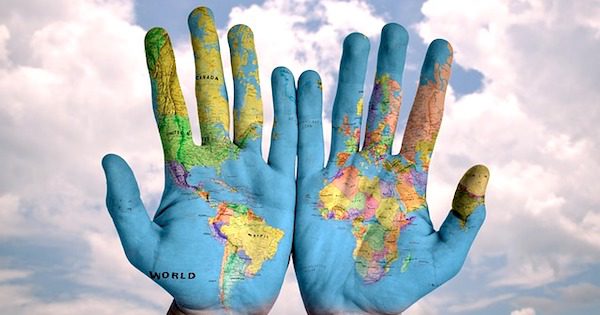
by Marc Schaus
For anyone currently following the secular movements happening all over North America and the world at large – we have some important new developments to talk about. There have now been many (read: many) secular milestones of 2017 thus far, all over the world, yet there’s actually a chance that several of them could be news to you. And if you’re surfing this side of Patheos, probably good news.
Depending on where you happen to get your daily dose of media, the world can seem to be drifting toward or away from secular values. One source can provide one running narrative for the changes we see, while multiple sources can offer us a bigger picture. At the far end of that spectrum would be the totality of news available to us and the biggest possible picture. Sounds good, right? The big, big picture? The trouble in getting that view is that with every passing week (every day, in fact), we have thousands of headlines from around the world and hundreds of research papers being published in academia from which to draw fresh information.
If you were to begin spending the time sifting through these various sources, you may be surprised at how much our incoming data can be directly relevant to the waxing or waning of secular values worldwide. Or, also related to secularism, which international social groups are potentially drifting from (or toward) traditional supernatural beliefs in general. Over time, the more international headlines and research one were to collect and analyze, the more a developing depiction of something roughly resembling the “state of secularism” would eventually emerge.
Admittedly, attempting to stay on top of developing stories worldwide regarding secularism and spiritual nonbelief can be a tough challenge. I mean, there are a lot of things happening out there every day, every hour, all across the world. From the rigorously fact-checked papers of scholarly work to the potentially sensationalist headlines of media outlets with an agenda to live up to – to the scattered Tweets of experts and amateurs alike traveling as fast as wireless signals can carry them. Even full-time authors need to drop in from time to time simply with collections of stats to discuss between larger commercial books. Indeed, secular author Phil Zuckerman’s piece in The Huffington Post last year on the growth of atheism and nonreligion around the world was precisely that.[1]
In beginning to analyze these world headlines, the first thing one will typically notice is that we need to separate the dictionary definition of total secularism into the various transitory stages in which we find it surfacing (or diminishing) around the world. Some countries strongly separate church and state, while others take mere baby steps toward or away from this arrangement. As well, and also within all of those places; the degree to which individual states potentially mix in the related concept of spiritual nonbelief. Then, adding to that mix, the particular context for the significance each piece of news may carry for the social group in question.
How does this all look, then? Well, for one, we can always look at the tried-and-true church attendance numbers of various faiths, for all of their various sects, throughout the various parts of the world in which they still happen to exist (wherever such numbers are reliably recorded, that is). Significant drops in attendance can certainly fuel a specific narrative regarding each church and church services in general. In countries like the United States, we can also look at the survey rates of claimed irreligiosity or the polled attitudes of what those who still believe actually believe. With that data, we could then chart something of a rough spiritual cartography for differences between the content-changes of beliefs for actual believers both now and in yesteryears. Is God still considered male? Is Genesis still literal? Is Hell still a physical place? And so on. These changes matter for our developing narrative.
Right now, barely passing the halfway point of 2017, we are certainly due for another care package of stats regarding secularism and nonreligion. National polling organizations in the US like Gallup and the Pew Research Center have already revealed striking numbers this year in favor of increasing secularism (and for the slow erosion of traditional supernaturalism in general). For example, were one to survey only the most recent Gallup polls on religion just in 2017 alone, one would find that support for Biblical Creationism is reportedly now at an all-time low,[2] that support for a literal translation of the Bible as the “Word of God” is at an all-time low[3] – and that while roughly half the American population still believes that religion can answer most of life’s problems,[4] this percentage has steadily declined from previous decades. Elsewhere, one would find that another recent national survey of college students found them less religiously-affiliated than ever.[5] Which makes sense, given that less than a year ago the Public Religion Research Institute had found that religious non-affiliation was actually the country’s largest religious group.[6] Or, even more incredibly and aside from mere non-affiliation, recent stats from secular research giant Will Gervais and co-author Maxine Najle estimated the outright atheist demographic at over 20% of the general US population.[7]
Keep in mind, however: a collection of polling stats from one country, from one set of organizations and in one calendar year should not be considered a statistical silver bullet. Refraining from undue sensationalism is rule number one in looking at such figures. Rather, we need to consider more stats, from more organizations in more and more countries. Each statistic merely reflects an individual data point to consider when making up the whole of our eventual narrative. So, yes, we ought to be careful about assuming too much influence in our developing state-of-the-union narrative from numbers in isolation.
As you’ll have guessed, secular trends are certainly not universal. After all, not every country is the United States. Weighing our data equally across the board (or at least attempting to) is crucial for getting an honest picture for our narrative. With that in mind, though, we also ought to be honest about the significance of the contrary data points that we may find. For example, finding data points of extremism in areas of the world already ripe with religiosity is easy. Examples of secularism and religious tolerance are far more significant in such areas. Likewise, in parts of the world historically dominated by religious indifference, cases of extreme values also ought to carry more significance. We can keep in mind that just as data points from one set of polls in one country in one year do not represent the entire secular story – so too do contrary data points not constitute a full stop in the development of the secular narrative.
One such piece of contrary evidence may actually be one’s own everyday experience, such as personally living in a region still fiercely religious. In that case, the data will not fit with your own empirical evidence of still being surrounded with highly supernatural beliefs, conservative believers, or both. You may happen to find yourself living in a pocket of the United States experiencing a kind of “religious revival” firsthand with a President determined to empower the country’s outspokenly religious attorney general to (and I’ll quote him) “issue guidance interpreting religious liberty protections in federal law.”[8]
Evidence like this can be an example of limited lens, however. Incredibly religious, old-school conservative communities exist all over the US and, as I know, here in Canada. Tolerance for nonbelievers has not always been high in such places. And yet, Pew recently reported back in February that US feelings of warmness and acceptance toward atheists have risen on their “thermometer” ratings system from cool to neutral.[9] In Canada, acceptance has jumped even higher: the Angus Reid Institute recently reported that an estimated 80% of Canadians would now vote for an atheist Prime Minister.[10] Also in the West, outside the limited lens of terror attacks, Western Europe has also been known for secular trends. Yet another recent study from the UK indicated that the religiously-unaffiliated on their national survey analysis sometimes formed even the majority of individuals polled.[11]
Now, outside of the regions we typically associate with increased secularism, this transition may sound more removed from everyday life. For personal experience, you may also find yourself living in a part of the world still dominated by traditional religiosity, almost entirely devoid of nonbelievers. Possibly even a region routinely beset with violent acts of religious extremism. Direct experience with either can make the claim of secular trends or jumps in nonreligion sound like a tasteless joke.
For example, take the recent headline in Pakistan of student Mashal Khan who, despite being seemingly well-liked by his many classmates, was falsely accused of posting Facebook messages deemed “disrespectful” to Islam – and was then surrounded by twenty other students who enacted the religious vigilantism of beating, stripping, taunting and eventually shooting him. Khan’s story was reported back in April of this year. Tragic headlines like these do little for a thesis of the world becoming more secular, or even more tolerant.
So we do have headlines of figures like Mashal Khan for a counter-narrative. But cases of more violent extremism are, as the name implies, extremes in the data. They also reflect a context relative to the environment in which they occurred. This is an environment where, even more recently in June, a Pakistani man was sentenced to death for a Facebook post deemed sufficiently blasphemous by police.[12] But historically, blasphemy laws and conservative courts have been typical here. We can contextualize that spin on the narrative by looking at (albeit smaller) historically rare instances of tolerance increasing. For example, an article published the very same month in Pakistan Today featured numerous rationales outlining how religious blasphemy laws are outdated, nonpeaceful and an affront to personal freedom.[13]
Lately, I see data points in religiously-inspired “blasphemy laws” being repealed in several other countries. Or, at the very least, laws bestowing specific benefits upon religious institutions being annulled or judicially defanged. Admittedly there are still plenty of developed countries which have blasphemy laws on the books, though most rarely, if ever, actively prosecute individuals who break those laws. For example, a country like Australia still has blasphemy laws in the criminal code which penalize any expression of self hostile to Christians – but for the locals themselves, these archaic zombie laws are meaningless and are merely waiting for their inevitable expulsion from the country’s legal system.
Actively repealing blasphemy laws internationally constitutes baby steps away from theological jurisprudence for a greater proportion of world countries. Cases now abound in which blasphemy laws (and other religiously-inspired legal frameworks) are finally becoming contentious issues in Western/European countries where they still exist. For example, up until late 2016[14] there was far less protection in America for nontheists fighting state-level constitutional laws weighing in on religiosity – as seven states do still bar nonbelievers from holding office (in some cases, from even being jurors). Here in Canada, legislation was recently introduced in June to eliminate blasphemy laws such as witchcraft and “blasphemous libel”.[15] Denmark also repealed its last 334-year-old blasphemy law earlier this year. Elsewhere, amendments have been proposed to end all of Ireland’s blasphemy laws after the tragicomedic arrest of British comedian Stephen Fry in which investigators were only able to find – no joke – one individual offended by Fry’s jokes in his blasphemy case.
Aside from the core legal code of any one country, we do have other, smaller secular legal developments which do not always splash in public debates. We have court battles raging throughout the US for the removal of religious symbolism from public spaces.[16] Or, here in Canada again, the newfound lack of scholastic enforcement for studying religious topics in Catholic schools in Ontario. Back in June of this year, students in Catholic schools were noted to soon become “religious exempt” in opting out of theological classes.[17] Points like these (there were many others to add) reflect yet more data points to make up the whole. None a silver-bullet – but all contributing toward the big, big picture.
What do you think? Is a weekly headline-drop and routine care package of fresh stats regarding secularism and nonreligion around the world something you’d like to see?
 Marc Schaus is a Canadian author documenting the rise of secularism and nonreligion around the world. Before writing his first book, Marc conducted R&D research in neuroscience studying neural networks in the brain – and has previously appeared in digital print discussing current events in the world of faith on The Huffington Post. His primary research focus now is how spiritual faith “works” in the human brain and why 21st century life is creating a cognitive advantage for secular, so-called ‘superstitionless’ belief systems. Find Marc’s new book on Amazon or via publisher – Post Secular: Science, Humanism and the Future of Faith.
Featured image via Pixabay
NOTES
[1] Zuckerman, P. (2016). Religion Declining, Secularism Surging. The Huffington Post (Blog).
[2] (2017). In US, Belief in Creationist View of Humans at New Low. Gallup.
[3] (2017). Record Few Americans Believe Bible Is Literal Word of God. Gallup.
[4] (2017). Majority in US Still Say Religion Can Answer Most Problems. Gallup.
[5] See the latest CIRP Freshman Survey from the Higher Education Research Institute (HERI) program here.
[6] Jones, R. Cox, D. Cooper, B. Lienesch, R. (2016). Exodus: Why Americans are Leaving Religion–and Why They’re Unlikely to Come Back. Public Religion Research Institute.
[7] Though they base this estimate on being roughly 99% certain the number is above 11%, with a slightly less accurate .8 probability of the number being above 20%. These numbers are still higher than previous estimates, however. Gervais, W.M. Najle, M.B. (2017). How Many Atheists Are There? Social Psychological and Personality Science.
[8] Referring to President Trump’s recent executive order “Promoting Free Speech and Religious Liberty”.
[9] (2017). Americans Express Increasingly Warm Feelings Toward Religious Groups. Pew Research Center.
[10] (2017). Could our national leader be: ______?. Angus Reid Institute.
[11] Clements, B. Gries, P. (2017). “Religious Nones” in the United Kingdom: How Atheists and Agnostics Think about Religion and Politics. APSA: Cambridge University Press. DOI:10.1017/S175504831600078X
[12] (2017). Pakistan: Death penalty for blasphemy on Facebook. Al Jazeera.
[13] Sardar, K. (2017). The blasphemy law is self-defeating. Pakistan Today. http://www.pakistantoday.com.pk/2017/06/14/the-blasphemy-law-is-self-defeating/
[14] Referring to then-President Obama’s December signing of an amendment to the Frank Wolf International Religious Freedom Act giving more protections to non-theistic beliefs.
[15] See Canada’s own government website for a description of legislation concerning “Cleaning up the Criminal Code”: http://www.canada.ca/en/department-justice/news/2017/06/cleaning_up_the_criminalcodeclarifyingandstrengtheningsexualassa.html
[16] The latest of several, we have the June 2017 decision from a Florida judge to side with an atheist group to remove the Christian cross from a public park. For a copy of the story, see:
Richardson, V. (2017). Atheist group scores win as judge reluctantly orders cross removed from Florida park. The Washington Times. http://www.washingtontimes.com/news/2017/jun/19/atheist-group-scores-win-as-judge-reluctantly-orde/
[17] (2017). Students can opt out of religious classes at Catholic school after complaint settled. The Star. https://www.thestar.com/yourtoronto/education/2017/06/13/students-can-opt-out-of-religious-classes-at-catholic-school-after-complaint-settled.html
Previous Post

July 19, 2017
See Me
Next Post

September 26, 2017 Scientism: It's a Thing!
Browse Our Archives
Select a Category Ableism Activism Addiction and Recovery Agnosticism Anti-intellectualism Arts Atheism Beauty Catholicism Charles Darwin Children China Christianity Church/State separation churchgoing communication compassionate humanism Creationism critical thinking Culture death disaster response doubt education Egypt Entertainment Environment ethics evolution Existence of God Exploration fear Foundation Beyond Belief Free speech God Health History Human rights humanism identity India Interfaith Islam labels Language LGBT Love Meaning Media Medicine Middle East misconceptions mixed belief marriage Moral argument Morality Myths Near-Death Experience Nonreligious parenting Parody Persecution complex Philosophy Poetry Politics prayer Psychology Rationality Religion religious atheists Religious privilege Republican Party Satire Schools science secular parenting Spirituality The Unpigeonholeables Uncategorized United Kingdom Wonder
Select a Month March 2021 August 2020 March 2020 January 2020 September 2019 July 2019 June 2019 April 2019 February 2019 January 2019 December 2018 November 2018 October 2018 September 2018 August 2018 July 2018 June 2018 May 2018 April 2018 March 2018 February 2018 January 2018 December 2017 November 2017 October 2017 September 2017 August 2017 July 2017 March 2017 February 2017 January 2017 December 2016 November 2016 October 2016 September 2016 August 2016 July 2016 June 2016 May 2016 April 2016 March 2016 February 2016 January 2016 December 2015 November 2015 October 2015 September 2015 June 2015 March 2015 February 2015 January 2015 December 2014 November 2014 October 2014 September 2014
Follow Us!
TAKE THE
Religious Wisdom Quiz
What’s the name of the garden where Adam and Eve lived?
Select your answer to see how you score.
Gethsemane Galilee Eden Nazareth
Related posts from The Secular Spectrum

Yasir Qadhi's Elitist Ruse to Conceal the Obscure...

How Religion Can Impact Mental Health in Good...

On Cognitive Dissonance and the Thought Patterns Behind...
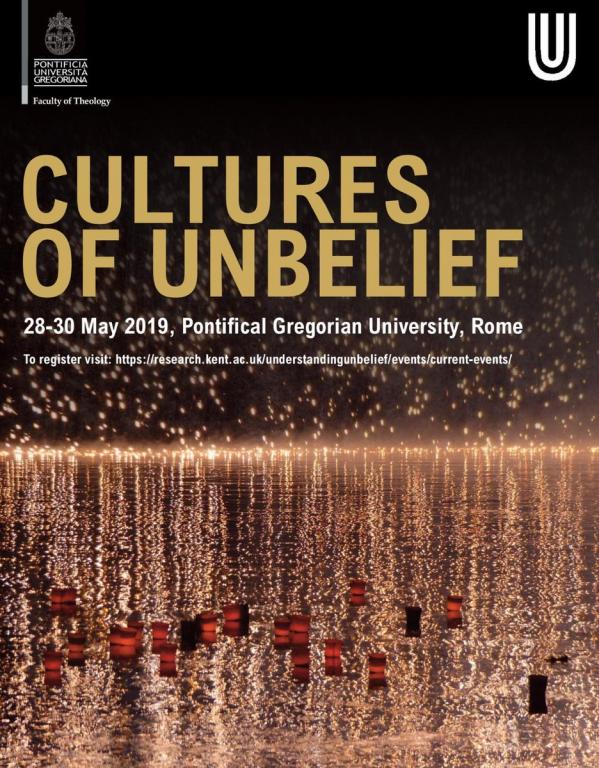
Understanding Cultures of Unbelief for Religious
TRENDING AT PATHEOS Nonreligious

Dethroning Jesus and Enthroning Yourself
Jesus Never Asked to Be Worshipped. He Asked to Be Understood. Christianity...

Why Most Christians are Really Paulians and Jobians
I Don't Care, But It Matters Let's get this out of the...

Essential Tips to Successfully Navigate the Selling Process
Selling a house can feel overwhelming, but it doesn’t have to be....

To Make Remote Work Effective, Think About Others
The COVID-19 pandemic forced many companies to rapidly transition to remote work....

Flexibility Is Key to Solving Problems of Tomorrow
The world of work is undergoing a dramatic transformation. The COVID-19 pandemic...
view all Nonreligious blogs
Ad-Free & Subscriber Log-In Subscription Support
- About Us
- 2026 Calendar
- Videos
- Podcasts
- Library of World Religions
- Faith In Media Tracker
- Advertise With Us
- Write for Us
- Privacy Policy
- Terms of Service
- Do Not Sell My Data
- Contact Us
- Radiant Digital
- Manage Newsletter Subscriptions
- Unsubscribe From Notifications
- Sitemap
Copyright 2008-2026, Patheos. All rights reserved.
Subscription Support Ad-Free & Subscriber Log-In
Follow Patheos