
BuddhistCatholicContemplativeEvangelicalGeneral ChristianHinduJewishLatter-day SaintMuslimNew VisionsProgressive Christian
Beliefs
- Buddhist
- Catholic
- Contemplative
- Evangelical
- General Christian
- Hindu
- Jewish
- Latter-day Saint
- More Voices
- Muslim
- New Visions
- Pagan
- Progressive Christian
Topics
- Religion News
- Food and Religion
- Sports and Religion
- Religious Art
- Religious Music and Entertainment
- Religious Events
- History and Religion
- Style and Religion
- Politics and Religion
- Women in Religion
- Recreation Outdoors and Religion
- Business Finance and Religion
- Careers Workplace and Religion
- Education and Religion
- Family Parenting and Religion
- Health Fitness and Religion
- Home and Religion
- Relationships and Religion
- Technology and Religion
- Travel and Religion
Columnists
- Buddhist Columnists
- Business Finance and Religion Columnists
- Careers Workplace and Religion Columnists
- Catholic Columnists
- Contemplative Columnists
- Education and Religion Columnists
- Evangelists Columnists
- Family Parenting and Religion Columnists
- General Christian Columnists
- Health Fitness and Religion Columnists
- Hindu Columnists
- History and Religion Columnists
- Home and Religion Columnists
- Jewish Columnists
- More Voices Columnists
- Latter Day Columnists
- Muslim Columnists
- New Visions Columnists
- Nonreligious Columnists
- Pagan Columnists
- Politics and Religion Columnists
- Progressive Columnists
- Recreation Outdoors and Religion Columnists
- Relationships and Religion Columnists
- Religion News Columnists
- Religious Art Columnists
- Religious Events Columnists
- Religious Music and Entertainment Columnists
- Sports and Religion Columnists
- Style and Religion Columnists
- Technology and Religion Columnists
- Travel and Religion Columnists
- Women in Religion Columnists
Resource Library
- 2026 Calendar
- Library of World Religions
- The 100 Most Holy Places on Earth
- Patheos Answers
- Podcasts
- Videos
- Faith Leaders Database
- Anglican Episcopalian
- Bahai
- Baptist
- Buddhism
- Christianity
- Confucianism
- Eastern Orthodoxy
- Hinduism
- Holiness and Pentecostal
- ISKCON
- Islam
- Judaism
- Lutheran
- Methodist
- The Church of Jesus Christ of Latter-day Saints
- New Age
- Paganism
- Presbytarian and Reformed
- Protestantism
- Religion Behind the Scenes
- Roman Catholic
- Scientology
- Shia Islam
- Sikhism
- Sufism
- Sunni Islam
- Taoism
- Zen
- See all religions
Research Tools
 Ad-Free & Subscriber Log-In Subscription Support
Follow Patheos 

- Trending:
- Advent
- |
- Forgiveness
- |
- Thanksgiving
- |
- Election
- |
- Seasonal Holidays
- |
- Marriage
 The Secular Spectrum
- Home
- Nonreligious
- See Me
See Me
Last updated on: July 19, 2017 at 8:01 pm by Fr. Carl Chudy
See Me 2017-07-19T20:01:32-05:00 Fr. Carl Chudy
Patheos Explore the world's faith through different perspectives on religion and spirituality! Patheos has the views of the prevalent religions and spiritualities of the world.
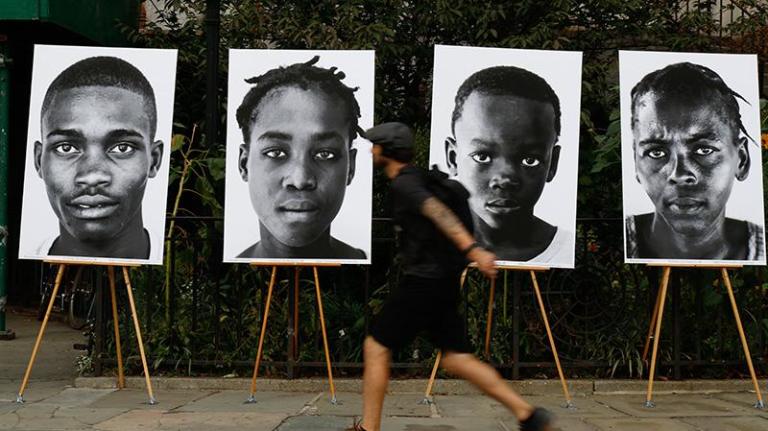
Let’s talk plaque psoriasis. If you don’t suffer from this devastating immune skin disease, you need to know that it raises scales of inflamed skin in unpredictable parts of the body with incessant irritability. An illness such as this, like any that changes our appearance in front of others, also changes how others may see us, or how we think others see us. A commercial for a prescriptive drug for this illness is called See Me. The script is simple: “See me, see me. Don’t stare at me. Psoriasis is just something I have, and not contagious.”
The image roll goes from men changing in a locker room leaving a locker buddy alone, to a woman sitting on a bus who notices that a newly boarded passenger decides not to sit next to her. As she passes her seat aisle, she looks up at her downcast. It’s not contagious, “see me!” Is this not a secret wish we often say to ourselves when we feel terribly misunderstood and unaccepted for who we really are. In our need to belong to the layers of community we live in, our identity, in the minds of others, is most often under scrutiny.
Dual Thinking
Splitting the world into two, good and evil, and “knowing” who belongs to which side is sometimes called dual thinking. It can look like this: sacred/secular, right/left, gay/straight, white/black, citizen/immigrant, Christian/anything else but, defines not only how we can understand our communities, but it is how we self- define ourselves. Which side am I on? Am I my sexual orientation? My faith or non-religious views? Does my religion or nonreligious view, my skin color, or politics define me so completely that there is nothing left or worth discovering? See me.
This is brought into sharp focus today in the midst of a populist movement raging through out country that probably began at the time of the great recession of 2008, that casts deep suspicions on our pluralism and diversity through a politics of fear and security. It has re-emphasized conflicts of faith and secularism, anti-immigration, Islamophobia, overt racism and more through a cocktail mix of conservative Christian theology and political ideology. The binary, dualistic world of certain Christian fundamentalists in alliance with ultraconservative ideology, and a passel of hate groups gained a much more public voice of power recently.
The Populist Divide
In his book, The Populist Explosion, John Judis says national populism is a political logic where ordinary people are conceived as an “noble assemblage” not bounded by class, and view their elite opponents as self-serving. They rally against those whom the elites coddle; in this case refugees, immigrants, those of color or minority religious affiliation, or no religious affiliation at all.
There has been a great run in social media of Trigg County Judge Hollis Alexander of Kentucky, who refused to officiate at a secular wedding. Government neutrality between non-religion and religion, as well as religion and religion, has been again been suspended as an important effect of this populism.
On a similar note, an interesting article from the Vatican sanctioned newspaper, La Civilta Catolica, speaks of the growing similarities between evangelical fundamentalism and some circles of the Catholic right in the USA. “One feature of this “ecumenism of hate” is a clear “Manichean” delineation between absolute good and evil, it said, and a confident sense of who belongs in which camp…However, “defending freedom of religion cannot be driven by a sense of “religion in total freedom” that challenges the secularity of the state.”
Among some Catholics in the United States, Steve Bannon’s view of a Muslim-Christian clash is more popular than the pope’s positive message of a creating a “culture of encounter.” Despite the pope’s insistence on a positive outlook on Muslims and their faith, Islamophobia finds a home in some American Catholic institutions and media outlets through their consistent negativity about Muslims. Robert Spencer, whose anti-Muslim activism alongside Pamela Geller has been well documented, has become a respected voice in some Catholic circles unfortunately.
Bridging the Divide
Certain conservative Christian and other religious circles that create this ‘”ecumenism of hate” are not representational of all religious efforts who seek quite the opposite (See us): bridges in the divide of our humanity across our cultural and social fragmentation. As there are Christians that are cause for great concern in this country, there are many more religious persons who see things quite differently, not a world of good and evil where people are accepted, and others are not, but a world where our diversity and pluralism as secular and religious believers are met to be honored. No religion is a monolith, including Atheism.
See me: Chris Stedman (Author of Faitheist), Kathleen Green (New director of the Yale Humanist Community), Greg Epstein (Humanist Chaplain at Harvard University), Dale McGowan (founding Director of Foundation Beyond Belief & my editor), Roy Speckhardt (Director of the American Humanist Association), Eboo Patel (Founder of Interfaith Youth Core), Heidi Hadsell (President of Hartford Seminary), Sami Aziz (Founder of Common Ground), John L. Esposito (Director of the Bridge Initiative at Georgetown University), Cardinal Cupich of Chicago (Head of the National Catholic Muslim Dialogue Initiative), and the many secular and religious women and men who work in interfaith organizations and secular humanist associations across the country who are bridge building leaders.
All of these people are leaders in interfaith and religious secular engagement. They understand that we are all much more diverse and complex than the two dimensional cookie cutters that others perceive us in, and that our complexity is an invitation of curiosity to know more. In that desire to know more four things stand out: People have the right to form their own identities; people have a right to express their identities, and people’s identities should be reasonably accommodated; and respect for someone else’s identity does not require you to agree with it, or accept it. (Patel)
Eboo Patel is author of the recently published, Interfaith Leadership: A Primer. The focus of this extraordinary guide is what he calls “civic interfaith leadership in a religiously diverse democracy.” It is a clarion call to muster this leadership for 21st century America. Why leadership? The author goes on to say that what leaders really do is to fan the flames of change. “Change is a function of leadership.” They help us all see each other for who we really are, and help us understand why that is so important.
____________________________________
 FR. CARL CHUDY is a Catholic priest and member of an international Catholic religious order very involved in interfaith and intercultural dialogue worldwide. He holds a Masters in Divinity from Catholic Theological Union in Chicago with a cross-cultural specialization. Carl is currently involved in further studies in interfaith and inter-secular dialogue at Hartford Seminary. He works with some national interfaith and secular associations, including the American Humanist Association.
Previous Post

March 10, 2017
There Is No Normal
Next Post

August 7, 2017 The International Secular
Browse Our Archives
Select a Category Ableism Activism Addiction and Recovery Agnosticism Anti-intellectualism Arts Atheism Beauty Catholicism Charles Darwin Children China Christianity Church/State separation churchgoing communication compassionate humanism Creationism critical thinking Culture death disaster response doubt education Egypt Entertainment Environment ethics evolution Existence of God Exploration fear Foundation Beyond Belief Free speech God Health History Human rights humanism identity India Interfaith Islam labels Language LGBT Love Meaning Media Medicine Middle East misconceptions mixed belief marriage Moral argument Morality Myths Near-Death Experience Nonreligious parenting Parody Persecution complex Philosophy Poetry Politics prayer Psychology Rationality Religion religious atheists Religious privilege Republican Party Satire Schools science secular parenting Spirituality The Unpigeonholeables Uncategorized United Kingdom Wonder
Select a Month March 2021 August 2020 March 2020 January 2020 September 2019 July 2019 June 2019 April 2019 February 2019 January 2019 December 2018 November 2018 October 2018 September 2018 August 2018 July 2018 June 2018 May 2018 April 2018 March 2018 February 2018 January 2018 December 2017 November 2017 October 2017 September 2017 August 2017 July 2017 March 2017 February 2017 January 2017 December 2016 November 2016 October 2016 September 2016 August 2016 July 2016 June 2016 May 2016 April 2016 March 2016 February 2016 January 2016 December 2015 November 2015 October 2015 September 2015 June 2015 March 2015 February 2015 January 2015 December 2014 November 2014 October 2014 September 2014
Follow Us!
TAKE THE
Religious Wisdom Quiz
In the Parable of the Wedding Banquet, who accepts the invitation?
Select your answer to see how you score.
Unexpected guests Priests Only the king Nobles
Related posts from The Secular Spectrum
Yasir Qadhi's Elitist Ruse to Conceal the Obscure...
Understanding Cultures of Unbelief for Religious

Trump Admin's Prioritization of Religion Over Health Care...

Why Do We Question Vegetarianism When It's a...
TRENDING AT PATHEOS Nonreligious

Dethroning Jesus and Enthroning Yourself
Jesus Never Asked to Be Worshipped. He Asked to Be Understood. Christianity...

Why Most Christians are Really Paulians and Jobians
I Don't Care, But It Matters Let's get this out of the...

Essential Tips to Successfully Navigate the Selling Process
Selling a house can feel overwhelming, but it doesn’t have to be....

To Make Remote Work Effective, Think About Others
The COVID-19 pandemic forced many companies to rapidly transition to remote work....

Flexibility Is Key to Solving Problems of Tomorrow
The world of work is undergoing a dramatic transformation. The COVID-19 pandemic...
view all Nonreligious blogs
Ad-Free & Subscriber Log-In Subscription Support
- About Us
- 2026 Calendar
- Videos
- Podcasts
- Library of World Religions
- Faith In Media Tracker
- Advertise With Us
- Write for Us
- Privacy Policy
- Terms of Service
- Do Not Sell My Data
- Contact Us
- Radiant Digital
- Manage Newsletter Subscriptions
- Unsubscribe From Notifications
- Sitemap
Copyright 2008-2026, Patheos, part of the Radiant Digital network of media brands. All rights reserved.
Subscription Support Ad-Free & Subscriber Log-In
Follow Patheos