
BuddhistCatholicContemplativeEvangelicalGeneral ChristianHinduJewishLatter-day SaintMuslimNew VisionsProgressive Christian
Beliefs
- Buddhist
- Catholic
- Contemplative
- Evangelical
- General Christian
- Hindu
- Jewish
- Latter-day Saint
- More Voices
- Muslim
- New Visions
- Pagan
- Progressive Christian
Topics
- Religion News
- Food and Religion
- Sports and Religion
- Religious Art
- Religious Music and Entertainment
- Religious Events
- History and Religion
- Style and Religion
- Politics and Religion
- Women in Religion
- Recreation Outdoors and Religion
- Business Finance and Religion
- Careers Workplace and Religion
- Education and Religion
- Family Parenting and Religion
- Health Fitness and Religion
- Home and Religion
- Relationships and Religion
- Technology and Religion
- Travel and Religion
Columnists
- Buddhist Columnists
- Business Finance and Religion Columnists
- Careers Workplace and Religion Columnists
- Catholic Columnists
- Contemplative Columnists
- Education and Religion Columnists
- Evangelists Columnists
- Family Parenting and Religion Columnists
- General Christian Columnists
- Health Fitness and Religion Columnists
- Hindu Columnists
- History and Religion Columnists
- Home and Religion Columnists
- Jewish Columnists
- More Voices Columnists
- Latter Day Columnists
- Muslim Columnists
- New Visions Columnists
- Nonreligious Columnists
- Pagan Columnists
- Politics and Religion Columnists
- Progressive Columnists
- Recreation Outdoors and Religion Columnists
- Relationships and Religion Columnists
- Religion News Columnists
- Religious Art Columnists
- Religious Events Columnists
- Religious Music and Entertainment Columnists
- Sports and Religion Columnists
- Style and Religion Columnists
- Technology and Religion Columnists
- Travel and Religion Columnists
- Women in Religion Columnists
Resource Library
- 2026 Calendar
- Library of World Religions
- The 100 Most Holy Places on Earth
- Patheos Answers
- Podcasts
- Videos
- Faith Leaders Database
- Anglican Episcopalian
- Bahai
- Baptist
- Buddhism
- Christianity
- Confucianism
- Eastern Orthodoxy
- Hinduism
- Holiness and Pentecostal
- ISKCON
- Islam
- Judaism
- Lutheran
- Methodist
- The Church of Jesus Christ of Latter-day Saints
- New Age
- Paganism
- Presbytarian and Reformed
- Protestantism
- Religion Behind the Scenes
- Roman Catholic
- Scientology
- Shia Islam
- Sikhism
- Sufism
- Sunni Islam
- Taoism
- Zen
- See all religions
Research Tools
 Ad-Free & Subscriber Log-In Subscription Support
Ad-Free & Subscriber Log-In Subscription Support
Follow Patheos 

- Trending:
- Forgiveness
- |
- Marriage
- |
- Consciousness
- |
- Death Penalty
- |
- Election
- |
- Halloween
 The Secular Spectrum
- Home
- Nonreligious
- Fear and Anger Over the Ohio State Knife Attack
Fear and Anger Over the Ohio State Knife Attack
Last updated on: December 6, 2016 at 5:19 pm by Gleb Tsipursky
Fear and Anger Over the Ohio State Knife Attack 2016-12-06T17:19:30-05:00 Gleb Tsipursky
Patheos Explore the world's faith through different perspectives on religion and spirituality! Patheos has the views of the prevalent religions and spiritualities of the world.
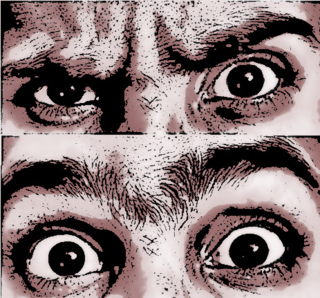
Source: Muteb Gz/Flickr
I felt a stab of cold fear when I first learned about the knife attack at Ohio State, the university where I teach, on November 28. Safely at home when the attack occurred, I saw the faces of my students and colleagues flash before my eyes. Were any of them in harm’s way? As reports from friends and colleagues trickled in, I was glad to see none of them harmed, although my research assistant was right nearby and got a scare.
After the initial fear passed, I felt a growing heat of anger. Who did this and why? I checked news websites obsessively.
I learned that the attacker was a student at Ohio State, Abdul Razak Ali Artan, a Somali Muslim. He rammed his car into a crowd on campus, and then ran out waving a knife and stabbing people, before being shot and by an Ohio State police officer.
As I learned this, my thoughts immediately turned to the possibility of terrorism. The situation pattern-matched the attack at my alma mater UNC-Chapel Hill in 2006, where a former student rammed his car into a crowd of students to – in his words – “avenge the deaths of Muslims worldwide.” This was part of a broader pattern of using cars to ram people, mostly perpetrated by Muslim extremists.
However, being an expert on how our brain’s faulty wiring leads us to make bad decisions, I knew that such pattern-matching is a dangerous trap. We evolved in the savannah environment, where we had to make snap judgments about threats from predators, and our brain is well-adapted for that setting. It is poorly adapted to modern conditions, where threats are more complex and ambiguous, and we have much more time to investigate and determine the actual circumstances. Fortunately, learning about where our intuitions may lead us astray helps us make wise decisions about how to proceed.
Our natural instinct is to extend the fear and anger we experience from the specific individual to all individuals sharing his background, Muslim and Somali. This is a thinking error known as the horns effect, where we irrationally extend a negative perception of one member of a group to the whole group.
Some politicians already fell into this trap. For instance, Representative Peter King (R-LI) stated that “there have been significant terror problems with Somali immigrants over the past several years in the United States.” Yet according to johnstonarchive.net, in 2015 there were no Somali perpetrators of terrorism in the US and in 2016 only one. This is hardly “significant terror problems.”
Other politicians started criticizing Muslims. Thus, the State Treasurer of Ohio Josh Mandel Tweeted: “Looks like Radical Islamic terror came to my alma mater today.” Yet we have no evidence to support Mandel’s claims. What we know is that Artan expressed fear of Islamophobia in an August 2016 interview with the Ohio Student newspaper. He also expressed anger in a Facebook post right before the attack, saying “I am sick and tired of seeing my fellow Muslim brothers and sisters being killed and tortured EVERYWHERE… I can’t take it anymore.” These statements are not characteristic of “Radical Islamic terror,” but reflect fear and anger over the treatment of Muslims.
Reactions like King’s and Mandel’s are natural, since they flow out of how our brains are wired, but they are not rational, as they do not reflect the reality of the situation and do not help us achieve our goals – being safe from terrorism. Instead, such expressions of fear and anger feed into the Muslim anxiety syndrome sweeping the United States and increase the irrational stigma toward Muslims and Somalis, harming relations with these communities.
Such worsening of relations makes it less likely for members of these communities to cooperate with the authorities in investigations of potential terrorism. Moreover, as we can see from Artan’s words, his experience of fear and anger at the hands of Americans served as important factors for pushing him into his senseless violence.
In this case, our brain’s natural patterns make us less safe, and lead to an escalating cycle of violence. We need to recognize that fear and anger we may experience toward those of Muslim and Somali background is irrational, and instead work against these instincts by being extra friendly – much more than we intuitively feel – toward these folks. Only by intentionally overcoming these instincts and working against them can we break the cycle of violence and grow safer!
__________________________________________________________________
Want to make sure I keep writing? Support me on Patreon!
Bio: Dr. Gleb Tsipursky is an author, speaker, consultant, coach, scholar, and social entrepreneur specializing in science-based strategies for effective decision-making, goal achievement, emotional and social intelligence, meaning and purpose, and altruism – for more information or to hire him, see his website, GlebTsipursky.com. He runs a nonprofit that helps people use science-based strategies to make effective decisions and reach their goals, so as to build an altruistic and flourishing world, Intentional Insights. He also serves as a tenure-track professor at Ohio State in the History of Behavioral Science and the Decision Sciences Collaborative, and published over 25 peer-reviewed articles. A best-selling author, he wrote Find Your Purpose Using Science among other books, and regular contributes to prominent venues, such as Time, The Conversation, Salon, The Huffington Post, and elsewhere. He appears regularly on network TV, such as affiliates of ABC and Fox, radio stations such as NPR and Sunny 95, as well as internet-only media such as podcasts and videocasts.
Consider signing up to the Intentional Insights newsletter; volunteering; donating; buying merchandise. Get in touch with him at gleb (at) intentionalinsights (dot) org.
Previous Post

December 1, 2016
Don’t Be Fooled This Giving Season: Give Wisely!
Next Post

December 14, 2016 Foundation Beyond Belief Needs Your Help!
Browse Our Archives
Select a Category Ableism Activism Addiction and Recovery Agnosticism Anti-intellectualism Arts Atheism Beauty Catholicism Charles Darwin Children China Christianity Church/State separation churchgoing communication compassionate humanism Creationism critical thinking Culture death disaster response doubt education Egypt Entertainment Environment ethics evolution Existence of God Exploration fear Foundation Beyond Belief Free speech God Health History Human rights humanism identity India Interfaith Islam labels Language LGBT Love Meaning Media Medicine Middle East misconceptions mixed belief marriage Moral argument Morality Myths Near-Death Experience Nonreligious parenting Parody Persecution complex Philosophy Poetry Politics prayer Psychology Rationality Religion religious atheists Religious privilege Republican Party Satire Schools science secular parenting Spirituality The Unpigeonholeables Uncategorized United Kingdom Wonder
Select a Month March 2021 August 2020 March 2020 January 2020 September 2019 July 2019 June 2019 April 2019 February 2019 January 2019 December 2018 November 2018 October 2018 September 2018 August 2018 July 2018 June 2018 May 2018 April 2018 March 2018 February 2018 January 2018 December 2017 November 2017 October 2017 September 2017 August 2017 July 2017 March 2017 February 2017 January 2017 December 2016 November 2016 October 2016 September 2016 August 2016 July 2016 June 2016 May 2016 April 2016 March 2016 February 2016 January 2016 December 2015 November 2015 October 2015 September 2015 June 2015 March 2015 February 2015 January 2015 December 2014 November 2014 October 2014 September 2014
Follow Us!
TAKE THE
Religious Wisdom Quiz
What did John see coming down from heaven in Revelation 21?
Select your answer to see how you score.
A chariot of fire The four horsemen The New Jerusalem The Ark of the Covenant
Related posts from The Secular Spectrum

Yasir Qadhi's Elitist Ruse to Conceal the Obscure...

Despite "Pro-Life" Claims, Stem Cell Therapy Has Very...

How Religion Can Impact Mental Health in Good...

On Cognitive Dissonance and the Thought Patterns Behind...
TRENDING AT PATHEOS Nonreligious

Dethroning Jesus and Enthroning Yourself
Jesus Never Asked to Be Worshipped. He Asked to Be Understood. Christianity...

Why Most Christians are Really Paulians and Jobians
I Don't Care, But It Matters Let's get this out of the...

Essential Tips to Successfully Navigate the Selling Process
Selling a house can feel overwhelming, but it doesn’t have to be....

To Make Remote Work Effective, Think About Others
The COVID-19 pandemic forced many companies to rapidly transition to remote work....

Flexibility Is Key to Solving Problems of Tomorrow
The world of work is undergoing a dramatic transformation. The COVID-19 pandemic...
view all Nonreligious blogs
Ad-Free & Subscriber Log-In Subscription Support
- About Us
- 2026 Calendar
- Videos
- Podcasts
- Library of World Religions
- Faith In Media Tracker
- Advertise With Us
- Write for Us
- Privacy Policy
- Terms of Service
- Do Not Sell My Data
- Contact Us
- Radiant Digital
- Manage Newsletter Subscriptions
- Unsubscribe From Notifications
- Sitemap
Copyright 2008-2026, Patheos. All rights reserved.
Subscription Support Ad-Free & Subscriber Log-In
Follow Patheos