
BuddhistCatholicContemplativeEvangelicalGeneral ChristianHinduJewishLatter-day SaintMuslimNew VisionsProgressive Christian
Beliefs
- Buddhist
- Catholic
- Contemplative
- Evangelical
- General Christian
- Hindu
- Jewish
- Latter-day Saint
- More Voices
- Muslim
- New Visions
- Pagan
- Progressive Christian
Topics
- Religion News
- Food and Religion
- Sports and Religion
- Religious Art
- Religious Music and Entertainment
- Religious Events
- History and Religion
- Style and Religion
- Politics and Religion
- Women in Religion
- Recreation Outdoors and Religion
- Business Finance and Religion
- Careers Workplace and Religion
- Education and Religion
- Family Parenting and Religion
- Health Fitness and Religion
- Home and Religion
- Relationships and Religion
- Technology and Religion
- Travel and Religion
Columnists
- Buddhist Columnists
- Business Finance and Religion Columnists
- Careers Workplace and Religion Columnists
- Catholic Columnists
- Contemplative Columnists
- Education and Religion Columnists
- Evangelists Columnists
- Family Parenting and Religion Columnists
- General Christian Columnists
- Health Fitness and Religion Columnists
- Hindu Columnists
- History and Religion Columnists
- Home and Religion Columnists
- Jewish Columnists
- More Voices Columnists
- Latter Day Columnists
- Muslim Columnists
- New Visions Columnists
- Nonreligious Columnists
- Pagan Columnists
- Politics and Religion Columnists
- Progressive Columnists
- Recreation Outdoors and Religion Columnists
- Relationships and Religion Columnists
- Religion News Columnists
- Religious Art Columnists
- Religious Events Columnists
- Religious Music and Entertainment Columnists
- Sports and Religion Columnists
- Style and Religion Columnists
- Technology and Religion Columnists
- Travel and Religion Columnists
- Women in Religion Columnists
Resource Library
- 2026 Calendar
- Library of World Religions
- The 100 Most Holy Places on Earth
- Patheos Answers
- Podcasts
- Videos
- Faith Leaders Database
- Anglican Episcopalian
- Bahai
- Baptist
- Buddhism
- Christianity
- Confucianism
- Eastern Orthodoxy
- Hinduism
- Holiness and Pentecostal
- ISKCON
- Islam
- Judaism
- Lutheran
- Methodist
- The Church of Jesus Christ of Latter-day Saints
- New Age
- Paganism
- Presbytarian and Reformed
- Protestantism
- Religion Behind the Scenes
- Roman Catholic
- Scientology
- Shia Islam
- Sikhism
- Sufism
- Sunni Islam
- Taoism
- Zen
- See all religions
Research Tools
 Ad-Free & Subscriber Log-In Subscription Support
Ad-Free & Subscriber Log-In Subscription Support
Follow Patheos 

- Trending:
- Forgiveness
- |
- Marriage
- |
- Consciousness
- |
- Death Penalty
- |
- Election
- |
- Halloween
 The Secular Spectrum
- Home
- Nonreligious
- Why the Pundits Are Wrong About Clinton Dominating the Debate
Why the Pundits Are Wrong About Clinton Dominating the Debate
Last updated on: September 29, 2016 at 7:36 pm by Gleb Tsipursky
Why the Pundits Are Wrong About Clinton Dominating the Debate 2016-09-29T19:36:18-05:00 Gleb Tsipursky
Patheos Explore the world's faith through different perspectives on religion and spirituality! Patheos has the views of the prevalent religions and spiritualities of the world.
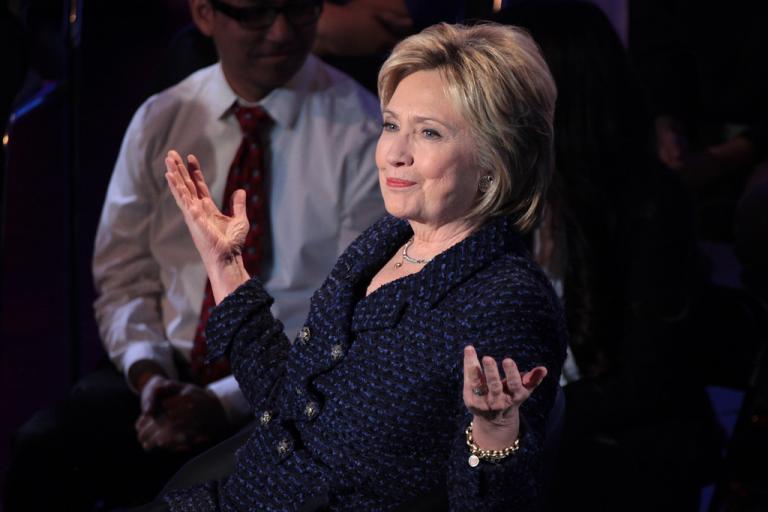
The vast majority of pundits declared Hillary Clinton the decisive winner of this week’s debate.
This includes both conservative and liberal pundits. For instance, Douglas Schoen of Fox News wrote: “She was ready for all of his quips with a litany of detail that may have bored the viewer at points, but showed why she is winning on qualifications, experience and temperament in every poll.”
However, most post-debate online polls are breaking for Donald Trump as the winner. These polls are not rigorous, in that anyone can vote in them multiple times, regardless of whether they would vote in the actual election. Still, some of these polls have hundreds of thousands of votes. They provide significant evidence of enthusiasm for Trump’s debate performance and suggest that the pundits are wrong about Clinton dominating the debate.
So what explains this difference between the polls and the pundits?
As an expert on the role of emotional intelligence in public life, including in debates, I have long observed that mainstream media commentators don’t give sufficient credit to the role of emotions in shaping public perceptions.
Understanding the impact of emotions in politics is key for making an accurate prediction of how debates will impact voting.
Pundits vs. the public
Pundits tend to focus on the substance of the debate by analyzing the content of each candidate’s statements. Schoen’s quote above is typical of what pundits value: policy details that express appropriate qualifications and experience.
This focus on content fails to fully reflect what actually influences the viewing public – body language and tone of voice.
The first-ever presidential debate, between Richard Nixon and John F. Kennedy, was apparently seen as a tie by those who listened on the radio. Yet, those who watched on television and got to compare the energetic and healthy-looking Kennedy with the pale, shifty-eyed Nixon saw the former as the winner.
In the presidential debates most Americans focus more on nonverbal cues of body language, and remember them after the debate is over, compared to the content of what is said, according to David Givens, director of the Center for Nonverbal Studies, a private nonprofit research center. These nonverbals are of fundamental importance to communication, and they often mean more than what is actually being said.
This is something that traditional pundits fail to give due credit. This failure can be seen in previous debates in which Trump participated for the Republican presidential nomination. In most cases, pundits declared that Trump was defeated by his competitors, but he won in post-debate online polling and ended up with the nomination.
Research on emotional intelligence provides key clues for why Trump ended up on top. Emotional intelligence is the ability to perceive and influence the emotions of others. While we perceive ourselves to be rational beings, in reality studies show that our emotions dominate most of our mental processes.

Donald Trump during the first presidential debate. REUTERS/Lucas Jackson
Emotional intelligence is especially important for leaders due to the phenomenon of emotional contagion – the ability to “infect” large numbers of people with your emotions. Research shows that emotionally intelligent leaders are especially skilled at emotional contagion. This is a fundamental component of what scholars call charisma, the whole complement of factors that enables a leader to influence others through the leader’s personality.
In my work on the role of emotional intelligence in public life, I have long highlighted Trump’s strength in playing to the emotions of his audience. He has succeeded in being perceived by the public as more honest and authentic, despite fact checkers saying otherwise.
Emotional intelligence and the first debate
Charisma has long been a weak area for Clinton. She has struggled to overcome the persistent impression that she’s inauthentic, cold and distant, which she says emerged from her learning as a young woman to control her emotions. In this debate, Clinton needed to demonstrate a better sense of emotional connection to the audience to win over important demographics, such as Bernie Sanders supporters.
Despite her command of policy and substance, Clinton did not in my view succeed in conveying strong emotions during the debate. For instance, in the part of the debate about the economy, the most important issue for U.S. voters, she conveyed a clear plan, with strong evidence backing it up. In her debate preparation she likely worked on injecting emotions into her presentation through telling stories, a classical way of conveying emotions. She shared some powerful stories of people suffering from the poor economy and how her policies would help them out.
But her nonverbal cues – body language and tone of voice – showed lack of emotional expression. For instance, in this moment in the debate, Clinton talks about helping people who are struggling to balance family and work, and experience various stresses.
Yet her tone and body language do not change to reflect these emotional topics. She did not gesture or change her voice to express empathy with those who struggle and have stress. She looks the same as she does a little later or earlier when talking about policy details.
Nonverbal cues of body language and tone are especially important in cases where the content of the verbal statement is at odds with the nonverbal cues. Emotional stories told with flat affect are unlikely to work for convincing the undecided and Bernie supporters that Clinton truly cares and is actually fighting for them. Training in conveying emotions through body language and tone of voice could help Clinton in the next debate and public speaking in general.
By contrast, Trump looked like he truly cared about the economy. Right out of the gate, he spoke to the emotions of voters by expressing concerns about jobs leaving the U.S. Despite the lack of detail and his difficulty responding to questions about how he would solve this problem, his body language was angry and authoritative.
He looked like a strong protector to those voters, especially working-class ones who are suffering economically. He may have even appealed to those who are doing fine, but believe that the economy is headed in the wrong direction.
Trump also harshly criticized Clinton on trade deals such as NAFTA, calling it the “worst deal ever” in a strong and aggressive manner. Clinton’s calm response that Trump is “inaccurate,” without good nonverbals indicating her authentic belief that he was lying, is an example of how Trump got the best of Clinton on the nonverbals.
Overall, I would argue that while Clinton won the debate on content and substance, Trump won on style and charisma. In fact, I believe the 2 to 4 percent gain for Clinton predicted by FiveThirtyEight and other pundits in the next week will fail to materialize. Until they start taking emotional engagement into consideration, pundits will continue to be wrong about debate outcomes, and we should question their initial predictions.

Next Post

October 4, 2016 Patheos Atheist Writers Mourn the Loss of Niki Massey
Browse Our Archives
Select a Category Ableism Activism Addiction and Recovery Agnosticism Anti-intellectualism Arts Atheism Beauty Catholicism Charles Darwin Children China Christianity Church/State separation churchgoing communication compassionate humanism Creationism critical thinking Culture death disaster response doubt education Egypt Entertainment Environment ethics evolution Existence of God Exploration fear Foundation Beyond Belief Free speech God Health History Human rights humanism identity India Interfaith Islam labels Language LGBT Love Meaning Media Medicine Middle East misconceptions mixed belief marriage Moral argument Morality Myths Near-Death Experience Nonreligious parenting Parody Persecution complex Philosophy Poetry Politics prayer Psychology Rationality Religion religious atheists Religious privilege Republican Party Satire Schools science secular parenting Spirituality The Unpigeonholeables Uncategorized United Kingdom Wonder
Select a Month March 2021 August 2020 March 2020 January 2020 September 2019 July 2019 June 2019 April 2019 February 2019 January 2019 December 2018 November 2018 October 2018 September 2018 August 2018 July 2018 June 2018 May 2018 April 2018 March 2018 February 2018 January 2018 December 2017 November 2017 October 2017 September 2017 August 2017 July 2017 March 2017 February 2017 January 2017 December 2016 November 2016 October 2016 September 2016 August 2016 July 2016 June 2016 May 2016 April 2016 March 2016 February 2016 January 2016 December 2015 November 2015 October 2015 September 2015 June 2015 March 2015 February 2015 January 2015 December 2014 November 2014 October 2014 September 2014
Follow Us!
TAKE THE
Religious Wisdom Quiz
Who said, "All things work together for good"?
Select your answer to see how you score.
James Peter Paul John
Related posts from The Secular Spectrum

Yasir Qadhi's Elitist Ruse to Conceal the Obscure...

Despite "Pro-Life" Claims, Stem Cell Therapy Has Very...

How Religion Can Impact Mental Health in Good...

On Cognitive Dissonance and the Thought Patterns Behind...
TRENDING AT PATHEOS Nonreligious

Dethroning Jesus and Enthroning Yourself
Jesus Never Asked to Be Worshipped. He Asked to Be Understood. Christianity...

Why Most Christians are Really Paulians and Jobians
I Don't Care, But It Matters Let's get this out of the...

Essential Tips to Successfully Navigate the Selling Process
Selling a house can feel overwhelming, but it doesn’t have to be....

To Make Remote Work Effective, Think About Others
The COVID-19 pandemic forced many companies to rapidly transition to remote work....

Flexibility Is Key to Solving Problems of Tomorrow
The world of work is undergoing a dramatic transformation. The COVID-19 pandemic...
view all Nonreligious blogs
Ad-Free & Subscriber Log-In Subscription Support
- About Us
- 2026 Calendar
- Videos
- Podcasts
- Library of World Religions
- Faith In Media Tracker
- Advertise With Us
- Write for Us
- Privacy Policy
- Terms of Service
- Do Not Sell My Data
- Contact Us
- Radiant Digital
- Manage Newsletter Subscriptions
- Unsubscribe From Notifications
- Sitemap
Copyright 2008-2026, Patheos. All rights reserved.
Subscription Support Ad-Free & Subscriber Log-In
Follow Patheos