
BuddhistCatholicContemplativeEvangelicalGeneral ChristianHinduJewishLatter-day SaintMuslimNew VisionsProgressive Christian
Beliefs
- Buddhist
- Catholic
- Contemplative
- Evangelical
- General Christian
- Hindu
- Jewish
- Latter-day Saint
- More Voices
- Muslim
- New Visions
- Pagan
- Progressive Christian
Topics
- Religion News
- Food and Religion
- Sports and Religion
- Religious Art
- Religious Music and Entertainment
- Religious Events
- History and Religion
- Style and Religion
- Politics and Religion
- Women in Religion
- Recreation Outdoors and Religion
- Business Finance and Religion
- Careers Workplace and Religion
- Education and Religion
- Family Parenting and Religion
- Health Fitness and Religion
- Home and Religion
- Relationships and Religion
- Technology and Religion
- Travel and Religion
Columnists
- Buddhist Columnists
- Business Finance and Religion Columnists
- Careers Workplace and Religion Columnists
- Catholic Columnists
- Contemplative Columnists
- Education and Religion Columnists
- Evangelists Columnists
- Family Parenting and Religion Columnists
- General Christian Columnists
- Health Fitness and Religion Columnists
- Hindu Columnists
- History and Religion Columnists
- Home and Religion Columnists
- Jewish Columnists
- More Voices Columnists
- Latter Day Columnists
- Muslim Columnists
- New Visions Columnists
- Nonreligious Columnists
- Pagan Columnists
- Politics and Religion Columnists
- Progressive Columnists
- Recreation Outdoors and Religion Columnists
- Relationships and Religion Columnists
- Religion News Columnists
- Religious Art Columnists
- Religious Events Columnists
- Religious Music and Entertainment Columnists
- Sports and Religion Columnists
- Style and Religion Columnists
- Technology and Religion Columnists
- Travel and Religion Columnists
- Women in Religion Columnists
Resource Library
- 2026 Calendar
- Library of World Religions
- The 100 Most Holy Places on Earth
- Patheos Answers
- Podcasts
- Videos
- Faith Leaders Database
- Anglican Episcopalian
- Bahai
- Baptist
- Buddhism
- Christianity
- Confucianism
- Eastern Orthodoxy
- Hinduism
- Holiness and Pentecostal
- ISKCON
- Islam
- Judaism
- Lutheran
- Methodist
- The Church of Jesus Christ of Latter-day Saints
- New Age
- Paganism
- Presbytarian and Reformed
- Protestantism
- Religion Behind the Scenes
- Roman Catholic
- Scientology
- Shia Islam
- Sikhism
- Sufism
- Sunni Islam
- Taoism
- Zen
- See all religions
Research Tools
 Ad-Free & Subscriber Log-In Subscription Support
Follow Patheos 

- Trending:
- Advent
- |
- Forgiveness
- |
- Thanksgiving
- |
- Election
- |
- Seasonal Holidays
- |
- Marriage
 The Secular Spectrum
- Home
- Nonreligious
- Dissecting the GOP Platform with a Secular Scalpel
Dissecting the GOP Platform with a Secular Scalpel
Last updated on: August 11, 2016 at 2:55 pm by Guest Contributor
Dissecting the GOP Platform with a Secular Scalpel 2016-08-11T14:55:07-05:00 Guest Contributor
Patheos Explore the world's faith through different perspectives on religion and spirituality! Patheos has the views of the prevalent religions and spiritualities of the world.

Section 5 (“Great American Families, Education, Healthcare, and Criminal Justice”)
The religious references were pretty light in the third and fourth sections, but they get right back into it in the fifth. On page 31, it says:
Strong families, depending upon God and one another, advance the cause of liberty by lessening the need for government in their daily lives. Conversely, as we have learned over the last five decades, the loss of faith and family life leads to greater dependence upon government.
To me, this seems like a clear statement that, according to the Republican Party, someone who doesn’t have faith or God in their family is just not as good a citizen. In general, the implication of all these religious references seem to be that “real Americans believe in God.” If you don’t agree with that statement, then I don’t know how you’d be able to reconcile being in a party which feels the need to so persistently reinforce that sentiment in its platform.
A couple paragraphs later, the platform transitions from extolling the virtues of the nuclear family to attacking the rights of gay people to marry. It had previously mentioned that “the cornerstone of the family is natural marriage, the union of one man and one woman,” but at the bottom of page 31, it gets a lot more explicit, saying, “The data and the facts lead to an inescapable conclusion: Every child deserves a married mom and dad.” And further down, “Our laws and our government’s regulations should recognize marriage as the union of one man and one woman and actively promote married family life as the basis of a stable and prosperous society.”
I’ve been restraining myself from editorializing about what I perceive to be hyperbole or rhetorical trickery used in this platform. The point of this review is the disconnect between the Republican Party and atheism, not “why I personally am not a Republican.” Even so, I think there is a point worth making through this statement — a little bait-and-switch maneuver they pulled.
In the previous paragraph, the claim was made that “the overwhelming evidence of experience, social science, and common sense” indicates that “children raised in a two-parent household” tend to have a higher quality of life across various parameters. I agree that the conclusion which was stated there does seem to be accurate to the scientific consensus. But notice the difference between the two paragraphs; in one, they talk about “two-parent households,” and in the next, they talk about “a married mom and dad.” It’s changed from two parents to two straight parents.
And that, once they’ve established the facade of evidence-based thinking, is where they depart from the “overwhelming evidence of social science.” From what I’ve seen, the scientific consensus on this issue is that children do better in two-parent homes, but it doesn’t make any meaningful difference whether the parents are gay or straight. Multiple meta-analyses (analyses of multiple studies on a specific subject) have reached the same conclusion.
I think it’s interesting then, that while opposition to gay marriage does seem to be overwhelmingly religious in nature and motive, this platform attempts to make their reasoning seem purely secular and scientific, but has to rely on cheap rhetorical trickery (by starting out with a statement that’s actually true, and then changing to something more specific but less true after the original statement is accepted) to do so.
At the end of the same paragraph (at the top of page 32), the platform restates the Party’s intent that religious people should be granted special privilege to discriminate:
We oppose government discrimination against businesses or entities which decline to sell items or services to individuals for activities that go against their religious views about such activities.
I find it so morbidly ironic that these people call it “government discrimination” when the government is trying to prevent religious people from actively practicing discrimination. Oh, the projection.
In the next paragraph, it says:
Private entities which facilitate adoptions enrich our communities. We support measures such as the First Amendment Defense Act to ensure these entities do not face government discrimination because of their views on marriage and family.
Translation: we support adoption agencies that don’t let gay people adopt. And this is right after they say that “Families formed or enlarged by adoption strengthen our communities and ennoble our nation.” So, basically, what their statement comes down to is that they support entities which prevent gay people from strengthening our communities and ennobling our nation. Does anybody else see a problem with this?
At the bottom of page 32, it says:
To protect religious liberty we will ensure that faith-based institutions, especially those that are vital parts of underserved neighborhoods, do not face discrimination by government.
On page 33 is the first mention of the Bible in this platform:
A good understanding of the Bible being indispensable for the development of an educated citizenry, we encourage state legislatures to offer the Bible in a literature curriculum as an elective in America’s high schools.
While it’s easy enough to disagree with the claim that anything about the Bible is “indispensible,” I’m actually kind of impressed that it took this long for there to be a statement which advocates an elevated status for Christianity, instead of just religion in general. Of course, on the face of it, it doesn’t seem so bad, because it only says that the Bible should be taught as an elective literature course. But then, if you give them an inch, history has shown that some of them will take a mile.
In 2000, People For the American Way Foundation published a scathing expose, The Good Book Taught Wrong: Bible History Classes in Florida Public Schools. The PFAW Foundation investigation found that “Bible History” classes were often being taught more like Christian Sunday School classes from a sectarian, Protestant perspective. Bible stories were treated as literal history.
The resulting report, Reading, Writing & Religion II: Texas Public School Bible Courses in 2011-2012 (a follow-up to an earlier study), found that most Texas Bible courses crossed the constitutional line by promoting certain religious perspectives over others and religion over non-religion. While many problems appeared to be missteps by well-intentioned and otherwise well-trained teachers, others reflected overt sectarian agendas.
Note the dissonance in the homepage of the National Council on Bible Curriculum in Public Schools. It seems very insistent that “the program is concerned with education rather than indoctrination of students,” and yet, it goes on to say, “The world is watching to see if we will be motivated to impact our culture, to deal with the moral crises in our society, and reclaim our families and children.” How would simply teaching the Bible as literature accomplish those objectives?
The site also links to a World Net Daily article by Chuck Norris, who serves on the board of that organization. In the article, he outlined changes to a Texas bill proposed by the Texas Freedom Network. To me, they seem like common sense; things like teachers having appropriate academic qualifications, scholarly reviewed textbooks, preventing “the use of Bible classes to evangelize or promote personal religious perspectives,” having education agencies monitor these courses, and even simply allowing the districts the option to not offer the courses.
These measures seem quite in line with the intention to dispassionately teach the Bible as a part of our literary history, rather than as an evangelistic propaganda tool. And yet, Norris opposes these measures as “unnecessary changes.” Why would a board member of the NCBCPS be against a measure to prevent “the use of Bible classes to evangelize or promote personal religious perspectives,” unless that was exactly what they wanted to accomplish?
There’s another “God-given” reference on page 34, but that’s no big deal compared to what is said in the last paragraph of that page:
We renew our call for replacing “family planning” programs for teens with sexual risk avoidance education that sets abstinence until marriage as the responsible and respected standard of behavior. That approach — the only one always effective against premarital pregnancy and sexually-transmitted disease — empowers teens to achieve optimal health outcomes. We oppose school-based clinics that provide referral or counseling for abortion and contraception…
This is another area which seems like it could only be fueled by the religion-based belief that extramarital sex is sinful, because it is completely contrary to the evidence. It has been shown time and time again that states with abstinence-only programs have worse outcomes in terms of teen pregnancy and STDs. I did a Google search of “atheists for abstinence-only education,” and all I found were examples of atheists complaining about how dumb it is, so I feel pretty justified in counting this as a religious issue, even though the religious connection isn’t explicitly avowed in the platform.
At the top of page 35, Title IX of the Education Amendments of 1972 is quoted, and then it says,
That same provision of law is now being used by bureaucrats — and by the current President of the United States — to impose a social and cultural revolution upon the American people by wrongly redefining sex discrimination to include sexual orientation or other categories. Their agenda has nothing to do with individual rights; it has everything to do with power. They are determined to reshape our schools — and our entire society — to fit the mold of an ideology alien to America’s history and traditions.
I think I’ve pretty much said everything applicable to this statement in response to previous statements which oppose attempts to prevent religious people from freely practicing discrimination. I will say, though, that I find it deeply troubling how Republicans think that wanting everyone to be treated equally is “an ideology alien to America’s history and traditions.” I sure hope they’re wrong about that.
Another shot at abortion is taken on page 36:
Through Obamacare, the current Administration has promoted the notion of abortion as healthcare. We, however, affirm the dignity of women by protecting the sanctity of human life. Numerous studies have shown that abortion endangers the health and wellbeing of women, and we stand firmly against it.
I’m really not gonna get into the tit-for-tat of replying to that claim by producing studies on the other side which contradicts or criticizes it (and then arguing pointlessly about which studies are more credible), but suffice it to say that the commonly-repeated claim that abortion causes increased risk of things like suicide or breast cancer is by no means a medical consensus. This is another example of Republicans hiding behind the façade of science, while embracing positions that seem to ultimately have much more religious underpinnings.
There are more mentions of religious issue on page 37, in the subsection, “Protecting Individual Conscience in Healthcare.” Since it’s fairly short, I’m just gonna include the whole thing here.
America’s healthcare professionals should not be forced to choose between following their faith and practicing their profession. We respect the rights of conscience of healthcare professionals, doctors, nurses, pharmacists, and organizations, especially the faith-based groups which provide a major portion of care for the nation and the needy. We support the ability of all organizations to provide, purchase, or enroll in healthcare coverage consistent with their religious, moral, or ethical convictions without discrimination or penalty.
It’s not completely clear, but it seems like this is probably a reference to healthcare professionals who refuse to provide care or services for LGBT patients. There’s that irony again, of the wording here referring to it as discrimination when religious people are themselves not permitted to practice discrimination.
We support the right of parents to determine the proper medical treatment and therapy for their minor children.
Again, they’re sure not forthcoming with specifics, but this could be in reference to parents who refuse to let their children receive any medical treatment for religious reasons. In some ways, I admire the party’s consistency, for defending religious liberty even when it clearly is only harmful. But then again, it’s not terribly consistent that they’re opposed to killing a fetus when it’s too early in the germination process for it to have any thoughts or feelings or meet any metrics of what we consider humanity, but they’re completely cool with children who are already alive (with thoughts and feelings, etc.) being abandoned to die from a treatable medical condition, provided the parents have “sincerely-held” religious reasons for doing so. Personally, I cannot abide a political party who thinks the religious freedom of parents is more important than the life of a child.
(It came to my attention from someone else’s comments about this line that it’s more likely referring to religious parents sending their children to “gay conversion” therapy. While that’s not generally as life-threatening as parents refusing any medical treatment for their children whatsoever, it still seems like something that has only negative value, if you don’t first accept the premise that being gay is sinful, which seems to be a purely religious premise.)
They immediately follow this statement with another batch of anti-abortion stances.
We support the right of parents to consent to medical treatment for their minor children and urge enactment of legislation that would require parental consent for their daughter to be transported across state lines for abortion. Providers should not be permitted to unilaterally withhold services because a patient’s life is deemed not worth living. American taxpayers should not be forced to fund abortion. As Democrats abandon this four decade-old bipartisan consensus, we call for codification of the Hyde Amendment and its application across the government, including Obamacare. We call for a permanent ban on federal funding and subsidies for abortion and healthcare plans that include abortion coverage.
At the bottom of the page, it comments on medical research using stem cells:
We call for expanded support for the stem cell research that now offers the greatest hope for many afflictions — through adult stem cells, umbilical cord blood, and cells reprogrammed into pluripotent stem cells — without the destruction of embryonic human life.
This appears to be another area where their religious objection to abortion is being hidden behind the façade of scientific-sounding language. While there have been some recent breakthroughs in making adult stem cells more useful then they previously had been, I see no indication that adult stem cells have eclipsed embryonic cells as being “the greatest hope” for advancements in medical research. The paragraph goes on to say more about using embryos for medical research, and then suddenly switches gears to the FDA approval of a new medication:
We urge a ban on human cloning for research or reproduction, and a ban on the creation of, or experimentation on, human embryos for research. We applaud Congress’ ban on the FDA approval of research involving three-parent embryos. We believe the FDA’s approval of Mifeprex, a dangerous abortifacient formerly known as RU-486, threatens women’s health, as does the agency’s endorsement of over-the-counter sales of powerful contraceptives without a physician’s recommendation. We support cutting federal and state funding for entities that endanger women’s health by performing abortions in a manner inconsistent with federal or state law.
I never heard of Mifeprex before today, so I don’t really have any strong opinions on whether it might be harmful or not, but I do think this is an area where the platform benefits from not having to cite any sources. They can just claim it’s dangerous, and not bother with those petty concerns of whether the claim has any evidence or not. At a glance, I suspect their opposition to an abortifacient has more to do with their opposition to abortion in general, than a sincere belief that this particular drug is dangerous to women.
On the bottom of page 39, it mentions “faith-based institutions with proven track records of rehabilitation” as a worthy outlet for first-time, nonviolent offenders.
On page 40, a new facet of the Republican opposition to sex is broached:
Pornography, with its harmful effects, especially on children, has become a public health crisis that is destroying the lives of millions. We encourage states to continue to fight this public menace and pledge our commitment to children’s safety and well-being.
I’m not ready to say that opposition to pornography has purely religious root causes, but I do think the puritanical belief that all sex (or even sexuality) outside of marriage is sinful can certainly contribute to the issue, so I thought it was worth including for completeness’ sake.
Previous Post

August 5, 2016
Humanism and “The Other”
Next Post

August 13, 2016 Your Feelings Are Not Your Fault (Mostly)
Browse Our Archives
Select a Category Ableism Activism Addiction and Recovery Agnosticism Anti-intellectualism Arts Atheism Beauty Catholicism Charles Darwin Children China Christianity Church/State separation churchgoing communication compassionate humanism Creationism critical thinking Culture death disaster response doubt education Egypt Entertainment Environment ethics evolution Existence of God Exploration fear Foundation Beyond Belief Free speech God Health History Human rights humanism identity India Interfaith Islam labels Language LGBT Love Meaning Media Medicine Middle East misconceptions mixed belief marriage Moral argument Morality Myths Near-Death Experience Nonreligious parenting Parody Persecution complex Philosophy Poetry Politics prayer Psychology Rationality Religion religious atheists Religious privilege Republican Party Satire Schools science secular parenting Spirituality The Unpigeonholeables Uncategorized United Kingdom Wonder
Select a Month March 2021 August 2020 March 2020 January 2020 September 2019 July 2019 June 2019 April 2019 February 2019 January 2019 December 2018 November 2018 October 2018 September 2018 August 2018 July 2018 June 2018 May 2018 April 2018 March 2018 February 2018 January 2018 December 2017 November 2017 October 2017 September 2017 August 2017 July 2017 March 2017 February 2017 January 2017 December 2016 November 2016 October 2016 September 2016 August 2016 July 2016 June 2016 May 2016 April 2016 March 2016 February 2016 January 2016 December 2015 November 2015 October 2015 September 2015 June 2015 March 2015 February 2015 January 2015 December 2014 November 2014 October 2014 September 2014
Follow Us!
TAKE THE
Religious Wisdom Quiz
What does Revelation say will wipe away every tear from their eyes?
Select your answer to see how you score.
An angel The tree of life The river of life God himself
Related posts from The Secular Spectrum

Yasir Qadhi's Elitist Ruse to Conceal the Obscure...

How Religion Can Impact Mental Health in Good...
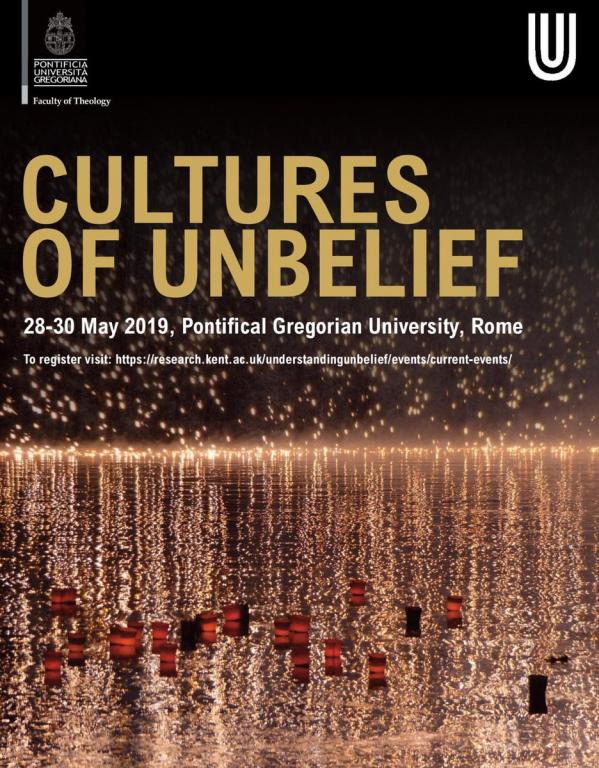
Understanding Cultures of Unbelief for Religious

Trump Admin's Prioritization of Religion Over Health Care...
TRENDING AT PATHEOS Nonreligious

Dethroning Jesus and Enthroning Yourself
Jesus Never Asked to Be Worshipped. He Asked to Be Understood. Christianity...

Why Most Christians are Really Paulians and Jobians
I Don't Care, But It Matters Let's get this out of the...

Essential Tips to Successfully Navigate the Selling Process
Selling a house can feel overwhelming, but it doesn’t have to be....

To Make Remote Work Effective, Think About Others
The COVID-19 pandemic forced many companies to rapidly transition to remote work....

Flexibility Is Key to Solving Problems of Tomorrow
The world of work is undergoing a dramatic transformation. The COVID-19 pandemic...
view all Nonreligious blogs
Ad-Free & Subscriber Log-In Subscription Support
- About Us
- 2026 Calendar
- Videos
- Podcasts
- Library of World Religions
- Faith In Media Tracker
- Advertise With Us
- Write for Us
- Privacy Policy
- Terms of Service
- Do Not Sell My Data
- Contact Us
- Radiant Digital
- Manage Newsletter Subscriptions
- Unsubscribe From Notifications
- Sitemap
Copyright 2008-2026, Patheos, part of the Radiant Digital network of media brands. All rights reserved.
Subscription Support Ad-Free & Subscriber Log-In
Follow Patheos