
BuddhistCatholicContemplativeEvangelicalGeneral ChristianHinduJewishLatter-day SaintMuslimNew VisionsProgressive Christian
Beliefs
- Buddhist
- Catholic
- Contemplative
- Evangelical
- General Christian
- Hindu
- Jewish
- Latter-day Saint
- More Voices
- Muslim
- New Visions
- Pagan
- Progressive Christian
Topics
- Religion News
- Food and Religion
- Sports and Religion
- Religious Art
- Religious Music and Entertainment
- Religious Events
- History and Religion
- Style and Religion
- Politics and Religion
- Women in Religion
- Recreation Outdoors and Religion
- Business Finance and Religion
- Careers Workplace and Religion
- Education and Religion
- Family Parenting and Religion
- Health Fitness and Religion
- Home and Religion
- Relationships and Religion
- Technology and Religion
- Travel and Religion
Columnists
- Buddhist Columnists
- Business Finance and Religion Columnists
- Careers Workplace and Religion Columnists
- Catholic Columnists
- Contemplative Columnists
- Education and Religion Columnists
- Evangelists Columnists
- Family Parenting and Religion Columnists
- General Christian Columnists
- Health Fitness and Religion Columnists
- Hindu Columnists
- History and Religion Columnists
- Home and Religion Columnists
- Jewish Columnists
- More Voices Columnists
- Latter Day Columnists
- Muslim Columnists
- New Visions Columnists
- Nonreligious Columnists
- Pagan Columnists
- Politics and Religion Columnists
- Progressive Columnists
- Recreation Outdoors and Religion Columnists
- Relationships and Religion Columnists
- Religion News Columnists
- Religious Art Columnists
- Religious Events Columnists
- Religious Music and Entertainment Columnists
- Sports and Religion Columnists
- Style and Religion Columnists
- Technology and Religion Columnists
- Travel and Religion Columnists
- Women in Religion Columnists
Resource Library
- 2026 Calendar
- Library of World Religions
- The 100 Most Holy Places on Earth
- Patheos Answers
- Podcasts
- Videos
- Faith Leaders Database
- Anglican Episcopalian
- Bahai
- Baptist
- Buddhism
- Christianity
- Confucianism
- Eastern Orthodoxy
- Hinduism
- Holiness and Pentecostal
- ISKCON
- Islam
- Judaism
- Lutheran
- Methodist
- The Church of Jesus Christ of Latter-day Saints
- New Age
- Paganism
- Presbytarian and Reformed
- Protestantism
- Religion Behind the Scenes
- Roman Catholic
- Scientology
- Shia Islam
- Sikhism
- Sufism
- Sunni Islam
- Taoism
- Zen
- See all religions
Research Tools
 Ad-Free & Subscriber Log-In Subscription Support
Ad-Free & Subscriber Log-In Subscription Support
Follow Patheos 

- Trending:
- Forgiveness
- |
- Marriage
- |
- Consciousness
- |
- Death Penalty
- |
- Election
- |
- Halloween
 The Secular Spectrum
- Home
- Nonreligious
- Quit Telling Addicts They Need God to Recover!
Quit Telling Addicts They Need God to Recover!
Last updated on: April 19, 2016 at 8:17 am by Guest Contributor
Quit Telling Addicts They Need God to Recover! 2016-04-19T08:17:03-05:00 Guest Contributor
Patheos Explore the world's faith through different perspectives on religion and spirituality! Patheos has the views of the prevalent religions and spiritualities of the world.
By Liz Greene –
Spiritually-based treatment programs assist thousands of addicts every year in finding the motivation necessary for recovery. These programs are founded on the idea that addiction is as much of a spiritual problem as a physical one — and that a closer relationship with God can end dependence on drugs and alcohol. While religion continues to be a popular path of recovery for countless men and women, it also turns some addicts away.
History of Faith in Recovery
From it stems all forms of spiritual disease, for we have been not only mentally and physically ill, we have been spiritually sick. — Bill Wilson
When we think of faith and recovery, the first thing that often comes to mind is Alcoholics Anonymous. AA started in 1935 as an offshoot of the Oxford Group, a non-denominational Christian movement dedicated to living “god controlled” lives. Founders Bill Wilson and Bob Smith were the first to propose a 12-step formula for mutual aid groups, basing them on the idea that lack of religiosity is what leads people into addiction.
The 12 steps are as follows:
- We admitted we were powerless over alcohol—that our lives had become unmanageable.
- Came to believe that a Power greater than ourselves could restore us to sanity.
- Made a decision to turn our will and our lives over to the care of God as we understood Him.
- Made a searching and fearless moral inventory of ourselves.
- Admitted to God, to ourselves, and to another human being the exact nature of our wrongs.
- Were entirely ready to have God remove all these defects of character.
- Humbly asked Him to remove our shortcomings.
- Made a list of all persons we had harmed, and became willing to make amends to them all.
- Made direct amends to such people wherever possible, except when to do so would injure them or others.
- Continued to take personal inventory and when we were wrong promptly admitted it.
- Sought through prayer and meditation to improve our conscious contact with God, as we understood Him, praying only for knowledge of His will for us and the power to carry that out.
- Having had a spiritual awakening as the result of these Steps, we tried to carry this message to alcoholics, and to practice these principles in all our affairs.
The purpose of the steps is to encourage individuals to submit to a higher power so that it can become a force for good in their lives. The original 12 steps were unequivocally patterned after a Christian God — a bias which continued to appear in subsequent programs, such as Narcotics Anonymous.
Religion’s Role in Recovery
The capacity in which faith plays a role in substance abuse treatment ranges from nominal to extensive. Some programs have passive religious principles which only come to the forefront occasionally. Their main focus tends to be on traditional psychological approaches to treatment, such as behavior management and other therapies. Other programs incorporate faith and religion into every part of the treatment process — sometimes going as far as to reject the involvement of doctors or any kind of medication, believing that prayer, spiritual strengthening and a deep-seated relationship with God can cure addiction.
However, many programs today take a more broad spiritual approach in order to attract a wider range of the population. The difference between religious and spiritual groups can often seem slightly unclear. Although both involve a belief in a higher power, religion is dedication to a particular doctrine while spirituality is more a personal form of religion. Recovery centers often interchange the words spiritual and holistic, but the programs are essentially the same.
Why We Need a Change
Instead of telling people they are powerless, wouldn’t it make more sense to empower them and build on their strengths? Why not tell them they are stronger than alcohol and they can choose not to let it control them? — Harriet Hall
The notion of addiction as a spiritual disease is not universally accepted. This has led to Alcoholics Anonymous attempting to sidestep the religion issue, stating the term “higher power” doesn’t, by definition, refer to the Judeo-Christian God. However, the implication still exists, and for many, that’s enough to discourage participation.
The first thing drug rehabilitation programs must do is make people feel comfortable. This increases the likelihood of the patient opening up, making lasting changes, coming to terms with their addiction, and understanding how to keep destructive impulses and cravings at bay. A recent study published by the National Center for Biotechnology Information found that religious overtones can have a marked effect on participation in group therapy.
- 20% of respondents said they felt uncomfortable in AA.
- 18% reported feeling that AA was too negative.
- 15% of respondents were uncomfortable with the God and religious aspects of AA.
- 3% said they wouldn’t attend another meeting.
At its heart, the 12-step program asks addicts to surrender their will to a higher power and ask God to remove defects of character. This negates the fundamental right of all humans to make choices and shape who they are through their values, decisions, and actions. It removes responsibility, free will, and power. What good is there in telling someone who is at the end of their tether that they must relinquish any control they had left on their life?
Furthermore, many 12-step programs warn patients that if they fail to practice the steps, they’ll relapse and die. Addicts don’t think they can be treated if they don’t follow the program, and end up ceasing to believe they can be helped. It’s a self-fulfilling prophecy.
While there’s no one-size-fits-all solution to addiction treatment, the most important thing we can do for addicts is to make them feel comfortable, welcome, and (most importantly) empowered. By continuing to insert religion and spirituality into recovery programs, we’re doing a great disservice to those who are asking us for help.
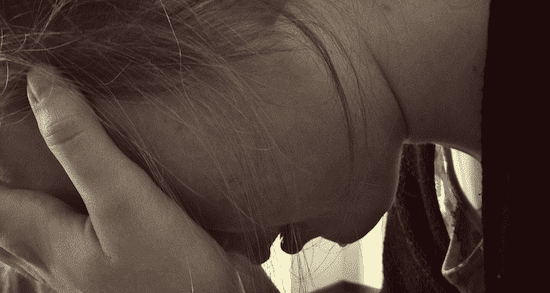
Image via Pixabay
 LIZ GREENE is a makeup enthusiast, rabid feminist, and an anxiety-ridden realist from the beautiful city of trees, Boise, Idaho. You can follow her latest misadventures on her blog, Instant Lo.
Previous Post

April 18, 2016
Humanists Rally Support for Victims of Devastating Ecuador Quake
Next Post

April 19, 2016 Your Fate is in Your Hands (except when it isn't)
Browse Our Archives
Select a Category Ableism Activism Addiction and Recovery Agnosticism Anti-intellectualism Arts Atheism Beauty Catholicism Charles Darwin Children China Christianity Church/State separation churchgoing communication compassionate humanism Creationism critical thinking Culture death disaster response doubt education Egypt Entertainment Environment ethics evolution Existence of God Exploration fear Foundation Beyond Belief Free speech God Health History Human rights humanism identity India Interfaith Islam labels Language LGBT Love Meaning Media Medicine Middle East misconceptions mixed belief marriage Moral argument Morality Myths Near-Death Experience Nonreligious parenting Parody Persecution complex Philosophy Poetry Politics prayer Psychology Rationality Religion religious atheists Religious privilege Republican Party Satire Schools science secular parenting Spirituality The Unpigeonholeables Uncategorized United Kingdom Wonder
Select a Month March 2021 August 2020 March 2020 January 2020 September 2019 July 2019 June 2019 April 2019 February 2019 January 2019 December 2018 November 2018 October 2018 September 2018 August 2018 July 2018 June 2018 May 2018 April 2018 March 2018 February 2018 January 2018 December 2017 November 2017 October 2017 September 2017 August 2017 July 2017 March 2017 February 2017 January 2017 December 2016 November 2016 October 2016 September 2016 August 2016 July 2016 June 2016 May 2016 April 2016 March 2016 February 2016 January 2016 December 2015 November 2015 October 2015 September 2015 June 2015 March 2015 February 2015 January 2015 December 2014 November 2014 October 2014 September 2014
Follow Us!
TAKE THE
Religious Wisdom Quiz
What was the name of the King who made Esther his queen?
Select your answer to see how you score.
Hezekiah Ahasuerus Jeremiah Barnabas
Related posts from The Secular Spectrum

Despite "Pro-Life" Claims, Stem Cell Therapy Has Very...

How Religion Can Impact Mental Health in Good...

Trump Admin's Prioritization of Religion Over Health Care...

Christians Are Divided on the Legalization of Cannabis....
TRENDING AT PATHEOS Nonreligious

Dethroning Jesus and Enthroning Yourself
Jesus Never Asked to Be Worshipped. He Asked to Be Understood. Christianity...

Why Most Christians are Really Paulians and Jobians
I Don't Care, But It Matters Let's get this out of the...

Essential Tips to Successfully Navigate the Selling Process
Selling a house can feel overwhelming, but it doesn’t have to be....

To Make Remote Work Effective, Think About Others
The COVID-19 pandemic forced many companies to rapidly transition to remote work....

Flexibility Is Key to Solving Problems of Tomorrow
The world of work is undergoing a dramatic transformation. The COVID-19 pandemic...
view all Nonreligious blogs
Ad-Free & Subscriber Log-In Subscription Support
- About Us
- 2026 Calendar
- Videos
- Podcasts
- Library of World Religions
- Faith In Media Tracker
- Advertise With Us
- Write for Us
- Privacy Policy
- Terms of Service
- Do Not Sell My Data
- Contact Us
- Radiant Digital
- Manage Newsletter Subscriptions
- Unsubscribe From Notifications
- Sitemap
Copyright 2008-2026, Patheos. All rights reserved.
Subscription Support Ad-Free & Subscriber Log-In
Follow Patheos