
BuddhistCatholicContemplativeEvangelicalGeneral ChristianHinduJewishLatter-day SaintMuslimNew VisionsProgressive Christian
Beliefs
- Buddhist
- Catholic
- Contemplative
- Evangelical
- General Christian
- Hindu
- Jewish
- Latter-day Saint
- More Voices
- Muslim
- New Visions
- Pagan
- Progressive Christian
Topics
- Religion News
- Food and Religion
- Sports and Religion
- Religious Art
- Religious Music and Entertainment
- Religious Events
- History and Religion
- Style and Religion
- Politics and Religion
- Women in Religion
- Recreation Outdoors and Religion
- Business Finance and Religion
- Careers Workplace and Religion
- Education and Religion
- Family Parenting and Religion
- Health Fitness and Religion
- Home and Religion
- Relationships and Religion
- Technology and Religion
- Travel and Religion
Columnists
- Buddhist Columnists
- Business Finance and Religion Columnists
- Careers Workplace and Religion Columnists
- Catholic Columnists
- Contemplative Columnists
- Education and Religion Columnists
- Evangelists Columnists
- Family Parenting and Religion Columnists
- General Christian Columnists
- Health Fitness and Religion Columnists
- Hindu Columnists
- History and Religion Columnists
- Home and Religion Columnists
- Jewish Columnists
- More Voices Columnists
- Latter Day Columnists
- Muslim Columnists
- New Visions Columnists
- Nonreligious Columnists
- Pagan Columnists
- Politics and Religion Columnists
- Progressive Columnists
- Recreation Outdoors and Religion Columnists
- Relationships and Religion Columnists
- Religion News Columnists
- Religious Art Columnists
- Religious Events Columnists
- Religious Music and Entertainment Columnists
- Sports and Religion Columnists
- Style and Religion Columnists
- Technology and Religion Columnists
- Travel and Religion Columnists
- Women in Religion Columnists
Resource Library
- 2026 Calendar
- Library of World Religions
- The 100 Most Holy Places on Earth
- Patheos Answers
- Podcasts
- Videos
- Faith Leaders Database
- Anglican Episcopalian
- Bahai
- Baptist
- Buddhism
- Christianity
- Confucianism
- Eastern Orthodoxy
- Hinduism
- Holiness and Pentecostal
- ISKCON
- Islam
- Judaism
- Lutheran
- Methodist
- The Church of Jesus Christ of Latter-day Saints
- New Age
- Paganism
- Presbytarian and Reformed
- Protestantism
- Religion Behind the Scenes
- Roman Catholic
- Scientology
- Shia Islam
- Sikhism
- Sufism
- Sunni Islam
- Taoism
- Zen
- See all religions
Research Tools
 Ad-Free & Subscriber Log-In Subscription Support
Ad-Free & Subscriber Log-In Subscription Support
Follow Patheos 

- Trending:
- Forgiveness
- |
- Marriage
- |
- Consciousness
- |
- Death Penalty
- |
- Election
- |
- Halloween
 The Secular Spectrum
- Home
- Nonreligious
- The Abuse of Use and Disuse
The Abuse of Use and Disuse
Last updated on: April 7, 2016 at 4:26 pm by Stephanie Savage
The Abuse of Use and Disuse 2016-04-07T16:26:27-05:00 Stephanie Savage
Patheos Explore the world's faith through different perspectives on religion and spirituality! Patheos has the views of the prevalent religions and spiritualities of the world.
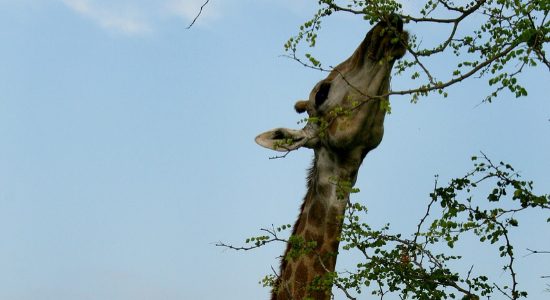
Several years ago, Keith bought a set of very old encyclopedias. I can certainly understand the impulse to unload an obsolete and space-hogging source of information in this Age of Google. Still, these 1934 encyclopedias are fossils from a bygone era, embedded not in amber, but on fragile paper.
One night when I was still a habitual night owl, I thumbed through the tiny volumes of Funk and Wagnalls New Standard Encyclopedia, with its delightful Art Deco gold design embossed upon a stately hunter-green binding. The encyclopedia was “By an Editorial Staff of Leading Experts and Specialists, with the Help of the Leading Scholars, Scientists, and Men of Affairs of the English-Speaking World.”
Yummy.
Diving into the yellowing pages, with their miniscule print, I looked up evolution. What did these Leading Experts and Men of Affairs think of that? My jaw dropped as I learned that Lamarckism had triumphed over Darwinian natural selection as the primary mechanism of evolution. Huh?
I reread the passage to make sure I wasn’t misinterpreting it.
The Lamarckian theory of use and disuse has become prominent, because certain Darwinian assumptions have been disproved.
Reading on, I found that the problems in explaining how acquired characteristics could affect the germ plasm had been lessened by recent studies in hormones.
Thus, I proceeded down the rabbit hole, as the hours ticked into the wee hours of the morning. Using a more modern form of information-gathering—the internet—I learned about the so-called eclipse of Darwinism.
Though evolution was almost universally accepted, the theory of natural selection had fallen out of favor in the decades around the turn of the century. The reasons are complex, but they began with a seemingly intractable problem that Darwin himself grappled with.
When On the Origin of Species was first published in 1859, there was no known mechanism of heredity. The only systematic theory of evolution had been proposed by Jean-Baptiste Lamarck in 1809, but it had been largely discredited.
How the evolutionary worm had turned.
Well, not exactly. In the first volume of “Origin,” Darwin had allowed for Lamarckian use and disuse in as one mechanism of heredity, albeit far less important than natural selection. But in subsequent editions, as the scientific arguments against natural selection piled up, Darwin relied increasingly on Lamarckian concepts of heredity.
Under then-current concepts of blended heredity, novel traits would be quickly swamped within the general population of a species. This argument continued even after the rediscovery of Mendel in 1900.
Ironically, Darwin’s library contained a book with a summary of Mendel’s now-famous breeding experiments with peas. But the relevant pages were apparently unread.
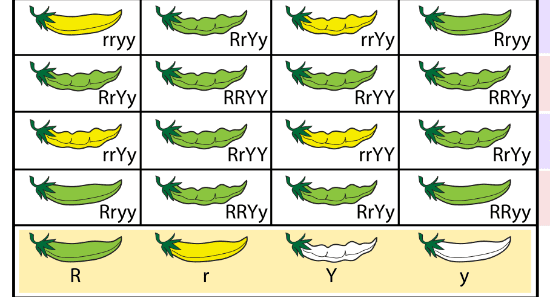
And speaking of that meticulous monk, the rediscovery of Mendel seemed to put natural selection further into the shadow of Neo-Lamarckism for many twentieth century geneticists. As Funk and Wagnalls states:
Types of extreme variation of a species bred together do not lead to new variation but produce individuals that approach the mean of that species.
Now, I already knew a bit about Lamarckism. It was an early evolutionary theory—unfairly maligned in many schoolbooks—positing that changes in environment cause acquired adaptations in animals, which are passed on onto their offspring and compounded over the generations. How else could you explain how the necks of giraffes grew so tall except through use and disuse?
It was a logical inference for a deist like Lamarck, who didn’t accept the God did it “theory” of the creation of species. Giraffes stretched their necks to reach the highest branches. Each generation, their necks grew ever longer until they reached their current dizzying heights. Didn’t many mammals develop thicker coats in the winter and lose them in the summer? And what else but disuse could explain blind and colorless cave animals?
Thus, my night owl ways could’ve made me become literally nocturnal, a trait I would’ve passed on to my offspring. For many, the appeal of the theory was its self-directed nature, though in the case of this particular habit it was far from adaptive.
Lamarckism also decreased the time required for evolution, then a major sticking point. According to Funk and Wagnalls, the sun was only 100 million years old. [Fun fact: the yet-to-be-debunked hoax “fossil” Piltdown Man was judged to be 1,250,000 years old.]
Some modern people like to mock Lamarckism as a sign of the stupidity of the past. Oh, we’re so smart. Surely we don’t believe in ideas that will be discredited one day. They don’t understand that this is exactly how science works. It builds on flawed theories which have some explanatory powers, refining and amending them with empirical observations as theorists come ever closer to the truth.
Of course, many scientists of the time tore into the obvious contradictions in Lamarckian soft inheritance. How could non-reproducing castes of social insects have evolved through use or disuse? Where was the experimental proof of inheritance of acquired traits?
Indeed, Lamarck’s boss at the French National Museum of Natural History, the zoologist and anatomist Georges Cuvier—founding father of paleontology and a forceful exponent of extinction theory—mercilessly lampooned Lamarck’s ideas.
ducks by dint of diving became pikes; pikes by dint of happening upon dry land became ducks; hens searching for their food at the water’s edge, and striving not to get their legs wet, succeeded so well in elongating their legs that they became herons or storks.
Cuvier wasn’t traditionally religious, but he objected to the way transformism cut God out of the equation. Lamarck, in turn, rejected Cuvier’s theories, but not because he didn’t believe the fossilized creatures identified by Cuvier no longer existed. According to Lamarck, the gigantic beasts weren’t extinct; they merely represented intermediary stages frozen in time. Those mastodons and mammoths had eventually transmogrified into elephants.
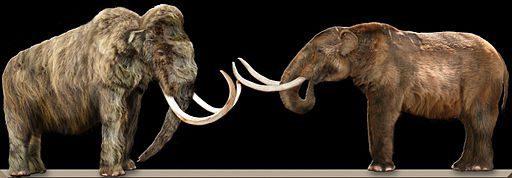
A mammoth and a mastodon.
In yet another twist of fate, while in Lamarck’s post- Revolution France, his views were widely rejected, they were revived once again by Trofim Lysenko, an infamous post-Soviet Revolution agronomist who headed the Institute of Genetics under Stalin. Lysenko rejected Mendelian genetics in favor of neo-Lamarckian theories of inheritance he claimed were more consistent with Marxism. Mendelian geneticists were sent to the gulag and even executed.
Lysenkoism set back Soviet genetics for decades. Though politics could suppress scientists, the science itself refused to budge, as the Soviet Union fell further behind the West in biological research.
Sound familiar?
As for Lamarck, he never lived to see his theories embraced, nor Darwin his eclipse. Though textbooks often pit Darwinism against Lamarckism in an evolutionary cage match, the ebb and flow of acceptance and rejection was an ordinary part of the scientific process.
But it’s useful to remember that Darwin’s signature idea wasn’t evolution, which had been theorized since the Greeks—it was natural selection (a discovery he shared with Alfred Russel Wallace). It wasn’t until population genetics was added to the mix that the mathematical permutations of Mendelian inheritance in the wild were fully understood. The modern evolutionary synthesis in the 40s—too late for the 1934 edition of Funk and Wagnalls, but already well in progress—reconciled the previously opposing factions of Mendelian geneticists and neo-Darwinian selectionists, meshing their ideas into an overarching theory of evolutionary biology.
But if you insist on picking winners and losers, Lamarck may have one last laugh.
His theories are being revived yet again. No, it has nothing to do with a vital force coursing through organs, strengthening the traits that are used and withering those that aren’t.
Epigenetics is revealing patterns of soft inheritance highly reminiscent of Neo-Lamarckism. Soft inheritance has been observed in rats and even in human populations, a legacy of both high fat diets and starvation. The prevailing theory of Neo-Lamarckian epigenetics is that some changes acquired during the lifetime of the parent can be passed onto their progeny through altered patterns of DNA methylation, which affects gene expression. Other researchers have seen viral resistance passed to succeeding generations of the biologists’ favorite nematode, C. elegans.
The worm turns again.
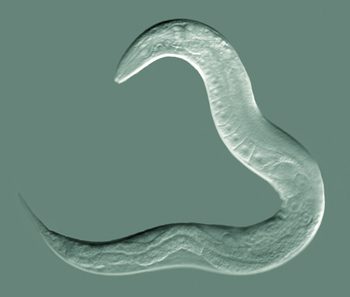
C. elegans.
Previous Post

March 27, 2016
Science Provides The Keys To Success In A Secular Life
Next Post

April 7, 2016 Glimpsing Truth through the Blinders of Religion
Browse Our Archives
Select a Category Ableism Activism Addiction and Recovery Agnosticism Anti-intellectualism Arts Atheism Beauty Catholicism Charles Darwin Children China Christianity Church/State separation churchgoing communication compassionate humanism Creationism critical thinking Culture death disaster response doubt education Egypt Entertainment Environment ethics evolution Existence of God Exploration fear Foundation Beyond Belief Free speech God Health History Human rights humanism identity India Interfaith Islam labels Language LGBT Love Meaning Media Medicine Middle East misconceptions mixed belief marriage Moral argument Morality Myths Near-Death Experience Nonreligious parenting Parody Persecution complex Philosophy Poetry Politics prayer Psychology Rationality Religion religious atheists Religious privilege Republican Party Satire Schools science secular parenting Spirituality The Unpigeonholeables Uncategorized United Kingdom Wonder
Select a Month March 2021 August 2020 March 2020 January 2020 September 2019 July 2019 June 2019 April 2019 February 2019 January 2019 December 2018 November 2018 October 2018 September 2018 August 2018 July 2018 June 2018 May 2018 April 2018 March 2018 February 2018 January 2018 December 2017 November 2017 October 2017 September 2017 August 2017 July 2017 March 2017 February 2017 January 2017 December 2016 November 2016 October 2016 September 2016 August 2016 July 2016 June 2016 May 2016 April 2016 March 2016 February 2016 January 2016 December 2015 November 2015 October 2015 September 2015 June 2015 March 2015 February 2015 January 2015 December 2014 November 2014 October 2014 September 2014
Follow Us!
TAKE THE
Religious Wisdom Quiz
How many days did God take to create the world?
Select your answer to see how you score.
Two Seven Six Ten
Related posts from The Secular Spectrum

Yasir Qadhi's Elitist Ruse to Conceal the Obscure...

Despite "Pro-Life" Claims, Stem Cell Therapy Has Very...

On Cognitive Dissonance and the Thought Patterns Behind...

Reaching 'Faith Healers' Is an Urgent Public Health...
TRENDING AT PATHEOS Nonreligious

Dethroning Jesus and Enthroning Yourself
Jesus Never Asked to Be Worshipped. He Asked to Be Understood. Christianity...

Why Most Christians are Really Paulians and Jobians
I Don't Care, But It Matters Let's get this out of the...

Essential Tips to Successfully Navigate the Selling Process
Selling a house can feel overwhelming, but it doesn’t have to be....

To Make Remote Work Effective, Think About Others
The COVID-19 pandemic forced many companies to rapidly transition to remote work....

Flexibility Is Key to Solving Problems of Tomorrow
The world of work is undergoing a dramatic transformation. The COVID-19 pandemic...
view all Nonreligious blogs
Ad-Free & Subscriber Log-In Subscription Support
- About Us
- 2026 Calendar
- Videos
- Podcasts
- Library of World Religions
- Faith In Media Tracker
- Advertise With Us
- Write for Us
- Privacy Policy
- Terms of Service
- Do Not Sell My Data
- Contact Us
- Radiant Digital
- Manage Newsletter Subscriptions
- Unsubscribe From Notifications
- Sitemap
Copyright 2008-2026, Patheos. All rights reserved.
Subscription Support Ad-Free & Subscriber Log-In
Follow Patheos