
BuddhistCatholicContemplativeEvangelicalGeneral ChristianHinduJewishLatter-day SaintMuslimNew VisionsProgressive Christian
Beliefs
- Buddhist
- Catholic
- Contemplative
- Evangelical
- General Christian
- Hindu
- Jewish
- Latter-day Saint
- More Voices
- Muslim
- New Visions
- Pagan
- Progressive Christian
Topics
- Religion News
- Food and Religion
- Sports and Religion
- Religious Art
- Religious Music and Entertainment
- Religious Events
- History and Religion
- Style and Religion
- Politics and Religion
- Women in Religion
- Recreation Outdoors and Religion
- Business Finance and Religion
- Careers Workplace and Religion
- Education and Religion
- Family Parenting and Religion
- Health Fitness and Religion
- Home and Religion
- Relationships and Religion
- Technology and Religion
- Travel and Religion
Columnists
- Buddhist Columnists
- Business Finance and Religion Columnists
- Careers Workplace and Religion Columnists
- Catholic Columnists
- Contemplative Columnists
- Education and Religion Columnists
- Evangelists Columnists
- Family Parenting and Religion Columnists
- General Christian Columnists
- Health Fitness and Religion Columnists
- Hindu Columnists
- History and Religion Columnists
- Home and Religion Columnists
- Jewish Columnists
- More Voices Columnists
- Latter Day Columnists
- Muslim Columnists
- New Visions Columnists
- Nonreligious Columnists
- Pagan Columnists
- Politics and Religion Columnists
- Progressive Columnists
- Recreation Outdoors and Religion Columnists
- Relationships and Religion Columnists
- Religion News Columnists
- Religious Art Columnists
- Religious Events Columnists
- Religious Music and Entertainment Columnists
- Sports and Religion Columnists
- Style and Religion Columnists
- Technology and Religion Columnists
- Travel and Religion Columnists
- Women in Religion Columnists
Resource Library
- 2026 Calendar
- Library of World Religions
- The 100 Most Holy Places on Earth
- Patheos Answers
- Podcasts
- Videos
- Faith Leaders Database
- Anglican Episcopalian
- Bahai
- Baptist
- Buddhism
- Christianity
- Confucianism
- Eastern Orthodoxy
- Hinduism
- Holiness and Pentecostal
- ISKCON
- Islam
- Judaism
- Lutheran
- Methodist
- The Church of Jesus Christ of Latter-day Saints
- New Age
- Paganism
- Presbytarian and Reformed
- Protestantism
- Religion Behind the Scenes
- Roman Catholic
- Scientology
- Shia Islam
- Sikhism
- Sufism
- Sunni Islam
- Taoism
- Zen
- See all religions
Research Tools
 Ad-Free & Subscriber Log-In Subscription Support
Ad-Free & Subscriber Log-In Subscription Support
Follow Patheos 

- Trending:
- Forgiveness
- |
- Marriage
- |
- Consciousness
- |
- Death Penalty
- |
- Election
- |
- Halloween
 The Secular Spectrum
- Home
- Nonreligious
- Science Provides The Keys To Success In A Secular Life
Science Provides The Keys To Success In A Secular Life
Last updated on: March 27, 2016 at 2:22 pm by Gleb Tsipursky
Science Provides The Keys To Success In A Secular Life 2016-03-27T14:22:07-05:00 Gleb Tsipursky
Patheos Explore the world's faith through different perspectives on religion and spirituality! Patheos has the views of the prevalent religions and spiritualities of the world.
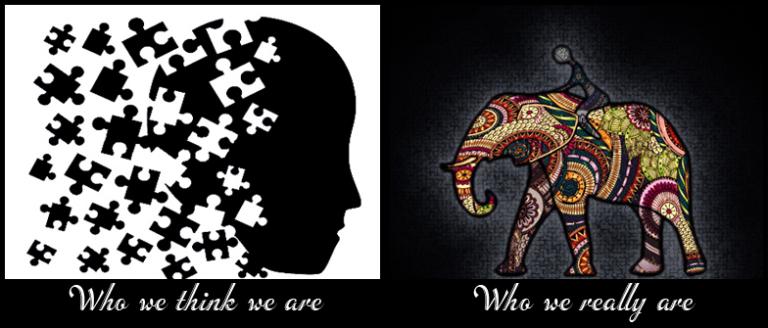
As secular people, we know that there is no afterlife, and we need to make our lives successful in the here and now. At the same time, it’s important to be careful about the vast majority of success literature, which is filled with pseudoscience and woo, and instead focus on actual research-based interventions that can help us succeed. This piece delves into science-based strategies for improving our lives through managing our minds that we as secular people can apply in our daily lives.
The only things we can truly control in life are our thoughts, feelings and behaviors. If we know how our minds work, we can be intentional about influencing our thinking and feeling patterns. To have this level of control, we need to develop emotional intelligence by learning about the science-based patterns behind our emotions and how to manage them. We can evaluate reality more clearly, make better decisions and improve our ability to achieve our goals. Thus, we gain greater agency and the quality of living intentionally.
How do our minds work? Intuitively, our mind feels like a cohesive whole. We perceive ourselves as intentional and rational thinkers. Yet, cognitive science research shows that in reality, the intentional part of our mind is similar to a little rider on top of a huge elephant of emotions and intuitions.
Roughly speaking, we have two thinking systems. Daniel Kahneman, who won the Nobel Prize for his research on behavioral economics, calls them “system one” and “system two“. But I think the terms “autopilot system” and “intentional system” describe them more clearly. The term “intentional system,” in particular, is a useful way of thinking about living intentionally, and thereby gaining greater agency.
The autopilot system corresponds to our emotions and intuitions. Its cognitive processes take place mainly in the amygdala and other parts of the brain that developed early in our evolution. This system guides our daily habits, helps us make snap decisions and reacts instantly to dangerous life-and-death situations (such as saber-toothed tigers) through the freeze, fight or flight stress response. While it helped us survive in the past, the fight-or-flight response is not a great fit for modern life.
We have many small stresses that are not life-threatening, but the autopilot system treats them like tigers. This produces an unnecessarily stressful everyday life experience that undermines our mental and physical well-being. Moreover, while the snap judgments resulting from intuitions and emotions might feel true because they are fast and powerful, they sometimes lead us in the wrong, in systemic and predictable ways.
The intentional system reflects our rational thinking and centers around the prefrontal cortex: the part of the brain that evolved more recently. According to recent research, it developed as humans started to live within larger social groups. This thinking system helps us handle more complex mental activities, such as managing individual and group relationships, logical reasoning, probabilistic thinking and learning new information and patterns of thinking and behavior.
While the automatic system requires no conscious effort to function, the intentional system takes deliberate effort to turn on, and it is mentally tiring. Fortunately, with enough motivation and appropriate training, the intentional system can turn on in situations where the autopilot system is prone to make errors, especially costly ones. Here’s a quick visual comparison of the two systems:

The autopilot system is like an elephant. It’s by far the more powerful and predominant of the two systems.
Our emotions can often overwhelm our rational thinking. Moreover, our intuitions and habits determine the large majority of our lives, which we spend on autopilot mode. That’s not a bad thing at all. It would be mentally exhausting to think intentionally about every action and decision.
The intentional system is like the elephant rider. It can guide the elephant deliberately to go in the direction that matches that of our actual goals.
Certainly, the elephant part of the brain is huge and unwieldy. It is slow to turn and change, and it stampedes at threats.
But we can train the elephant. Your rider can be an elephant whisperer. Over time, you can use the intentional system to change your automatic thinking, feeling and behavioral patterns. In this way, you will become a better agent in terms of taking charge of your life and reaching your goals.
I hope this information fills you with optimism. You can use these strategies to get what you want and achieve success in life as a secular person.
Previous Post

March 27, 2016
My Last, Desperate Act of Satire
Next Post

March 30, 2016 The Abuse of Use and Disuse
Browse Our Archives
Select a Category Ableism Activism Addiction and Recovery Agnosticism Anti-intellectualism Arts Atheism Beauty Catholicism Charles Darwin Children China Christianity Church/State separation churchgoing communication compassionate humanism Creationism critical thinking Culture death disaster response doubt education Egypt Entertainment Environment ethics evolution Existence of God Exploration fear Foundation Beyond Belief Free speech God Health History Human rights humanism identity India Interfaith Islam labels Language LGBT Love Meaning Media Medicine Middle East misconceptions mixed belief marriage Moral argument Morality Myths Near-Death Experience Nonreligious parenting Parody Persecution complex Philosophy Poetry Politics prayer Psychology Rationality Religion religious atheists Religious privilege Republican Party Satire Schools science secular parenting Spirituality The Unpigeonholeables Uncategorized United Kingdom Wonder
Select a Month March 2021 August 2020 March 2020 January 2020 September 2019 July 2019 June 2019 April 2019 February 2019 January 2019 December 2018 November 2018 October 2018 September 2018 August 2018 July 2018 June 2018 May 2018 April 2018 March 2018 February 2018 January 2018 December 2017 November 2017 October 2017 September 2017 August 2017 July 2017 March 2017 February 2017 January 2017 December 2016 November 2016 October 2016 September 2016 August 2016 July 2016 June 2016 May 2016 April 2016 March 2016 February 2016 January 2016 December 2015 November 2015 October 2015 September 2015 June 2015 March 2015 February 2015 January 2015 December 2014 November 2014 October 2014 September 2014
Follow Us!
TAKE THE
Religious Wisdom Quiz
Multitudes, multitudes in the valley of decision! What is this valley also called?
Select your answer to see how you score.
The valley of judgment The valley of Jehoshaphat The valley of Kidron The valley of Megiddo
Related posts from The Secular Spectrum

Yasir Qadhi's Elitist Ruse to Conceal the Obscure...

Despite "Pro-Life" Claims, Stem Cell Therapy Has Very...

How Religion Can Impact Mental Health in Good...

On Cognitive Dissonance and the Thought Patterns Behind...
TRENDING AT PATHEOS Nonreligious

Dethroning Jesus and Enthroning Yourself
Jesus Never Asked to Be Worshipped. He Asked to Be Understood. Christianity...

Why Most Christians are Really Paulians and Jobians
I Don't Care, But It Matters Let's get this out of the...

Essential Tips to Successfully Navigate the Selling Process
Selling a house can feel overwhelming, but it doesn’t have to be....

To Make Remote Work Effective, Think About Others
The COVID-19 pandemic forced many companies to rapidly transition to remote work....

Flexibility Is Key to Solving Problems of Tomorrow
The world of work is undergoing a dramatic transformation. The COVID-19 pandemic...
view all Nonreligious blogs
Ad-Free & Subscriber Log-In Subscription Support
- About Us
- 2026 Calendar
- Videos
- Podcasts
- Library of World Religions
- Faith In Media Tracker
- Advertise With Us
- Write for Us
- Privacy Policy
- Terms of Service
- Do Not Sell My Data
- Contact Us
- Radiant Digital
- Manage Newsletter Subscriptions
- Unsubscribe From Notifications
- Sitemap
Copyright 2008-2026, Patheos. All rights reserved.
Subscription Support Ad-Free & Subscriber Log-In
Follow Patheos