
BuddhistCatholicContemplativeEvangelicalGeneral ChristianHinduJewishLatter-day SaintMuslimNew VisionsProgressive Christian
Beliefs
- Buddhist
- Catholic
- Contemplative
- Evangelical
- General Christian
- Hindu
- Jewish
- Latter-day Saint
- More Voices
- Muslim
- New Visions
- Pagan
- Progressive Christian
Topics
- Religion News
- Food and Religion
- Sports and Religion
- Religious Art
- Religious Music and Entertainment
- Religious Events
- History and Religion
- Style and Religion
- Politics and Religion
- Women in Religion
- Recreation Outdoors and Religion
- Business Finance and Religion
- Careers Workplace and Religion
- Education and Religion
- Family Parenting and Religion
- Health Fitness and Religion
- Home and Religion
- Relationships and Religion
- Technology and Religion
- Travel and Religion
Columnists
- Buddhist Columnists
- Business Finance and Religion Columnists
- Careers Workplace and Religion Columnists
- Catholic Columnists
- Contemplative Columnists
- Education and Religion Columnists
- Evangelists Columnists
- Family Parenting and Religion Columnists
- General Christian Columnists
- Health Fitness and Religion Columnists
- Hindu Columnists
- History and Religion Columnists
- Home and Religion Columnists
- Jewish Columnists
- More Voices Columnists
- Latter Day Columnists
- Muslim Columnists
- New Visions Columnists
- Nonreligious Columnists
- Pagan Columnists
- Politics and Religion Columnists
- Progressive Columnists
- Recreation Outdoors and Religion Columnists
- Relationships and Religion Columnists
- Religion News Columnists
- Religious Art Columnists
- Religious Events Columnists
- Religious Music and Entertainment Columnists
- Sports and Religion Columnists
- Style and Religion Columnists
- Technology and Religion Columnists
- Travel and Religion Columnists
- Women in Religion Columnists
Resource Library
- 2026 Calendar
- Library of World Religions
- The 100 Most Holy Places on Earth
- Patheos Answers
- Podcasts
- Videos
- Faith Leaders Database
- Anglican Episcopalian
- Bahai
- Baptist
- Buddhism
- Christianity
- Confucianism
- Eastern Orthodoxy
- Hinduism
- Holiness and Pentecostal
- ISKCON
- Islam
- Judaism
- Lutheran
- Methodist
- The Church of Jesus Christ of Latter-day Saints
- New Age
- Paganism
- Presbytarian and Reformed
- Protestantism
- Religion Behind the Scenes
- Roman Catholic
- Scientology
- Shia Islam
- Sikhism
- Sufism
- Sunni Islam
- Taoism
- Zen
- See all religions
Research Tools
 Ad-Free & Subscriber Log-In Subscription Support
Ad-Free & Subscriber Log-In Subscription Support
Follow Patheos 

- Trending:
- Forgiveness
- |
- Marriage
- |
- Consciousness
- |
- Death Penalty
- |
- Election
- |
- Halloween
 The Secular Spectrum
- Home
- Nonreligious
- The Taboo of Atheism in Egypt
The Taboo of Atheism in Egypt
Last updated on: February 5, 2016 at 1:47 pm by Guest Contributor
The Taboo of Atheism in Egypt 2016-02-05T13:47:05-05:00 Guest Contributor
Patheos Explore the world's faith through different perspectives on religion and spirituality! Patheos has the views of the prevalent religions and spiritualities of the world.

By Hakim Khatib –
Acknowledging the rights of atheists doesn’t mean adopting their ideas. While atheists just don’t believe in one further religion in comparison to believers, everyone should be entitled to express their ideas and thoughts without intimidation. Challenging religious oppression and rusty social traditions, many Egyptians risk their lives to uphold and protect freedoms and values of tolerance.
Systematic Discrimination
Discrimination against atheists in Egypt is primarily a product of conservative social traditions and state religious establishments – Al-Azhar mosque and the Coptic Church. Laws and policies in Egypt protect religious freedom but punish those ridicule or insult heavenly religions by words or writing – i.e. insulting Buddhism or Hinduism is not punishable by the Egyptian law but insulting Islam, Christianity or Judaism is. Between 2011 and 2013, “Egyptian courts convicted 27 of 42 defendants on charges of contempt for religion,” according to The Guardian.
Interestingly, an Egyptian citizen is only entitled to one of the three monotheistic religions, namely Islam, Christianity and Judaism. In other words, people are allowed to believe or disbelieve in any religion for obvious reasons, but they are not allowed to have their beliefs or disbeliefs legally recognized. Therefore, on official records, all people have to be categorized as such. Diversity in this sense is systematically blinded.
According to official statistics, religious beliefs in Egypt are as follows: 90-94% are Sunni Muslims and 6-10% are Coptic Christians. While atheism is not limited to a specific segment of the Egyptian society, credible research is still lacking on the matter. It is simply because being without religion is a taboo in Egypt.
Similar to their declared wars on terrorism, corruption and neglect, political and religious state institutions launched a new “war on atheism”.
In a 2014-report, Dar Al-Ifta Al-Misriyyah (Al-Azhar center for Islamic legal research) confirmed that the number of atheists in Egypt is no more than 866 individuals – i.e. the proportion of atheists is 0.001% of the Egyptian population. While the methods Al-Azhar “scholars” used to reach this precise figure remain unknown, discriminatory discourse against atheists is commonplace in Egypt.
This discriminatory discourse is especially accentuated by Al-Azhar mosque and the Coptic Church. Starting from 2014, both institutions have been cooperating to fight against atheism in order to “save the Egyptian society”. In the same year, the government embarked a “national campaign” to combat the spread of atheism among young people using the help of a number of psychologists, sociologists and political scientists.
Nemat Satti, chairman of the Central Administration of the parliament and civic education at the Ministry of Youth and Sports, said to Shorouk News in 2014 that the phenomenon of atheism has become as noticeable and widespread among young people as the phenomena of harassment, rape and extremism. The comparison is pretty clear.
Media Discourse Against Atheists
This discriminatory discourse against atheists can be detected in the Egyptian media as well. Egyptian media is not neutral when addressing the issue of atheists in the society. Similar to the governmental and religious campaigns, media portrays atheists as patients with mental disorder, who need treatment to get rid of the illusions they are talking about.
For instance, in 2015 in her program “the morning of the capital” on the Egyptian channel The Capital TV (Al-Asima), an Egyptian journalist throws out an atheist guest on air for his ideas. A wrangle broke out between the Egyptian journalist Rania Mahmoud Yaseen, the host of a debate on atheism, and her atheist guest Ahmed Al-Harqan, who spoke about “the lack of historical evidence concerning the existence of the figure of the prophet Mohammad”.
Rania Yasin interrupted Al-Harqan saying: “Come on! Leave! We don’t need Atheists or infidels. People should pay attention to the warnings against infidelity, atheism and these outrageous ideas in the society.”
Hence the guest left the debate. It remains to wonder why an Egyptian journalist hosts a debate about such a sensitive issue in Egypt, if she isn’t willing to listen to what atheists have to say.
Stories of Persecution
While the stories of persecuting atheists in Egypt are numerous, here are some cases to show how this taboo is being handled systematically. So far, there is no evidence that the change of the head of the government or the government’s political orientation correlates with the number of attacks against atheists.
In 2014, Karim Ashraf Mohamed Al-Banna, 21, was jailed for three years for “insulting Islam” by simply declaring he is an atheist on Facebook. Shockingly, his own father testified against him claiming that his son “was embracing extremist ideas against Islam”.
In 2013, Egyptian clerics such as Al-Azhar professor Mahmoud Shaaban, a member of Al-Jama’a Al-Isalmiyya Asem Abelmajed and a Salafi scholar Abu Ishaq Al-Heweny issued an Islamic ruling (fatwa) against Hamed Abdel-Samad for writing a book on Islamic fascism. Abdel-Samad was accused of being heretic and must be killed for it. Shaaban said on Al-Hafez TV that: “after he [Abdel-Samad] has been confronted with the evidence, his killing is permitted if the [Egyptian] government doesn’t do it.”
In 2012, the Egyptian blogger Alber Saber was sentenced to three years in prison for insulting Islam by posting the trailer of the YouTube video Innocence of Muslims on his Facebook page. While prosecution didn’t find the trailer on Saber’s Facebook account, they accused him of religious blasphemy after finding a short video of Saber criticizing both Islamic and Coptic religious leaders and institutions.
After detaining Saber for religious blasphemy, “police incited the prisoners against Saber, claiming that he was an atheist and insulted the prophet Mohamed,” stated the 2012 Report On Non-Religious Discrimination. Consequently, one of the prisoners injured Saber with a razor blade.
According to the same report, there were similar incidents in 2012 against individuals who allegedly insulted Islam or the prophet Mohammad such as the Christian school secretary Makram Diab, who was sentenced to six years in prison, Ayman Yusef Mansur, 24, who was sentenced to three years in prison with hard labor.
These are not the first incidents in Egypt against atheists. In 2007, the blogger Abdel Kareem Soliman was sentenced to four years in prison for insulting Islam and the president. Another blogger, Kareem Amer, was sentenced to three years in prison for “Facebook posts deemed offensive to Islam”, according to 2012 Report On Non-Religious Discrimination.
While atheism in Egypt remains a taboo, systematic discrimination against atheists remains significant. Prompted by conservative traditions and state religious and political establishments, there are restrictions that deny atheists the right to engage in a serious debate about their fundamental rights.
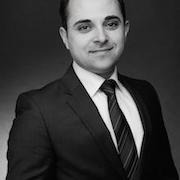
Hakim Khatib is a lecturer in journalism, intercultural communication and the politics and culture of the Middle East at Fulda University of Applied Sciences and Phillips University Marburg. He specializes in the application of religion into political life and discourse in the Middle East and the editor-in-chief of the Mashreq Politics and Culture Journal (MPC Journal).
Previous Post

February 3, 2016
A Little Birdie Told Me to Do It
Next Post
February 8, 2016 The Secular – Religious Dance
Browse Our Archives
Select a Category Ableism Activism Addiction and Recovery Agnosticism Anti-intellectualism Arts Atheism Beauty Catholicism Charles Darwin Children China Christianity Church/State separation churchgoing communication compassionate humanism Creationism critical thinking Culture death disaster response doubt education Egypt Entertainment Environment ethics evolution Existence of God Exploration fear Foundation Beyond Belief Free speech God Health History Human rights humanism identity India Interfaith Islam labels Language LGBT Love Meaning Media Medicine Middle East misconceptions mixed belief marriage Moral argument Morality Myths Near-Death Experience Nonreligious parenting Parody Persecution complex Philosophy Poetry Politics prayer Psychology Rationality Religion religious atheists Religious privilege Republican Party Satire Schools science secular parenting Spirituality The Unpigeonholeables Uncategorized United Kingdom Wonder
Select a Month March 2021 August 2020 March 2020 January 2020 September 2019 July 2019 June 2019 April 2019 February 2019 January 2019 December 2018 November 2018 October 2018 September 2018 August 2018 July 2018 June 2018 May 2018 April 2018 March 2018 February 2018 January 2018 December 2017 November 2017 October 2017 September 2017 August 2017 July 2017 March 2017 February 2017 January 2017 December 2016 November 2016 October 2016 September 2016 August 2016 July 2016 June 2016 May 2016 April 2016 March 2016 February 2016 January 2016 December 2015 November 2015 October 2015 September 2015 June 2015 March 2015 February 2015 January 2015 December 2014 November 2014 October 2014 September 2014
Follow Us!
TAKE THE
Religious Wisdom Quiz
Who said, "You are the Christ, the Son of the living God"?
Select your answer to see how you score.
John Andrew Thomas Peter
Related posts from The Secular Spectrum

Yasir Qadhi's Elitist Ruse to Conceal the Obscure...

Trump Admin's Prioritization of Religion Over Health Care...

Why Do We Question Vegetarianism When It's a...

TRENDING AT PATHEOS Nonreligious

Dethroning Jesus and Enthroning Yourself
Jesus Never Asked to Be Worshipped. He Asked to Be Understood. Christianity...

Why Most Christians are Really Paulians and Jobians
I Don't Care, But It Matters Let's get this out of the...

Essential Tips to Successfully Navigate the Selling Process
Selling a house can feel overwhelming, but it doesn’t have to be....

To Make Remote Work Effective, Think About Others
The COVID-19 pandemic forced many companies to rapidly transition to remote work....

Flexibility Is Key to Solving Problems of Tomorrow
The world of work is undergoing a dramatic transformation. The COVID-19 pandemic...
view all Nonreligious blogs
Ad-Free & Subscriber Log-In Subscription Support
- About Us
- 2026 Calendar
- Videos
- Podcasts
- Library of World Religions
- Faith In Media Tracker
- Advertise With Us
- Write for Us
- Privacy Policy
- Terms of Service
- Do Not Sell My Data
- Contact Us
- Radiant Digital
- Manage Newsletter Subscriptions
- Unsubscribe From Notifications
- Sitemap
Copyright 2008-2026, Patheos. All rights reserved.
Subscription Support Ad-Free & Subscriber Log-In
Follow Patheos