
BuddhistCatholicContemplativeEvangelicalGeneral ChristianHinduJewishLatter-day SaintMuslimNew VisionsProgressive Christian
Beliefs
- Buddhist
- Catholic
- Contemplative
- Evangelical
- General Christian
- Hindu
- Jewish
- Latter-day Saint
- More Voices
- Muslim
- New Visions
- Pagan
- Progressive Christian
Topics
- Religion News
- Food and Religion
- Sports and Religion
- Religious Art
- Religious Music and Entertainment
- Religious Events
- History and Religion
- Style and Religion
- Politics and Religion
- Women in Religion
- Recreation Outdoors and Religion
- Business Finance and Religion
- Careers Workplace and Religion
- Education and Religion
- Family Parenting and Religion
- Health Fitness and Religion
- Home and Religion
- Relationships and Religion
- Technology and Religion
- Travel and Religion
Columnists
- Buddhist Columnists
- Business Finance and Religion Columnists
- Careers Workplace and Religion Columnists
- Catholic Columnists
- Contemplative Columnists
- Education and Religion Columnists
- Evangelists Columnists
- Family Parenting and Religion Columnists
- General Christian Columnists
- Health Fitness and Religion Columnists
- Hindu Columnists
- History and Religion Columnists
- Home and Religion Columnists
- Jewish Columnists
- More Voices Columnists
- Latter Day Columnists
- Muslim Columnists
- New Visions Columnists
- Nonreligious Columnists
- Pagan Columnists
- Politics and Religion Columnists
- Progressive Columnists
- Recreation Outdoors and Religion Columnists
- Relationships and Religion Columnists
- Religion News Columnists
- Religious Art Columnists
- Religious Events Columnists
- Religious Music and Entertainment Columnists
- Sports and Religion Columnists
- Style and Religion Columnists
- Technology and Religion Columnists
- Travel and Religion Columnists
- Women in Religion Columnists
Resource Library
- 2026 Calendar
- Library of World Religions
- The 100 Most Holy Places on Earth
- Patheos Answers
- Podcasts
- Videos
- Faith Leaders Database
- Anglican Episcopalian
- Bahai
- Baptist
- Buddhism
- Christianity
- Confucianism
- Eastern Orthodoxy
- Hinduism
- Holiness and Pentecostal
- ISKCON
- Islam
- Judaism
- Lutheran
- Methodist
- The Church of Jesus Christ of Latter-day Saints
- New Age
- Paganism
- Presbytarian and Reformed
- Protestantism
- Religion Behind the Scenes
- Roman Catholic
- Scientology
- Shia Islam
- Sikhism
- Sufism
- Sunni Islam
- Taoism
- Zen
- See all religions
Research Tools
 Ad-Free & Subscriber Log-In Subscription Support
Ad-Free & Subscriber Log-In Subscription Support
Follow Patheos 

- Trending:
- Forgiveness
- |
- Marriage
- |
- Consciousness
- |
- Death Penalty
- |
- Election
- |
- Halloween
 The Secular Spectrum
- Home
- Nonreligious
- The Dulling of Darwin
The Dulling of Darwin
Last updated on: March 9, 2016 at 8:31 am by Dale McGowan
The Dulling of Darwin 2016-03-09T08:31:10-05:00 Dale McGowan
Patheos Explore the world's faith through different perspectives on religion and spirituality! Patheos has the views of the prevalent religions and spiritualities of the world.

Part 2 in a series on the mangling of Darwin’s Autobiography
An astonishing ability to pay attention may have been Darwin’s defining characteristic. Remember, this was the guy who found it possible to study barnacles for eight years straight. That superhuman capacity to observe and notice was the reason he could untangle the idea of natural selection. And as a result of this well-honed ability, the original manuscript of the Autobiography is bursting with sharp observations of the people around him.
But Sir Francis’s version? Yeah, not so much.
I’ll focus on four of my favorite passages from the original — two brief and two a little longer. First there’s Darwin on himself, a childhood memory:
About this time [age eight], or as I hope at a somewhat earlier age, I sometimes stole fruit for the sake of eating it; & one of my schemes was ingenious. The kitchen garden was kept locked in the evening, & was surrounded by a high wall, but by the aid of neighbouring trees I could easily get on the coping. I then fixed a long stick into the hole at the bottom of a rather large flower-pot, & by dragging this upwards pulled off peaches & plums, which fell into the pot & the prizes were thus secured. When a very little boy I remember stealing apples from the orchard, for the sake of giving them away to some boys & young men who lived in a cottage not far off, but before I gave them the fruit I showed off how quickly I could run & it is wonderful that I did not perceive that the surprise & admiration which they expressed at my powers of running, was given for the sake of the apples. But I well remember that I was delighted at them declaring that they had never seen a boy run so fast!
That delightful, humanizing bit of candor was entirely cut — lest the world learn that he picked fruit that wasn’t his when he was eight.
About Charles Lyell, one of his greatest influences, he had this to say:
On my return from the voyage of the Beagle, I explained to [Lyell] my views on coral-reefs, which differed compared to his, and I was greatly surprised and encouraged by the vivid interest which he showed. On such occasions, while absorbed in thought, he would throw himself into the strangest attitudes, often resting his head on the seat of a chair, while standing up. His delight in science was ardent, and he felt the keenest interest in the future progress of mankind.
Francis removed the best part of that one – Lyell’s quirk with the chair. See how it reads without that:
On my return from the voyage of the Beagle, I explained to him my views on coral-reefs, which differed compared to his, and I was greatly surprised and encouraged by the vivid interest which he showed. His delight in science was ardent, and he felt the keenest interest in the future progress of mankind.
Zzzzzzzzzzzzngk.
In one long passage, Charles offers incisive character sketches of a half dozen colleagues and friends:
Robert Brown
[Scottish botanist Robert Brown] was capable of the most generous actions. When old, much out of health, and quite unfit for any exertion, he daily visited (as Hooker told me) an old man-servant, who lived at a distance (and whom he supported), and read aloud to him. This is enough to make up for any degree of scientific penuriousness or jealousy.
He was rather given to sneering at anyone who wrote about what he did not fully understand: I remember praising Whewell’s History of the Inductive Sciences to him, and he answered, “Yes, I suppose that he has read the prefaces of very many books.”
Richard Owen. Good luck sleeping tonight
I often saw [the biologist Richard] Owen, whilst living in London, and admired him greatly, but was never able to understand his character and never became intimate with him. After the publication of the Origin of Species he became my bitter enemy, not owing to any quarrel between us, but as far as I could judge out of jealousy at its success.
Poor dear Falconer, who was a charming man, had a very bad opinion of him, being convinced that he was not only ambitious, very envious and arrogant, but untruthful and dishonest. His power of hatred was certainly unsurpassed. When in former days I used to defend Owen, Falconer often said, “You will find him out some day,” and so it has proved.
At a somewhat later period I became very intimate with [botanist Joseph Dalton] Hooker, who has been one of my best friends throughout life. He is a delightfully pleasant companion & most kind-hearted. One can see at once that he is honourable to the back-bone. His intellect is very acute, & he has great power of generalisation.
He is the most untirable worker that I have ever seen, & will sit the whole day working with the microscope, & be in the evening as fresh & pleasant as ever. He is in all ways very impulsive & somewhat peppery in temper; but the clouds pass away almost immediately. He once sent me an almost savage letter for a reason which will appear ludicrously small to an outsider, viz. because I maintained for a time the silly notion that our coal-plants had lived in shallow water in the sea. His indignation was all the greater because he could not pretend that he should ever have suspected that the Mangrove (and a few other marine plants which I named) had lived in the sea, if they had been found only in a fossil state. On another occasion he was almost equally indignant because I rejected with scorn the notion that a continent had formerly extended between Australia & S. America. I have known hardly any man more lovable than Hooker.
Thomas H. Huxley
A little later I became intimate with Huxley. His mind is as quick as a flash of lightning & as sharp as a razor. He is the best talker whom I have known. He never writes & never says anything flat. Given his conversation no one would suppose that he could cut up his opponents in so trenchant a manner as he can do & does do. He has been a most kind friend to me & would always take any trouble for me. He has been the mainstay in England of the principle of the gradual evolution of organic beings. Much splendid work as he has done in Zoology, he would have done far more, if his time had not been so largely consumed by official & literary work, & by his efforts to improve the education of the country.
He would allow me to say anything to him: many years ago I thought that it was a pity that he attacked so many scientific men, although I believe that he was right in each particular case, & I said so to him. He denied the charge indignantly, & I answered that I was very glad to hear that I was mistaken. We had been talking about his well-deserved attacks on Owen, so I said after a time, “How well you have exposed Ehrenberg’s blunders;” he agreed and added that it was necessary for science that such mistakes should be exposed. Again after a time, I added: “Poor Agassiz has fared ill under your hands.” Again I added another name, & now his bright eyes flashed on me, & he burst out laughing, anathematising me in some manner. He is a splendid man & has worked well for the good of mankind.
I may here mention a few other eminent men whom I have occasionally seen, but I have little to say about them worth saying. I felt a high reverence for Sir J. Herschel & was delighted to dine with him at his charming house at the C[ape] of Good Hope & afterwards at his London house. I saw him, also, on a few other occasions. He never talked much, but every word which he uttered was worth listening to. He was very shy & he often had a distressed expression. Lady Caroline Bell, at whose house I dined at the C. of Good Hope, admired Herschel much, but said that he always came into a room as if he knew that his hands were dirty, & that he knew that his wife knew that they were dirty.
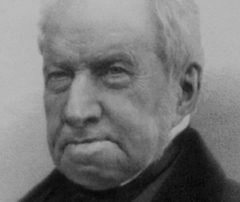
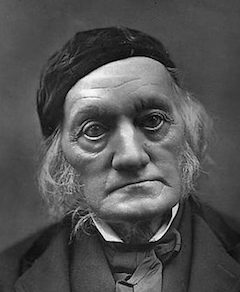
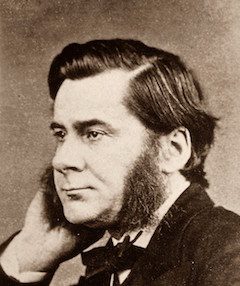
That priceless passage, including some of the best personal portraits of some of these men, was reduced by Francis Darwin to this yawny blob of paste:
[Robert Brown] was capable of the most generous actions. When old, much out of health, and quite unfit for any exertion, he daily visited (as Hooker told me) an old man-servant, who lived at a distance (and whom he supported), and read aloud to him. This is enough to make up for any degree of scientific penuriousness or jealousy.
I may here mention a few other eminent men whom I have occasionally seen, but I have little to say about them worth saying. I felt a high reverence for Sir J. Herschel & was delighted to dine with him at his charming house at the C[ape] of Good Hope & afterwards at his London house. I saw him, also, on a few other occasions. He never talked much, but every word which he uttered was worth listening to.
Gah!
Finally, a passage that captured the personality of two major figures of the time and illustrated one of the human foibles Darwin disliked most — the craving for status and glory:
All the leading geologists were more or less known by me, at the time when geology was advancing with triumphant steps. I liked most of them, with the exception of [geologist and minister The Very Rev. William] Buckland who though very good-humoured & good-natured seemed to me a vulgar & almost coarse man. He was incited more by a craving for notoriety, which sometimes made him act like a buffoon, than by a love of science. He was not, however, selfish in his desire for notoriety; for Lyell, when a very young man, consulted him about communicating a poor paper to the Geol. Soc. which had been sent him by a stranger, & Buckland answered — “You had better do so, for it will be headed, ‘Communicated by Charles Lyell’, & thus your name will be brought before the public.
The services rendered to geology by Murchison by his classification of the older formations cannot be over-estimated; but he did not possess a philosophical mind. He was very kind-hearted & would exert himself to the utmost to oblige anyone. The degree to which he valued rank was ludicrous, & he displayed this feeling & his vanity with the simplicity of a child. He related with the utmost glee to a large circle, including many mere acquaintances, in the rooms of the Geolog. Soc. how the Czar Nicholas, when in London, had patted him on the shoulder & had said, alluding to his geological work — “Mon ami, Russia is grateful to you,” & then Murchison added rubbing his hands together, “The best of it was that Prince Albert heard it all.” He announced one day to the Council of the Geolog. Soc. that his great work on the Silurian system was at last published; & he then looked at all who were present & said, “You will every one of you find your name in the Index,” as if this was the height of glory.
The whole passage was cut.
I could go on and on. Over two dozen passages like these were cut out of the Autobiography, draining much of the color and humanity out of Darwin’s self-portrait.
The reason we know what was cut: granddaughter Nora Barlow’s 1958 edition appends a list of the formerly excised passages.
I do understand Francis’s impulse here, even though all of these people were dead at the time of publication except Huxley. But I am terribly grateful for Nora.
It wasn’t the character sketches that put the Darwins at each other’s throats, though. It was the question of whether Charles Darwin’s description of the development of his own religious views should see the light of day.
Back to Part 1 | On to Part 3: Hiding Darwin’s Disbelief
Previous Post
February 22, 2016
Distorting Darwin
Next Post
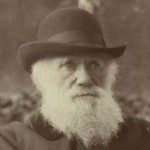
February 22, 2016 Hiding Darwin's Disbelief
Browse Our Archives
Select a Category Ableism Activism Addiction and Recovery Agnosticism Anti-intellectualism Arts Atheism Beauty Catholicism Charles Darwin Children China Christianity Church/State separation churchgoing communication compassionate humanism Creationism critical thinking Culture death disaster response doubt education Egypt Entertainment Environment ethics evolution Existence of God Exploration fear Foundation Beyond Belief Free speech God Health History Human rights humanism identity India Interfaith Islam labels Language LGBT Love Meaning Media Medicine Middle East misconceptions mixed belief marriage Moral argument Morality Myths Near-Death Experience Nonreligious parenting Parody Persecution complex Philosophy Poetry Politics prayer Psychology Rationality Religion religious atheists Religious privilege Republican Party Satire Schools science secular parenting Spirituality The Unpigeonholeables Uncategorized United Kingdom Wonder
Select a Month March 2021 August 2020 March 2020 January 2020 September 2019 July 2019 June 2019 April 2019 February 2019 January 2019 December 2018 November 2018 October 2018 September 2018 August 2018 July 2018 June 2018 May 2018 April 2018 March 2018 February 2018 January 2018 December 2017 November 2017 October 2017 September 2017 August 2017 July 2017 March 2017 February 2017 January 2017 December 2016 November 2016 October 2016 September 2016 August 2016 July 2016 June 2016 May 2016 April 2016 March 2016 February 2016 January 2016 December 2015 November 2015 October 2015 September 2015 June 2015 March 2015 February 2015 January 2015 December 2014 November 2014 October 2014 September 2014
Follow Us!
TAKE THE
Religious Wisdom Quiz
What king wrote many proverbs and built a great temple?
Select your answer to see how you score.
Saul David Solomon Hezekiah
Related posts from The Secular Spectrum
Which Came First, the Science or the Atheism?
Glimpsing Truth through the Blinders of Religion
TRENDING AT PATHEOS Nonreligious

Dethroning Jesus and Enthroning Yourself
Jesus Never Asked to Be Worshipped. He Asked to Be Understood. Christianity...

Why Most Christians are Really Paulians and Jobians
I Don't Care, But It Matters Let's get this out of the...

Essential Tips to Successfully Navigate the Selling Process
Selling a house can feel overwhelming, but it doesn’t have to be....

To Make Remote Work Effective, Think About Others
The COVID-19 pandemic forced many companies to rapidly transition to remote work....

Flexibility Is Key to Solving Problems of Tomorrow
The world of work is undergoing a dramatic transformation. The COVID-19 pandemic...
view all Nonreligious blogs
Ad-Free & Subscriber Log-In Subscription Support
- About Us
- 2026 Calendar
- Videos
- Podcasts
- Library of World Religions
- Faith In Media Tracker
- Advertise With Us
- Write for Us
- Privacy Policy
- Terms of Service
- Do Not Sell My Data
- Contact Us
- Radiant Digital
- Manage Newsletter Subscriptions
- Unsubscribe From Notifications
- Sitemap
Copyright 2008-2026, Patheos. All rights reserved.
Subscription Support Ad-Free & Subscriber Log-In
Follow Patheos