
BuddhistCatholicContemplativeEvangelicalGeneral ChristianHinduJewishLatter-day SaintMuslimNew VisionsProgressive Christian
Beliefs
- Buddhist
- Catholic
- Contemplative
- Evangelical
- General Christian
- Hindu
- Jewish
- Latter-day Saint
- More Voices
- Muslim
- New Visions
- Pagan
- Progressive Christian
Topics
- Religion News
- Food and Religion
- Sports and Religion
- Religious Art
- Religious Music and Entertainment
- Religious Events
- History and Religion
- Style and Religion
- Politics and Religion
- Women in Religion
- Recreation Outdoors and Religion
- Business Finance and Religion
- Careers Workplace and Religion
- Education and Religion
- Family Parenting and Religion
- Health Fitness and Religion
- Home and Religion
- Relationships and Religion
- Technology and Religion
- Travel and Religion
Columnists
- Buddhist Columnists
- Business Finance and Religion Columnists
- Careers Workplace and Religion Columnists
- Catholic Columnists
- Contemplative Columnists
- Education and Religion Columnists
- Evangelists Columnists
- Family Parenting and Religion Columnists
- General Christian Columnists
- Health Fitness and Religion Columnists
- Hindu Columnists
- History and Religion Columnists
- Home and Religion Columnists
- Jewish Columnists
- More Voices Columnists
- Latter Day Columnists
- Muslim Columnists
- New Visions Columnists
- Nonreligious Columnists
- Pagan Columnists
- Politics and Religion Columnists
- Progressive Columnists
- Recreation Outdoors and Religion Columnists
- Relationships and Religion Columnists
- Religion News Columnists
- Religious Art Columnists
- Religious Events Columnists
- Religious Music and Entertainment Columnists
- Sports and Religion Columnists
- Style and Religion Columnists
- Technology and Religion Columnists
- Travel and Religion Columnists
- Women in Religion Columnists
Resource Library
- 2026 Calendar
- Library of World Religions
- The 100 Most Holy Places on Earth
- Patheos Answers
- Podcasts
- Videos
- Faith Leaders Database
- Anglican Episcopalian
- Bahai
- Baptist
- Buddhism
- Christianity
- Confucianism
- Eastern Orthodoxy
- Hinduism
- Holiness and Pentecostal
- ISKCON
- Islam
- Judaism
- Lutheran
- Methodist
- The Church of Jesus Christ of Latter-day Saints
- New Age
- Paganism
- Presbytarian and Reformed
- Protestantism
- Religion Behind the Scenes
- Roman Catholic
- Scientology
- Shia Islam
- Sikhism
- Sufism
- Sunni Islam
- Taoism
- Zen
- See all religions
Research Tools
 Ad-Free & Subscriber Log-In Subscription Support
Ad-Free & Subscriber Log-In Subscription Support
Follow Patheos 

- Trending:
- Forgiveness
- |
- Marriage
- |
- Consciousness
- |
- Death Penalty
- |
- Election
- |
- Halloween
 The Secular Spectrum
- Home
- Nonreligious
- Interrogation of Aude: “How is it possible that I cannot believe in our Lord!”
Interrogation of Aude: “How is it possible that I cannot believe in our Lord!”
Last updated on: November 17, 2015 at 6:14 pm by Dale McGowan
Interrogation of Aude: “How is it possible that I cannot believe in our Lord!” 2015-11-17T18:14:04-05:00 Dale McGowan
Patheos Explore the world's faith through different perspectives on religion and spirituality! Patheos has the views of the prevalent religions and spiritualities of the world.
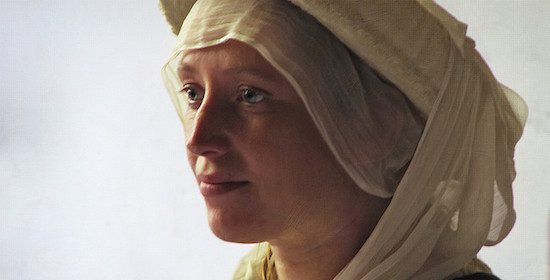
The second of three recently translated interrogations from the Inquisition. Learn more and read the first interrogation here.
Confession of Aude, Wife of Guillaume Fauré, of Merviel (1318)
Year of our Lord 1318, the Saturday before the holiday of Saint Mary Magdalene (15 July 1318). As it reached the knowledge of Revered Father in Christ My Lord Jacques, Bishop of Pamiers by divine Providence, that Aude, the daughter of the late Guillaume de Maucasal, of Lafage in the diocese of Mirepoix, and the spouse of Guillaume Fauré of Merviel, in the diocese of Pamiers, was suspected of heresy, and even strongly so, by reason of certain words and declarations uttered, as it has been said, by her in the presence of certain people against the Catholic Faith, and that moreover, as it has been said, this Aude was publicly slandered, My Said Lord Bishop, wishing thus to take the responsibility of investigating the truth of these events with the said Aude and others, had her brought into his presence, wishing, as he has said, to investigate with her regarding the truth of these above-mentioned accusations.
My Said Lord Bishop one day asked the said Aude in the name of simple information if she had fallen into error on the articles of faith and the sacraments of the Church, and on which of them, as it had been reported to My Lord the Bishop. She responded immediately:
I believe that our Lord Jesus Christ was born of the flesh of the Holy Virgin Mary, and that he suffered, and was crucified for the human race, that he was resurrected, and ascended to heaven, and that he will return to judge the good people and the bad people; I profess and believe the faith and the sacraments as they are observed by the Holy Roman Catholic Church.
Interrogated subsequently, she nevertheless said:
About eight years ago, I contracted a marriage with Guillaume Fauré, my husband, and I was taken to his house in Merviel around All Saints’. As I had never received the body of the Lord, even though I was 17 or 18, I confessed my sins to a priest, but at the following Easter, I did not receive the Body of Christ. My husband asked me why and reproached me for it. I told him that in Lafage, where I am from originally, young men and women did not usually receive the body of Christ.
Then, the following year, again on Easter Day, I received the body of Christ. And as I had omitted to confess a serious sin that I had committed before marrying my said husband, I was completely terrified and upset because I had received the body of Christ without having confessed this sin.
Finally, after the following three years had gone by, I fell into the following error: I did believe that God was all-powerful in heaven, but I did not believe that God was in the sacrament on the altar, or that by virtue of the holy words spoken by the priest, it became the body of Christ. I was in this error and persisted in it without interruption until now that I have been taken to My Lord Bishop for it.
In the presence of which she said that the Holy Virgin Mary had inspired her in her heart to again believe that the flesh and the blood of Christ are the in sacrament on the altar, and that she believed that which a good Christian must believe.
Did anyone, man or women, lead you to this error?
No, but it came to me, I believe, from the persistence of the sin I spoke of because I had not confessed it.
Have you met any of the heretics or spoken with them?
No, to my knowledge, I have never seen a heretic.
Have you confessed this error to a priest or to anyone else?
No, until recently, when I was gravely ill. In the grip of that sickness, I revealed this error to Guillaume Fauré, my husband, and to Ermengarde Garaud, of Merviel. And first to my husband in these terms: “Sir, how is it possible that I cannot believe in our Lord!” My husband said to me, scolding me: “What, damn woman, are you saying this in your right mind?” I responded: “Yes.” My husband told me then that if I had not confessed, I had better, because otherwise I could not stay with him, and he would send me away.
When you said these words to your husband, were you in your right mind?
Yes, and even now I remember all that very well.
In this same sickness, I sent for Ermengarde Garaud of Merviel. When she had arrived in my house, I told her: “Aunt, how can it be that I cannot believe in our Lord, and that I cannot believe that the host that is raised on the altar by the priest is the body of Christ?” Then Ermengarde reprimanded me strongly and suggested many things to encourage me to believe, among them, the following example:
“A long time ago, there was a Goodwoman who made a loaf of bread, which was then consecrated by the priest on the altar. This consecrated loaf was then made into the body of Christ. The priest used it to give Communion to the congregation. The woman who had made it began to laugh when she saw this. The priest noticed, and when she approached to receive the Communion, he told her, ‘You, stay behind,’ and asked her why she had laughed. She responded: ‘Sir, the body of Christ can be made out of the loaf that I kneaded! That’s what I’m laughing about.’ Immediately the priest began to pray with the congregation so that God might work a miracle on it. Once this prayer was done, when he tried to give this consecrated bread to this woman, the consecrated bread that he offered to her for Communion looked like the finger of a child, and the consecrated wine in the Chalice like coagulated blood. Seeing this, the frightened woman began to pray. The priest and the congregation did the same. After this prayer, the woman was thus converted, believing that the body of Christ was in this sacrament, and this finger and this blood regained their first appearance of bread and wine as before, and this woman received Communion devoutly.”
After that story, I said, “O aunt, your words are so good, and you have comforted me so much!”
Have you confessed this error to a priest?
I don’t remember.
After which, the Monday before the holiday of Saint Mary Magdalene, the 17th of July, 1318, the said Aude appeared in person before My said Lord Bishop in the Episcopal House of Pamiers, in the presence of My said lords Pierre du Verdier, Archdeacon of Majorque; master Barnard Gaubert, and me, Guillaume de Pardailhan, aforementioned notary, the assistants of My said Lord Bishop. Aude swore on the Gospel of God, touching it physically with her right hand, to tell the whole and pure truth and to respond truthfully to the questions that she would be posed. Interrogated about all the aforementioned events and about each one separately under oath, she persisted in her previous confession, except for the following corrections and rectifications, to the effect that during the first year that she came to her husband’s house, she received the body of the Lord at Easter, and after having received it, she fell immediately, so she says, into the said error, because she had not confessed a serious sin that she had committed before having contracted marriage with her said husband.
And from that moment until last Saturday, she had persisted without interruption in that error. Not long ago, however, so she says, she had abandoned it and firmly believed all the articles of faith and all the sacraments of the Church, these having been explained to her one by one by My said Lord Bishop.
She also said that she had recently confessed this error in her illness, one month ago, to the priest of the Holy Cross and that he had imposed a certain penance on her; she herself offered, so she says, to accomplish this penance, and even an even bigger one at that; this priest estimated that that penance was too severe, so he imposed a certain gentler penance.
Diligently interrogated, she said nothing more of pertinence.
Next, the same Monday, My Lord the Bishop being assisted by the same, to supplement the inquiry and the obtaining of the truth on that which precedes, he had Ermengarde Garaud of Merviel brought before him, who swore on the Gospel of God physically touching it with her right hand to tell the pure and entire truth on that which precedes, in the principle capacity and as witness. She said and testified as follows:
That year, around the last day of Saint John the Baptist, I do not remember the day, Aude was very ill in her husband’s house in Merviel. She sent someone to find me. When I arrived near her, she asked me if there was anyone else in the room. I told her there was not. She told me then that she wanted to confess something to me; I asked her what it was that she wanted to tell me, and she said: “Tia, how can it be that I cannot believe in God, and that when the body of Christ is raised on the altar, I can neither pray to it nor believe that it is the body of Christ?” I responded to her: “There are no traitors here, for this country and this house have always been pure from all evil and all heresy. Take care to not bring it from elsewhere and spoil our country.” Aude said to me then: “Tia, what might I do to believe in God, and to believe that the body of Christ is really on the altar, when the priest performs the Elevation of the Host?”
I told her to believe strongly that the Lord and the body of Christ were really above the altar when the priest performs the Elevation, after he speaks the words prescribed by the Lord, and that she mustn’t doubt it in the least. Otherwise she would be lost.
Later, she asked me again: “Tia, how do you pray to God, and what words do you say during the Elevation of the body of Christ, when the priest raises it above the altar?” I told her: “Personally, here is how I pray to God, and the prayer that I say: ‘Oh Lord, true God and true man, all-powerful, born of the body of the Virgin Mary without sin, and accepted death and suffering on the tree of the True Cross, nailed by his hands and feet, his head crowned with thorns and his side pierced with a spear, shed blood and water, gave to redeem all from sin, Lord, grant me a single tear to cleanse my heart of all ugliness and of all sin. Into your hands, Lord, I commend my spirit; You have redeemed me, the one true Lord God.’”
Aude told me again: “Aunt, what words do you say, in the morning when you get out of bed?” I told her that I said the prayer: “Lord God Almighty, you protect my heart and soul; Lord, you keep me from sinning and from failing and from further sin, and from myself and from bearing false witness, and lead me to the True Faith.” After which Aude said: “Aunt, you have comforted me well! You have such good words and you know how to pray to God so well! Without you, I was lost, and if I were to die, my body would rot in the Church of Saint Christopher, and devils would take away my soul.” At that I repeated to her again: No, traitoress, take care to believe strongly in God, and believe that the body of Christ is in the sacrament on the altar, and listen to the example that I am going to tell you.
And she recounted the example placed above in the confession of Aude. And, continuing:
Then Aude began to strike her face with her hands and cried; she told me and asked me, for the love of God, to come see her often to comfort her.
As a result of the terror that I felt when she revealed her error to me, I fell very seriously ill, and I still am at the present time; during that illness, I revealed what she had told me to a priest, my lord Guillaume of the Infirmary, to clear my conscience, and so that no one could reproach me in any way. I believe that it was this priest who revealed me to My Lord Bishop.
Interrogated about herself, she said:
I strongly believe in all the articles of faith and sacraments of the Church as the Holy Church of God keeps and observes them. Never have I seen or heard any heretic or any suspect against the faith, nor have I frequented any of them.
Have you given this deposition for favor, affection, hatred, or fear?
No, only because it is the truth.
And she said nothing more of any pertinence.
Aude was sentenced to wear the double yellow cross as a mark of shame for the remainder of her life. Fournier went on to become Pope Benedict XII.
See also: Guillemette of Ornolac and Raimond de l’Aire
Image by Hans Splinter via Flickr | CC 2.0
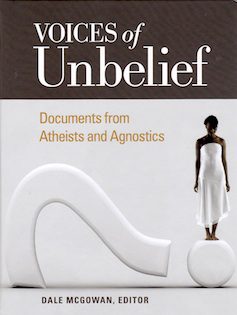 Source: Fournier, Jacques. The Fournier Register (1318-1325). Original manuscript currently in the Vatican Library, Lat. MS. 4030. English translations by Dareth Pray, assisted by Dr. Nancy P. Stork, for Voices of Unbelief, ed. Dale McGowan (Greenwood 2012).
Previous Post
November 16, 2015
A Doubter in the Inquisitor's Chair
Next Post

November 17, 2015 "How Was Christ made? I'm going to tell you..."
Browse Our Archives
Select a Category Ableism Activism Addiction and Recovery Agnosticism Anti-intellectualism Arts Atheism Beauty Catholicism Charles Darwin Children China Christianity Church/State separation churchgoing communication compassionate humanism Creationism critical thinking Culture death disaster response doubt education Egypt Entertainment Environment ethics evolution Existence of God Exploration fear Foundation Beyond Belief Free speech God Health History Human rights humanism identity India Interfaith Islam labels Language LGBT Love Meaning Media Medicine Middle East misconceptions mixed belief marriage Moral argument Morality Myths Near-Death Experience Nonreligious parenting Parody Persecution complex Philosophy Poetry Politics prayer Psychology Rationality Religion religious atheists Religious privilege Republican Party Satire Schools science secular parenting Spirituality The Unpigeonholeables Uncategorized United Kingdom Wonder
Select a Month March 2021 August 2020 March 2020 January 2020 September 2019 July 2019 June 2019 April 2019 February 2019 January 2019 December 2018 November 2018 October 2018 September 2018 August 2018 July 2018 June 2018 May 2018 April 2018 March 2018 February 2018 January 2018 December 2017 November 2017 October 2017 September 2017 August 2017 July 2017 March 2017 February 2017 January 2017 December 2016 November 2016 October 2016 September 2016 August 2016 July 2016 June 2016 May 2016 April 2016 March 2016 February 2016 January 2016 December 2015 November 2015 October 2015 September 2015 June 2015 March 2015 February 2015 January 2015 December 2014 November 2014 October 2014 September 2014
Follow Us!
TAKE THE
Religious Wisdom Quiz
Who opposed the rebuilding of the Temple and tried to discourage the Jews?
Select your answer to see how you score.
Their enemies/Samaritans Amalekites Moabites Philistines
Related posts from The Secular Spectrum

Yasir Qadhi's Elitist Ruse to Conceal the Obscure...
Storytelling while Secular: Writing about Loss in an...

What We Talk About When We Talk About...

Atheism in Colombia: Not as Different as You...
TRENDING AT PATHEOS Nonreligious

Dethroning Jesus and Enthroning Yourself
Jesus Never Asked to Be Worshipped. He Asked to Be Understood. Christianity...

Why Most Christians are Really Paulians and Jobians
I Don't Care, But It Matters Let's get this out of the...

Essential Tips to Successfully Navigate the Selling Process
Selling a house can feel overwhelming, but it doesn’t have to be....

To Make Remote Work Effective, Think About Others
The COVID-19 pandemic forced many companies to rapidly transition to remote work....

Flexibility Is Key to Solving Problems of Tomorrow
The world of work is undergoing a dramatic transformation. The COVID-19 pandemic...
view all Nonreligious blogs
Ad-Free & Subscriber Log-In Subscription Support
- About Us
- 2026 Calendar
- Videos
- Podcasts
- Library of World Religions
- Faith In Media Tracker
- Advertise With Us
- Write for Us
- Privacy Policy
- Terms of Service
- Do Not Sell My Data
- Contact Us
- Radiant Digital
- Manage Newsletter Subscriptions
- Unsubscribe From Notifications
- Sitemap
Copyright 2008-2026, Patheos. All rights reserved.
Subscription Support Ad-Free & Subscriber Log-In
Follow Patheos