
BuddhistCatholicContemplativeEvangelicalGeneral ChristianHinduJewishLatter-day SaintMuslimNew VisionsProgressive Christian
Beliefs
- Buddhist
- Catholic
- Contemplative
- Evangelical
- General Christian
- Hindu
- Jewish
- Latter-day Saint
- More Voices
- Muslim
- New Visions
- Pagan
- Progressive Christian
Topics
- Religion News
- Food and Religion
- Sports and Religion
- Religious Art
- Religious Music and Entertainment
- Religious Events
- History and Religion
- Style and Religion
- Politics and Religion
- Women in Religion
- Recreation Outdoors and Religion
- Business Finance and Religion
- Careers Workplace and Religion
- Education and Religion
- Family Parenting and Religion
- Health Fitness and Religion
- Home and Religion
- Relationships and Religion
- Technology and Religion
- Travel and Religion
Columnists
- Buddhist Columnists
- Business Finance and Religion Columnists
- Careers Workplace and Religion Columnists
- Catholic Columnists
- Contemplative Columnists
- Education and Religion Columnists
- Evangelists Columnists
- Family Parenting and Religion Columnists
- General Christian Columnists
- Health Fitness and Religion Columnists
- Hindu Columnists
- History and Religion Columnists
- Home and Religion Columnists
- Jewish Columnists
- More Voices Columnists
- Latter Day Columnists
- Muslim Columnists
- New Visions Columnists
- Nonreligious Columnists
- Pagan Columnists
- Politics and Religion Columnists
- Progressive Columnists
- Recreation Outdoors and Religion Columnists
- Relationships and Religion Columnists
- Religion News Columnists
- Religious Art Columnists
- Religious Events Columnists
- Religious Music and Entertainment Columnists
- Sports and Religion Columnists
- Style and Religion Columnists
- Technology and Religion Columnists
- Travel and Religion Columnists
- Women in Religion Columnists
Resource Library
- 2026 Calendar
- Library of World Religions
- The 100 Most Holy Places on Earth
- Patheos Answers
- Podcasts
- Videos
- Faith Leaders Database
- Anglican Episcopalian
- Bahai
- Baptist
- Buddhism
- Christianity
- Confucianism
- Eastern Orthodoxy
- Hinduism
- Holiness and Pentecostal
- ISKCON
- Islam
- Judaism
- Lutheran
- Methodist
- The Church of Jesus Christ of Latter-day Saints
- New Age
- Paganism
- Presbytarian and Reformed
- Protestantism
- Religion Behind the Scenes
- Roman Catholic
- Scientology
- Shia Islam
- Sikhism
- Sufism
- Sunni Islam
- Taoism
- Zen
- See all religions
Research Tools
 Ad-Free & Subscriber Log-In Subscription Support
Ad-Free & Subscriber Log-In Subscription Support
Follow Patheos 

- Trending:
- Forgiveness
- |
- Marriage
- |
- Consciousness
- |
- Death Penalty
- |
- Election
- |
- Halloween
 The Secular Spectrum
- Home
- Nonreligious
- A Doubter in the Inquisitor’s Chair
A Doubter in the Inquisitor’s Chair
Last updated on: November 17, 2015 at 12:12 pm by Dale McGowan
A Doubter in the Inquisitor’s Chair 2015-11-17T12:12:53-05:00 Dale McGowan
Patheos Explore the world's faith through different perspectives on religion and spirituality! Patheos has the views of the prevalent religions and spiritualities of the world.
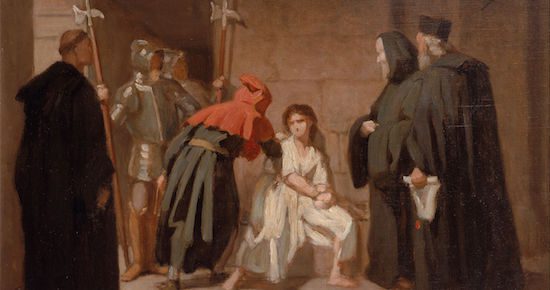
“Inquisition” by Edouard Moyse (c. 1872) via Wikimedia
A few years ago, while researching my historical anthology Voices of Unbelief: Documents from Atheists and Agnostics, I came across a 14th c. inquisitor named Jacques Fournier. Bishop Fournier was tasked with rooting out Cathars, an unorthodox sect spreading through the south of France. As he dove into the task, he took the unusual step of having all 578 interrogations transcribed in real time.
The Fournier Register, as the document was known, was translated from Middle French into Latin and locked up in the Vatican Library. Only small fragments had ever been translated into English.
The Inquisitions weren’t much interested in nonbelievers. They mostly sought to squash heretical movements that threatened Catholic religious and political power on the continent. But once in a blue moon, an inquisitor came across not a heretic but an outright unbeliever, or at least someone who doubted major tenets of the Christian faith without embracing any other sect.
I came across a few tantalizing references to three such doubters in secondary sources: Guillemette of Ornolac, Aude of Merviel, and Raimond de l’Aire. All three were interrogated by Fournier between 1318 and 1322, and I wanted to hear them speak. So I tracked down a translator of Middle French (with the unbeatable name Dareth Pray) and had the testimony of these three individuals, and the witnesses against them, translated into English for the first time for Voices of Unbelief.
Hearing their words so clearly after all these centuries was profoundly moving to me. Now I’d like to get them outside of that reference book to a wider audience.
Let’s start with the interrogation of Guillemette and the witnesses against her.
Statement of Witnesses Against Guillemette, Widow of Bernard Benet of Ornolac
In the year of our Lord 1319, the 11th of May, Alazaïs, wife of Pierre Munier of Ornolac, sworn witness to the event of the heretical words that it is said were uttered by Guillemette, widow of Bernard Benet of Ornolac, said:
A year ago, in relationship to the present time in which I am testifying, when the leaves of the elm trees grow, myself and Guillemette, widow of Bernard Benet of Ornolac, were sitting under the elm of Ornolac, and we were talking about this and that. Among other things, I said, “May God guard your soul, and with your body let God do what he will!”
Guillemette said to me, “Idiot, idiot, what are you afraid of?” I told her that I was afraid for my soul because we sin often, and I asked her: “And you, aren’t you afraid?” She responded that she was not. I asked her why she was not afraid for her soul, and she responded: “The soul? the soul? Idiot! Our soul is no more than blood.” Hearing this, I told her to never again say such a thing, for it could make misfortune befall her. She responded that she would say it in front of anyone she liked: “And what would happen to me, if I said it?”
That year, around Lent, I was in a house that is next to Guillemette’s house, and Raimond Benet, her son-in-law, was in her house, and he was speaking to her (I overheard it). He was saying: “My good woman, preserve your soul!” “Idiot, idiot, what soul? The soul is nothing more than blood.” Afterwards, I spoke of these words to Raimond Benet, who repeated them to me.
[When] questioned if it is out of hatred, love, fear, prayer, the promise of a sum of money, or another bribe that she testifies so, she responded no, it was only because it is the truth.
The same year and day as above, Gentille, the daughter of the late Guillaume Rous d’Ornolac, witness sworn and interrogated on that which precedes, said:
About a year ago, it seems to me, I was in the garden I have at Ornolac, which is next to the garden of Guillemette, the widow of Bernard Benet of Ornolac; she was in her garden, and we began to speak about the dead and the souls of the deceased. She said then: “The soul, the soul! Personally, I don’t see anything come out of men or women when they die. If I saw the soul or some other thing come out, I would know what the soul is, but so far I haven’t seen anything come out, and that is why I don’t know what the soul is.” Based on these words, I believe and I believed that she thought that the soul does not survive after the death of the body.
In the same place, she said that when men and woman live in the present life, their life is but blood. I understood by these words that she was saying that the soul is but blood.
I often heard her making such remarks, in my house as well as elsewhere.
[When] questioned if it is out of hatred, love, fear, prayer, the promise of a sum of money, or another bribe that she testifies so, she responded no, it was only because it is the truth.
The same year as above, Raimond Benet of Ornolac, witness sworn and interrogated on that which precedes, said:
Less than a year ago, though I remember neither the day nor the season, Guillemette, my mother-in-law, and Raimonde, my wife, were sleeping together in my house, while I slept in another. In the morning, my mother-in-law told me that she and my wife had heard something that cried “ha,” and asked me if I had heard it. I replied that no, I had not heard it, but that cats often cry in this way when they fight with each other. She told me that it could very well have been the soul of a dead person, for she had heard tell that when souls are not in a good place, they cry and go in the wind, and that one can see them. I told her: “How can you say that one can see the soul and that it goes in the wind?” She responded: “You don’t see that, when men die, one doesn’t see them do anything but exhale? This exhalation is nothing but wind. If the soul were something other than this exhalation, one would see something come out of the body. Now, one only sees this exhalation; that is why the soul goes in the wind.”
That year, I had cut the head off of a goose, and that goose lived and cried still, until its blood had left its body. Guillemette said: “The goose cried as long as it had blood, and the same thing would happen for a man or a woman: they would live as long as they had blood.” But I do not remember having heard her say that the human soul is nothing but blood.
If I remember anything else, I will come and find My Lord the Bishop, and I will reveal it to him.
[When] questioned if it is out of hatred, love, fear, prayer, the promise of a sum of money, or another bribe that she testifies so, he responded that no, it was only because it is the truth.
Confession of Guillamette, Widow of Bernard Benet of Ornolac
In the year of our Lord 1320, the 11th of August, the said Guillemette, appearing in the Chamber of the bishopric of Pamiers in the presence of My said Lord Bishop attended by Brother Gaillard de Pomiès, said and confessed:
Three years ago the next grape-harvesting season, I was in my garden at Ornolac, and I fell to the ground from a wall and hurt my nose, to the point that blood came out of it. When I fell, Gentille, the daughter of the late Guillaume Rous of Ornolac, came to help me, and as I saw that blood was coming out of my nose, I said: “The soul, the soul! The soul is but blood.”
A year ago at the end of April, when the elms were beginning to put out their leaves, I was under the elm of Ornolac, which is near the land of Pierre Bordas of Ornolac, I do believe. We were speaking together, saying that one must do good, life enduring, for one’s soul, and that one must fear God for the salvation of one’s soul. I said then that the soul of the man and the woman is but blood, and that when the man or the woman dies, their soul dies also.
That year, around Easter, Raimond Benet had a newborn child who was dying. He called me, when I was going to the woods in the forest, so that I could look after his dying son. I looked after him from morning to night, and I was watching if I could see something come out of the child’s mouth when he died. As I saw nothing come out except an exhalation, I said, in front of Gentille den Rous, already subpoenaed: “Watch, watch, when a man dies, you don’t see anything but wind come out of his mouth. If I saw something else come out, I would believe that the soul is something. But since only wind came out, I do not believe that it is anything.”
Did you say these words about the soul in possession of all your senses, and believing this in your heart, in the meaning of these words?
Yes, and I have believed it for two years, although I have not remained continuously in this belief, only intermittingly. It seems to me that it was during a half a year, in those two years, that I was of that opinion, believing that the human soul was nothing but blood when the man lives in his body, and that it would die when the man or the human body dies.
At the time when you believed that the human soul dies with the body, did you believe that there was a hell or a heaven, or that souls were punished or rewarded after death?
During that time, I did not believe that there was a hell or a heaven, or any other world but the present; I also believed that souls would not be punished or rewarded in the other world.
Why did you believe that the human soul was but the blood of the living man, and that it would die with the body?
Firstly, I believed it because I saw that when all the blood has left the body of a living thing, it dies. I believed it secondly because I didn’t see anything come out of the men who were dying, except wind.
During the time when you were in this believe about the mortality of the soul, did you believe that the souls of saint Peter, Paul, and of the other saints and of all deceased men were dead?
Yes, except that I always believed in the existence of God, of the Virgin Mary, and of Saint John the Evangelist, for the Virgin Mary and Saint John neither died, nor were killed. But for the others, some died, and some were even killed.
From the moment that you believed that human souls die with the body, did you believe that men would be resurrected or would live again after death?
I did not believe in the resurrection of human bodies, for I believed that just as the body is buried, the soul is also buried with it. And as I saw the human body rot, I believed that it could never live again.
Did you have someone who taught this to you, did you learn it from someone?
No. I thought it over and believed it by myself.
Do you believe that the soul of Jesus Christ, who died on the cross, is dead or with his body?
Yes, for, although God cannot die, Jesus Christ died, all the same. Therefore, although I believed that God has always been, I did not believe that Christ’s soul lived and subsisted after his death.
Do you believe then that Christ was resurrected?
Yes, and it is God who did that.
Do you currently believe that the human soul is anything other than blood, that it does not die at the death of the body, that it is not buried with the body, that there is a hell and a heaven, where souls are punished or rewarded, and there will be a resurrection of all men, and that the soul of Christ did not die with his body?
Yes, and I have believed it since the last holiday of the Ascension of the Lord because at that time I heard tell that My Lord the Bishop of Pamiers wanted to carry out an investigation against me about it. I was afraid of My Lord Bishop because of that, and I changed my opinion after that time.
Guillemette was sentenced to wear a double yellow cross as a mark of shame for the remainder of her life. Fournier went on to become Pope Benedict XII.
Second interrogation: Aude of Merviel
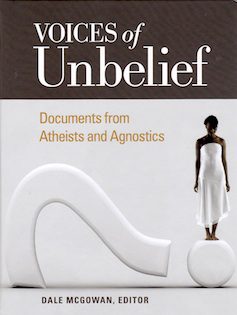 Source: Fournier, Jacques. The Fournier Register (1318-1325). Original manuscript currently in the Vatican Library, Lat. MS. 4030. English translations by Dareth Pray, assisted by Dr. Nancy P. Stork, for Voices of Unbelief, ed. Dale McGowan (Greenwood 2012).
Previous Post

November 15, 2015
“No True Atheist”: Freethinking, Dogmatism, and Interfaith Dialogue


Browse Our Archives
Select a Category Ableism Activism Addiction and Recovery Agnosticism Anti-intellectualism Arts Atheism Beauty Catholicism Charles Darwin Children China Christianity Church/State separation churchgoing communication compassionate humanism Creationism critical thinking Culture death disaster response doubt education Egypt Entertainment Environment ethics evolution Existence of God Exploration fear Foundation Beyond Belief Free speech God Health History Human rights humanism identity India Interfaith Islam labels Language LGBT Love Meaning Media Medicine Middle East misconceptions mixed belief marriage Moral argument Morality Myths Near-Death Experience Nonreligious parenting Parody Persecution complex Philosophy Poetry Politics prayer Psychology Rationality Religion religious atheists Religious privilege Republican Party Satire Schools science secular parenting Spirituality The Unpigeonholeables Uncategorized United Kingdom Wonder
Select a Month March 2021 August 2020 March 2020 January 2020 September 2019 July 2019 June 2019 April 2019 February 2019 January 2019 December 2018 November 2018 October 2018 September 2018 August 2018 July 2018 June 2018 May 2018 April 2018 March 2018 February 2018 January 2018 December 2017 November 2017 October 2017 September 2017 August 2017 July 2017 March 2017 February 2017 January 2017 December 2016 November 2016 October 2016 September 2016 August 2016 July 2016 June 2016 May 2016 April 2016 March 2016 February 2016 January 2016 December 2015 November 2015 October 2015 September 2015 June 2015 March 2015 February 2015 January 2015 December 2014 November 2014 October 2014 September 2014
Follow Us!
TAKE THE
Religious Wisdom Quiz
What is the correct sequence of the fruit of the Spirit as listed in Galatians?
Select your answer to see how you score.
Joy, love, peace, goodness, kindness, faithfulness, forbearance, gentleness, self-control Love, joy, peace, kindness, goodness, forbearance, faithfulness, self-control, gentleness Love, joy, peace, forbearance, kindness, goodness, faithfulness, gentleness, self-control Love, peace, joy, kindness, forbearance, faithfulness, goodness, self-control, gentleness
Related posts from The Secular Spectrum

Yasir Qadhi's Elitist Ruse to Conceal the Obscure...
Storytelling while Secular: Writing about Loss in an...

Atheism in Colombia: Not as Different as You...

A Humanist in Colombia: Lessons for a Hurting...
TRENDING AT PATHEOS Nonreligious

Dethroning Jesus and Enthroning Yourself
Jesus Never Asked to Be Worshipped. He Asked to Be Understood. Christianity...

Why Most Christians are Really Paulians and Jobians
I Don't Care, But It Matters Let's get this out of the...

Essential Tips to Successfully Navigate the Selling Process
Selling a house can feel overwhelming, but it doesn’t have to be....

To Make Remote Work Effective, Think About Others
The COVID-19 pandemic forced many companies to rapidly transition to remote work....

Flexibility Is Key to Solving Problems of Tomorrow
The world of work is undergoing a dramatic transformation. The COVID-19 pandemic...
view all Nonreligious blogs
Ad-Free & Subscriber Log-In Subscription Support
- About Us
- 2026 Calendar
- Videos
- Podcasts
- Library of World Religions
- Faith In Media Tracker
- Advertise With Us
- Write for Us
- Privacy Policy
- Terms of Service
- Do Not Sell My Data
- Contact Us
- Radiant Digital
- Manage Newsletter Subscriptions
- Unsubscribe From Notifications
- Sitemap
Copyright 2008-2026, Patheos. All rights reserved.
Subscription Support Ad-Free & Subscriber Log-In
Follow Patheos