
BuddhistCatholicContemplativeEvangelicalGeneral ChristianHinduJewishLatter-day SaintMuslimNew VisionsProgressive Christian
Beliefs
- Buddhist
- Catholic
- Contemplative
- Evangelical
- General Christian
- Hindu
- Jewish
- Latter-day Saint
- More Voices
- Muslim
- New Visions
- Pagan
- Progressive Christian
Topics
- Religion News
- Food and Religion
- Sports and Religion
- Religious Art
- Religious Music and Entertainment
- Religious Events
- History and Religion
- Style and Religion
- Politics and Religion
- Women in Religion
- Recreation Outdoors and Religion
- Business Finance and Religion
- Careers Workplace and Religion
- Education and Religion
- Family Parenting and Religion
- Health Fitness and Religion
- Home and Religion
- Relationships and Religion
- Technology and Religion
- Travel and Religion
Columnists
- Buddhist Columnists
- Business Finance and Religion Columnists
- Careers Workplace and Religion Columnists
- Catholic Columnists
- Contemplative Columnists
- Education and Religion Columnists
- Evangelists Columnists
- Family Parenting and Religion Columnists
- General Christian Columnists
- Health Fitness and Religion Columnists
- Hindu Columnists
- History and Religion Columnists
- Home and Religion Columnists
- Jewish Columnists
- More Voices Columnists
- Latter Day Columnists
- Muslim Columnists
- New Visions Columnists
- Nonreligious Columnists
- Pagan Columnists
- Politics and Religion Columnists
- Progressive Columnists
- Recreation Outdoors and Religion Columnists
- Relationships and Religion Columnists
- Religion News Columnists
- Religious Art Columnists
- Religious Events Columnists
- Religious Music and Entertainment Columnists
- Sports and Religion Columnists
- Style and Religion Columnists
- Technology and Religion Columnists
- Travel and Religion Columnists
- Women in Religion Columnists
Resource Library
- 2026 Calendar
- Library of World Religions
- The 100 Most Holy Places on Earth
- Patheos Answers
- Podcasts
- Videos
- Faith Leaders Database
- Anglican Episcopalian
- Bahai
- Baptist
- Buddhism
- Christianity
- Confucianism
- Eastern Orthodoxy
- Hinduism
- Holiness and Pentecostal
- ISKCON
- Islam
- Judaism
- Lutheran
- Methodist
- The Church of Jesus Christ of Latter-day Saints
- New Age
- Paganism
- Presbytarian and Reformed
- Protestantism
- Religion Behind the Scenes
- Roman Catholic
- Scientology
- Shia Islam
- Sikhism
- Sufism
- Sunni Islam
- Taoism
- Zen
- See all religions
Research Tools
 Ad-Free & Subscriber Log-In Subscription Support
Follow Patheos 

- Trending:
- Advent
- |
- Forgiveness
- |
- Thanksgiving
- |
- Election
- |
- Seasonal Holidays
- |
- Marriage
 The Secular Spectrum
- Home
- Nonreligious
- “Please Put a Blanket on Me” — I Was Aware in My Coma
“Please Put a Blanket on Me” — I Was Aware in My Coma
Last updated on: October 23, 2015 at 11:26 am by Guest Contributor
“Please Put a Blanket on Me” — I Was Aware in My Coma 2015-10-23T11:26:02-05:00 Guest Contributor
Patheos Explore the world's faith through different perspectives on religion and spirituality! Patheos has the views of the prevalent religions and spiritualities of the world.
By Stephanie Savage
While my doctors were shining lights in my eyes, trying to gauge my level of consciousness, I was asking them to leave me alone so I could get back to sleep…in what I call my coma-dream.
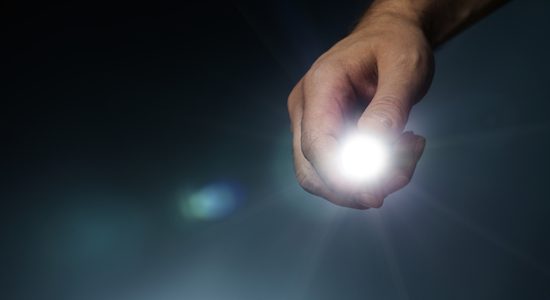
During my six-week coma, I experienced a phenomenon called covert cognition. Though my pupils responded to the light, I flunked most of their other tests. The doctors basically wrote me off as a vegetable. Ironically, it was the move to a nursing home—as they were warehousing this hopeless case rated as a poor candidate for rehabilitation—that finally spurred me to awaken. My doctors denied me physical therapy, yet every time I was physically stimulated, I woke up a little more.
Before I began researching my Skeptical Inquirer article, “Covert Cognition: My So-Called Near-Death Experience,” I knew nothing about covert cognition, AKA covert awareness, also called, “Hello! Please put a blanket on me; I’m cold!” The last one is something I would’ve told the medical personnel if I could. After my awakening, all I knew was that my doctors had written me off as a vegetable while I was aware of much of what was going on around me.
According to covert cognition researchers, as many as one in five patients with disorders of consciousness are covertly aware. Most aren’t as fortunate as I was. But at least one person is luckier still; he’s now rolling in money from his bestseller about his coma-dream, which he insists was Proof of Heaven.
In a future post, I will get into the reasons why I believe Eben Alexander’s near-death experience (NDE) was, like mine, just a form of coma-dream. But first I want to dive into the subject of covert cognition and why it negates the arguments for mind-brain separation in NDEs.

The day of my move to a nursing home, five days before my awakening.
The case for mind-brain separation in NDEs is usually predicated on the assumption that NDEs occur when the brain isn’t working and is incapable of generating what the so-called experiencer perceived. But covert cognition researchers are finding that the brains of a significant portion of patients with consciousness disorders are still functioning at levels which can at present only be detected with rare and expensive diagnostic machines. In short, instead of being an on/off switch, consciousness is more of a dimmer.
As I detailed in the SI piece, when cognitive neuroscientist Adrian Owen was at Cambridge, he and his team succeeded in communicating with patients with no outward signs of awareness (much like Bristol Palin). One subject was actually able to tell them he wasn’t in pain.
This was not like facilitated communication. Dr. Owen and his fellow researchers devised an ingenious way to allow patients to answer biographical questions inside an fMRI machine. The patients imagined playing tennis or walking through their homes to choose yes or no. As they did so, their brain scans lit up in the motor or navigational areas, indicating which response the patient chose. Using this method, four patients were able to reply to the queries. One answered five of six correctly.
Sadly, that patient eventually died without regaining full consciousness. But the father of Jeff Tremblay now knows he was right when he sensed that his son was able to enjoy the movies he’s been taking him out to see every weekend for more than a decade.
Jeff took part in the Hitchcock study conducted by the Owen Lab at Western University (see also the SI article), in which a condensed version of “Bang! You’re Dead,” a classic episode of Alfred Hitchcock Presents, was presented as the participants’ brains were imaged by an fMRI machine. Jeff’s brain patterns proved to be identical to that of the study’s healthy controls. That means he was following every suspenseful plot twist. Peter Tremblay reports, however, that Jeff’s favorite genre is comedies, to which he responds with a big belly laugh.
Dr. Owen’s goal to make covert cognition detection widely available using EEGs is still in its infancy, yet he’s already discovered Kate Bainbridge’s covert awareness via PET scan and given comfort to Peter Trembley. Kate received therapy after her awareness was uncovered. Although she is severely disabled physically, Kate is now fully conscious. Her life is far from easy, yet she’s expressed her tremendous gratitude to Dr. Owens for discovering that’s she’s “in there,” as she has put it.
These are of course the extreme ends of the spectrum. Yet, it’s evident that extensively-damaged brains are capable of functioning at levels that were once unsuspected. Proof of Heaven rests on the assumption that Eben Alexander’s cerebral cortex was “totally off-line,” too ravaged by E. coli meningitis to be responsible for his NDE — the equivalent of brain death. He seems awfully spry for someone who should be a candidate for organ harvesting. If his cortex had truly been destroyed, he wouldn’t be writing books and making appearances on Oprah.
Rather than list all the reasons Alexander’s ridiculous assertion is unsupportable, I will point to Sam Harris’s highly cogent dissection: This Must Be Heaven.
Though Alexander calls himself a scientist throughout Proof of Heaven, he is in fact a neurosurgeon. That’s like your plumber claiming the credentials to design your city’s sewage treatment system. Sam Harris, on the other hand, is an actual neuroscientist. I’m not a scientist or a doctor, but I am a person who experienced a complex coma-dream while my doctors proclaimed me profoundly brain damaged and assumed I was a hopeless vegetable. Is covert cognition really harder to accept than the idea that our thoughts and feelings exist outside the brain, floating free of the body like my mind did during math class?
Covert cognition has profound implications for people alleged to have had no brain function. When Dr. Owen and his team finally succeed in making covert cognition detection portable and inexpensive, I think we’ll find that the brains of these experiencers are far more active than those of the NDE true-believers wedded to the notion that the mind exists separately from the brain.
Full disclosure: I’m now working with Dr. Owen to a small degree via email. He said he would be asking me questions about my covert cognition experience as he reaches the relevant chapters of his new book for the popular market. I look forward to helping him in any way I can because I’m now passionate about informing the public about the plight of the covertly aware.
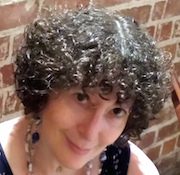 STEPHANIE SAVAGE started out as a writer of satirical fiction with a skeptical and humanist bent. When she suffered multiple strokes and fell into a six-week coma, she emerged with a mission to tell her story and fight for the cause of reason using nonfiction.
Her work has appeared in such magazines as Skeptical Inquirer and Free Inquiry, including her article, “Covert Cognition: My So-Called Near-Death Experience,” which explained how covert cognition like she experienced could disprove mind-brain separation. She also writes a blog that explores the skeptical and humanist aspects of her experience.
Previous Post
October 22, 2015
Getting My Own Story Straight
Next Post
October 27, 2015 10 Ways Believers and Nonbelievers Make Great Marriages
Browse Our Archives
Select a Category Ableism Activism Addiction and Recovery Agnosticism Anti-intellectualism Arts Atheism Beauty Catholicism Charles Darwin Children China Christianity Church/State separation churchgoing communication compassionate humanism Creationism critical thinking Culture death disaster response doubt education Egypt Entertainment Environment ethics evolution Existence of God Exploration fear Foundation Beyond Belief Free speech God Health History Human rights humanism identity India Interfaith Islam labels Language LGBT Love Meaning Media Medicine Middle East misconceptions mixed belief marriage Moral argument Morality Myths Near-Death Experience Nonreligious parenting Parody Persecution complex Philosophy Poetry Politics prayer Psychology Rationality Religion religious atheists Religious privilege Republican Party Satire Schools science secular parenting Spirituality The Unpigeonholeables Uncategorized United Kingdom Wonder
Select a Month March 2021 August 2020 March 2020 January 2020 September 2019 July 2019 June 2019 April 2019 February 2019 January 2019 December 2018 November 2018 October 2018 September 2018 August 2018 July 2018 June 2018 May 2018 April 2018 March 2018 February 2018 January 2018 December 2017 November 2017 October 2017 September 2017 August 2017 July 2017 March 2017 February 2017 January 2017 December 2016 November 2016 October 2016 September 2016 August 2016 July 2016 June 2016 May 2016 April 2016 March 2016 February 2016 January 2016 December 2015 November 2015 October 2015 September 2015 June 2015 March 2015 February 2015 January 2015 December 2014 November 2014 October 2014 September 2014
Follow Us!
TAKE THE
Religious Wisdom Quiz
Which Christian principle is shown by the story of the widow's mite?
Select your answer to see how you score.
Never give Generosity from the heart Give to be seen Give only if rich
Related posts from The Secular Spectrum

Despite "Pro-Life" Claims, Stem Cell Therapy Has Very...
On Cognitive Dissonance and the Thought Patterns Behind...
The Problem with “Thoughts and Prayers”

Reaching 'Faith Healers' Is an Urgent Public Health...
TRENDING AT PATHEOS Nonreligious

Dethroning Jesus and Enthroning Yourself
Jesus Never Asked to Be Worshipped. He Asked to Be Understood. Christianity...

Why Most Christians are Really Paulians and Jobians
I Don't Care, But It Matters Let's get this out of the...

Essential Tips to Successfully Navigate the Selling Process
Selling a house can feel overwhelming, but it doesn’t have to be....

To Make Remote Work Effective, Think About Others
The COVID-19 pandemic forced many companies to rapidly transition to remote work....

Flexibility Is Key to Solving Problems of Tomorrow
The world of work is undergoing a dramatic transformation. The COVID-19 pandemic...
view all Nonreligious blogs
Ad-Free & Subscriber Log-In Subscription Support
- About Us
- 2026 Calendar
- Videos
- Podcasts
- Library of World Religions
- Faith In Media Tracker
- Advertise With Us
- Write for Us
- Privacy Policy
- Terms of Service
- Do Not Sell My Data
- Contact Us
- Radiant Digital
- Manage Newsletter Subscriptions
- Unsubscribe From Notifications
- Sitemap
Copyright 2008-2026, Patheos, part of the Radiant Digital network of media brands. All rights reserved.
Subscription Support Ad-Free & Subscriber Log-In
Follow Patheos