
BuddhistCatholicContemplativeEvangelicalGeneral ChristianHinduJewishLatter-day SaintMuslimNew VisionsProgressive Christian
Beliefs
- Buddhist
- Catholic
- Contemplative
- Evangelical
- General Christian
- Hindu
- Jewish
- Latter-day Saint
- More Voices
- Muslim
- New Visions
- Pagan
- Progressive Christian
Topics
- Religion News
- Food and Religion
- Sports and Religion
- Religious Art
- Religious Music and Entertainment
- Religious Events
- History and Religion
- Style and Religion
- Politics and Religion
- Women in Religion
- Recreation Outdoors and Religion
- Business Finance and Religion
- Careers Workplace and Religion
- Education and Religion
- Family Parenting and Religion
- Health Fitness and Religion
- Home and Religion
- Relationships and Religion
- Technology and Religion
- Travel and Religion
Columnists
- Buddhist Columnists
- Business Finance and Religion Columnists
- Careers Workplace and Religion Columnists
- Catholic Columnists
- Contemplative Columnists
- Education and Religion Columnists
- Evangelists Columnists
- Family Parenting and Religion Columnists
- General Christian Columnists
- Health Fitness and Religion Columnists
- Hindu Columnists
- History and Religion Columnists
- Home and Religion Columnists
- Jewish Columnists
- More Voices Columnists
- Latter Day Columnists
- Muslim Columnists
- New Visions Columnists
- Nonreligious Columnists
- Pagan Columnists
- Politics and Religion Columnists
- Progressive Columnists
- Recreation Outdoors and Religion Columnists
- Relationships and Religion Columnists
- Religion News Columnists
- Religious Art Columnists
- Religious Events Columnists
- Religious Music and Entertainment Columnists
- Sports and Religion Columnists
- Style and Religion Columnists
- Technology and Religion Columnists
- Travel and Religion Columnists
- Women in Religion Columnists
Resource Library
- 2026 Calendar
- Library of World Religions
- The 100 Most Holy Places on Earth
- Patheos Answers
- Podcasts
- Videos
- Faith Leaders Database
- Anglican Episcopalian
- Bahai
- Baptist
- Buddhism
- Christianity
- Confucianism
- Eastern Orthodoxy
- Hinduism
- Holiness and Pentecostal
- ISKCON
- Islam
- Judaism
- Lutheran
- Methodist
- The Church of Jesus Christ of Latter-day Saints
- New Age
- Paganism
- Presbytarian and Reformed
- Protestantism
- Religion Behind the Scenes
- Roman Catholic
- Scientology
- Shia Islam
- Sikhism
- Sufism
- Sunni Islam
- Taoism
- Zen
- See all religions
Research Tools
 Ad-Free & Subscriber Log-In Subscription Support
Ad-Free & Subscriber Log-In Subscription Support
Follow Patheos 

- Trending:
- Forgiveness
- |
- Marriage
- |
- Consciousness
- |
- Death Penalty
- |
- Election
- |
- Halloween
 The Secular Spectrum
- Home
- Nonreligious
- Does a Liberal Humanism Follow from Atheism?
Does a Liberal Humanism Follow from Atheism?
Last updated on: September 29, 2015 at 1:26 pm by Guest Contributor
Does a Liberal Humanism Follow from Atheism? 2015-09-29T13:26:18-05:00 Guest Contributor
Patheos Explore the world's faith through different perspectives on religion and spirituality! Patheos has the views of the prevalent religions and spiritualities of the world.
 by Kile Jones
The debates between what are called “dictionary atheists” and “social justice warriors” reveal an intriguing tension: Does the lack of belief in a deity imply anything about one’s ethics or politics? Or better put, is a progressive politics and socially liberal ethic a more reasonable terminus for non-believers, than say, Men’s Rights Activists or fiscally conservative libertarianism? The backlash against Atheism Plus is a perfect example of this contention.
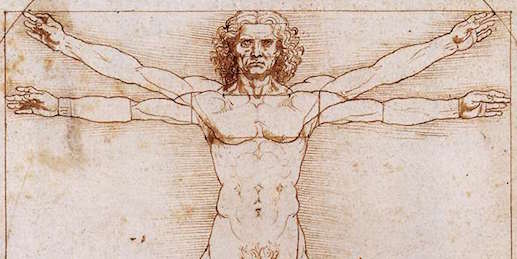
Besides the descriptive fact that non-believers generally vote Democratic or Independent (only around 1 in 10 vote Republican), are socially liberal and inclined towards feminism, secularism, social justice, and LGBTQ advocacy, there is a prescriptive argument that insists humanism is the reasonable “next step” from atheism. Humanists, generally speaking, believe their positive moral philosophy follows naturally from their godlessness. Why would atheists continue in a secularized form of the religious conservativism they despise?
Of course one does not have to be a socially liberal humanist to affirm an atheist identity. And the etymologically-oriented dictionary atheists have a point: humans can, and do, compartmentalize many of their beliefs and identities. These atheists rightly fear a totalitarian form of humanism that demands you believe x, y, and z, in order to be a genuine atheist. In fact, it’s usually the firebrand atheists like David Silverman who are telling humanists what they “actually” are.
To my dictionary friends, here are a few examples of beliefs that are implied and/or follow from being an atheist:
- not believing anything based on faith or without sufficient evidence;
- being critical of authoritarianism and rigid dogmatism;
- believing in the merits of the scientific enterprise; and
- believing there are no ideas beyond critique and reproach.
It would be hard to imagine an atheist who didn’t agree with most of these points. To put it simply: your atheism has implications about other facets of life.
Being someone repulsed by the fear and hatred instilled in people of fundamentalist religious influence, how can I accept the mistreatment of minorities and marginalized persons? It would be inconsistent of me to only decry forms of abuse that have a religious origin. It would also be erroneous to not believe in white privilege while believing in Christian/religious privilege. So while I agree that we can compartmentalize our beliefs and identities, they cannot, and do not, exist in a vacuum.
So while atheism simply means “no God,” it also implies a host of other positions. From a certain epistemology to trends in voting patters, atheism lends itself more to humanism and progressive social views than to the outdated world of Norman Rockwell. From being in favor of taking down the Confederate flag in Charleston to denouncing police murdering black persons, a humanistic concern for the oppressed is a natural extension of, and not a stranger to, my atheism.
I cannot see how denying the plight of women, people of color, and LGBTQ persons more consistently follows from a lack of a belief in God than from these other, more humanistic positions.

KILE JONES is the founder of the Claremont Journal of Religion and “Interview an Atheist at Church Day.” He holds two masters degrees from Boston University.
Previous Post

September 24, 2015
Carl, Francis, and Elizabeth: A Church/State Test
Next Post
September 30, 2015 The Planned Parenthood Debate 101: What You Need to Know
Recent Comments
Browse Our Archives
Select a Category Ableism Activism Addiction and Recovery Agnosticism Anti-intellectualism Arts Atheism Beauty Catholicism Charles Darwin Children China Christianity Church/State separation churchgoing communication compassionate humanism Creationism critical thinking Culture death disaster response doubt education Egypt Entertainment Environment ethics evolution Existence of God Exploration fear Foundation Beyond Belief Free speech God Health History Human rights humanism identity India Interfaith Islam labels Language LGBT Love Meaning Media Medicine Middle East misconceptions mixed belief marriage Moral argument Morality Myths Near-Death Experience Nonreligious parenting Parody Persecution complex Philosophy Poetry Politics prayer Psychology Rationality Religion religious atheists Religious privilege Republican Party Satire Schools science secular parenting Spirituality The Unpigeonholeables Uncategorized United Kingdom Wonder
Select a Month March 2021 August 2020 March 2020 January 2020 September 2019 July 2019 June 2019 April 2019 February 2019 January 2019 December 2018 November 2018 October 2018 September 2018 August 2018 July 2018 June 2018 May 2018 April 2018 March 2018 February 2018 January 2018 December 2017 November 2017 October 2017 September 2017 August 2017 July 2017 March 2017 February 2017 January 2017 December 2016 November 2016 October 2016 September 2016 August 2016 July 2016 June 2016 May 2016 April 2016 March 2016 February 2016 January 2016 December 2015 November 2015 October 2015 September 2015 June 2015 March 2015 February 2015 January 2015 December 2014 November 2014 October 2014 September 2014
Follow Us!
TAKE THE
Religious Wisdom Quiz
How many commandments were written on stone tablets?
Select your answer to see how you score.
Ten Seven Twelve Thirteen
Related posts from The Secular Spectrum

American Pluralism: Its Promises and Struggles



Storytelling while Secular: Writing about Loss in an...
TRENDING AT PATHEOS Nonreligious

Dethroning Jesus and Enthroning Yourself
Jesus Never Asked to Be Worshipped. He Asked to Be Understood. Christianity...

Why Most Christians are Really Paulians and Jobians
I Don't Care, But It Matters Let's get this out of the...

Essential Tips to Successfully Navigate the Selling Process
Selling a house can feel overwhelming, but it doesn’t have to be....

To Make Remote Work Effective, Think About Others
The COVID-19 pandemic forced many companies to rapidly transition to remote work....

Flexibility Is Key to Solving Problems of Tomorrow
The world of work is undergoing a dramatic transformation. The COVID-19 pandemic...
view all Nonreligious blogs
Ad-Free & Subscriber Log-In Subscription Support
- About Us
- 2026 Calendar
- Videos
- Podcasts
- Library of World Religions
- Faith In Media Tracker
- Advertise With Us
- Write for Us
- Privacy Policy
- Terms of Service
- Do Not Sell My Data
- Contact Us
- Radiant Digital
- Manage Newsletter Subscriptions
- Unsubscribe From Notifications
- Sitemap
Copyright 2008-2026, Patheos. All rights reserved.
Subscription Support Ad-Free & Subscriber Log-In
Follow Patheos