
BuddhistCatholicContemplativeEvangelicalGeneral ChristianHinduJewishLatter-day SaintMuslimNew VisionsProgressive Christian
Beliefs
- Buddhist
- Catholic
- Contemplative
- Evangelical
- General Christian
- Hindu
- Jewish
- Latter-day Saint
- More Voices
- Muslim
- New Visions
- Pagan
- Progressive Christian
Topics
- Religion News
- Food and Religion
- Sports and Religion
- Religious Art
- Religious Music and Entertainment
- Religious Events
- History and Religion
- Style and Religion
- Politics and Religion
- Women in Religion
- Recreation Outdoors and Religion
- Business Finance and Religion
- Careers Workplace and Religion
- Education and Religion
- Family Parenting and Religion
- Health Fitness and Religion
- Home and Religion
- Relationships and Religion
- Technology and Religion
- Travel and Religion
Columnists
- Buddhist Columnists
- Business Finance and Religion Columnists
- Careers Workplace and Religion Columnists
- Catholic Columnists
- Contemplative Columnists
- Education and Religion Columnists
- Evangelists Columnists
- Family Parenting and Religion Columnists
- General Christian Columnists
- Health Fitness and Religion Columnists
- Hindu Columnists
- History and Religion Columnists
- Home and Religion Columnists
- Jewish Columnists
- More Voices Columnists
- Latter Day Columnists
- Muslim Columnists
- New Visions Columnists
- Nonreligious Columnists
- Pagan Columnists
- Politics and Religion Columnists
- Progressive Columnists
- Recreation Outdoors and Religion Columnists
- Relationships and Religion Columnists
- Religion News Columnists
- Religious Art Columnists
- Religious Events Columnists
- Religious Music and Entertainment Columnists
- Sports and Religion Columnists
- Style and Religion Columnists
- Technology and Religion Columnists
- Travel and Religion Columnists
- Women in Religion Columnists
Resource Library
- 2026 Calendar
- Library of World Religions
- The 100 Most Holy Places on Earth
- Patheos Answers
- Podcasts
- Videos
- Faith Leaders Database
- Anglican Episcopalian
- Bahai
- Baptist
- Buddhism
- Christianity
- Confucianism
- Eastern Orthodoxy
- Hinduism
- Holiness and Pentecostal
- ISKCON
- Islam
- Judaism
- Lutheran
- Methodist
- The Church of Jesus Christ of Latter-day Saints
- New Age
- Paganism
- Presbytarian and Reformed
- Protestantism
- Religion Behind the Scenes
- Roman Catholic
- Scientology
- Shia Islam
- Sikhism
- Sufism
- Sunni Islam
- Taoism
- Zen
- See all religions
Research Tools
 Ad-Free & Subscriber Log-In Subscription Support
Ad-Free & Subscriber Log-In Subscription Support
Follow Patheos 

- Trending:
- Forgiveness
- |
- Marriage
- |
- Consciousness
- |
- Death Penalty
- |
- Election
- |
- Halloween
 The Secular Spectrum
- Home
- Nonreligious
- Carl, Francis, and Elizabeth: A Church/State Test
Carl, Francis, and Elizabeth: A Church/State Test
Last updated on: September 24, 2015 at 1:18 pm by Guest Contributor
Carl, Francis, and Elizabeth: A Church/State Test 2015-09-24T13:18:17-05:00 Guest Contributor
Patheos Explore the world's faith through different perspectives on religion and spirituality! Patheos has the views of the prevalent religions and spiritualities of the world.
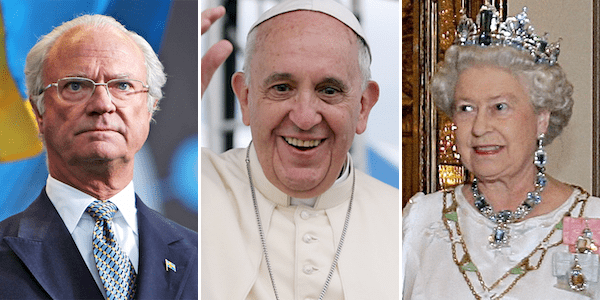
by Kelsey Jo Starr
I live in Washington, DC. I work and go to school in Washington, DC. And, most importantly, I ride the Metro in Washington, DC. As a Metro rider, I have prayed to every god that may or may not exist, performed every rain dance imaginable, and bargained away most things that I own in hopes that the trains will at least move, preferably at a reasonable pace during the few days that Pope Francis will be in town. It will be a traffic nightmare to say the least. Not to mention the fact that certain streets will be closed, acting as a barrier between me and my favorite place in the city: that grassy area where the food trucks all park.
But all human-related frustration aside, there is a bigger question at stake here. This visit will be Pope Francis’s first, and the first time a Pope has visited the United States since 2008. You can say what you want about him. You can talk about how he’s foregoing lunch with elected officials in order to dine with the homeless. You can talk about how he’s protecting several church leaders accused of child molestation. No matter what your opinions of him, it is impossible to deny that his visit is historically significant.
That being said, there is one major question looming in a lot of people’s brains. Given that Pope Francis represents the Catholic Church, does his visit violate the American principle of separation of church and state?
Let’s examine this question further.
The simple fact that he is here on American soil addressing US politicians violates no laws. What many people forget is that the Pope is technically a Head of State—no different than the Queen of the United Kingdom (who is also the head of the Church of England). The Vatican is an independent nation, and its leaders are worthy of the same pomp and circumstance as any other Head of State.
Many Americans get confused by the concept of a Head of State because we are one of the few nations where the Head of State and Head of Government are the same person. In brief, the Head of State is the human figurehead that acts as a representation of their country when on foreign diplomatic business. The Head of Government actually keeps the country running and executes laws.
What makes the Pope so fascinating and his visit so potentially problematic is his popularity. You won’t see the DC Metro system falling apart at the seams when Carl XVI Gustaf of Sweden comes to visit and meet with the President. But with the massive influx of people that a name like Pope Francis attracts, a whole new set of rules come into play. He’s going to be on TV. People are going to want to be around him. People are going to want to criticize him. Politicians who comment on his actions are going to get talked about. There is a lot at stake here.
So, we’re back to square one. What is the government allowed and not allowed to do relative to the Papal visit? Quite simply, they can endorse and support actions that he performs as a Head of State, but not as a Head of Religion.
What’s the difference? I’ll make it easy with the help of my good friends Elizabeth and Gustaf.
While there is an issue of separation of church and state in all three cities that the Pope will visit, I’m going to focus on Washington DC because it is the political center of the country, so there is a larger chance of him intersecting with the state and a larger risk of violations here, and because I live here and I’m biased. I’ll analyze all parts of his three-day visit to Washington, DC where the government contributed in any way, shape, or form. We will then replace Pope Francis with His Majesty Carl XVI Gustaf of Sweden or Her Majesty Queen Elizabeth II of the United Kingdom. If it still sounds like something that it makes sense for the United States government to fund, then it’s okay. If not, we have a violation!
Let’s begin.
Day One
On Tuesday, September 22nd, the Pope landed at Joint Base Andrews. He was greeted by the President, his family, and Mr. and Mrs. Biden. Fans who were able got to witness the landing but were not allowed to engage with him. He made no remarks and, after greeting the executive families, climbed inside what I’ll call the Holy Fiat and made his way to what is essentially the Vatican Embassy.
Besides the fact that the King of Sweden would most likely land in a different location, this is all fine. He didn’t come in to people being forced to pray the Rosary, nor did the President throw King James Bibles into the crowd with money that was supposed to go towards the Let’s Move campaign. Day one gets a pass.
Day Two
Day Two began with the Pope being welcomed by the White House and a more official greeting with the President. The two took totally candid pictures together and greeted the crowds. He gave a speech on the White House lawn, mostly about climate change (although he did address religious liberty), then he and the President retired for a private conversation. His visit saw a large increase in security and a large motorcade to assist in travel.
Despite some personal issues some of my colleagues in the nonreligious movement may have, it is 100% legal for the Pope to address the common people on White House property. Again, consider King Gustaf. Just because he would draw a much smaller crowd does not mean that the basic idea behind the two being allowed to speak there is any different. They are both the Heads of State for their respective nations. The primary reason he spoke on the lawn, in my opinion, was not so much an endorsement of his viewpoints but an understanding of the crowd he would draw. It’s a political game.
Here’s a glimpse from the cheap seats when Queen Elizabeth II visited the White House in 2007—again, technically the head of an entire religion.
Look at the crowd! Would anyone say inviting her to the White House violated separation of church and state because it promoted the Church of England? Well, I bet someone would, but they’re wrong.
Just to further my point, earlier this month, the President invited His Majesty King Salman bin Abd al-Aziz, the King of Saudi Arabia, to the White House. In his official remarks, this Head of State also mentions god. Yes, the audience was smaller, and the purpose of his visit was more focused—the Iran Deal. But both are considered official visits, and both have made their official remarks as Heads of State on White House soil. Nothing illegal has happened.
After the White House, we have the parade essentially around the block. The Pope gets into his adorable Popemobile (I still think Holy Fiat is better), and greets his fans who manage to get past security and find a seat in time.
This is where things start to get complicated. I do not think that the American government would use resources like taxpayer funded traffic cops, street crews, etc., to hold a parade for the King of Sweden. Even more prominent Heads of State like the Queen of the United Kingdom did not receive a parade on government land.
It may seem like such a small thing, especially when you look at how short the parade route was. But, government funds are government funds. By blocking off resources to the general public in favor of one religious icon of a certain denomination, a breach of separation of church and state is occurring.
Moreover, the parade was aired on C-SPAN, a government-funded political cable channel. I am perfectly okay with the White House remarks being aired on C-SPAN, because again, he is serving as a Head of State without any real express favors. However, the exposure to Catholicism caused by both the parade and the subsequent filming on a government channel clearly runs a major risk of violating the law.
The rest of the day doesn’t really matter because it was all done on private land, funded by private organizations, and only filmed and reported on by private news outlets. He can say whatever he wants at these events, and he did. It would not be worth exploring in detail because the line of church/state separation stops once he steps out of the Holy Fiat.
Day Three
At the time of writing, Day Three hasn’t happened yet, so I’m running on pure speculation and what has been announced by various organizations.
The Pope’s first stop will be to address the Joint Session of Congress. Although it’s hard to say with certainty that his speech does not violate separation of church and state because I do not know the exact language of his speech or whether it will be promoting a specific religion or not, he is legally allowed to do this. Several foreign Heads of both State and Government have addressed a Joint Session of Congress in the past. This includes Head of the Church of England Queen Elizabeth II, but sadly not His Majesty King Carl XVI Gustaf of Sweden.
Hang in there, buddy. I’m rooting for you.
Once again, as long as he acts as a Head of State and not Head of Religion, he’s not in the wrong. The nation that he is head of is very religious, so he might use religious rhetoric in his speech. But several others who have addressed Congress (I’m looking at you, Binyamin Netanyahu) also use religious rhetoric. Inviting these people does not mean that the United States government is promoting their specific religion — just accepting the fact that they exist and that they matter on the foreign policy stage.
Moreover, if an elected official hears his speech and rides on the religious side of it to help gain donors or votes this fall, it’s annoying but, again, still legal.
And rightfully so. These men and women are free to express their religion as they so please. Just because I personally feel that religion should not have a say in government does not mean I’m going to forbid Senator Tim Kaine to talk about how he is Catholic and what the Pope’s message meant to him in that context. I could do the same thing as an atheist.
The rest of the day will be spent making public appearances (I’m allowing it because I’m sure the Queen of England or King of Sweden have had a few photo ops that have shut down a road or two as Head of State), and again with visits to private property.
Although one could make the argument that churches receive a tax break from the government, so the Pope visiting them would be a violation of church/state separation, I’d prefer not to hang out with those people as they are now just looking for reasons to be upset.
After that, he flies off to New York and plays by a whole different set of rules — rules I will not get into with this post because it is already quite long.
Conclusion
With the exception of one small part of his visit, everything the Pope is doing as part of his Washington, DC visit is perfectly legal in the realm of separation of church and state, so long as he treats his visits to public grounds as a religious Head of State as opposed to a Head of Religion. Even the parade, which I marked as his only violation, could theoretically get a pass since he could still be acting in a Head of State role, but it does seem odd as no other Head of State really gets a parade like that when they come to the United States.
The big one to watch out for will be Philadelphia, which is already under a strict watch after violating federal law by using public funds to support the Pope last time one visited. I do predict that this time they will play it safe. But still, be ever-vigilant.
Say what you want about Pope Francis, and there really is a lot to say. He’s a divisive character because of the institution he represents and how he is working to change it (or not). However, it’d be hard to deny that he has no place coming to Washington, DC and other parts of the United States. Foreign dignitaries travel all the time for various reasons. Sure, his visit annoys me as a DC commuter, but I’d be just as annoyed if I worked here in the late 60s and the Beatles came into town. We may not agree with a lot of what a person has to say, but if they are legally allowed to be here, then that has to be, at the bare minimum, acknowledged.
Just remember that you also have a legal right to address any concerns you have with the Vatican in a peaceful way. The First Amendment works both ways.
I will continue to write about the complex intersection of church/state law and politics. So be sure to watch this space for more updates. If you have an issue you would like me to discuss for a future blog, leave a comment. Thanks for reading!
Images via Wikimedia.
 KELSEY JO STARR is a Master’s Student at the George Washington University studying legislative affairs. She is super passionate about separation of church and state and helping others understand the complicated political and legal world we currently live in. Her current expertise is in American politics, but she is currently working to expand her knowledge in hopes of better understanding how religion affects people all over the world. On the Secular Spectrum, Kelsey Jo would probably fall somewhere between the Academic and the Activist.
Previous Post

June 30, 2015
Anti-Theists and Diplomats: The Roundtable
Next Post
September 29, 2015 Does a Liberal Humanism Follow from Atheism?
Recent Comments
Browse Our Archives
Select a Category Ableism Activism Addiction and Recovery Agnosticism Anti-intellectualism Arts Atheism Beauty Catholicism Charles Darwin Children China Christianity Church/State separation churchgoing communication compassionate humanism Creationism critical thinking Culture death disaster response doubt education Egypt Entertainment Environment ethics evolution Existence of God Exploration fear Foundation Beyond Belief Free speech God Health History Human rights humanism identity India Interfaith Islam labels Language LGBT Love Meaning Media Medicine Middle East misconceptions mixed belief marriage Moral argument Morality Myths Near-Death Experience Nonreligious parenting Parody Persecution complex Philosophy Poetry Politics prayer Psychology Rationality Religion religious atheists Religious privilege Republican Party Satire Schools science secular parenting Spirituality The Unpigeonholeables Uncategorized United Kingdom Wonder
Select a Month March 2021 August 2020 March 2020 January 2020 September 2019 July 2019 June 2019 April 2019 February 2019 January 2019 December 2018 November 2018 October 2018 September 2018 August 2018 July 2018 June 2018 May 2018 April 2018 March 2018 February 2018 January 2018 December 2017 November 2017 October 2017 September 2017 August 2017 July 2017 March 2017 February 2017 January 2017 December 2016 November 2016 October 2016 September 2016 August 2016 July 2016 June 2016 May 2016 April 2016 March 2016 February 2016 January 2016 December 2015 November 2015 October 2015 September 2015 June 2015 March 2015 February 2015 January 2015 December 2014 November 2014 October 2014 September 2014
Follow Us!
TAKE THE
Religious Wisdom Quiz
What special power did Joseph have?
Select your answer to see how you score.
Writing scrolls Interpreting dreams Building altars Fighting giants
Related posts from The Secular Spectrum

Trump Admin's Prioritization of Religion Over Health Care...

Atheism in Colombia: Not as Different as You...

A Humanist in Colombia: Lessons for a Hurting...
Divorce Ban in Philippines Could Easily Be Us...
TRENDING AT PATHEOS Nonreligious

Dethroning Jesus and Enthroning Yourself
Jesus Never Asked to Be Worshipped. He Asked to Be Understood. Christianity...

Why Most Christians are Really Paulians and Jobians
I Don't Care, But It Matters Let's get this out of the...

Essential Tips to Successfully Navigate the Selling Process
Selling a house can feel overwhelming, but it doesn’t have to be....

To Make Remote Work Effective, Think About Others
The COVID-19 pandemic forced many companies to rapidly transition to remote work....

Flexibility Is Key to Solving Problems of Tomorrow
The world of work is undergoing a dramatic transformation. The COVID-19 pandemic...
view all Nonreligious blogs
Ad-Free & Subscriber Log-In Subscription Support
- About Us
- 2026 Calendar
- Videos
- Podcasts
- Library of World Religions
- Faith In Media Tracker
- Advertise With Us
- Write for Us
- Privacy Policy
- Terms of Service
- Do Not Sell My Data
- Contact Us
- Radiant Digital
- Manage Newsletter Subscriptions
- Unsubscribe From Notifications
- Sitemap
Copyright 2008-2026, Patheos. All rights reserved.
Subscription Support Ad-Free & Subscriber Log-In
Follow Patheos