
BuddhistCatholicContemplativeEvangelicalGeneral ChristianHinduJewishLatter-day SaintMuslimNew VisionsProgressive Christian
Beliefs
- Buddhist
- Catholic
- Contemplative
- Evangelical
- General Christian
- Hindu
- Jewish
- Latter-day Saint
- More Voices
- Muslim
- New Visions
- Pagan
- Progressive Christian
Topics
- Religion News
- Food and Religion
- Sports and Religion
- Religious Art
- Religious Music and Entertainment
- Religious Events
- History and Religion
- Style and Religion
- Politics and Religion
- Women in Religion
- Recreation Outdoors and Religion
- Business Finance and Religion
- Careers Workplace and Religion
- Education and Religion
- Family Parenting and Religion
- Health Fitness and Religion
- Home and Religion
- Relationships and Religion
- Technology and Religion
- Travel and Religion
Columnists
- Buddhist Columnists
- Business Finance and Religion Columnists
- Careers Workplace and Religion Columnists
- Catholic Columnists
- Contemplative Columnists
- Education and Religion Columnists
- Evangelists Columnists
- Family Parenting and Religion Columnists
- General Christian Columnists
- Health Fitness and Religion Columnists
- Hindu Columnists
- History and Religion Columnists
- Home and Religion Columnists
- Jewish Columnists
- More Voices Columnists
- Latter Day Columnists
- Muslim Columnists
- New Visions Columnists
- Nonreligious Columnists
- Pagan Columnists
- Politics and Religion Columnists
- Progressive Columnists
- Recreation Outdoors and Religion Columnists
- Relationships and Religion Columnists
- Religion News Columnists
- Religious Art Columnists
- Religious Events Columnists
- Religious Music and Entertainment Columnists
- Sports and Religion Columnists
- Style and Religion Columnists
- Technology and Religion Columnists
- Travel and Religion Columnists
- Women in Religion Columnists
Resource Library
- 2026 Calendar
- Library of World Religions
- The 100 Most Holy Places on Earth
- Patheos Answers
- Podcasts
- Videos
- Faith Leaders Database
- Anglican Episcopalian
- Bahai
- Baptist
- Buddhism
- Christianity
- Confucianism
- Eastern Orthodoxy
- Hinduism
- Holiness and Pentecostal
- ISKCON
- Islam
- Judaism
- Lutheran
- Methodist
- The Church of Jesus Christ of Latter-day Saints
- New Age
- Paganism
- Presbytarian and Reformed
- Protestantism
- Religion Behind the Scenes
- Roman Catholic
- Scientology
- Shia Islam
- Sikhism
- Sufism
- Sunni Islam
- Taoism
- Zen
- See all religions
Research Tools
 Ad-Free & Subscriber Log-In Subscription Support
Ad-Free & Subscriber Log-In Subscription Support
Follow Patheos 

- Trending:
- Forgiveness
- |
- Marriage
- |
- Consciousness
- |
- Death Penalty
- |
- Election
- |
- Halloween
 The Secular Spectrum
- Home
- Nonreligious
- Listening to the Anti-Theists
Listening to the Anti-Theists
Last updated on: June 30, 2015 at 2:13 pm by Dale McGowan
Listening to the Anti-Theists 2015-06-30T14:13:54-05:00 Dale McGowan
Patheos Explore the world's faith through different perspectives on religion and spirituality! Patheos has the views of the prevalent religions and spiritualities of the world.

How best to approach religion and the religious is one of the central questions among atheists. At one end of the spectrum is the “firebrand” or anti-theist, usually defined as an atheist who goes beyond disbelief to actively oppose religion. Anti-theists generally see religion as harmful, and see diminishing or ending religious influence as a desirable goal. At the other end are atheists variously referred to as “faitheists,” accommodationists, or diplomats — those who emphasize cooperation and finding common ground with the religious.
This three-part series hands the mic first to Peter Mosley and Kaveh Mousavi, two Patheos Atheist bloggers who identify as anti-theists, then to Steve Neumann and James Croft, two Patheos Atheist bloggers who identify as diplomats. The third part brings all four together in a roundtable. The goal of this series is not to pit the approaches against each other but to give each side an opportunity to clarify their own positions in hopes of a better understanding of how they differ and what they share.
Why do you take the anti-theist approach in terms of religion and atheism?
KAVEH MOUSAVI: Because major world religions are not only wrong, but harmful, down to fundamental concepts such as “faith” and even “sacred.” Because religious values and concepts are repressive and reactionary and illiberal and their role in history was harmful and it continues to be harmful. I think these are true arguments, and the arguments to the contrary have not convinced me so far. I’m an anti-theist because I find it to be true.
Peter, what led you beyond atheism as a label to anti-theism?
PETER MOSLEY: It was the rise of the “faitheists.” I started to embrace “anti-theist” to clarify that I think theism is a bad idea. The idea of “god” is too often a puppet used to control people, or a nonexistent authority that insulates outdated conceptualizations of society, science, and morality. I don’t see anti-theism as an approach so much as an attitude or view towards religion, although I think some (myself included) do have strong reasons for strident expressions of disbelief in God or gods.
So what’s the difference between your approach to religion and the religious, and the approach of a faitheist/diplomat?
PETER: Faitheists seem more willing to utilize concepts of God or gods to engage in humanitarian goals than anti-theists and are not as concerned about appearing to endorse these concepts. I will not passively or actively endorse the concept of God or gods in humanitarian work or any other arena.
KAVEH: I think the main difference is that a faitheist considers the harms of religion to be limited to certain practices and certain movements while the anti-theist thinks the tree is rotten to its roots – that the harm of religions is inseparable from their very foundation. I think one can be a coherent ideologue of major world religions or a progressive religious person, but one cannot be both, and a faitheist clearly disagrees.
What are the most persistent misconceptions about anti-theists?
KAVEH: That we hate religious people, that we are not pragmatic or not diplomatic, that our understanding of religion is shallow and superficial. Of course, there are anti-theists like that, but anti-theism is not necessarily like that. Anti-theism is a truth claim. We can love religious people, or endorse pragmatic policies, or to have a deep understanding of religion and still have a negative view of it overall.
PETER: Kaveh covered it. Pragmatism is a concern among some of us, but many of us are just openly enjoying freedom from religion and from having to respect religion. Although I can be diplomatic, I don’t see myself as obligated to be where religion expects me to respect it — especially versions of it that, in one way or other, hint that myself or others I care about are sinners.
What do you object to most about the diplomat/faitheist approach?
PETER: It seems dishonestly manipulative. Many faitheists seem to see as a concept something many people think is real, and instead of being straightforward about that, they try to use these concepts to get people to do things. I prefer a more honest approach that encourages people to do humanitarian things on the basis of reason and empathy, not coercion via a faith we don’t believe in.
Kaveh, you’ve written about atheists who fail to recognize their own marginalized position. Can you explain that further?
KAVEH: The faitheist approach imagines a world in which atheists are not an oppressed, marginalized people rising against an oppressive social system but partners in an equal exchange of ideas.
PETER: There’s also a strong feeling that faitheism seeks opportunities to “gang up” with religious people in order to shame those who are rightfully angry at abuses of religion, instead of helping these people continue a conversation with the dominant religious crowd.
KAVEH: It’s all a question of where we are now in terms of religion. Centuries from now, when the Abrahamic religions are nothing more than myths and the cultural heritage of humanity, the tourist-like and intellectually detached attitude of the faitheists would be welcome. But as long as these abominable fictions contribute to the misery in our world, the faitheist approach is a privilege I do not afford.
Have you ever seen expressions of anti-theism that you felt went too far or were counterproductive?
PETER: Sure. I had someone comment once that she wished all Christians went to a literal hell. I think that anything deeming someone as worthy of hell is WAY too far, which is why I think Christians tend to be far worse in insults than atheists. But at the same time, I knew that she was speaking from a place of deep hurt due to a church that told her for years (and still tells her now) that she is going to hell.
KAVEH: Anything dehumanizing, silencing, and repressive in attitude. Oversimplifications of religions and spreading misinformation. Atheistic Islamophobia. To me the most loathsome anti-theist argument is calling religious people mentally ill. This is killing two birds with one stone of bigotries: it’s ableist, and it’s dehumanizing to religious people at the same time.
PETER: I agree with Kaveh, but I also know that many ex-Christians, myself included, have been amateurishly diagnosed with mental illnesses—no surprise, in light of the Bible—in demeaning ways after leaving religion. Many have had such a severe break with religion that they suffer from diagnosed and undiagnosed PTSD, often worsened by the alienation of family and friends. And all because we don’t believe a story that seems extremely outlandish to us, but is also often rooted in trauma and anger at legitimate mistreatment.
I personally object to all speech that dehumanizes opponents. But even as I try to encourage others not to dehumanize opponents, I think it’s healthy to remind Christians that many anti-theists have gone through traumatic situations, and that here in America they are often having a much more difficult time than Christians. The religion can really do a number on them. So there’s a line I’d like us to hold, but in that there is also an understanding I’d like Christians to embrace.
What do you see as the atheist end game? What kind of future should we be trying to bring about?
PETER: Basically, I’m in favor of a rational, empathetic humanism. Thus, I’d like to see us urge people to look at people and see people, not the authority of a God or gods. Goals are difficult; there is no end game to existence. We hope it goes on indefinitely. But I do hope we continually work to remove nonexistent variables that get in the way of caring about each other so that we can craft ideals that fit people, instead of merely focusing on getting people to fit into ideals. I like to think of that as learning to love people, and it’s something I could spend the rest of my life doing.
Kaveh, final thoughts. Where do you think or hope we’re headed?
KAVEH: I am certain that Abrahamic and Buddhist and other hegemonic religions will disappear on their own accord. They are not more reasonable or impressive than the religions that are already extinct. This is not related to this discussion, but I hope and wish that by then humanity’s most evil idea – the nation-state – has also disappeared and we live in an era of a global democracy that upholds the ideals of human rights. I hope that by then our struggles would be a source of entertainment and education to a people who find us laughably behind their own time.
[Continue to Part 2, Listening to the Atheist Diplomats] [Part 3: The final roundtable]
 Kaveh Mousavi is the pseudonym of an atheist ex-Muslim living in Iran, subject to one of the world’s remaining theocracies. He is a student of English Literature, an aspiring novelist, and part-time English teacher.
He is passionate about politics, video games, heavy metal music, and cinema. He was born at the tenth anniversary of the Islamic Revolution of Iran. He has ditched the Islamic part, but has kept some of the revolutionary spirit.
Follow Kaveh at On the Margin of Error.
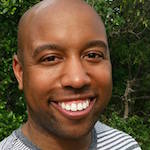
Peter Mosley says he was a “pretty serious Christian” who grew up in the church and didn’t give up faith until 28. he is currently pursuing a Ph.D. (ABD) in Modern American Literature, with a focus on intersections between black masculinity and Christianity, at Texas Christian University. Much of his writing at Patheos reflects those interests.
Follow Peter at Barrierbreaker.
Previous Post

March 11, 2015
How to Reconcile God and Evolution...and How Not To
Next Post

June 11, 2015 Listening to the Atheist Diplomats
Recent Comments
Browse Our Archives
Select a Category Ableism Activism Addiction and Recovery Agnosticism Anti-intellectualism Arts Atheism Beauty Catholicism Charles Darwin Children China Christianity Church/State separation churchgoing communication compassionate humanism Creationism critical thinking Culture death disaster response doubt education Egypt Entertainment Environment ethics evolution Existence of God Exploration fear Foundation Beyond Belief Free speech God Health History Human rights humanism identity India Interfaith Islam labels Language LGBT Love Meaning Media Medicine Middle East misconceptions mixed belief marriage Moral argument Morality Myths Near-Death Experience Nonreligious parenting Parody Persecution complex Philosophy Poetry Politics prayer Psychology Rationality Religion religious atheists Religious privilege Republican Party Satire Schools science secular parenting Spirituality The Unpigeonholeables Uncategorized United Kingdom Wonder
Select a Month March 2021 August 2020 March 2020 January 2020 September 2019 July 2019 June 2019 April 2019 February 2019 January 2019 December 2018 November 2018 October 2018 September 2018 August 2018 July 2018 June 2018 May 2018 April 2018 March 2018 February 2018 January 2018 December 2017 November 2017 October 2017 September 2017 August 2017 July 2017 March 2017 February 2017 January 2017 December 2016 November 2016 October 2016 September 2016 August 2016 July 2016 June 2016 May 2016 April 2016 March 2016 February 2016 January 2016 December 2015 November 2015 October 2015 September 2015 June 2015 March 2015 February 2015 January 2015 December 2014 November 2014 October 2014 September 2014
Follow Us!
TAKE THE
Religious Wisdom Quiz
I worked with a trowel in one hand and a weapon in the other, ready to build and fight. Who am I?
Select your answer to see how you score.
The builders The servants The Tribe of Judah The Priests
Related posts from The Secular Spectrum

Why Do We Question Vegetarianism When It's a...
American Pluralism: Its Promises and Struggles

Christians Are Divided on the Legalization of Cannabis....

TRENDING AT PATHEOS Nonreligious

Dethroning Jesus and Enthroning Yourself
Jesus Never Asked to Be Worshipped. He Asked to Be Understood. Christianity...

Why Most Christians are Really Paulians and Jobians
I Don't Care, But It Matters Let's get this out of the...

Essential Tips to Successfully Navigate the Selling Process
Selling a house can feel overwhelming, but it doesn’t have to be....

To Make Remote Work Effective, Think About Others
The COVID-19 pandemic forced many companies to rapidly transition to remote work....

Flexibility Is Key to Solving Problems of Tomorrow
The world of work is undergoing a dramatic transformation. The COVID-19 pandemic...
view all Nonreligious blogs
Ad-Free & Subscriber Log-In Subscription Support
- About Us
- 2026 Calendar
- Videos
- Podcasts
- Library of World Religions
- Faith In Media Tracker
- Advertise With Us
- Write for Us
- Privacy Policy
- Terms of Service
- Do Not Sell My Data
- Contact Us
- Radiant Digital
- Manage Newsletter Subscriptions
- Unsubscribe From Notifications
- Sitemap
Copyright 2008-2026, Patheos. All rights reserved.
Subscription Support Ad-Free & Subscriber Log-In
Follow Patheos