
BuddhistCatholicContemplativeEvangelicalGeneral ChristianHinduJewishLatter-day SaintMuslimNew VisionsProgressive Christian
Beliefs
- Buddhist
- Catholic
- Contemplative
- Evangelical
- General Christian
- Hindu
- Jewish
- Latter-day Saint
- More Voices
- Muslim
- New Visions
- Pagan
- Progressive Christian
Topics
- Religion News
- Food and Religion
- Sports and Religion
- Religious Art
- Religious Music and Entertainment
- Religious Events
- History and Religion
- Style and Religion
- Politics and Religion
- Women in Religion
- Recreation Outdoors and Religion
- Business Finance and Religion
- Careers Workplace and Religion
- Education and Religion
- Family Parenting and Religion
- Health Fitness and Religion
- Home and Religion
- Relationships and Religion
- Technology and Religion
- Travel and Religion
Columnists
- Buddhist Columnists
- Business Finance and Religion Columnists
- Careers Workplace and Religion Columnists
- Catholic Columnists
- Contemplative Columnists
- Education and Religion Columnists
- Evangelists Columnists
- Family Parenting and Religion Columnists
- General Christian Columnists
- Health Fitness and Religion Columnists
- Hindu Columnists
- History and Religion Columnists
- Home and Religion Columnists
- Jewish Columnists
- More Voices Columnists
- Latter Day Columnists
- Muslim Columnists
- New Visions Columnists
- Nonreligious Columnists
- Pagan Columnists
- Politics and Religion Columnists
- Progressive Columnists
- Recreation Outdoors and Religion Columnists
- Relationships and Religion Columnists
- Religion News Columnists
- Religious Art Columnists
- Religious Events Columnists
- Religious Music and Entertainment Columnists
- Sports and Religion Columnists
- Style and Religion Columnists
- Technology and Religion Columnists
- Travel and Religion Columnists
- Women in Religion Columnists
Resource Library
- 2026 Calendar
- Library of World Religions
- The 100 Most Holy Places on Earth
- Patheos Answers
- Podcasts
- Videos
- Faith Leaders Database
- Anglican Episcopalian
- Bahai
- Baptist
- Buddhism
- Christianity
- Confucianism
- Eastern Orthodoxy
- Hinduism
- Holiness and Pentecostal
- ISKCON
- Islam
- Judaism
- Lutheran
- Methodist
- The Church of Jesus Christ of Latter-day Saints
- New Age
- Paganism
- Presbytarian and Reformed
- Protestantism
- Religion Behind the Scenes
- Roman Catholic
- Scientology
- Shia Islam
- Sikhism
- Sufism
- Sunni Islam
- Taoism
- Zen
- See all religions
Research Tools
 Ad-Free & Subscriber Log-In Subscription Support
Ad-Free & Subscriber Log-In Subscription Support
Follow Patheos 

- Trending:
- Forgiveness
- |
- Marriage
- |
- Consciousness
- |
- Death Penalty
- |
- Election
- |
- Halloween
 The Secular Spectrum
- Home
- Nonreligious
- Being Both: The OTHER great book on mixed-belief marriage
Being Both: The OTHER great book on mixed-belief marriage
Last updated on: September 30, 2014 at 9:36 am by Dale McGowan
Being Both: The OTHER great book on mixed-belief marriage 2014-09-30T09:36:37-05:00 Dale McGowan
Patheos Explore the world's faith through different perspectives on religion and spirituality! Patheos has the views of the prevalent religions and spiritualities of the world.
I’m working on a few posts about In Faith and In Doubt, my book about relationships between religious and nonreligious partners. But first, I’d like to introduce the other book on mixed-belief relationships that’s well worth reading: Being Both: Embracing Two Religions in One Interfaith Family by Susan Katz Miller.
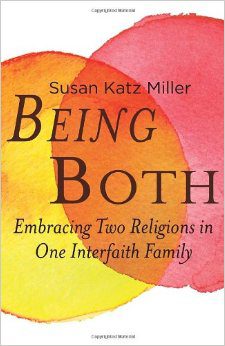 You heard me right: I’ve found exactly one other that I can recommend wholeheartedly. Most of the rest of the oeuvre can fall off the shelf as far as I’m concerned. With rare exceptions, the mixed-belief marriage lit will give you some form of the message that marrying outside of your own belief system is an epic blunder, one that leads inevitably to unhappiness, divorce, and bitter regret.
The fallback position is that interfaith marriages can survive, but only if one partner essentially subsumes his or her identity into that of the other.
This, to put it gently, is codswallop.
Being Both counters both the gloomy outlook and the “pick one” assumption with stats and first-person accounts from couples who have happily and successfully embraced their difference. But it’s not Pollyanna. Miller faces the challenges head-on and describes ways couples have addressed them with varying degrees of success. But it’s the presence of interfaith couples who have succeeded that makes Being Both stand out.
I was married to a Southern Baptist for 13 years. (We’re still married, though she’s no longer religious.) Our marriage was and is a happy one with very little tension or conflict. Sure, we had some disagreements and frustrations around religious questions while she was still a believer, especially once the kids came along, but neither of us has felt anything like “regret” for having married someone with different beliefs, nor felt compelled to surrender to the other’s worldview. And though many mixed-belief couples do encounter serious trouble, I know many others whose mixed-belief marriages are successful and happy.
But the literature almost uniformly focuses on the shipwrecks. Book after book presents interfaith marriage as (to quote some actual passages) a uniformly “regrettable” choice made by starry-eyed young people “who think that love will conquer all” and so ignore the “slow catastrophe” of an interfaith marriage, leading inevitably to “tragic results” including unhappiness, shattered families, and bitter separation and divorce. They tend to include phrases like, “If you’re determined to intermarry…” followed by advice for getting the best out of a terrible situation.
Dig an inch below the surface and it becomes clear what’s going on: many of these authors are clergy trying to prevent the erosion of their own faith communities by attrition and assimilation—something one rabbi recently described to me as “a greater threat to Judaism than anti-Semitism.”
But that same rabbi agreed that we have to accept the reality of interfaith marriage, not construct a fiction to scare people away.
No matter—others are happy to take up the fearmongering cause. A 2010 Washington Post opinion piece by Til Faith Do Us Part author Naomi Schaefer Riley was ominously titled, “Interfaith marriages are rising fast, but they’re failing fast, too”—a statement that’s baldly unsupported.
When you pull back the curtain and clear the smoke, people with different religious perspectives generally have about the same shot at marital happiness as those who share the same religion. One key study concludes that “Theological beliefs and the belief dissimilarity of spouses have little effect on the likelihood of dissolution [of marriage] over time.”
Even Riley herself admits this in a dim corner of a late chapter of her book, saying “When we compare the likelihood that a Christian married to a non-Christian will be divorced to the likelihood that two Christians will be divorced, there is no discernible difference” (p. 120). This relative footnote of fact follows a hundred pages of jeremiads like “Interfaith marriages often come with a heavy price [and] are more likely than same-faith unions to be unhappy.”
It was while looking for refutations of Riley that I found the marvelous blog of Susan Katz Miller and eventually her outstanding, levelheaded book. We bonded over our shared astonishment at the one-sidedness of Riley and the rest of the interfaith literature, and her blog provided valuable ballast for my efforts during the writing of In Faith and In Doubt.
(The biggest mistake I’ve discovered so far in my own book is the unconscionable absence of any mention of the debt I owed Miller’s work. That was pure sloppiness, and she’s been very gracious about it.)
Though Being Both mentions nonreligious partners occasionally, the focus is mostly on marriages between religious partners of different perspectives. But most of the insights apply just as well to the secular/religious mix.
Miller comes from the best-informed point of view I can imagine: the child of interfaith parents who is herself in an interfaith marriage. So if interfaith marriage was a certain relationship death sentence, she would know.
One of the great pleasures of Being Both is that it’s written by a writer—and if you think that’s a tautology, I have a thousand other books for you to read. Miller’s relaxed, clear style is complemented by a clear grounding in research and interviews with actual interfaith couples.
She tackles every major topic, from multiple identity to parenting to rites of passage and religious literacy. The effect of reading a positive take on these challenges after so many agenda-driven naysayers is hard to fully describe.
Miller concludes her book with a point I made in my own: that interfaith families and individuals become “ambassadors of peace” in our culture, increasing the profile and influence not just of their dual perspectives but of the very idea of crossing lines and finding common ground. They embody coexistence in a way that’s hard to match.
So start with mine, which is, you know, wow. But if you’re looking for a thoughtful and fair second opinion on mixed-belief marriage, continue with Being Both.
Order Being Both at Amazon.com
Previous Post

September 26, 2014
Sam Harris, Meet the Secular Support Movement
Next Post
October 9, 2014 The receiverless prayer
Recent Comments
Browse Our Archives
Select a Category Ableism Activism Addiction and Recovery Agnosticism Anti-intellectualism Arts Atheism Beauty Catholicism Charles Darwin Children China Christianity Church/State separation churchgoing communication compassionate humanism Creationism critical thinking Culture death disaster response doubt education Egypt Entertainment Environment ethics evolution Existence of God Exploration fear Foundation Beyond Belief Free speech God Health History Human rights humanism identity India Interfaith Islam labels Language LGBT Love Meaning Media Medicine Middle East misconceptions mixed belief marriage Moral argument Morality Myths Near-Death Experience Nonreligious parenting Parody Persecution complex Philosophy Poetry Politics prayer Psychology Rationality Religion religious atheists Religious privilege Republican Party Satire Schools science secular parenting Spirituality The Unpigeonholeables Uncategorized United Kingdom Wonder
Select a Month March 2021 August 2020 March 2020 January 2020 September 2019 July 2019 June 2019 April 2019 February 2019 January 2019 December 2018 November 2018 October 2018 September 2018 August 2018 July 2018 June 2018 May 2018 April 2018 March 2018 February 2018 January 2018 December 2017 November 2017 October 2017 September 2017 August 2017 July 2017 March 2017 February 2017 January 2017 December 2016 November 2016 October 2016 September 2016 August 2016 July 2016 June 2016 May 2016 April 2016 March 2016 February 2016 January 2016 December 2015 November 2015 October 2015 September 2015 June 2015 March 2015 February 2015 January 2015 December 2014 November 2014 October 2014 September 2014
Follow Us!
TAKE THE
Religious Wisdom Quiz
Proverbs 24:27 advises to "put your outdoor work in order" before what?
Select your answer to see how you score.
Seeking a teacher Getting married Going to war Building a house
Related posts from The Secular Spectrum

American Pluralism: Its Promises and Struggles


Atheism in Colombia: Not as Different as You...

Beyond the Brand: Finding the Communal Self Behind...
TRENDING AT PATHEOS Nonreligious

Dethroning Jesus and Enthroning Yourself
Jesus Never Asked to Be Worshipped. He Asked to Be Understood. Christianity...

Why Most Christians are Really Paulians and Jobians
I Don't Care, But It Matters Let's get this out of the...

Essential Tips to Successfully Navigate the Selling Process
Selling a house can feel overwhelming, but it doesn’t have to be....

To Make Remote Work Effective, Think About Others
The COVID-19 pandemic forced many companies to rapidly transition to remote work....

Flexibility Is Key to Solving Problems of Tomorrow
The world of work is undergoing a dramatic transformation. The COVID-19 pandemic...
view all Nonreligious blogs
Ad-Free & Subscriber Log-In Subscription Support
- About Us
- 2026 Calendar
- Videos
- Podcasts
- Library of World Religions
- Faith In Media Tracker
- Advertise With Us
- Write for Us
- Privacy Policy
- Terms of Service
- Do Not Sell My Data
- Contact Us
- Radiant Digital
- Manage Newsletter Subscriptions
- Unsubscribe From Notifications
- Sitemap
Copyright 2008-2026, Patheos. All rights reserved.
Subscription Support Ad-Free & Subscriber Log-In
Follow Patheos