
BuddhistCatholicContemplativeEvangelicalGeneral ChristianHinduJewishLatter-day SaintMuslimNew VisionsProgressive Christian
Beliefs
- Buddhist
- Catholic
- Contemplative
- Evangelical
- General Christian
- Hindu
- Jewish
- Latter-day Saint
- More Voices
- Muslim
- New Visions
- Pagan
- Progressive Christian
Topics
- Religion News
- Food and Religion
- Sports and Religion
- Religious Art
- Religious Music and Entertainment
- Religious Events
- History and Religion
- Style and Religion
- Politics and Religion
- Women in Religion
- Recreation Outdoors and Religion
- Business Finance and Religion
- Careers Workplace and Religion
- Education and Religion
- Family Parenting and Religion
- Health Fitness and Religion
- Home and Religion
- Relationships and Religion
- Technology and Religion
- Travel and Religion
Columnists
- Buddhist Columnists
- Business Finance and Religion Columnists
- Careers Workplace and Religion Columnists
- Catholic Columnists
- Contemplative Columnists
- Education and Religion Columnists
- Evangelists Columnists
- Family Parenting and Religion Columnists
- General Christian Columnists
- Health Fitness and Religion Columnists
- Hindu Columnists
- History and Religion Columnists
- Home and Religion Columnists
- Jewish Columnists
- More Voices Columnists
- Latter Day Columnists
- Muslim Columnists
- New Visions Columnists
- Nonreligious Columnists
- Pagan Columnists
- Politics and Religion Columnists
- Progressive Columnists
- Recreation Outdoors and Religion Columnists
- Relationships and Religion Columnists
- Religion News Columnists
- Religious Art Columnists
- Religious Events Columnists
- Religious Music and Entertainment Columnists
- Sports and Religion Columnists
- Style and Religion Columnists
- Technology and Religion Columnists
- Travel and Religion Columnists
- Women in Religion Columnists
Resource Library
- 2026 Calendar
- Library of World Religions
- The 100 Most Holy Places on Earth
- Patheos Answers
- Podcasts
- Videos
- Faith Leaders Database
- Anglican Episcopalian
- Bahai
- Baptist
- Buddhism
- Christianity
- Confucianism
- Eastern Orthodoxy
- Hinduism
- Holiness and Pentecostal
- ISKCON
- Islam
- Judaism
- Lutheran
- Methodist
- The Church of Jesus Christ of Latter-day Saints
- New Age
- Paganism
- Presbytarian and Reformed
- Protestantism
- Religion Behind the Scenes
- Roman Catholic
- Scientology
- Shia Islam
- Sikhism
- Sufism
- Sunni Islam
- Taoism
- Zen
- See all religions
Research Tools
 Ad-Free & Subscriber Log-In Subscription Support
Ad-Free & Subscriber Log-In Subscription Support
Follow Patheos 

- Trending:
- Forgiveness
- |
- Marriage
- |
- Consciousness
- |
- Death Penalty
- |
- Election
- |
- Halloween
 Seasons of the Church
- Home
- General Christian
- Daring to Hope When the “Black Dog” Prowls
Daring to Hope When the “Black Dog” Prowls
Last updated on: December 3, 2014 at 4:00 am by Tod Worner
Daring to Hope When the “Black Dog” Prowls 2014-12-02T16:07:46-07:00 Tod Worner
Patheos Explore the world's faith through different perspectives on religion and spirituality! Patheos has the views of the prevalent religions and spiritualities of the world.
“Hope means hoping when everything seems hopeless.”
– G.K. Chesterton
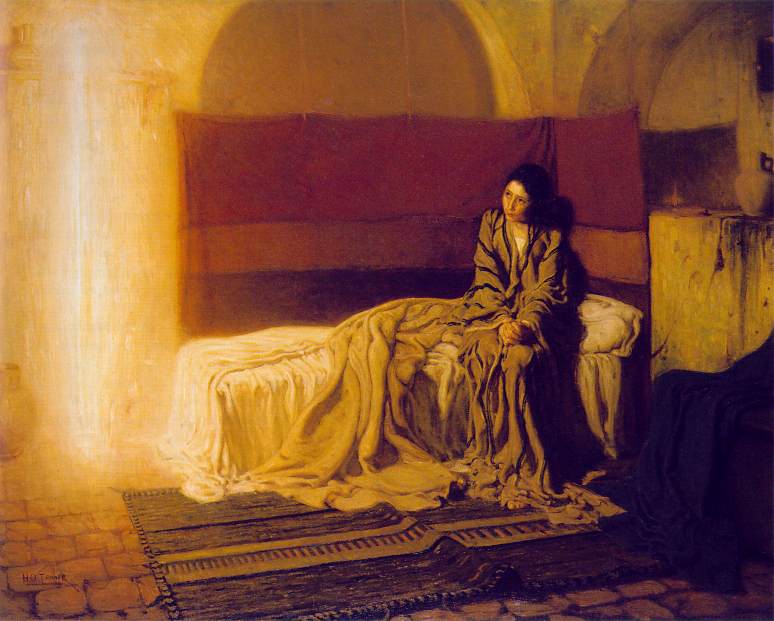
Dear Jesus, do I need Advent. I just do. Living in the upper Midwest during the melancholic waning days of fall, begrudging the early arrival of snow flurries and enduring the bone-chill that summer had (mockingly) made me forget, I need Advent. You see, I am predisposed to what Winston Churchill once called “the black dog”. The black dog is an ill-defined woefulness that can gnaw at you at unpredictable times for indescribable reasons. Not classically a depression, it is rather a longing for something that is unfulfilled by anything here on earth. If not tilting into a fuller depression, perhaps this is a good thing. C.S. Lewis, after all, once wondered,
“If we find ourselves with a desire that nothing in this world can satisfy, the most probable explanation is that we were made for another world.”
And that is why I need Advent. Advent, originating from the Latin “Adventus”, means “a coming, an approach, or an arrival”. It is a season of anticipation, of expectation and of reform in preparation for the arrival. But what is it we are anticipating, expecting, and preparing for? Nothing more than the entry of God into History, the Word Made Flesh, the Messiah, the Savior of Mankind. We are awaiting, expectantly and eagerly, the Central Event of Human History. The Incarnation. Nothing less than that. And that is why I need Advent.
To me, this anticipation, this expectation, this preparation boils down to the supernatural virtue that best repels the “black dog”: Hope. Advent is a season of inextinguishable Hope. In a concentration of four weeks, our Sunday readings release an explosion of good news: A virgin girl charged with ushering the redeeming God into the world, a prophet (Isaiah) anticipating barren land becoming lush and the infirm becoming well, an imprisoned baptist assured that the One he foretold has arrived with glorious miracles, and a man comforted by angelic dreams answers his call to guard over the Child-God about to be born. Hope, glorious hope…found forcing its way into a society of brutal occupation, poverty, disease and injustice.
Advent is also a season of hope anticipating Christ’s Second Coming. In a way, our earthly experience of Advent is a paradoxical recognition of the humble human incarnation of Christ the Child as well as the majestic divine return of Christ the King. It is a season anticipating First and Second Comings. Advent reminds us that, while entrenched in the pain, loss and suffering accompanying our earthly existence, it is vital to be nurtured by the memory of Christ’s First appearance and comforted by the hope of His Second. St. Bernard of Clairvaux reminds us to be hopeful in this time between Christ’s First and Second Coming,
“We know that there are three comings of the Lord. The third lies between the other two. It is invisible, while the other two are visible. In the first coming he was seen on earth, dwelling among men; he himself testifies that they saw him and hated him. In the final coming all flesh will see the salvation of our God, and they will look on him whom they pieced. The intermediate coming is a hidden one; in it only the elect see the Lord within their own selves and they are saved.”
Whether anticipating the Incarnation or Second Coming, hope is Advent’s indisputable theme. Pope Benedict XVI (as Joseph Cardinal Ratzinger) once reminded us of this hope saying,
“Advent is concerned with that very connection between memory and hope which is so necessary to man. Advent’s intention is to awaken the most profound and basic emotional memory within us, namely, the memory of the God who became a child. This is a healing memory; it brings hope. The purpose of the Church’s year is continually to rehearse her great history of memories, to awaken the heart’s memory so that it can discern the star of hope…It is the beautiful task of Advent to awaken in all of us memories of goodness and thus to open doors of hope.”
Perhaps, most moving are the abbreviated words on the wonder of hope by Catholic writer/poet Charles Peguy in The Portal of the Mystery of Hope,
“The faith that I love the best, says God, is hope.
Faith doesn’t surprise me.
It’s not surprising.
I am so resplendent in my creation.
In the sun and the moon and in the stars…Charity, says God, that doesn’t surprise me.
It’s not surprising.
These poor creatures are so miserable that unless they had a heart of stone, how could they not have love for each other.
How could they not love their brothers…What surprises me, says God, is hope.
And I can’t get over it.
This little hope who seems like nothing at all.
This little girl hope.
Immortal.”
And so in Advent – the vitally necessary Advent – as the “black dog” prowls, the days grow dark and the chill wind blows yearning to snuff out the four Advent candles, do I hope? Do I dare to hope? Yes. Yes I do. Thanks be to God.
Tod Worner is a husband, father, physician, WWII history lecturer and Catholic convert exploring the mystical and intellectual brilliance of the Catholic faith. He blogs at A Catholic Thinker at Patheos.
Previous Post

December 2, 2014
O Come, O Come, Emmanuel
Next Post

December 4, 2014 Flaunt the Color Purple
Browse Our Archives
Select a Category Advent Uncategorized
Select a Month December 2014 November 2014
TAKE THE
Religious Wisdom Quiz
I went uninvited before the king, risking death, saying 'If I perish, I perish.' Who am I?
Select your answer to see how you score.
Vashti Esther Ruth Deborah
Related posts from Seasons of the Church


TRENDING AT PATHEOS General Christian

Catholic Integralists believe that religious values – specifically Christian ones – should...

Electing A Virtuous President Would Make Immunity Irrelevant
Presidential immunity can bring with it many risks. So how can we...

Why The Olympic Games Are A ‘Civil Religious’...
Sporting events form a vital space where Americans display their 'civil religious...

After more than a decade of news, research updates, and insights on...

Q: Why do Southern Baptists and like-minded Protestants...
THE RELIGION GUY’S ANSWER: Why? Simple. Because they believe that’s what the...

THE QUESTION: Is gambling evil? THE RELIGION GUY’S ANSWER: Analysts anticipate a...
view all General Christian blogs
Ad-Free & Subscriber Log-In Subscription Support
- About Us
- 2026 Calendar
- Videos
- Podcasts
- Library of World Religions
- Faith In Media Tracker
- Advertise With Us
- Write for Us
- Privacy Policy
- Terms of Service
- Do Not Sell My Data
- Contact Us
- Radiant Digital
- Manage Newsletter Subscriptions
- Unsubscribe From Notifications
- Sitemap
Copyright 2008-2026, Patheos. All rights reserved.
Subscription Support Ad-Free & Subscriber Log-In
Follow Patheos