
BuddhistCatholicContemplativeEvangelicalGeneral ChristianHinduJewishLatter-day SaintMuslimNew VisionsProgressive Christian
Beliefs
- Buddhist
- Catholic
- Contemplative
- Evangelical
- General Christian
- Hindu
- Jewish
- Latter-day Saint
- More Voices
- Muslim
- New Visions
- Pagan
- Progressive Christian
Topics
- Religion News
- Food and Religion
- Sports and Religion
- Religious Art
- Religious Music and Entertainment
- Religious Events
- History and Religion
- Style and Religion
- Politics and Religion
- Women in Religion
- Recreation Outdoors and Religion
- Business Finance and Religion
- Careers Workplace and Religion
- Education and Religion
- Family Parenting and Religion
- Health Fitness and Religion
- Home and Religion
- Relationships and Religion
- Technology and Religion
- Travel and Religion
Columnists
- Buddhist Columnists
- Business Finance and Religion Columnists
- Careers Workplace and Religion Columnists
- Catholic Columnists
- Contemplative Columnists
- Education and Religion Columnists
- Evangelists Columnists
- Family Parenting and Religion Columnists
- General Christian Columnists
- Health Fitness and Religion Columnists
- Hindu Columnists
- History and Religion Columnists
- Home and Religion Columnists
- Jewish Columnists
- More Voices Columnists
- Latter Day Columnists
- Muslim Columnists
- New Visions Columnists
- Nonreligious Columnists
- Pagan Columnists
- Politics and Religion Columnists
- Progressive Columnists
- Recreation Outdoors and Religion Columnists
- Relationships and Religion Columnists
- Religion News Columnists
- Religious Art Columnists
- Religious Events Columnists
- Religious Music and Entertainment Columnists
- Sports and Religion Columnists
- Style and Religion Columnists
- Technology and Religion Columnists
- Travel and Religion Columnists
- Women in Religion Columnists
Resource Library
- 2026 Calendar
- Library of World Religions
- The 100 Most Holy Places on Earth
- Patheos Answers
- Podcasts
- Videos
- Faith Leaders Database
- Anglican Episcopalian
- Bahai
- Baptist
- Buddhism
- Christianity
- Confucianism
- Eastern Orthodoxy
- Hinduism
- Holiness and Pentecostal
- ISKCON
- Islam
- Judaism
- Lutheran
- Methodist
- The Church of Jesus Christ of Latter-day Saints
- New Age
- Paganism
- Presbytarian and Reformed
- Protestantism
- Religion Behind the Scenes
- Roman Catholic
- Scientology
- Shia Islam
- Sikhism
- Sufism
- Sunni Islam
- Taoism
- Zen
- See all religions
Research Tools
 Ad-Free & Subscriber Log-In Subscription Support
Ad-Free & Subscriber Log-In Subscription Support
Follow Patheos 

- Trending:
- Forgiveness
- |
- Marriage
- |
- Consciousness
- |
- Death Penalty
- |
- Election
- |
- Halloween

- Home
- Catholic
- Relationships and Religion
- Finding mercy in oceans, art, and more
Finding mercy in oceans, art, and more
Last updated on: September 22, 2023 at 1:55 pm by Samantha Mattheiss
Finding mercy in oceans, art, and more 2023-09-22T13:55:54-04:00 Samantha Mattheiss
Patheos Explore the world's faith through different perspectives on religion and spirituality! Patheos has the views of the prevalent religions and spiritualities of the world.

Image by summerstock from Pixabay
Last year, my 2nd grader came home from school singing “Mercy is falling is falling is falling. Mercy is falling like a sweet spring rain.”
“Oh, I love that song! Did you sing that during adoration?” I asked him.
“No, my teacher sang it when we walked outside in the rain,” he replied.
My eyes welled up with tears of joy. It was a big sacrifice, financially, to send our children to Catholic school this year. But what more could I want for my kids than for them to recognize God in the wonders of creation? To experience a cool falling mist upon one’s face and with this, to consider God’s Mercy, which cleanses and renews?
Ocean of Mercy
The teacher at this Catholic school wasn’t far off when the rain reminded her of God’s mercy. Saint Faustina also related mercy to water. She spoke of an ocean of mercy, and taught us to pray in the Divine Mercy Chaplet, “O blood and water which gushed forth from the Heart of Jesus as a fount of mercy for us, I trust in you!”
Let’s reflect a bit more on why water might be related to mercy. Water cleanses, renews, and refreshes us. If you’ve ever laid on a sandy beach in the sun, you may have found that the ocean invited you to come (Isaiah 55:1). Be refreshed with the freshness of the water which laps in ceaselessly from a seemingly endless source. It is a fount of life for countless sea creatures—from coral to starfish and humpback whales. And for us, it washes over us, renewing us in love and mercy.
Next time you’re at the beach, maybe even this Labor Day weekend, I invite you to consider the mystical meaning of the ocean that stretches out before you, inviting you to dive in, arms outstretched—your head, then feet following, for a whole-body cleanse. Let Him wash you from every mistake and cleanse you from within. Rejoice in the renewal.
Image of Mercy
If you’re as intrigued as I am by mercy, check out artist Anja Eltgroth’s incredible colored glass image of mercy. Read about it on the Imago Arts Facebook page. If you read carefully, you’ll see that the image was created from pieces of broken glass that Anja collected while living in Philadelphia, PA—the city of brotherly love.
So, seekers of truth: What meaning do you encounter in Anja’s image of mercy? Do you notice how the brokenness of the City of Brotherly Love has been transformed into a beautiful masterpiece, through the hands of an artist? As you reflect upon this, you might consider God, artist and creator. He, too, uses our brokenness—all of our sins, mistakes, failings, shortcomings, sufferings, and pain—to create something beautiful. All we have to do is give Him our brokenness, and He receives it all and uses it for glory. He transforms, renews, and strengthens us with every piece of brokenness. If you’ve ever ruminated over your sins and sufferings, you need not do so any longer. Instead, simply turn to the Lord and give him all of it.
How exactly can we do this? It might sound something like this: “God, I’m giving you all the mistakes I made in life—along with every sin and failure—I ask you to receive it, take it off my shoulders, and even use it for something beautiful.” God created us imperfect so that He can have mercy on us (Romans 11:32). So give everything to Him, and then watch and see what He does. Notice how He weaves all the broken parts of your life together into something good and beautiful, renewing and strengthening you.
If you’re still interested in Anja’s artwork, watch her video about art therapy, as she shares how engaging in art can be a means to release the “painful mass” within oneself. We all have pain and suffering, mistakes and failures; but all of this can be transformed into something beautiful for us and for others.
Psychology of Mercy
Now let’s look to the study of the human person to find out more about mercy. Remember, God communicates to us in and through creation—and that means rain, oceans, and the remarkable human person. So what has research in the field of psychology uncovered about mercy?
Forgiveness
First, let’s look at forgiveness, which is often how mercy is defined. Forgiveness has been shown to have countless benefits, including improved psychological and physical well-being, acceptance of self, and resilience (Raj et al., 2016). Forgiveness of the self has also been shown to be related to improved physical health and psychological well-being (Davis et al., 2015). If you’re still stuck on something someone else has done, or something you’ve done, there’s no reason to hold on to it. Let it go, like Elsa from Frozen suggests, and forgive.
If you’d like to read more a story of forgiveness, check out Patheos blogger Linda L. Kruschke’s post “A legacy of forgiveness: Seeking peace and healing.”
Search for meaning
Additionally, research shows that when we attempt to find meaning in past sufferings, we demonstrate greater post-traumatic growth (Adler, 2012). In other words, we become stronger, more resilient, and more adept at navigating the world when we try to find meaning, or even create narratives, based on our most adverse experiences.
As such, when we consider God’s mercy—maybe as we’re diving deep into refreshing Jersey Shore ocean—we might start to agree with Kelly Clarkson and others who proclaimed that “what doesn’t kill you makes you stronger.” While current research suggests that post-traumatic growth is more nuanced than that (Jayawickreme et al., 2021), there’s substantial evidence that finding meaning in past adversity promotes psychological growth.
Brain growth
Speaking of growth, research shows that our brains grow when we make mistakes and when we fail (Dweck, 2006). Moreover, if you teach children that each time you make a mistake, your brain is getting larger, they spend much more time learning from mistakes than dwelling upon them (Dweck, 2006). Check out Carol Dweck’s incredible TedTalk for more information about the Growth Mindset.
Mercy is falling all around us
To you, seeker of truth. I encourage you to look for signs of God’s mercy all around you–in the sweet spring rain, in the rolling waves, and in your relationships. God is just longing to pour out His mercy upon you. You just have to give Him your mistakes, sins, and shortcomings- and watch as He renews you, making something beautiful with every piece of brokenness. In line with psychological research, I encourage you to forgive yourself and others, search for meaning in past adversity, and learn from mistakes. All of these practices line up nicely with God’s pouring forth of mercy, renewing and rejuvenating us not despite our past, but with it—all of it.
References
Adler, J. M. (2012). Living into the story: agency and coherence in a longitudinal study of narrative identity development and mental health over the course of psychotherapy. Journal of personality and social psychology, 102(2), 367.
Davis, D. E., Ho, M. Y., Griffin, B. J., Bell, C., Hook, J. N., Van Tongeren, D. R., … & Westbrook, C. J. (2015). Forgiving the self and physical and mental health correlates: a meta-analytic review. Journal of counseling psychology, 62(2), 329.
Dweck, C. (n.d.). The power of believing that you can improve [Video]. TED Talks. https://www.ted.com/talks/carol_dweck_the_power_of_believing_that_you_can_improve?language=en
Jayawickreme, E., Infurna, F. J., Alajak, K., Blackie, L. E., Chopik, W. J., Chung, J. M., … & Zonneveld, R. (2021). Post‐traumatic growth as positive personality change: Challenges, opportunities, and recommendations. Journal of personality, 89(1), 145-165.
Raj, P., Elizabeth, C. S., & Padmakumari, P. (2016). Mental health through forgiveness: Exploring the roots and benefits. Cogent Psychology, 3(1), 1153817.
Relationships and Religion
Recreation, Outdoors and Religion
Previous Post

August 8, 2023
Are you longing to discover truth?
Next Post

September 7, 2023 How to appreciate the beauty of the world: What you should know
Recent Comments
Browse Our Archives
Select a Category Beauty Brain Collective well-being Love Mathematics Meaning Mercy Nature Prayer Psychology Sacraments Science Social Connection Uncategorized Wellness
Select a Month July 2025 May 2025 April 2025 March 2025 January 2025 December 2024 October 2024 September 2024 July 2024 June 2024 May 2024 February 2024 December 2023 November 2023 October 2023 September 2023 August 2023
Follow Us!
TAKE THE
Religious Wisdom Quiz
In Revelation, what is the name of the city that comes down out of heaven?
Select your answer to see how you score.
The Holy City New Jerusalem Zion The City of God
Related posts from Search. Encounter. Rejoice.

Pope Leo XIV, Math, and the Mind of...
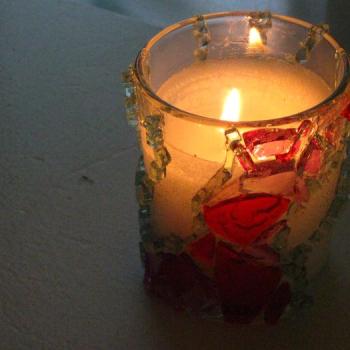
Mercy: Brokenness Transformed into Beauty?

Earth Day 2025: Honor Pope Francis, Care for...
Did Jesus see beauty in those who crucified...
TRENDING AT PATHEOS Catholic

Creation, Preservation, and Teleology in Catholic Theology
As I write this, it is very early Monday morning. Like millions...

The Parable Of The Sower And The Word...
One of Christ’s most famous parables is that of the sower who...

Rejecting Doom: Christian Hope And Human Action
Christianity is a religion of hope. We are to have hope and...

Why I Choose the Eucharist Over the Sermon
Choose the Eucharist, Not the Sermon What are we supposed to get...

5 Design Elements Found in Spiritually Rooted Homes
Putting Spirituality Into Home Decor Our homes are more than our living...

Credo: A Story of God Told with the...
About 10 years ago, I began to imagine a personal "Credo" that...
view all Catholic blogs
Ad-Free & Subscriber Log-In Subscription Support
- About Us
- 2026 Calendar
- Videos
- Podcasts
- Library of World Religions
- Faith In Media Tracker
- Advertise With Us
- Write for Us
- Privacy Policy
- Terms of Service
- Do Not Sell My Data
- Contact Us
- Radiant Digital
- Manage Newsletter Subscriptions
- Unsubscribe From Notifications
- Sitemap
Copyright 2008-2026, Patheos. All rights reserved.
Subscription Support Ad-Free & Subscriber Log-In
Follow Patheos