
BuddhistCatholicContemplativeEvangelicalGeneral ChristianHinduJewishLatter-day SaintMuslimNew VisionsProgressive Christian
Beliefs
- Buddhist
- Catholic
- Contemplative
- Evangelical
- General Christian
- Hindu
- Jewish
- Latter-day Saint
- More Voices
- Muslim
- New Visions
- Pagan
- Progressive Christian
Topics
- Religion News
- Food and Religion
- Sports and Religion
- Religious Art
- Religious Music and Entertainment
- Religious Events
- History and Religion
- Style and Religion
- Politics and Religion
- Women in Religion
- Recreation Outdoors and Religion
- Business Finance and Religion
- Careers Workplace and Religion
- Education and Religion
- Family Parenting and Religion
- Health Fitness and Religion
- Home and Religion
- Relationships and Religion
- Technology and Religion
- Travel and Religion
Columnists
- Buddhist Columnists
- Business Finance and Religion Columnists
- Careers Workplace and Religion Columnists
- Catholic Columnists
- Contemplative Columnists
- Education and Religion Columnists
- Evangelists Columnists
- Family Parenting and Religion Columnists
- General Christian Columnists
- Health Fitness and Religion Columnists
- Hindu Columnists
- History and Religion Columnists
- Home and Religion Columnists
- Jewish Columnists
- More Voices Columnists
- Latter Day Columnists
- Muslim Columnists
- New Visions Columnists
- Nonreligious Columnists
- Pagan Columnists
- Politics and Religion Columnists
- Progressive Columnists
- Recreation Outdoors and Religion Columnists
- Relationships and Religion Columnists
- Religion News Columnists
- Religious Art Columnists
- Religious Events Columnists
- Religious Music and Entertainment Columnists
- Sports and Religion Columnists
- Style and Religion Columnists
- Technology and Religion Columnists
- Travel and Religion Columnists
- Women in Religion Columnists
Resource Library
- 2026 Calendar
- Library of World Religions
- The 100 Most Holy Places on Earth
- Patheos Answers
- Podcasts
- Videos
- Faith Leaders Database
- Anglican Episcopalian
- Bahai
- Baptist
- Buddhism
- Christianity
- Confucianism
- Eastern Orthodoxy
- Hinduism
- Holiness and Pentecostal
- ISKCON
- Islam
- Judaism
- Lutheran
- Methodist
- The Church of Jesus Christ of Latter-day Saints
- New Age
- Paganism
- Presbytarian and Reformed
- Protestantism
- Religion Behind the Scenes
- Roman Catholic
- Scientology
- Shia Islam
- Sikhism
- Sufism
- Sunni Islam
- Taoism
- Zen
- See all religions
Research Tools
 Ad-Free & Subscriber Log-In Subscription Support
Follow Patheos 

- Trending:
- Advent
- |
- Forgiveness
- |
- Thanksgiving
- |
- Election
- |
- Seasonal Holidays
- |
- Marriage
 The Scriptorium
-
Essays
-
Pod
-
Authors
- Home
- Evangelical
- Heart Religion (Wesley on the Christian Life)
Heart Religion (Wesley on the Christian Life)
Last updated on: April 18, 2013 at 2:16 pm by Fred Sanders
Heart Religion (Wesley on the Christian Life) 2013-04-18T14:16:20-07:00 Fred Sanders
Patheos Explore the world's faith through different perspectives on religion and spirituality! Patheos has the views of the prevalent religions and spiritualities of the world.
My book Wesley on the Christian Life: The Heart Renewed in Love is due out in just a few months (August 2013), and is already available for pre-order at Amazon. Crossway’s fine copy-editor has finalized the text with me, and I’ll be checking page proofs soon. I’m also gathering a few endorsements from generous theologians and historians, which I’m excited to share in due course.
I’ll be doing some promoting of the book this summer and fall, but having just finished reading through the text again, I can’t resist the urge to share a couple hundred words from it.
One aspect of Wesley’s approach to the Christian life is his emphasis on heart religion. That may be old-fashioned language, but I’m not sure quite what we would call it today, so I stick close to Wesley’s own usage, and do my best to commend this approach to the life of the believer. Here’s a little sample from chapter three of Wesley on the Christian Life (extra paragraph breaks added for your internet eyes):
This is the point of heart religion: not to put an impossible pressure on the experience (or even on the emotional life) of the believer, but to press home the need for spiritual reality. Heart religion is not about worshiping the heart, but about worshiping God from the heart. In the phrase “heart religion,” heart is a contrast term; it is opposed to formal religion, intellectualized religion, and moralistic religion.
What is formal religion? It is religion focused on externals, on “forms or ceremonies.” Wesley was not against outward decorum and a beautiful liturgy. He genuinely loved the Anglican liturgy and the Book of Common Prayer. But forms are only forms. “Supposing these [forms] to be ever so decent and significant, ever so expressive of inward things,” Wesley said, they would still not avail. “The religion of Christ rises infinitely higher, and lies immensely deeper, than all these.” The value of external forms is derivative, and in times of need they are even expendable. “Let no man dream that they have any intrinsic worth; or that religion cannot subsist without them.” Wesley was not anti-liturgical, but he knew from experience how liturgy could serve as a place to hide from God.
Similarly, Wesley was not anti‑intellectual, anti‑theological, or anti‑creedal, but here too he had personal experience with the way a clever mind can invest too heavily in doctrinal orthodoxy and twist it into a strategy for avoiding the presence of God. Wesley might even go so far as to say that orthodox creeds are necessary, but he would always insist that they were not sufficient:
“Although true religion naturally leads to every good word and work, yet the real nature thereof lies deeper still, even in “the hidden man of the heart.” I say of the heart. For neither does religion consist in orthodoxy, or right opinions; which, although they are not properly outward things, are not in the heart, but the understanding. A man may be orthodox in every point. . . . He may think justly concerning the incarnation of our Lord, concerning the ever blessed Trinity and every other doctrine, contained in the oracles of God; He may assent to all the three creeds,—that called the Apostles, the Nicene, and the Athanasian; and yet it is possible he may have no religion at all. . . . He may be almost as orthodox,—as the devil (though indeed, not altogether; for every man errs in something; whereas we cannot well conceive him to hold any erroneous opinion;) and may, all the while, be as great a stranger as he to the religion of the heart.”
Heart religion is a commitment to spiritual reality, an aversion to anything that falls short of reality, a shrewdness about all the places a religious person can hide from God, and a recognition that the heart is the organ of engagement with what is real.
Wesley: “Observe well: This is religion, and this alone; this alone is true Christian religion; not this or that opinion, or system of opinions, be they ever so true, ever so scriptural. It is true, this is commonly called faith. But those who suppose it to be religion are given up to a strong delusion to believe a lie, and if they suppose it to be a sure passport to heaven are in the high road to hell.”
Against formalism and intellectualism, against the “strong delusion” of mistaking ideas for saving faith, against a shallow moralism that substituted good works for true religion, Wesley and the other preachers of the evangelical revival stood in protest. “Go thou higher and deeper than all this! Let thy religion be the religion of the heart.”
Previous Post
April 16, 2013
Traditional Trinitarianism (Holmes pt. 2)
Next Post

April 22, 2013 A University Should Be a University
Browse Our Archives
Select a Category Art Avant-Garde Blog Culture Education Education Literature Misc. Misc. On This Day Philosophy Podcasts Politics Theology Uncategorized
Select a Month March 2014 February 2014 January 2014 December 2013 November 2013 October 2013 September 2013 August 2013 July 2013 June 2013 May 2013 April 2013 March 2013 February 2013 January 2013 December 2012 November 2012 October 2012 September 2012 August 2012 July 2012 June 2012 May 2012 April 2012 March 2012 February 2012 January 2012
TAKE THE
Religious Wisdom Quiz
True or False: Philip baptized the Ethiopian eunuch after explaining Isaiah 53 to him.
Select your answer to see how you score.
TRUE FALSE
Related posts from The Scriptorium
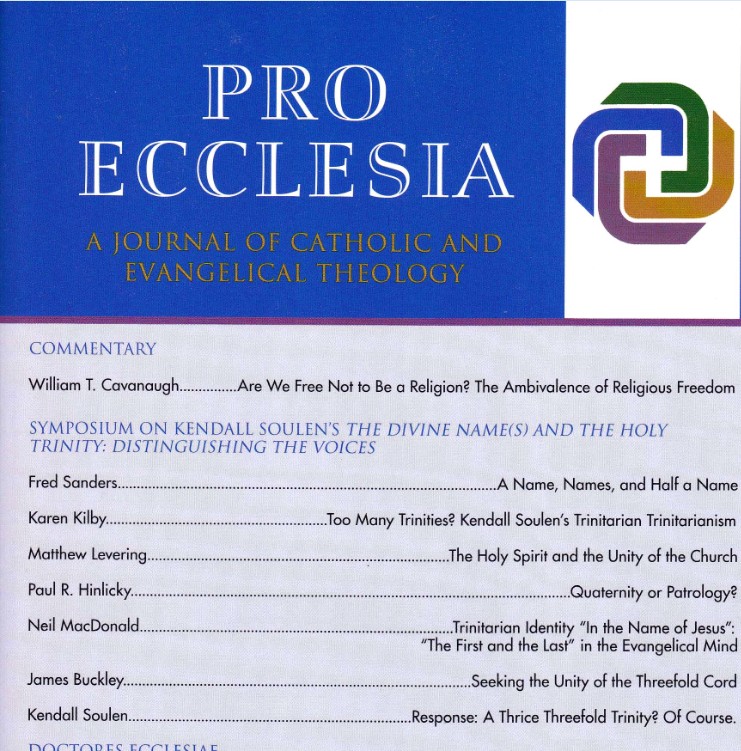
Symposium on Soulen's The Divine Name(s)

Thoughts Gymnastikos on Alternatives to Trinitarian Regiratio
Nine Mighty Acts of God (Christoph Barth's OT...
TRENDING AT PATHEOS Evangelical

Making Stones Into Bread: Choosing the “Right” Work
I was on my online arts ministry Zoom meeting with the International...

Ukraine’s exhausted Christians face fifth winter of war
By Julian Lukins The full-scale war in Ukraine is taking “a serious...

Russell Brand's Conviction is not anti-Christian Persecution
How do we shed the reputation that the Church is OK with...

Have you ever caught yourself saying, “I’ll do it tomorrow,” or “Now...

Write Your Story: A Great Way to Find...
A few month’s back, my son was scrolling around Facebook and saw...

Throughout history, people have pursued pleasure, possessions, relationships, and success in an...
view all Evangelical blogs
Ad-Free & Subscriber Log-In Subscription Support
- About Us
- 2026 Calendar
- Videos
- Podcasts
- Library of World Religions
- Faith In Media Tracker
- Advertise With Us
- Write for Us
- Privacy Policy
- Terms of Service
- Do Not Sell My Data
- Contact Us
- Radiant Digital
- Manage Newsletter Subscriptions
- Unsubscribe From Notifications
- Sitemap
Copyright 2008-2026, Patheos, part of the Radiant Digital network of media brands. All rights reserved.
Subscription Support Ad-Free & Subscriber Log-In
Follow Patheos