
BuddhistCatholicContemplativeEvangelicalGeneral ChristianHinduJewishLatter-day SaintMuslimNew VisionsProgressive Christian
Beliefs
- Buddhist
- Catholic
- Contemplative
- Evangelical
- General Christian
- Hindu
- Jewish
- Latter-day Saint
- More Voices
- Muslim
- New Visions
- Pagan
- Progressive Christian
Topics
- Religion News
- Food and Religion
- Sports and Religion
- Religious Art
- Religious Music and Entertainment
- Religious Events
- History and Religion
- Style and Religion
- Politics and Religion
- Women in Religion
- Recreation Outdoors and Religion
- Business Finance and Religion
- Careers Workplace and Religion
- Education and Religion
- Family Parenting and Religion
- Health Fitness and Religion
- Home and Religion
- Relationships and Religion
- Technology and Religion
- Travel and Religion
Columnists
- Buddhist Columnists
- Business Finance and Religion Columnists
- Careers Workplace and Religion Columnists
- Catholic Columnists
- Contemplative Columnists
- Education and Religion Columnists
- Evangelists Columnists
- Family Parenting and Religion Columnists
- General Christian Columnists
- Health Fitness and Religion Columnists
- Hindu Columnists
- History and Religion Columnists
- Home and Religion Columnists
- Jewish Columnists
- More Voices Columnists
- Latter Day Columnists
- Muslim Columnists
- New Visions Columnists
- Nonreligious Columnists
- Pagan Columnists
- Politics and Religion Columnists
- Progressive Columnists
- Recreation Outdoors and Religion Columnists
- Relationships and Religion Columnists
- Religion News Columnists
- Religious Art Columnists
- Religious Events Columnists
- Religious Music and Entertainment Columnists
- Sports and Religion Columnists
- Style and Religion Columnists
- Technology and Religion Columnists
- Travel and Religion Columnists
- Women in Religion Columnists
Resource Library
- 2026 Calendar
- Library of World Religions
- The 100 Most Holy Places on Earth
- Patheos Answers
- Podcasts
- Videos
- Faith Leaders Database
- Anglican Episcopalian
- Bahai
- Baptist
- Buddhism
- Christianity
- Confucianism
- Eastern Orthodoxy
- Hinduism
- Holiness and Pentecostal
- ISKCON
- Islam
- Judaism
- Lutheran
- Methodist
- The Church of Jesus Christ of Latter-day Saints
- New Age
- Paganism
- Presbytarian and Reformed
- Protestantism
- Religion Behind the Scenes
- Roman Catholic
- Scientology
- Shia Islam
- Sikhism
- Sufism
- Sunni Islam
- Taoism
- Zen
- See all religions
Research Tools
 Ad-Free & Subscriber Log-In Subscription Support
Ad-Free & Subscriber Log-In Subscription Support
Follow Patheos 

- Trending:
- Forgiveness
- |
- Marriage
- |
- Consciousness
- |
- Death Penalty
- |
- Election
- |
- Halloween
 The Scriptorium
-
Essays
-
Pod
-
Authors
- Home
- Evangelical
- Unhelpful Advice from Samuel Johnson
Unhelpful Advice from Samuel Johnson
Last updated on: March 18, 2014 at 9:28 am by Fred Sanders
Unhelpful Advice from Samuel Johnson 2014-03-18T09:28:45-07:00 Fred Sanders
Patheos Explore the world's faith through different perspectives on religion and spirituality! Patheos has the views of the prevalent religions and spiritualities of the world.
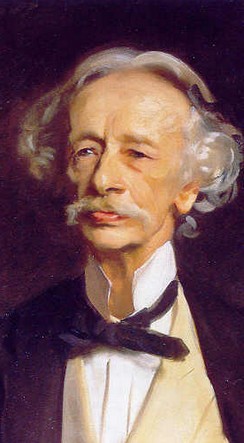
Samuel Johnson is one of the acknowledged masters of English prose, a fixed star of style. As you might expect from the author of a dictionary, Johnson was master of a vast vocabulary, concatenating his words into characteristically long sentences. Those sentences! They are complex periodic constructions, piled high, triple-knotted, exquisitely balanced, and crafted to lead the reader in paths of sagacity. The Johnsonian style is not for everybody, but it is a perfect achievement in its own right. You may already love the style without knowing it; some of Jane Austen’s most celebrated sentences show his influence so conspicuously that they almost read like affectionate satires.
How’d he get so good? His admirer James Boswell wanted to know, especially in 1750 when Johnson started producing a twice-a-week series of essays called The Rambler. Think of them as long, printed blog posts, but awesome. “Posterity will be astonished,” Boswell said, “when they are told… that many of these discourses, which we should suppose had been laboured with all the slow attention of literary leisure, were written in haste as the moment pressed, without even being read over by him before they were printed.”
Boswell had his own theory for how Johnson could be ready to write a learned essay on a wide range of subjects, off the top of his head:
It can be accounted for only in this way; that by reading and meditation, and a very close inspection of life, he had accumulated a great fund of miscellaneous knowledge, which, by a peculiar promptitude of mind, was ever ready at his call, and which he had constantly accustomed himself to clothe in the most apt and energetick expression.
Johnson, says Boswell, had accumulated mental stuff and had accustomed himself to present it well. For more detail, Boswell reports Johnson’s own version of the explanation:
Sir Joshua Reynolds once asked him by what means he had attained his extraordinary accuracy and flow of language. He told him, that he had early laid it down as a fixed rule to do his best on every occasion, and in every company: to impart whatever he knew in the most forcible language he could put it in; and that by constant practice, and never suffering any careless expressions to escape him, or attempting to deliver his thoughts without arranging them in the clearest manner, it became habitual to him.
This is equal parts helpful and unhelpful. The helpful part is the fixed rule: “do your best on every occasion.” Every time we communicate, we are practicing something. If we give ourselves permission to speak carelessly, we are practicing carelessness, over and over, until we perfect the art of careless, whattayacall it, writing or whatever, blah! Anyways, thats like good advice and maybe I’ll get back to it later on in this post or maybe not, who knows.
“In every company” is also a good reminder. Say you’ve been asked to speak a few words words to a motley crew of uninfluential people in an obscure place. Your mandate’s unclear and your audience is distracted. Do your best work for them. Bring your A game. Treat them like they deserve the most thoughtful presentation you can muster, even if it means taking the whole situation more seriously than your audience or the event organizers. Plan what you want to say in advance, and then go the next step: plan how you want to say it. Find the best words, the right approach, the most compelling arguments, “the most forcible language… in the clearest manner.” Do a rough draft, and then improve it. Fit it perfectly to your audience (not some imaginary bigger audience), and begin practicing care instead of sloppiness. It will become habitual. Samuel Johnson says so.
But there’s also something unhelpful in Johnson’s advice. As if “always do your best” is not enough of a burden on the conscience of a frustrated perfectionist, it gets worse. When you consider how well this rule payed off for Samuel Johnson, you realize that he read widely and wildly, thought in Latin, remembered everything, and had superpowers in the areas of both concentration and mental association. It seems that his mind was wonderfully constructed to profit from the kind of exercises he put it through.
In other words, it just seems like you’d have to be Samuel Johnson to be Samuel Johnson. But if your goals as a communicator are lower than “become Samuel Johnson,” you can still adopt his method and become better than you are now.
Previous Post
August 1, 2012
Delighting in the Good (Triune) God
Next Post

August 2, 2012 A Statue You Can't See. Also, Upside Down.
Browse Our Archives
Select a Category Art Avant-Garde Blog Culture Education Education Literature Misc. Misc. On This Day Philosophy Podcasts Politics Theology Uncategorized
Select a Month March 2014 February 2014 January 2014 December 2013 November 2013 October 2013 September 2013 August 2013 July 2013 June 2013 May 2013 April 2013 March 2013 February 2013 January 2013 December 2012 November 2012 October 2012 September 2012 August 2012 July 2012 June 2012 May 2012 April 2012 March 2012 February 2012 January 2012
TAKE THE
Religious Wisdom Quiz
How many books is the Book of Psalms divided into?
Select your answer to see how you score.
Five Seven Ten Three
Related posts from The Scriptorium

Homer, Virgil, and the Theology of the Underworld

C.S. Lewis: on faces and how to get...

TRENDING AT PATHEOS Evangelical

The REST of Your Life: A Creative Wrestles...
This week I had a conversation with a good friend from church....

How the author of the world's best hymn...
I've been working with John Newton for a while now. This makes...

Long before this Lectio Divina, Psalm 130 - the song - started...

What About the Trees? Another Living Parable
After I finished writing the last article about falling leaves as a...

Why Classical Education Is a Conversation, Not a...
Come and Read: Joy in Classical Education When I was a little...

Cornell University has received a great deal of negative publicity and intense...
view all Evangelical blogs
Ad-Free & Subscriber Log-In Subscription Support
- About Us
- 2026 Calendar
- Videos
- Podcasts
- Library of World Religions
- Faith In Media Tracker
- Advertise With Us
- Write for Us
- Privacy Policy
- Terms of Service
- Do Not Sell My Data
- Contact Us
- Radiant Digital
- Manage Newsletter Subscriptions
- Unsubscribe From Notifications
- Sitemap
Copyright 2008-2026, Patheos. All rights reserved.
Subscription Support Ad-Free & Subscriber Log-In
Follow Patheos