
BuddhistCatholicContemplativeEvangelicalGeneral ChristianHinduJewishLatter-day SaintMuslimNew VisionsProgressive Christian
Beliefs
- Buddhist
- Catholic
- Contemplative
- Evangelical
- General Christian
- Hindu
- Jewish
- Latter-day Saint
- More Voices
- Muslim
- New Visions
- Pagan
- Progressive Christian
Topics
- Religion News
- Food and Religion
- Sports and Religion
- Religious Art
- Religious Music and Entertainment
- Religious Events
- History and Religion
- Style and Religion
- Politics and Religion
- Women in Religion
- Recreation Outdoors and Religion
- Business Finance and Religion
- Careers Workplace and Religion
- Education and Religion
- Family Parenting and Religion
- Health Fitness and Religion
- Home and Religion
- Relationships and Religion
- Technology and Religion
- Travel and Religion
Columnists
- Buddhist Columnists
- Business Finance and Religion Columnists
- Careers Workplace and Religion Columnists
- Catholic Columnists
- Contemplative Columnists
- Education and Religion Columnists
- Evangelists Columnists
- Family Parenting and Religion Columnists
- General Christian Columnists
- Health Fitness and Religion Columnists
- Hindu Columnists
- History and Religion Columnists
- Home and Religion Columnists
- Jewish Columnists
- More Voices Columnists
- Latter Day Columnists
- Muslim Columnists
- New Visions Columnists
- Nonreligious Columnists
- Pagan Columnists
- Politics and Religion Columnists
- Progressive Columnists
- Recreation Outdoors and Religion Columnists
- Relationships and Religion Columnists
- Religion News Columnists
- Religious Art Columnists
- Religious Events Columnists
- Religious Music and Entertainment Columnists
- Sports and Religion Columnists
- Style and Religion Columnists
- Technology and Religion Columnists
- Travel and Religion Columnists
- Women in Religion Columnists
Resource Library
- 2026 Calendar
- Library of World Religions
- The 100 Most Holy Places on Earth
- Patheos Answers
- Podcasts
- Videos
- Faith Leaders Database
- Anglican Episcopalian
- Bahai
- Baptist
- Buddhism
- Christianity
- Confucianism
- Eastern Orthodoxy
- Hinduism
- Holiness and Pentecostal
- ISKCON
- Islam
- Judaism
- Lutheran
- Methodist
- The Church of Jesus Christ of Latter-day Saints
- New Age
- Paganism
- Presbytarian and Reformed
- Protestantism
- Religion Behind the Scenes
- Roman Catholic
- Scientology
- Shia Islam
- Sikhism
- Sufism
- Sunni Islam
- Taoism
- Zen
- See all religions
Research Tools
 Ad-Free & Subscriber Log-In Subscription Support
Ad-Free & Subscriber Log-In Subscription Support
Follow Patheos 

- Trending:
- Forgiveness
- |
- Marriage
- |
- Consciousness
- |
- Death Penalty
- |
- Election
- |
- Halloween
 To Give a Defense
- Home
- Catholic
- Why Jason Stellman Has Protestantism Nailed
Why Jason Stellman Has Protestantism Nailed
Last updated on: March 9, 2017 at 5:52 pm by Scott Eric Alt
Why Jason Stellman Has Protestantism Nailed 2017-03-09T17:52:06-04:00 Scott Eric Alt
Patheos Explore the world's faith through different perspectives on religion and spirituality! Patheos has the views of the prevalent religions and spiritualities of the world.
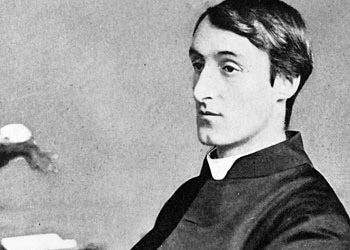
Gerard Manley Hopkins (public domain)
Here is an article which, if you haven’t read, you should. On his blog Creed Code Cult, Catholic convert and former PCA minister Jason Stellman posts this article on the fundamental paradigm difference between the Catholic Church and the Protestant “ecclesial communities” (to use Benedict XVI’s more accurate description). Mr. Stellman manages to write his article without using the word “paradigm,” but at heart, that is what he is talking about. And you should read it because he flat-out nails it.
Here’s why: Because he says the words that many Catholics have thought but haven’t said; for, to say them will most certainly rankle. But Mr. Stellman says them and lets them stand without either overwought hyperbole or cowering apology.
One thing I have begun to notice—especially after starting to fall in love with G.K. Chesterton about five years ago—is how practically and ecclesiologically atheistic Protestantism seems from a Catholic perspective.
Mr. Stellman is willing to explain what he means by comparing Protestantism with atheism, but he does not backpeddle on the comparison. The gist of the comparison is that Protestantism, historically, has entailed an excision of the supernatural from the Christian imagination. Oh, Protestants believe in supernatural events—when the Bible has recorded them. But outside the context of what Protestants are bound by sola scriptura to believe, the supernatural is nothing better than superstitious:
Yes, Gabriel appeared to the young teenager Mary in the year 9-months BC, but no, Mary did not appear to that young teenaged girl in France in 1858 A.D. Yes, the Holy Spirit took a gaggle of sinful fishermen and protected them from teaching error so that they could pen the New Testament, but no, the Holy Spirit could not possibly have supernaturally protected their successors from teaching error when they continued their ministry of governing the Church that Jesus founded.
That is spot-on in its exposure of the Protestant double-standard on infallibility: We believe that Peter was infallible when he wrote two epistles, but not when he taught as pope. Protestant apologists fail to explain how the Holy Spirit could guide the authors of Scripture but not the Magisterium of the Church. They fail to explain how God is capable of turning water into wine in 30 A.D., but just couldn’t have appeared before a poor Polish nun in the 1930s to tell her about His great mercy. They fail to explain how the one is the action of God, but the other little better than ignorant superstition.
Protestant apologists want to confine the miracles of God to the pages of a book, because in their hands the pages of a book are safe and unthreatening. A book can be contained; it can be submitted to exegesis, to cool reason, to the canons of academic theology. Thus they cannot fathom the fullness of the unbindable glory of God; and that is, in fact, to be atheistic—in both ecclesiology and the religious imagination. An image of Mary on a 16th-century tilma is as superstitious for a Protestant apologist to believe in, as the Resurrection itself is superstitious for an atheist to believe in.
It was G.K. Chesterton who helped reveal this truth to Mr. Stellman because of his insistence that Christians “recover that sense of childlike wonder which humility tends to foster. … [R]ed dragons are needed to amaze us because red apples no longer do.” That is correct, and I would add another Chestertonian observation to the mix. In his great book Orthodoxy
But therein is the Protestant paradigm: Protestants are very good at scriptural exegesis (albeit within their own heretical framework), and they are very good at analytical homiletics. But they have little sense, in their theological orientation, of wonder or miracle or the supernatural. To the supernatural, such as they accept it, they bring mere cold reason and empty white rooms. They do not know what Gerard Manley Hopkins meant when he wrote, “The world is charged with the grandeur of God.” And that is why they—and especially the Calvinists in their midst—are mad.
All this is what Mr. Stellman has come to understand over the past years; and that is why his witness and testimony are of such great value to the Church—to those who are in it, and those who will be brought to it because of what he has written.
Kudos, and a belated “Welcome home,” to Jason Stellman.
***
If you like the content on this blog, your generous gift to the author helps to keep it active. I remember all my supporters in my Mass intentions each week.

Next Post

April 24, 2013 Leonardo De Chirico Has Fun With Semantics
Browse Our Archives
Select a Category Abortion About Me Answers for Calvinists Answers to Media Fictions Answers to Objections Anti-Catholicism Apologetics Apostolic Succession Atonement Authority of the Church Baptism Benedictines Biblical Exegesis Blogging Book Reviews Books & Writing &c. Calvin's Institutes Capital Punishment Catholic Church Chastity Christology Church Fathers Church Social Doctrine Confession Contraception Conversion Stories Crusades Debates Depression & Suicide Deuterocanon Development of Doctrine Ecumenism English Language Eucharistic Adoration Exorcism Extra Ecclesiam Fisks & Rebuttals Freedom of Religion Freedom of Speech Fundamentalism Gender Politics Gender Theory Good Works Homosexuality Humor Idolatry Immaculate Conception In the News Inquisition ISIS Islam Just for Fun Just War Justification LCWR Limbo Liturgical Abuse Liturgical Year Magisterium Marriage and Family Mary Mortal Sin New Evangelization NFP Papacy Papal Documents Papal Infallibility Personal Narrative Politics Pope Francis Pope Francis Derangement Syndrome Population Control Praying to the "Dead" Priesthood Primacy of Peter Protestant Denominations Purgatory Radical Islam Radical Traditionalists Real Presence Right to Conscience RIght to Life Saints Same-Sex "Marriage" Seven Quick Takes Social Justice Social Media Sola Scriptura Spirit of Vatican II SSPX The Eucharist The Mass The Resurrection Traditionalism Vatican II Year of Mercy
Select a Month August 2019 July 2019 June 2019 May 2019 November 2018 October 2018 August 2018 July 2018 June 2018 April 2018 November 2017 October 2017 September 2017 May 2017 April 2017 March 2017 February 2017 November 2016 October 2016 September 2016 August 2016 July 2016 June 2016 May 2016 April 2016 March 2016 February 2016 January 2016 December 2015 November 2015 October 2015 September 2015 July 2015 June 2015 May 2015 April 2015 March 2015 February 2015 January 2015 December 2014 September 2014 August 2014 July 2014 June 2014 May 2014 April 2014 March 2014 February 2014 January 2014 December 2013 November 2013 October 2013 May 2013 April 2013 February 2013 January 2013
Follow Us!
TAKE THE
Religious Wisdom Quiz
What was the name of Bathsheba’s husband?
Select your answer to see how you score.
Uriah Nathan Abner Joab
Related posts from To Give a Defense

Infallibility is true, but (almost) useless. With some...
Does the Mass "banish the remembrance of Christ's...
A Heretic Would Not Cease to Be Pope:...
About that Syllabus of Errors....Guess What Else Pius...
TRENDING AT PATHEOS Catholic

Rejecting Doom: Christian Hope And Human Action
Christianity is a religion of hope. We are to have hope and...

It’s What Comes From Within Which Matters
One of the most difficult things for us to understand is why...

Why I Choose the Eucharist Over the Sermon
Choose the Eucharist, Not the Sermon What are we supposed to get...

5 Design Elements Found in Spiritually Rooted Homes
Putting Spirituality Into Home Decor Our homes are more than our living...

Credo: A Story of God Told with the...
About 10 years ago, I began to imagine a personal "Credo" that...

The Anatomy of Divine Revelation in Catholic Thought
The claim that God has made Himself known to human beings is...
view all Catholic blogs
Ad-Free & Subscriber Log-In Subscription Support
- About Us
- 2026 Calendar
- Videos
- Podcasts
- Library of World Religions
- Faith In Media Tracker
- Advertise With Us
- Write for Us
- Privacy Policy
- Terms of Service
- Do Not Sell My Data
- Contact Us
- Radiant Digital
- Manage Newsletter Subscriptions
- Unsubscribe From Notifications
- Sitemap
Copyright 2008-2026, Patheos. All rights reserved.
Subscription Support Ad-Free & Subscriber Log-In
Follow Patheos