
BuddhistCatholicContemplativeEvangelicalGeneral ChristianHinduJewishLatter-day SaintMuslimNew VisionsProgressive Christian
Beliefs
- Buddhist
- Catholic
- Contemplative
- Evangelical
- General Christian
- Hindu
- Jewish
- Latter-day Saint
- More Voices
- Muslim
- New Visions
- Pagan
- Progressive Christian
Topics
- Religion News
- Food and Religion
- Sports and Religion
- Religious Art
- Religious Music and Entertainment
- Religious Events
- History and Religion
- Style and Religion
- Politics and Religion
- Women in Religion
- Recreation Outdoors and Religion
- Business Finance and Religion
- Careers Workplace and Religion
- Education and Religion
- Family Parenting and Religion
- Health Fitness and Religion
- Home and Religion
- Relationships and Religion
- Technology and Religion
- Travel and Religion
Columnists
- Buddhist Columnists
- Business Finance and Religion Columnists
- Careers Workplace and Religion Columnists
- Catholic Columnists
- Contemplative Columnists
- Education and Religion Columnists
- Evangelists Columnists
- Family Parenting and Religion Columnists
- General Christian Columnists
- Health Fitness and Religion Columnists
- Hindu Columnists
- History and Religion Columnists
- Home and Religion Columnists
- Jewish Columnists
- More Voices Columnists
- Latter Day Columnists
- Muslim Columnists
- New Visions Columnists
- Nonreligious Columnists
- Pagan Columnists
- Politics and Religion Columnists
- Progressive Columnists
- Recreation Outdoors and Religion Columnists
- Relationships and Religion Columnists
- Religion News Columnists
- Religious Art Columnists
- Religious Events Columnists
- Religious Music and Entertainment Columnists
- Sports and Religion Columnists
- Style and Religion Columnists
- Technology and Religion Columnists
- Travel and Religion Columnists
- Women in Religion Columnists
Resource Library
- 2026 Calendar
- Library of World Religions
- The 100 Most Holy Places on Earth
- Patheos Answers
- Podcasts
- Videos
- Faith Leaders Database
- Anglican Episcopalian
- Bahai
- Baptist
- Buddhism
- Christianity
- Confucianism
- Eastern Orthodoxy
- Hinduism
- Holiness and Pentecostal
- ISKCON
- Islam
- Judaism
- Lutheran
- Methodist
- The Church of Jesus Christ of Latter-day Saints
- New Age
- Paganism
- Presbytarian and Reformed
- Protestantism
- Religion Behind the Scenes
- Roman Catholic
- Scientology
- Shia Islam
- Sikhism
- Sufism
- Sunni Islam
- Taoism
- Zen
- See all religions
Research Tools
 Ad-Free & Subscriber Log-In Subscription Support
Ad-Free & Subscriber Log-In Subscription Support
Follow Patheos 

- Trending:
- Forgiveness
- |
- Marriage
- |
- Consciousness
- |
- Death Penalty
- |
- Election
- |
- Halloween
 To Give a Defense
- Home
- Catholic
- TurretinFan Interprets the Lightning
TurretinFan Interprets the Lightning
Last updated on: March 9, 2017 at 4:10 pm by Scott Eric Alt
TurretinFan Interprets the Lightning 2017-03-09T16:10:04-04:00 Scott Eric Alt
Patheos Explore the world's faith through different perspectives on religion and spirituality! Patheos has the views of the prevalent religions and spiritualities of the world.
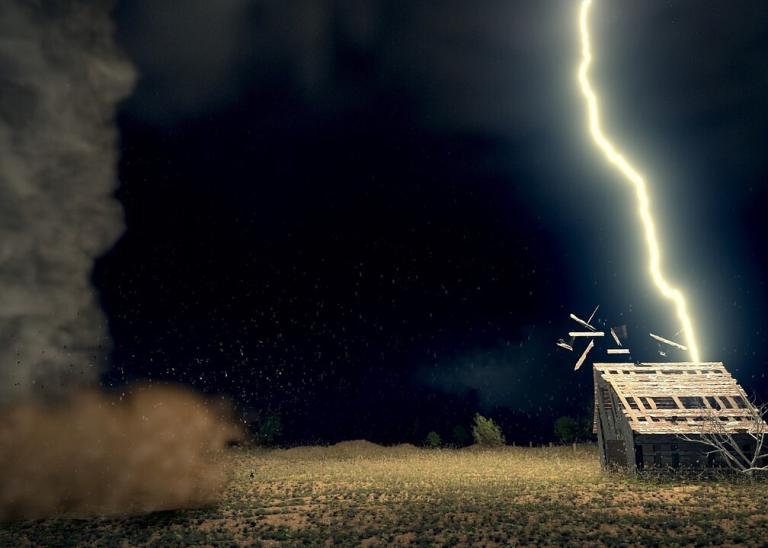
Image via Pixabay
If lightning strikes a tree, how do we know that it is random; whereas, if lightning strikes an image of Christ, that is God’s judgment against idolatry? Perhaps TurretinFan, who is the latest to interpret the lightning, will say that even the tree was not struck randomly, and that its destruction was ordained by God before all eternity. The Amazing and Undaunted Mr. X is a Calvinist, and Calvinists do not blow their nose unless it had been decreed by the Godhead. But surely God is not blasting with righteous judgment every tree that gets struck. No, Mr X might say, but God does have a purpose in striking the tree, even though we may not be able to discern it. Nevertheless, TF believes he can discern the purpose of God when the image of Jesus is struck. This is selection to suit a pre-made theology: When something Mr. X does not like is struck by lightning, God is affirming him in his dislike. (Never mind all the images of Jesus that don’t get struck.) When something Mr. X is neutral about is struck, God just has His own purposes that are mysterious. If lightning should strike Mr. X, would it be because God had finally grown weary of his blog, too?
Mr. X is particularly struck (no pun intended) with the fact that this is the second time the large statue of Jesus in Rio de Janeiro has been blasted by lightning. God must really be trying to make a point. The first time, there was no damage to the statue. This time, its finger was struck off.
Now, as it happens, there is a photograph of this latest act of God. One hundred feet tall, sitting high atop the city at the peak of the Cordova mountains, with its arms outstretched that way, the statue looks to me to be an invitation to lightning. In fact, there is a lightning rod near by, but perhaps is not well-placed enough. Perhaps the prominent statue intercepts the lightning on its way to the rod. Who knows? Who cares? Lightning strikes objects all the time, but when it is a religious statue, suddenly Mr. X’s attention is diverted from Ergun Caner long enough for him to prognosticate about the meaning behind it all and wag his finger at graven images.
“The idol cannot protect itself from lightning!” Mr. X cries, as if anyone believed it can. And therein lies a key mistake that Calvinists make when condemning Catholics for their “idol worship.” The assumption is that we think the religious objects, as objects, have power. The assumption is that we attribute God’s power to the material thing. But we do not. We know just as well as Mr. X does that the statue cannot save us or answer our prayers. We know just as well as he that a crucifix is not a talisman. What it does do is help focus our attention on the God who is merely represented (not replaced) by the object. God does not have to prove He has more power than the statue by striking off its finger, because no one suspected that it had any power in the first place.
Nevertheless, Mr. X finds the whole incident similar to the one told of in 1 Samuel 5:1-5.
And the Philistines took the ark of God, and brought it from Ebenezer unto Ashdod When the Philistines took the ark of God, they brought it into the house of Dagon, and set it by Dagon. And when they of Ashdod arose early on the morrow, behold, Dagon was fallen upon his face to the earth before the ark of the Lord. And they took Dagon, and set him in his place again. And when they arose early on the morrow morning, behold, Dagon was fallen upon his face to the ground before the ark of the Lord; and the head of Dagon and both the palms of his hands were cut off upon the threshold; only the stump of Dagon was left to him. Therefore neither the priests of Dagon, nor any that come into Dagon’s house, tread on the threshold of Dagon in Ashdod unto this day.
Mr. X does not exactly say why this passage is relevant in this context. No lightning or cause of the destruction of Dagon is mentioned in this passage. Moreover, Dagon is not Yahweh but a different object of worship altogether. Finally, Dagon is toppled the first time and utterly destroyed the second. Whereas, in Rio, no damage occurred on the first strike of lightning, and Jesus only lost a finger the second time. If God sent the lightning, as Mr. X claims, as a judgment upon idolatry, why would He not have blasted the statue in Rio to bits? Why is lightning not blasting statues of Mary all over the Catholic landscape? If God wanted to make a point, why do so in a way that has all the characteristics of random happenstance?
No attempt is made to consider such questions; we are meant to accept Mr. X’s declaration that this is the judgment of God, based upon nothing other than Mr. X’s own ipse dixit.
That is not good enough. Unless Mr. X can explain how he is so sure this particular lightning strike has a theological meaning, whereas lightning strikes against trees are inscrutable; unless he can explain why 99.9% of all religious objects are left untouched by destruction, yet the ones that are destroyed show the wrath of God; then he is just an anonymous blogger in an an unidentified basement, indistinguishable from Pat Robertson, claiming theological vindication at random events.
***
If you like the content on this blog, your generous gift to the author helps to keep it active. I remember all my supporters in my Mass intentions each week.
Previous Post
January 20, 2014
Steve Hays & the Parable of the Biltmore
Browse Our Archives
Select a Category Abortion About Me Answers for Calvinists Answers to Media Fictions Answers to Objections Anti-Catholicism Apologetics Apostolic Succession Atonement Authority of the Church Baptism Benedictines Biblical Exegesis Blogging Book Reviews Books & Writing &c. Calvin's Institutes Capital Punishment Catholic Church Chastity Christology Church Fathers Church Social Doctrine Confession Contraception Conversion Stories Crusades Debates Depression & Suicide Deuterocanon Development of Doctrine Ecumenism English Language Eucharistic Adoration Exorcism Extra Ecclesiam Fisks & Rebuttals Freedom of Religion Freedom of Speech Fundamentalism Gender Politics Gender Theory Good Works Homosexuality Humor Idolatry Immaculate Conception In the News Inquisition ISIS Islam Just for Fun Just War Justification LCWR Limbo Liturgical Abuse Liturgical Year Magisterium Marriage and Family Mary Mortal Sin New Evangelization NFP Papacy Papal Documents Papal Infallibility Personal Narrative Politics Pope Francis Pope Francis Derangement Syndrome Population Control Praying to the "Dead" Priesthood Primacy of Peter Protestant Denominations Purgatory Radical Islam Radical Traditionalists Real Presence Right to Conscience RIght to Life Saints Same-Sex "Marriage" Seven Quick Takes Social Justice Social Media Sola Scriptura Spirit of Vatican II SSPX The Eucharist The Mass The Resurrection Traditionalism Vatican II Year of Mercy
Select a Month August 2019 July 2019 June 2019 May 2019 November 2018 October 2018 August 2018 July 2018 June 2018 April 2018 November 2017 October 2017 September 2017 May 2017 April 2017 March 2017 February 2017 November 2016 October 2016 September 2016 August 2016 July 2016 June 2016 May 2016 April 2016 March 2016 February 2016 January 2016 December 2015 November 2015 October 2015 September 2015 July 2015 June 2015 May 2015 April 2015 March 2015 February 2015 January 2015 December 2014 September 2014 August 2014 July 2014 June 2014 May 2014 April 2014 March 2014 February 2014 January 2014 December 2013 November 2013 October 2013 May 2013 April 2013 February 2013 January 2013
Follow Us!
TAKE THE
Religious Wisdom Quiz
What was the name of the King who made Esther his queen?
Select your answer to see how you score.
Jeremiah Barnabas Hezekiah Ahasuerus
Related posts from To Give a Defense

Does the Mass "banish the remembrance of Christ's...

Dear James White: Thanks for the Applause. You...
Calvinist Blogger Reads James; Discovers That We Must...
Two Highly Illogical Arguments for Sola Scriptura.
TRENDING AT PATHEOS Catholic

Rejecting Doom: Christian Hope And Human Action
Christianity is a religion of hope. We are to have hope and...

It’s What Comes From Within Which Matters
One of the most difficult things for us to understand is why...

Why I Choose the Eucharist Over the Sermon
Choose the Eucharist, Not the Sermon What are we supposed to get...

5 Design Elements Found in Spiritually Rooted Homes
Putting Spirituality Into Home Decor Our homes are more than our living...

Credo: A Story of God Told with the...
About 10 years ago, I began to imagine a personal "Credo" that...

The Anatomy of Divine Revelation in Catholic Thought
The claim that God has made Himself known to human beings is...
view all Catholic blogs
Ad-Free & Subscriber Log-In Subscription Support
- About Us
- 2026 Calendar
- Videos
- Podcasts
- Library of World Religions
- Faith In Media Tracker
- Advertise With Us
- Write for Us
- Privacy Policy
- Terms of Service
- Do Not Sell My Data
- Contact Us
- Radiant Digital
- Manage Newsletter Subscriptions
- Unsubscribe From Notifications
- Sitemap
Copyright 2008-2026, Patheos. All rights reserved.
Subscription Support Ad-Free & Subscriber Log-In
Follow Patheos