
BuddhistCatholicContemplativeEvangelicalGeneral ChristianHinduJewishLatter-day SaintMuslimNew VisionsProgressive Christian
Beliefs
- Buddhist
- Catholic
- Contemplative
- Evangelical
- General Christian
- Hindu
- Jewish
- Latter-day Saint
- More Voices
- Muslim
- New Visions
- Pagan
- Progressive Christian
Topics
- Religion News
- Food and Religion
- Sports and Religion
- Religious Art
- Religious Music and Entertainment
- Religious Events
- History and Religion
- Style and Religion
- Politics and Religion
- Women in Religion
- Recreation Outdoors and Religion
- Business Finance and Religion
- Careers Workplace and Religion
- Education and Religion
- Family Parenting and Religion
- Health Fitness and Religion
- Home and Religion
- Relationships and Religion
- Technology and Religion
- Travel and Religion
Columnists
- Buddhist Columnists
- Business Finance and Religion Columnists
- Careers Workplace and Religion Columnists
- Catholic Columnists
- Contemplative Columnists
- Education and Religion Columnists
- Evangelists Columnists
- Family Parenting and Religion Columnists
- General Christian Columnists
- Health Fitness and Religion Columnists
- Hindu Columnists
- History and Religion Columnists
- Home and Religion Columnists
- Jewish Columnists
- More Voices Columnists
- Latter Day Columnists
- Muslim Columnists
- New Visions Columnists
- Nonreligious Columnists
- Pagan Columnists
- Politics and Religion Columnists
- Progressive Columnists
- Recreation Outdoors and Religion Columnists
- Relationships and Religion Columnists
- Religion News Columnists
- Religious Art Columnists
- Religious Events Columnists
- Religious Music and Entertainment Columnists
- Sports and Religion Columnists
- Style and Religion Columnists
- Technology and Religion Columnists
- Travel and Religion Columnists
- Women in Religion Columnists
Resource Library
- 2026 Calendar
- Library of World Religions
- The 100 Most Holy Places on Earth
- Patheos Answers
- Podcasts
- Videos
- Faith Leaders Database
- Anglican Episcopalian
- Bahai
- Baptist
- Buddhism
- Christianity
- Confucianism
- Eastern Orthodoxy
- Hinduism
- Holiness and Pentecostal
- ISKCON
- Islam
- Judaism
- Lutheran
- Methodist
- The Church of Jesus Christ of Latter-day Saints
- New Age
- Paganism
- Presbytarian and Reformed
- Protestantism
- Religion Behind the Scenes
- Roman Catholic
- Scientology
- Shia Islam
- Sikhism
- Sufism
- Sunni Islam
- Taoism
- Zen
- See all religions
Research Tools
 Ad-Free & Subscriber Log-In Subscription Support
Ad-Free & Subscriber Log-In Subscription Support
Follow Patheos 

- Trending:
- Forgiveness
- |
- Marriage
- |
- Consciousness
- |
- Death Penalty
- |
- Election
- |
- Halloween
 To Give a Defense
- Home
- Catholic
- The New Evangelization, Sans Puns: Scott Hahn’s “Mission Manual”
The New Evangelization, Sans Puns: Scott Hahn’s “Mission Manual”
Last updated on: March 14, 2017 at 12:39 am by Scott Eric Alt
The New Evangelization, Sans Puns: Scott Hahn’s “Mission Manual” 2017-03-14T00:39:58-04:00 Scott Eric Alt
Patheos Explore the world's faith through different perspectives on religion and spirituality! Patheos has the views of the prevalent religions and spiritualities of the world.
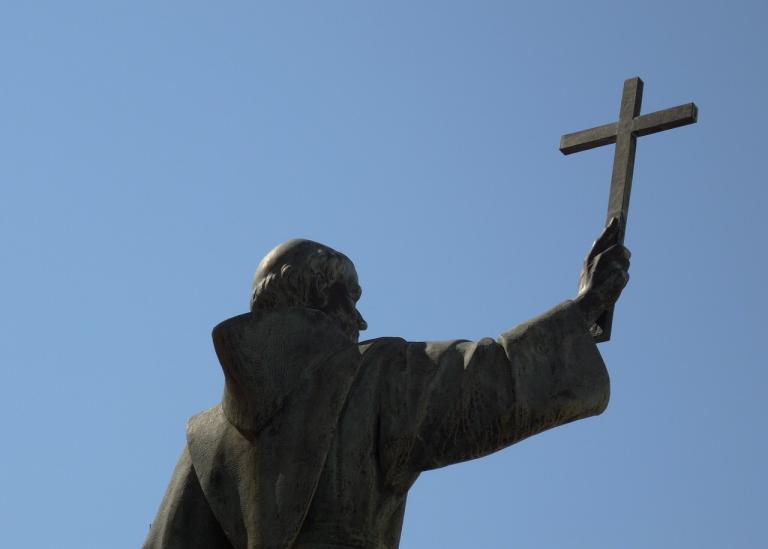
Image via Pixabay
Readers who expect with each new book to find Scott Hahn’s trademark puns in the subtitles won’t find them here. I admit that was the first thing I noticed about Evangelizing Catholics
The title of his new book—Evangelizing Catholics, now available from Our Sunday Visitor—might make one think that it is all about whipping pick-and-choose Catholics into shape, whether they be of the right or the left. And to be sure, Dr. Hahn does include this very harrowing figure:
Statistics tell us that 85 percent of the young people who are confirmed will leave the Church within the next fifteen years. Most of them will leave the Church in college, where 70 percent of the students who enter practicing their faith leave not practicing the faith.
Those are large numbers; imagine that: The Catholic Church keeps only one quarter of it its members past the age of thirty. That needs to be addressed. That needs a mission manual.
But Evangelizing Catholics is not merely about bringing others to the Church, or back to the Church, or shaping up those weak and sloppy Catholics. It is—in part; for Dr. Hahn does point out the “overabundance of Catholics who don’t know the faith to which they’re called to bear witness.” But the New Evangelization is also, at bottom, about evangelizing ourselves.
[T]ransformation is the heart of the New Evangelization. It’s what a life of ongoing conversion—of falling ever more deeply in love with God—is all about. It’s also the goal, both for ourselves and for those we week to reach.
God’s grace will get us to that goal. Only grace can make the transformation possible. But we participate in that process through the use of our intellect and well. It falls to us to strive to know what we proclaim as Catholics, and it falls to us to cooperate with the grace God gives us to live by these truths. It falls to us to strive to grasp the depths of the Gospel.
It falls to us: Dr. Hahn knows how to use the anaphora.
Evangelizing Catholics is divided into three sections.
In section 1, Dr. Hahn writes about what the New Evangelization is and why our popes, since Vatican II, have said that it is the primary mission of the whole Church. This is not an apologetic tfor Vatican II, addressed to skeptics, but a call to the laity to do what the Church says is our primary duty in the world. Dr. Hahn tells us why it is not just for Protestants to preach Christ to others, but Catholics too.
In section 2, Dr. Hahn writes about “models and methods for the New Evangelization”: the first evangelists and early Church, our own homes and families, and our individual apostolates. (A key distinction that Dr. Hahn explains in this section is between an “apostolate,” which the laity have, and a “ministry,” which priests have.) And he writes about how the family is the “epicenter” of the New Evangelization. As they say, so does Dr. Hahn: It begins at home.
Finally, in part 3, Dr. Hahn writes about the “content” of the New Evangelization: the nature of sin, atonement, the covenant family of God, and transformation of the self through the Eucharist.
But the true center of Evangelizing Catholics is this truth, which Dr. Hahn first read in Pope St. John Paul II’s 2003 encyclical Ecclesia de Eucharistia (online here): “The Eucharist thus appears as both the source and the summit of all evangelization.”
At first, as Dr. Hahn tells it, he did not know what the pope meant; he still was prisoned by the Protestant way of thinking about evangelization. First you say that God loves us but we have sinned; then, that Christ died for us and we must respond with faith. The end. But later Dr. Hahn read similar words from Cardinal George: “All evangelizers proclaim who Christ is. Catholic evangelizers proclaim a Eucharistic Christ.” Dr. Hahn also quotes Pope Benedict XVI (as Cardinal Ratzinger) to the same effect.
The point, as Dr. Hahn explains it, is that you evangelize the Gospel, and the Gospel is Christ, and Christ is the Eucharist. Christ is the sacraments. All evangelization starts from the sacraments and points back toward the sacraments. The Eucharist is the life of the faith because Christ is the life of the faith.
Scott Hahn has the rare gift of making complex ideas simple; he is a scholar who takes scholarship and opens it up, simply, for all readers. That is seldom more true than in this fine book. Evangelizing Catholics is the New Evangelization explained as only he can do so. If you’ve not read it, get it today.
***
If you like the content on this blog, your generous gift to the author helps to keep it active. I remember all my supporters in my Mass intentions each week.
Previous Post
July 30, 2014
Three Reasons to Take John 6 Literally
Next Post

August 5, 2014 The Saints and Social Justice by Brandon Vogt: A Review
Browse Our Archives
Select a Category Abortion About Me Answers for Calvinists Answers to Media Fictions Answers to Objections Anti-Catholicism Apologetics Apostolic Succession Atonement Authority of the Church Baptism Benedictines Biblical Exegesis Blogging Book Reviews Books & Writing &c. Calvin's Institutes Capital Punishment Catholic Church Chastity Christology Church Fathers Church Social Doctrine Confession Contraception Conversion Stories Crusades Debates Depression & Suicide Deuterocanon Development of Doctrine Ecumenism English Language Eucharistic Adoration Exorcism Extra Ecclesiam Fisks & Rebuttals Freedom of Religion Freedom of Speech Fundamentalism Gender Politics Gender Theory Good Works Homosexuality Humor Idolatry Immaculate Conception In the News Inquisition ISIS Islam Just for Fun Just War Justification LCWR Limbo Liturgical Abuse Liturgical Year Magisterium Marriage and Family Mary Mortal Sin New Evangelization NFP Papacy Papal Documents Papal Infallibility Personal Narrative Politics Pope Francis Pope Francis Derangement Syndrome Population Control Praying to the "Dead" Priesthood Primacy of Peter Protestant Denominations Purgatory Radical Islam Radical Traditionalists Real Presence Right to Conscience RIght to Life Saints Same-Sex "Marriage" Seven Quick Takes Social Justice Social Media Sola Scriptura Spirit of Vatican II SSPX The Eucharist The Mass The Resurrection Traditionalism Vatican II Year of Mercy
Select a Month August 2019 July 2019 June 2019 May 2019 November 2018 October 2018 August 2018 July 2018 June 2018 April 2018 November 2017 October 2017 September 2017 May 2017 April 2017 March 2017 February 2017 November 2016 October 2016 September 2016 August 2016 July 2016 June 2016 May 2016 April 2016 March 2016 February 2016 January 2016 December 2015 November 2015 October 2015 September 2015 July 2015 June 2015 May 2015 April 2015 March 2015 February 2015 January 2015 December 2014 September 2014 August 2014 July 2014 June 2014 May 2014 April 2014 March 2014 February 2014 January 2014 December 2013 November 2013 October 2013 May 2013 April 2013 February 2013 January 2013
Follow Us!
TAKE THE
Religious Wisdom Quiz
My name is Amos, before God called me to prophesy against Israel what was my occupation?
Select your answer to see how you score.
Priest in the temple Spinner of cloth Fisherman Shepherd and farmer
Related posts from To Give a Defense
No, Virginia, Blogs are Not the Magisterium. 7QT...

Leonardo De Chirico Has Fun With Semantics

The Church Is a Communion of Disciples in...
Through the Year With Pope Francis
TRENDING AT PATHEOS Catholic

Rejecting Doom: Christian Hope And Human Action
Christianity is a religion of hope. We are to have hope and...

It’s What Comes From Within Which Matters
One of the most difficult things for us to understand is why...

Why I Choose the Eucharist Over the Sermon
Choose the Eucharist, Not the Sermon What are we supposed to get...

5 Design Elements Found in Spiritually Rooted Homes
Putting Spirituality Into Home Decor Our homes are more than our living...

Credo: A Story of God Told with the...
About 10 years ago, I began to imagine a personal "Credo" that...

The Anatomy of Divine Revelation in Catholic Thought
The claim that God has made Himself known to human beings is...
view all Catholic blogs
Ad-Free & Subscriber Log-In Subscription Support
- About Us
- 2026 Calendar
- Videos
- Podcasts
- Library of World Religions
- Faith In Media Tracker
- Advertise With Us
- Write for Us
- Privacy Policy
- Terms of Service
- Do Not Sell My Data
- Contact Us
- Radiant Digital
- Manage Newsletter Subscriptions
- Unsubscribe From Notifications
- Sitemap
Copyright 2008-2026, Patheos. All rights reserved.
Subscription Support Ad-Free & Subscriber Log-In
Follow Patheos