
BuddhistCatholicContemplativeEvangelicalGeneral ChristianHinduJewishLatter-day SaintMuslimNew VisionsProgressive Christian
Beliefs
- Buddhist
- Catholic
- Contemplative
- Evangelical
- General Christian
- Hindu
- Jewish
- Latter-day Saint
- More Voices
- Muslim
- New Visions
- Pagan
- Progressive Christian
Topics
- Religion News
- Food and Religion
- Sports and Religion
- Religious Art
- Religious Music and Entertainment
- Religious Events
- History and Religion
- Style and Religion
- Politics and Religion
- Women in Religion
- Recreation Outdoors and Religion
- Business Finance and Religion
- Careers Workplace and Religion
- Education and Religion
- Family Parenting and Religion
- Health Fitness and Religion
- Home and Religion
- Relationships and Religion
- Technology and Religion
- Travel and Religion
Columnists
- Buddhist Columnists
- Business Finance and Religion Columnists
- Careers Workplace and Religion Columnists
- Catholic Columnists
- Contemplative Columnists
- Education and Religion Columnists
- Evangelists Columnists
- Family Parenting and Religion Columnists
- General Christian Columnists
- Health Fitness and Religion Columnists
- Hindu Columnists
- History and Religion Columnists
- Home and Religion Columnists
- Jewish Columnists
- More Voices Columnists
- Latter Day Columnists
- Muslim Columnists
- New Visions Columnists
- Nonreligious Columnists
- Pagan Columnists
- Politics and Religion Columnists
- Progressive Columnists
- Recreation Outdoors and Religion Columnists
- Relationships and Religion Columnists
- Religion News Columnists
- Religious Art Columnists
- Religious Events Columnists
- Religious Music and Entertainment Columnists
- Sports and Religion Columnists
- Style and Religion Columnists
- Technology and Religion Columnists
- Travel and Religion Columnists
- Women in Religion Columnists
Resource Library
- 2026 Calendar
- Library of World Religions
- The 100 Most Holy Places on Earth
- Patheos Answers
- Podcasts
- Videos
- Faith Leaders Database
- Anglican Episcopalian
- Bahai
- Baptist
- Buddhism
- Christianity
- Confucianism
- Eastern Orthodoxy
- Hinduism
- Holiness and Pentecostal
- ISKCON
- Islam
- Judaism
- Lutheran
- Methodist
- The Church of Jesus Christ of Latter-day Saints
- New Age
- Paganism
- Presbytarian and Reformed
- Protestantism
- Religion Behind the Scenes
- Roman Catholic
- Scientology
- Shia Islam
- Sikhism
- Sufism
- Sunni Islam
- Taoism
- Zen
- See all religions
Research Tools
 Ad-Free & Subscriber Log-In Subscription Support
Ad-Free & Subscriber Log-In Subscription Support
Follow Patheos 

- Trending:
- Forgiveness
- |
- Marriage
- |
- Consciousness
- |
- Death Penalty
- |
- Election
- |
- Halloween
 To Give a Defense
- Home
- Catholic
- Sexagesima: An Examination of Conscience
Sexagesima: An Examination of Conscience
Last updated on: March 13, 2017 at 11:46 pm by Scott Eric Alt
Sexagesima: An Examination of Conscience 2017-03-13T23:46:16-04:00 Scott Eric Alt
Patheos Explore the world's faith through different perspectives on religion and spirituality! Patheos has the views of the prevalent religions and spiritualities of the world.
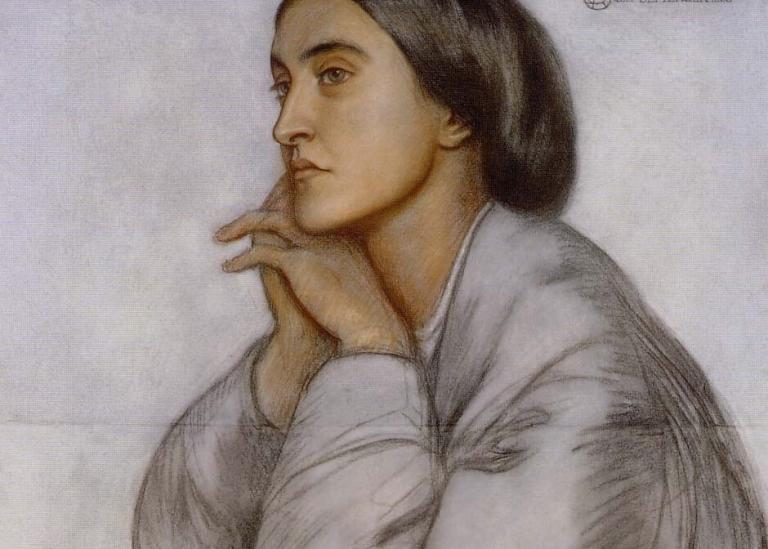
Christina Rossetti, by her brother Dante Gabriel Rossetti
In her duo of poems for Sexagesima Sunday, Christina Rossetti invites us to contrast the paradise of Eden with the paradise to come in Christ:
Yet earth was very good in days of old,
And earth is lovely still:
Still for the sacred flock she spreads the fold,
For Sion rears the hill.Mother she is, and cradle of our race,
A depth where treasures lie,
The broad foundation of a holy place,
Man’s step to scale the sky.She spreads the harvest-field which Angels reap,
And lo! the crop is white;
She spreads God’s Acre where the happy sleep
All night that is not night.
Earth may not pass till heaven shall pass away,
Nor heaven may be renewed
Except with earth: and once more in that day
Earth shall be very good.
That Eden of earth’s sunrise cannot vie
With Paradise beyond her sunset sky
Hidden on high.Four rivers watered Eden in her bliss,
But Paradise hath One which perfect is
In sweetness.Eden had gold, but Paradise hath gold
Like unto glass of splendours manifold
Tongue hath not told.Eden had sun and moon to make her bright;
But Paradise hath God and Lamb for light,
And hath no night.Unspotted innocence was Eden’s best;
Great Paradise shows God’s fulfilled behest,
Triumph and rest.Hail, Eve and Adam, source of death and shame!
New life has sprung from death, and Jesu’s Name
Clothes you with fame.
Hail Adam, and hail Eve! your children rise
And call you blessed, in their glad surmise
Of Paradise.
Rossetti understands attachments. And chief among them is our attachment to earth and the things of earth. Earth was “very good,” she says; earth is “lovely still.” Earth is our “mother,” our “cradle,” and indeed “A depth where treasures lie.”
But for all that, I am struck with how often Rossetti’s praise of earth is tempered by her understanding that it is not our real home. Here we have no continuing city. She calls it “The broad foundation of a holy place,” but it is not the “holy place” itself. It is, she explains, “Man’s step to scale the sky.” So earth is to be praised, not for what it is in itself, but for the fact that it is our path to something holier and better.
It is only in that context that we can understand what Rossetti means when she refers to earth as “lovely.” I am reminded of Robert Frost’s “Stopping By Woods On a Snowy Evening.” The woods were not his destination, but that did not prevent him from stopping a while to linger over how “lovely, dark, and deep” everything was. Christina Rossetti would understand. And yet she points out that, at the end of days, when heaven is renewed with earth, “once more in that day / Earth shall be very good.” It is okay to linger over attachments to lovely things; but we must realize that it is only in renewal that any of them shall merit the superlative “very.” We must be renewed first.
In the second of the two poems, Rossetti turns to a more specific contrast between the lovely things of Eden and the lovely things of Paradise. Eden had “four rivers,” but paradise “One which perfect is.” Eden’s “gold” is lesser than Paradise’s “gold / Like unto glass” which “Tongue hath not told.” Eden could offer only “unspotted innocence,” but Paradise “God’s fulfilled behest.”
Eye hath not seen nor hath ear heard: I admire Rossetti’s method of calling us to detachment from the things of this world—however lovely they are—by reminding us that lovelier things await. She goes gently about the business of telling us to forgo the world and the things of the world. Something in the nursery-book style of her rhyme and meter only adds to how deeply her poems call us to a longing for a loveliness we can somehow remember despite never having experienced it for one day. Perhaps, in the end, it is our longings more than our fears that will prompt us to forgo our attachments and our sins and seek the city that is to come.
***
In his homily for the Vigil Mass, Fr. said that St. Paul’s words in the epistle reading were the most perfect examination of conscience he could think of. Fr. is an expert in moral theology, so his analysis of Paul here has weight.
If I speak in the tongues of men and of angels, but have not love, I am a noisy gong or a clanging symbol. And if I have prophetic powers, and understand all mysteries, and all knowledge, and if I have all faith, so as to remove mountains, but have not love, I am nothing. If I give away all I have, and if I deliver my body to be burned, but have not love, I gain nothing. Love is patient and kind; love is not jealous or boastful; it is not arrogant or rude. Love does not insist on its own way; it is not irritable or resentful; it does not rejoice at wrong but rejoices in the right. Love bears all things, believes all things, hopes all things, endures all things. Love never ends; as for prophecies, they will pass away; as for tongues, they will cease; as for knowledge, it will pass away. For our knowledge is imperfect and our prophecy is imperfect; but when the perfect comes, the imperfect will pass away. When I was a child, I spoke like a child, I thought like a child, I reasoned like a child; when I became a man, I gave up childish ways. For now we see in a mirror dimly, but then face to face. Now I know in part; then I shall understand fully, even as I have been fully understood. So faith, hope, love abide, these three; but the greatest of these is love. (1 Cor. 13:1-13, RSV-CE)
Fr. put verses 4-7 in the form of an examination of conscience. Have I been patient and kind? Or have I been jealous? Boastful? Arrogant? Rude? Have I insisted on my own way? Have I been irritable or resentful? Have I rejoiced at wrong, or have I rejoiced in the right? Have I borne all things, hoped all things, endured all things?
There is no better examination of conscience, Fr. said, than those questions. After hearing that homily, I am near resolved to read 1 Corinthians 13:4-7 every night while I make my own examination, and again while I prepare for confession.
If I may make this challenge, dear reader: During the next two weeks, before you go to Confession on Ash Wednesday (you are going to Confession on Ash Wednesday, right?), why not spend some time making an examination of your conscience according to the standards of 1 Corinthians 13:4-7? Lent is right around the corner; examine yourself and see how you might renew yourself for the sake of the city that is to come.
Paul’s words in the rest of the passage are a good complement to Rossetti: a contrast of the things of earth, which are temporary, with the things of heaven, which are eternal. Prophecies will pass away. Tongues will pass away. Knowledge will pass away. So will all things; whatever we are most attached to, it all will pass away.
Annie Dillard asks the question this way: “Do you think you will keep your life, or anything else you love? But no. Your needs are all met, but not as the world giveth.” In the end, that is why we must make a real examination of conscience: We cannot keep a thing. It is not about what we can cling to here; it is about what we are promised there. And when all of our possessions and attachments have been taken from us, what shall we have left but what we have found when we looked into our conscience?
I make this confession of pride: My greatest attachment is to my intellect, my knowledge, my understanding, my reason. That may explain why one of my greatest fears is dementia. And what that tells me is that I most need to study humility. Paul says, “as for knowledge, it will pass away. For our knowledge is imperfect.” St. Thomas Aquinas, who was the greatest intellect to ever live, looked on everything he had written—the Summa, the Tantum Ergo; all of it—and said: “It reminds me of straw.”
He was not attached. Except to Christ. Before Lent begins, examine your conscience; take note of your attachments; then refocus your desire on him and his promises for the city that is to come.
***
If you like the content on this blog, your generous gift to the author helps to keep it active. I remember all my supporters in my Mass intentions each week.
Previous Post
January 31, 2013
The Apostles Are Also Theopneustos
Next Post
February 6, 2013 John Bugay's False Understanding of Infallibility
Browse Our Archives
Select a Category Abortion About Me Answers for Calvinists Answers to Media Fictions Answers to Objections Anti-Catholicism Apologetics Apostolic Succession Atonement Authority of the Church Baptism Benedictines Biblical Exegesis Blogging Book Reviews Books & Writing &c. Calvin's Institutes Capital Punishment Catholic Church Chastity Christology Church Fathers Church Social Doctrine Confession Contraception Conversion Stories Crusades Debates Depression & Suicide Deuterocanon Development of Doctrine Ecumenism English Language Eucharistic Adoration Exorcism Extra Ecclesiam Fisks & Rebuttals Freedom of Religion Freedom of Speech Fundamentalism Gender Politics Gender Theory Good Works Homosexuality Humor Idolatry Immaculate Conception In the News Inquisition ISIS Islam Just for Fun Just War Justification LCWR Limbo Liturgical Abuse Liturgical Year Magisterium Marriage and Family Mary Mortal Sin New Evangelization NFP Papacy Papal Documents Papal Infallibility Personal Narrative Politics Pope Francis Pope Francis Derangement Syndrome Population Control Praying to the "Dead" Priesthood Primacy of Peter Protestant Denominations Purgatory Radical Islam Radical Traditionalists Real Presence Right to Conscience RIght to Life Saints Same-Sex "Marriage" Seven Quick Takes Social Justice Social Media Sola Scriptura Spirit of Vatican II SSPX The Eucharist The Mass The Resurrection Traditionalism Vatican II Year of Mercy
Select a Month August 2019 July 2019 June 2019 May 2019 November 2018 October 2018 August 2018 July 2018 June 2018 April 2018 November 2017 October 2017 September 2017 May 2017 April 2017 March 2017 February 2017 November 2016 October 2016 September 2016 August 2016 July 2016 June 2016 May 2016 April 2016 March 2016 February 2016 January 2016 December 2015 November 2015 October 2015 September 2015 July 2015 June 2015 May 2015 April 2015 March 2015 February 2015 January 2015 December 2014 September 2014 August 2014 July 2014 June 2014 May 2014 April 2014 March 2014 February 2014 January 2014 December 2013 November 2013 October 2013 May 2013 April 2013 February 2013 January 2013
Follow Us!
TAKE THE
Religious Wisdom Quiz
Which book follows Proverbs in the Old Testament?
Select your answer to see how you score.
Psalms Song of Solomon Isaiah Ecclesiastes
Related posts from To Give a Defense
Pentecost: To Woo Back a World's Desire
TRENDING AT PATHEOS Catholic

Creation, Preservation, and Teleology in Catholic Theology
As I write this, it is very early Monday morning. Like millions...

The Parable Of The Sower And The Word...
One of Christ’s most famous parables is that of the sower who...

Rejecting Doom: Christian Hope And Human Action
Christianity is a religion of hope. We are to have hope and...

Why I Choose the Eucharist Over the Sermon
Choose the Eucharist, Not the Sermon What are we supposed to get...

5 Design Elements Found in Spiritually Rooted Homes
Putting Spirituality Into Home Decor Our homes are more than our living...

Credo: A Story of God Told with the...
About 10 years ago, I began to imagine a personal "Credo" that...
view all Catholic blogs
Ad-Free & Subscriber Log-In Subscription Support
- About Us
- 2026 Calendar
- Videos
- Podcasts
- Library of World Religions
- Faith In Media Tracker
- Advertise With Us
- Write for Us
- Privacy Policy
- Terms of Service
- Do Not Sell My Data
- Contact Us
- Radiant Digital
- Manage Newsletter Subscriptions
- Unsubscribe From Notifications
- Sitemap
Copyright 2008-2026, Patheos. All rights reserved.
Subscription Support Ad-Free & Subscriber Log-In
Follow Patheos