
BuddhistCatholicContemplativeEvangelicalGeneral ChristianHinduJewishLatter-day SaintMuslimNew VisionsProgressive Christian
Beliefs
- Buddhist
- Catholic
- Contemplative
- Evangelical
- General Christian
- Hindu
- Jewish
- Latter-day Saint
- More Voices
- Muslim
- New Visions
- Pagan
- Progressive Christian
Topics
- Religion News
- Food and Religion
- Sports and Religion
- Religious Art
- Religious Music and Entertainment
- Religious Events
- History and Religion
- Style and Religion
- Politics and Religion
- Women in Religion
- Recreation Outdoors and Religion
- Business Finance and Religion
- Careers Workplace and Religion
- Education and Religion
- Family Parenting and Religion
- Health Fitness and Religion
- Home and Religion
- Relationships and Religion
- Technology and Religion
- Travel and Religion
Columnists
- Buddhist Columnists
- Business Finance and Religion Columnists
- Careers Workplace and Religion Columnists
- Catholic Columnists
- Contemplative Columnists
- Education and Religion Columnists
- Evangelists Columnists
- Family Parenting and Religion Columnists
- General Christian Columnists
- Health Fitness and Religion Columnists
- Hindu Columnists
- History and Religion Columnists
- Home and Religion Columnists
- Jewish Columnists
- More Voices Columnists
- Latter Day Columnists
- Muslim Columnists
- New Visions Columnists
- Nonreligious Columnists
- Pagan Columnists
- Politics and Religion Columnists
- Progressive Columnists
- Recreation Outdoors and Religion Columnists
- Relationships and Religion Columnists
- Religion News Columnists
- Religious Art Columnists
- Religious Events Columnists
- Religious Music and Entertainment Columnists
- Sports and Religion Columnists
- Style and Religion Columnists
- Technology and Religion Columnists
- Travel and Religion Columnists
- Women in Religion Columnists
Resource Library
- 2026 Calendar
- Library of World Religions
- The 100 Most Holy Places on Earth
- Patheos Answers
- Podcasts
- Videos
- Faith Leaders Database
- Anglican Episcopalian
- Bahai
- Baptist
- Buddhism
- Christianity
- Confucianism
- Eastern Orthodoxy
- Hinduism
- Holiness and Pentecostal
- ISKCON
- Islam
- Judaism
- Lutheran
- Methodist
- The Church of Jesus Christ of Latter-day Saints
- New Age
- Paganism
- Presbytarian and Reformed
- Protestantism
- Religion Behind the Scenes
- Roman Catholic
- Scientology
- Shia Islam
- Sikhism
- Sufism
- Sunni Islam
- Taoism
- Zen
- See all religions
Research Tools
 Ad-Free & Subscriber Log-In Subscription Support
Ad-Free & Subscriber Log-In Subscription Support
Follow Patheos 

- Trending:
- Forgiveness
- |
- Marriage
- |
- Consciousness
- |
- Death Penalty
- |
- Election
- |
- Halloween
 To Give a Defense
- Home
- Catholic
- Peter Leithart Founds New Protestant Sect: “Reformational Catholicism”
Peter Leithart Founds New Protestant Sect: “Reformational Catholicism”
Last updated on: March 9, 2017 at 4:52 pm by Scott Eric Alt
Peter Leithart Founds New Protestant Sect: “Reformational Catholicism” 2017-03-09T16:52:18-04:00 Scott Eric Alt
Patheos Explore the world's faith through different perspectives on religion and spirituality! Patheos has the views of the prevalent religions and spiritualities of the world.
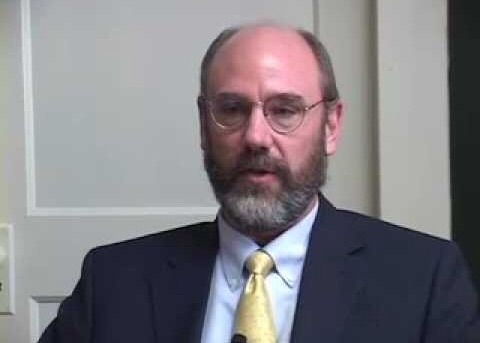
Peter Leithart
Should you be struck by a sudden impulse to run your fingernails ’cross your pate, wondering what this odd hybrid “Reformational Catholicism” could be, bear with me through this. Mr. Leithart is not talking about the Counter Reformation. Nor is he talking about Catholicism at all—not in any sense that would be understood by one who knew that words mean things and the meaning of them is fixed. What he is rather talking about (so he tells us at First Things) is “the end of Protestantism,” only without repatriation to the Church. In other words, Protestant Sect No. 50,001.
DAZE MY EYES WITH THAT FEDERAL VISION
I confess I have not been paying too much attention to the conflict over Mr. Leithart and his “Federal Vision.” 50,000 internal squabbles don’t much interest me as they used to. I became much more interested when he published this article last month about the “tragedy” of Protestants converting to Catholicism, his argument being that older is not necessarily better. (An odd argument to make in a publication called First Things.) I had a brief temptation to respond, but Bryan Cross and Jason Stellman had already given good responses here and here.
But Mr. Leithart’s latest musings are too bizarre to let go. They form not so much an article, or an essay, as they do a syllabus of antitheses, which are occasionally held together by a weak glue of context. Here is the kind of antithesis you will find on the blog:
A Protestant exaggerates his distance from Roman Catholicism on every point of theology and practice. … A Reformational Catholic cheerfully acknowledges that he shares creeds with Roman Catholics. …
A Protestant believes (old-fashioned) Roman Catholic claims about changeless stability. A Reformational Catholic knows that Catholicism has changed and is changing.
Some Protestants don’t view Roman Catholics as Christians. … A Reformational Catholic regards Catholics as brothers. …
A Protestant views the Church as an instrument for individual salvation. A Reformational Catholic believes salvation is inherently social. …
On it goes. I do appreciate Mr. Leithart’s willingness to call Catholics his brothers, and to find his heritage in (some) Catholic theology. But when words like these come from a man who, just last month, called conversion to Catholicism a “tragedy,” they are empty of any sound and hollow of any sting. Mr. Leithart’s real point in writing the article seems to be this: A pox on both your churches.
The reason I say that is because he is oft at pains to point out where he differs from both “Protestantism” (which he defines as singular and fixed) and Catholicism (which he describes as always in flux). He does not seem to understand that Protestantism is a potentially infinite multiplicity of sects, and thus does not find many Protestants left in the world. He finds them among Baptists, “Bible churches,” and some Presbyterians, but apparently not among Methodists or Lutherans. Then, when he turns his eye to the Catholic Church, what he finds is that he never steps in the same stream twice.
NO MORE TALK ABOUT FLAWED RELIGION
All of which is an odd and looking-glass image of things. But with that as his context, Mr. Leithart attempts to pull off a daring Olympic act: He places one foot on the Protestant steeple, a second foot on the Catholic steeple, stands loftily above them both, and says, “Look, ma! No hands!”
And although Mr. Leithart insists that his new sect is “not bound up with finding flaws in Roman Catholicism,” his article points out little else:
[A] Reformational catholic rejects papal claims, refuses to venerate the Host, and doesn’t pray to Mary or the saints. … While he’s at it, the Reformational catholic might as well claim the upper-case “C.” Why should the Roman see have a monopoly on capitalization?
Thus when he says that he “gives … a hearty handshake” to George Weigel, one wonders what on earth Mr. Leithart is talking about. For Mr. Weigel says that the New Evangelization depends upon regular reception of the sacraments and Eucharistic Adoration: two things Mr. Leithart flatly rejects.
Likewise, while attempting to claim a heritage in medieval and Counter-Reformation Catholicism, Mr. Leithart can not help but slap back-handed returns at the Catholic theologians and doctors of the Church he plays at tennis with:
A Reformational Catholic … honors Augustine and Gregory the Great … Alcuin and … Bonaventure, Dominic and Francis and Dante, Ignatius and Teresa of Avila … as fathers, brothers, sisters. A Reformational Catholic knows some of his ancestors were deeply flawed but won’t delete them from its family tree. He knows every family has its embarrassments. …
A Reformational Catholic revels in the riches, even while he puzzles over the oddities, of Augustine and Origen, Bernard and Bede.
Mr. Leithart is saying something else than that the great Catholics of the past had their sins. Listen to his words: He calls them “deeply flawed … embarrassments.” St. Augustine a “deeply flawed embarrassment”? St. Francis of Assisi a “deeply flawed embarrassment”? Teresa of Avila? Ignatius of Loyola? We should be clear here: Alexander VI was a deeply flawed embarrassment. Teresa of Avila was a saint, a model, a testament to a life lived whole and well and on fire with prayer until the end. One suspects that when Mr. Leithart calls St. Bonaventure “deeply flawed” and an “embarrassment,” he is talking not about his sins but about his theology. I refuse to be embarrassed by Gregory the Great.
STRANGE OLD TRUTHS FROM MEDIEVAL CHRISTIANS
Now, I do confess that I have had the same experience as Mr. Leithart. When, as a Protestant, I first encountered the writings of patristic and medieval Catholics, I did find them strange. They sounded Christian, but not by the measure of any Christianity familiar or home to me. The Desert Fathers in particular puzzled me. But Mr. Leithart treats that puzzlement as though it were their flaw rather than ours; as though St. Ephrem of Syria needed to conform to us. A Christian who is honest will find “oddities” in the Bible too. Explain Psalm 137:9. Or Exodus 4:24. Entire books get written
Here is where I parted company, long ago, from Mr. Leithart: I discovered that was what was most strange in the writings of Bonaventure, Augustine, Teresa of Avila, Julian of Norwich, was precisely what was most true in them. I discovered that they sounded strange because they were not of my age; that I should not expect them to sound like my contemporaries, or my grandfather; and that in their strangeness was a spiritual depth I had not considered but should.
Howbeit, where Mr. Leithart finds strangeness, he says, I dismiss it not; I believe it not. Which strikes me as nonsense.
At bottom, what Mr. Leithart attempts to do is to treat the different churches like they’re a Friday night potluck; to heap onto his plate whatever he likes in Protestantism, whatever he likes in Catholicism, and reject all else; and to call it “Reformational Catholicism.” That’s not the end of Protestantism. It’s just an additional one.
FILL THE WORLD WITH MORE SECT DIVISION
For indeed, Mr. Leithart views Christianity as infinitely malleable:
Protestantism has had a good run. It remade Europe and made America. It inspired global missions, soup kitchens, church plants, and colleges in the four corners of the earth. [Actually, it was the Catholic Church that invented the university, but never mind.] But the world and the church have changed, and Protestantism isn’t what the Church, including Protestants themselves, needs today. It’s time to turn the protest against Protestantism and to envision a new way of being heirs of the Reformation, a new way that happens to conform to the original Catholic vision of the Reformers.
A church that had “a good run” does not sound to me like what Christ promised. Christ did not say, “On this rock I will build my church, and it will get started 1500 years from now, and it will have a good run, after which time a guy named Peter Leithart will lead you into a new way and a more federal vision.”
The only way for Christianity to be united is for it to be reunited. The only true ecumenism is the kind that brings Anglicans back into communion such that they may retain their traditions and liturgy while still being part of the one head and the one body. Federalism may be the right vision for America, but it is no way to have a Church. Christ did not say, “I pray that they may be assorted in federal camps”; he said, “I pray that they may be one.”
Reformational Catholicism is not Catholicism at all. Peter Leithart is not “ending” Protestantism; he’s expanding it by one more division. Without unity in Rome, endless division is all there is.
UPDATES
R. Scott Clark posted this critique of Mr. Leithart from a Reformed perspective.
Jordan Cooper posted this response from a Lutheran perspective. Thanks to Mr. Cooper for tweeting me the link to his article.
***
If you like the content on this blog, your generous gift to the author helps to keep it active. I remember all my supporters in my Mass intentions each week.
Previous Post
November 8, 2013
Seven Books That Changed My Life: 7QT V Seriatim
Next Post
November 15, 2013 Seven More Books That Changed My Life: 7QT VI Seriatim
Browse Our Archives
Select a Category Abortion About Me Answers for Calvinists Answers to Media Fictions Answers to Objections Anti-Catholicism Apologetics Apostolic Succession Atonement Authority of the Church Baptism Benedictines Biblical Exegesis Blogging Book Reviews Books & Writing &c. Calvin's Institutes Capital Punishment Catholic Church Chastity Christology Church Fathers Church Social Doctrine Confession Contraception Conversion Stories Crusades Debates Depression & Suicide Deuterocanon Development of Doctrine Ecumenism English Language Eucharistic Adoration Exorcism Extra Ecclesiam Fisks & Rebuttals Freedom of Religion Freedom of Speech Fundamentalism Gender Politics Gender Theory Good Works Homosexuality Humor Idolatry Immaculate Conception In the News Inquisition ISIS Islam Just for Fun Just War Justification LCWR Limbo Liturgical Abuse Liturgical Year Magisterium Marriage and Family Mary Mortal Sin New Evangelization NFP Papacy Papal Documents Papal Infallibility Personal Narrative Politics Pope Francis Pope Francis Derangement Syndrome Population Control Praying to the "Dead" Priesthood Primacy of Peter Protestant Denominations Purgatory Radical Islam Radical Traditionalists Real Presence Right to Conscience RIght to Life Saints Same-Sex "Marriage" Seven Quick Takes Social Justice Social Media Sola Scriptura Spirit of Vatican II SSPX The Eucharist The Mass The Resurrection Traditionalism Vatican II Year of Mercy
Select a Month August 2019 July 2019 June 2019 May 2019 November 2018 October 2018 August 2018 July 2018 June 2018 April 2018 November 2017 October 2017 September 2017 May 2017 April 2017 March 2017 February 2017 November 2016 October 2016 September 2016 August 2016 July 2016 June 2016 May 2016 April 2016 March 2016 February 2016 January 2016 December 2015 November 2015 October 2015 September 2015 July 2015 June 2015 May 2015 April 2015 March 2015 February 2015 January 2015 December 2014 September 2014 August 2014 July 2014 June 2014 May 2014 April 2014 March 2014 February 2014 January 2014 December 2013 November 2013 October 2013 May 2013 April 2013 February 2013 January 2013
Follow Us!
TAKE THE
Religious Wisdom Quiz
Who said, "To obey is better than sacrifice"?
Select your answer to see how you score.
Isaiah Samuel David Solomon
Related posts from To Give a Defense

Dear James White: Thanks for the Applause. You...


A Counterblast to Dr.* James White and His...
Ephesians Chapter Four: Only One Church
TRENDING AT PATHEOS Catholic

Rejecting Doom: Christian Hope And Human Action
Christianity is a religion of hope. We are to have hope and...

It’s What Comes From Within Which Matters
One of the most difficult things for us to understand is why...

Why I Choose the Eucharist Over the Sermon
Choose the Eucharist, Not the Sermon What are we supposed to get...

5 Design Elements Found in Spiritually Rooted Homes
Putting Spirituality Into Home Decor Our homes are more than our living...

Credo: A Story of God Told with the...
About 10 years ago, I began to imagine a personal "Credo" that...

The Anatomy of Divine Revelation in Catholic Thought
The claim that God has made Himself known to human beings is...
view all Catholic blogs
Ad-Free & Subscriber Log-In Subscription Support
- About Us
- 2026 Calendar
- Videos
- Podcasts
- Library of World Religions
- Faith In Media Tracker
- Advertise With Us
- Write for Us
- Privacy Policy
- Terms of Service
- Do Not Sell My Data
- Contact Us
- Radiant Digital
- Manage Newsletter Subscriptions
- Unsubscribe From Notifications
- Sitemap
Copyright 2008-2026, Patheos. All rights reserved.
Subscription Support Ad-Free & Subscriber Log-In
Follow Patheos