
BuddhistCatholicContemplativeEvangelicalGeneral ChristianHinduJewishLatter-day SaintMuslimNew VisionsProgressive Christian
Beliefs
- Buddhist
- Catholic
- Contemplative
- Evangelical
- General Christian
- Hindu
- Jewish
- Latter-day Saint
- More Voices
- Muslim
- New Visions
- Pagan
- Progressive Christian
Topics
- Religion News
- Food and Religion
- Sports and Religion
- Religious Art
- Religious Music and Entertainment
- Religious Events
- History and Religion
- Style and Religion
- Politics and Religion
- Women in Religion
- Recreation Outdoors and Religion
- Business Finance and Religion
- Careers Workplace and Religion
- Education and Religion
- Family Parenting and Religion
- Health Fitness and Religion
- Home and Religion
- Relationships and Religion
- Technology and Religion
- Travel and Religion
Columnists
- Buddhist Columnists
- Business Finance and Religion Columnists
- Careers Workplace and Religion Columnists
- Catholic Columnists
- Contemplative Columnists
- Education and Religion Columnists
- Evangelists Columnists
- Family Parenting and Religion Columnists
- General Christian Columnists
- Health Fitness and Religion Columnists
- Hindu Columnists
- History and Religion Columnists
- Home and Religion Columnists
- Jewish Columnists
- More Voices Columnists
- Latter Day Columnists
- Muslim Columnists
- New Visions Columnists
- Nonreligious Columnists
- Pagan Columnists
- Politics and Religion Columnists
- Progressive Columnists
- Recreation Outdoors and Religion Columnists
- Relationships and Religion Columnists
- Religion News Columnists
- Religious Art Columnists
- Religious Events Columnists
- Religious Music and Entertainment Columnists
- Sports and Religion Columnists
- Style and Religion Columnists
- Technology and Religion Columnists
- Travel and Religion Columnists
- Women in Religion Columnists
Resource Library
- 2026 Calendar
- Library of World Religions
- The 100 Most Holy Places on Earth
- Patheos Answers
- Podcasts
- Videos
- Faith Leaders Database
- Anglican Episcopalian
- Bahai
- Baptist
- Buddhism
- Christianity
- Confucianism
- Eastern Orthodoxy
- Hinduism
- Holiness and Pentecostal
- ISKCON
- Islam
- Judaism
- Lutheran
- Methodist
- The Church of Jesus Christ of Latter-day Saints
- New Age
- Paganism
- Presbytarian and Reformed
- Protestantism
- Religion Behind the Scenes
- Roman Catholic
- Scientology
- Shia Islam
- Sikhism
- Sufism
- Sunni Islam
- Taoism
- Zen
- See all religions
Research Tools
 Ad-Free & Subscriber Log-In Subscription Support
Follow Patheos 

- Trending:
- Advent
- |
- Forgiveness
- |
- Thanksgiving
- |
- Election
- |
- Seasonal Holidays
- |
- Marriage
 To Give a Defense
- Home
- Catholic
- What Does It Mean To Give “Religious Assent”?
What Does It Mean To Give “Religious Assent”?
Last updated on: March 10, 2018 at 4:48 pm by Scott Eric Alt
What Does It Mean To Give “Religious Assent”? 2018-03-10T16:48:21-04:00 Scott Eric Alt
Patheos Explore the world's faith through different perspectives on religion and spirituality! Patheos has the views of the prevalent religions and spiritualities of the world.
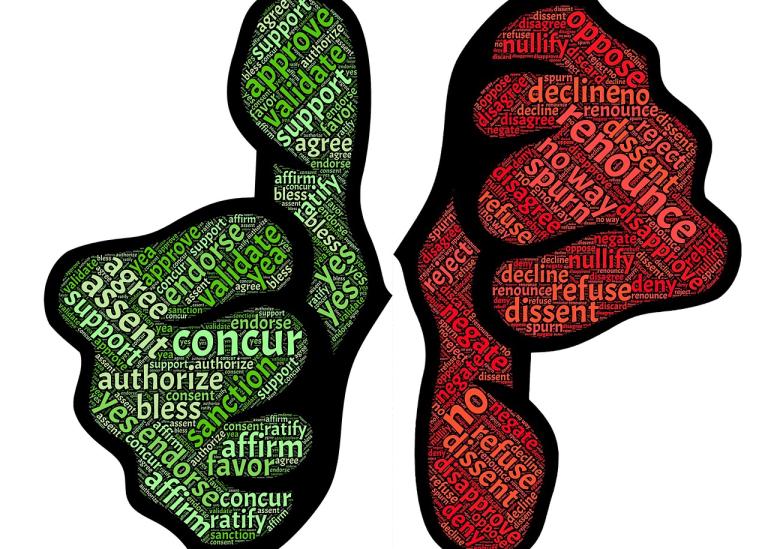
Image via Pixabay
Lumen Gentium; the Catechism of the Catholic Church; the Profession of Faith; and Canon Law: All tell us that Catholics owe their assent to the teachings of the authentic Magisterium, even when they are not technically infallible. Here, for example, is LG 25:
Bishops, teaching in communion with the Roman Pontiff, are to be respected by all as witnesses to divine and Catholic truth. In matters of faith and morals, the bishops speak in the name of Christ and the faithful are to accept their teaching and adhere to it with a religious assent. This religious submission of mind and will must be shown in a special way to the authentic magisterium of the Roman Pontiff, even when he is not speaking ex cathedra.
I put up a post about all this on March 4; and that prompted a few readers to ask: What does “religious assent” mean?
The Church develops the concept in Donum Veritatis (here), as well as the Doctrinal Commentary on the Profession of Faith. The Profession refers to it as a “religious submission of will and intellect”; which implies that Catholics must obey (will) as well as believe (intellect) the teachings of the authentic Magisterium. They must do so whether those teachings are “infallible” or not. This means that a Catholic must think with the mind of the Church; he must conform his intellect with what the Church proposes as true. One obeys Christ (for to obey the Church is to obey Christ her bridegroom) with the will, and also with the mind.
The CDF expands on this in Donum Veritatis 23:
When the Magisterium, not intending to act “definitively”, teaches a doctrine to aid a better understanding of Revelation and make explicit its contents, or to recall how some teaching is in conformity with the truths of faith, or finally to guard against ideas that are incompatible with these truths, the response called for is that of the religious submission of will and intellect. This kind of response cannot be simply exterior or disciplinary but must be understood within the logic of faith and under the impulse of obedience to the faith.
A Catholic must believe all that the Magisterium teaches (whether infallible or not) “within the logic of faith” and “under the impulse of obedience to the faith.” It is not the same as an “assent of faith,” the Catechism says, but it is still “an extension of it.” A Catholic can not separate it from the faith he professes. If you try to put it in some other category of belief, your faith itself is rent in twain.
In §17 of Donum Veritatis, the CDF explains the rationale.
Divine assistance is also given to the successors of the apostles teaching in communion with the successor of Peter, and in a particular way, to the Roman Pontiff as Pastor of the whole Church, when exercising their ordinary Magisterium, even should this not issue in an infallible definition or in a “definitive” pronouncement but in the proposal of some teaching which leads to a better understanding of Revelation in matters of faith and morals and to moral directives derived from such teaching.
Stop there. Mark that. All that the Magisterium teaches is under the protection of the Holy Spirit. All of it; whether infallible or no. Thus to reject anything that a pope or bishop teaches is to reject the Holy Spirit’s protection of the Church. It is to reject Christ. That’s a serious matter.
Whoever hears you hears me. Whoever rejects you rejects me. And whoever rejects me rejects the one who sent me (Luke 10:16).
The CDF continues:
One must therefore take into account the proper character of every exercise of the Magisterium, considering the extent to which its authority is engaged. It is also to be borne in mind that all acts of the Magisterium derive from the same source, that is, from Christ who desires that His People walk in the entire truth.
In other words, if a Catholic were to withdraw his assent of will and intellect from a papal teaching, he would be withdrawing it from Christ. All papal teachings come from Christ.
The CDF continues:
For this same reason, magisterial decisions in matters of discipline, even if they are not guaranteed by the charism of infallibility, are not without divine assistance and call for the adherence of the faithful.
Bottom line: “Religious assent” is no different from any other assent you would give to Christ Himself.
But is there any room for any kind of dissent? Is there any corner in the mind that one may reserve for “non serviam”?
The CDF says no.
The freedom of the act of faith cannot justify a right to dissent. [There is no such right for a Catholic.] In fact this freedom does not indicate at all freedom with regard to the truth but signifies the free self-determination of the person in conformity with his moral obligation to accept the truth.
In other words, “religious assent” flows out of a Catholic’s “moral obligation to accept the truth.” There is no freedom to say “I accept x but not y.” Nor is there a freedom to “accept with reservation.” Religious assent does not mean a Catholic may say, “Maybe, but I attach an asterisk to it.” No. Catholics are morally obligated to it.
Here is another way to put it. The Church affirms that “religious assent” is different than an “assent of faith.” But how so, if there is no room for dissent of any kind?
Simply this. A Catholic must give an “assent of the faith” to all that is divinely revealed. What is divinely revealed is infallible; it is the content of the faith itself.
A Catholic must give “religious assent” to those truths that are not the content of the faith itself, but nevertheless flow from it. This is why the Church says that, though “religious assent” is not an “assent of faith,” it is an “extension” of it.
What differs is not the degree of assent, but the object of the assent.
Anyone who says, “Okay, I only owe this religious assent; I am therefore going to maintain some doubts; I won’t be too vocal about it; on Facebook I may say, “Whatever” or “Pfft”; privately I might say, “That pope can go buzz off”: That person is doing “religious assent” wrong.
***
Previous Post

March 5, 2017
Attention Fox News, et al.: The Pope Has Condemned Population Control
Next Post

March 7, 2017 Oh, That Story About Pope Francis Advocating Population Control ...
Browse Our Archives
Select a Category Abortion About Me Answers for Calvinists Answers to Media Fictions Answers to Objections Anti-Catholicism Apologetics Apostolic Succession Atonement Authority of the Church Baptism Benedictines Biblical Exegesis Blogging Book Reviews Books & Writing &c. Calvin's Institutes Capital Punishment Catholic Church Chastity Christology Church Fathers Church Social Doctrine Confession Contraception Conversion Stories Crusades Debates Depression & Suicide Deuterocanon Development of Doctrine Ecumenism English Language Eucharistic Adoration Exorcism Extra Ecclesiam Fisks & Rebuttals Freedom of Religion Freedom of Speech Fundamentalism Gender Politics Gender Theory Good Works Homosexuality Humor Idolatry Immaculate Conception In the News Inquisition ISIS Islam Just for Fun Just War Justification LCWR Limbo Liturgical Abuse Liturgical Year Magisterium Marriage and Family Mary Mortal Sin New Evangelization NFP Papacy Papal Documents Papal Infallibility Personal Narrative Politics Pope Francis Pope Francis Derangement Syndrome Population Control Praying to the "Dead" Priesthood Primacy of Peter Protestant Denominations Purgatory Radical Islam Radical Traditionalists Real Presence Right to Conscience RIght to Life Saints Same-Sex "Marriage" Seven Quick Takes Social Justice Social Media Sola Scriptura Spirit of Vatican II SSPX The Eucharist The Mass The Resurrection Traditionalism Vatican II Year of Mercy
Select a Month August 2019 July 2019 June 2019 May 2019 November 2018 October 2018 August 2018 July 2018 June 2018 April 2018 November 2017 October 2017 September 2017 May 2017 April 2017 March 2017 February 2017 November 2016 October 2016 September 2016 August 2016 July 2016 June 2016 May 2016 April 2016 March 2016 February 2016 January 2016 December 2015 November 2015 October 2015 September 2015 July 2015 June 2015 May 2015 April 2015 March 2015 February 2015 January 2015 December 2014 September 2014 August 2014 July 2014 June 2014 May 2014 April 2014 March 2014 February 2014 January 2014 December 2013 November 2013 October 2013 May 2013 April 2013 February 2013 January 2013
Follow Us!
TAKE THE
Religious Wisdom Quiz
To which country was Joseph taken as a slave?
Select your answer to see how you score.
Egypt Canaan Midian Babylon
Related posts from To Give a Defense

Infallibility is true, but (almost) useless. With some...

Pope Francis Derangement Syndrome Vol. XX: Death Penalty...
Yes, Virginia, The Catechism is a Magisterial Document

"Ultramontanism" and a Supposed Conflict Between Pope Francis...
TRENDING AT PATHEOS Catholic

The Kingdom Of God In Ordinary Life And...
The kingdom of God is all around us; it is in us...

How Discretion Guides Us Away From Extremes
Prudence is an important virtue for all of us. While we should...

If Baptism Washes Away Sin, Why Do Catholics...
The seven sacraments stand as the foundation of Catholic ecclesial life. The...

The Power of Setting a Good Example
Remember last August when the Chicago White Sox hosted a "Pope Hat...

A Catholic Critique of Biblical Unitarianism
If the statistics are to be believed, Unitarianism is rising worldwide. Although...

How Grandma Tourism Helps Grandparents Live Their Vocation
Grandma, The New Travel Influencer What started as a nostalgia-inspired social media...
view all Catholic blogs
Ad-Free & Subscriber Log-In Subscription Support
- About Us
- 2026 Calendar
- Videos
- Podcasts
- Library of World Religions
- Faith In Media Tracker
- Advertise With Us
- Write for Us
- Privacy Policy
- Terms of Service
- Do Not Sell My Data
- Contact Us
- Radiant Digital
- Manage Newsletter Subscriptions
- Unsubscribe From Notifications
- Sitemap
Copyright 2008-2026, Patheos, part of the Radiant Digital network of media brands. All rights reserved.
Subscription Support Ad-Free & Subscriber Log-In
Follow Patheos