
BuddhistCatholicContemplativeEvangelicalGeneral ChristianHinduJewishLatter-day SaintMuslimNew VisionsProgressive Christian
Beliefs
- Buddhist
- Catholic
- Contemplative
- Evangelical
- General Christian
- Hindu
- Jewish
- Latter-day Saint
- More Voices
- Muslim
- New Visions
- Pagan
- Progressive Christian
Topics
- Religion News
- Food and Religion
- Sports and Religion
- Religious Art
- Religious Music and Entertainment
- Religious Events
- History and Religion
- Style and Religion
- Politics and Religion
- Women in Religion
- Recreation Outdoors and Religion
- Business Finance and Religion
- Careers Workplace and Religion
- Education and Religion
- Family Parenting and Religion
- Health Fitness and Religion
- Home and Religion
- Relationships and Religion
- Technology and Religion
- Travel and Religion
Columnists
- Buddhist Columnists
- Business Finance and Religion Columnists
- Careers Workplace and Religion Columnists
- Catholic Columnists
- Contemplative Columnists
- Education and Religion Columnists
- Evangelists Columnists
- Family Parenting and Religion Columnists
- General Christian Columnists
- Health Fitness and Religion Columnists
- Hindu Columnists
- History and Religion Columnists
- Home and Religion Columnists
- Jewish Columnists
- More Voices Columnists
- Latter Day Columnists
- Muslim Columnists
- New Visions Columnists
- Nonreligious Columnists
- Pagan Columnists
- Politics and Religion Columnists
- Progressive Columnists
- Recreation Outdoors and Religion Columnists
- Relationships and Religion Columnists
- Religion News Columnists
- Religious Art Columnists
- Religious Events Columnists
- Religious Music and Entertainment Columnists
- Sports and Religion Columnists
- Style and Religion Columnists
- Technology and Religion Columnists
- Travel and Religion Columnists
- Women in Religion Columnists
Resource Library
- 2026 Calendar
- Library of World Religions
- The 100 Most Holy Places on Earth
- Patheos Answers
- Podcasts
- Videos
- Faith Leaders Database
- Anglican Episcopalian
- Bahai
- Baptist
- Buddhism
- Christianity
- Confucianism
- Eastern Orthodoxy
- Hinduism
- Holiness and Pentecostal
- ISKCON
- Islam
- Judaism
- Lutheran
- Methodist
- The Church of Jesus Christ of Latter-day Saints
- New Age
- Paganism
- Presbytarian and Reformed
- Protestantism
- Religion Behind the Scenes
- Roman Catholic
- Scientology
- Shia Islam
- Sikhism
- Sufism
- Sunni Islam
- Taoism
- Zen
- See all religions
Research Tools
 Ad-Free & Subscriber Log-In Subscription Support
Ad-Free & Subscriber Log-In Subscription Support
Follow Patheos 

- Trending:
- Forgiveness
- |
- Marriage
- |
- Consciousness
- |
- Death Penalty
- |
- Election
- |
- Halloween
 To Give a Defense
- Home
- Catholic
- Did Theodoret of Cyrus Teach Sola Scriptura? White vs. Matatics (1997): Part 2
Did Theodoret of Cyrus Teach Sola Scriptura? White vs. Matatics (1997): Part 2
Last updated on: April 4, 2018 at 9:03 pm by Scott Eric Alt
Did Theodoret of Cyrus Teach Sola Scriptura? White vs. Matatics (1997): Part 2 2018-04-04T21:03:37-04:00 Scott Eric Alt
Patheos Explore the world's faith through different perspectives on religion and spirituality! Patheos has the views of the prevalent religions and spiritualities of the world.
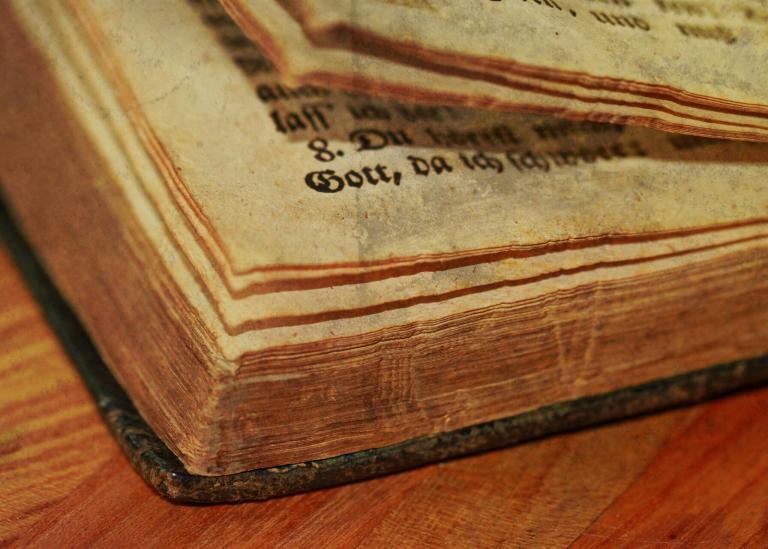
Image via Pixabay
Note: Part 1 of this series on the 1997 sola scriptura debate between James White & Gerry Matatics can be found here. In this post, I pick up where I left off in Dr.* White’s opening statement.
Not satisfied with his effort to co-opt St. Cyril of Jerusalem into a defense of sola scriptura, Dr.* James White (Th.D., D.Min., etc., etc.), of Alpha & Omega Sophistries, goes on to abuse the text of Theodoret’s Dialogues by quoting him out of context too. This comes at about the 23:00 mark in his 1997 debate with Gerry Matatics. The quotation Dr.* White provides us is this one: “The doctrine of the Church should be proven, not announced. Therefore show that the Scriptures teach these things.” I will get there.
***
Theodoret (ca. 393-458), born in Antioch, was bishop of the Greek city Cyrus, whose ruins are in northern Syria near the Turkish border. He played a key role in the Nestorian controversy of the fifth century. Nestorius and his followers denied the hypostatic union between Christ’s human and divine natures; they rejected the title Theotokos for Mary, believing (as do many Protestants today) that Mary was the mother of Christ only, not of God. Nestorianism was condemned as a heresy, first by the Council of Ephesus in 431, and then by the Council of Chalcedon in 451. According to the Canons of Ephesus:
If anyone does not confess that Emmanuel is God in truth, and therefore that the holy virgin is the Theotokos (for she bore in a fleshly way the Word of God become flesh), let him be anathema.
According to the Catholic Encyclopedia, Theodoret’s role in all this was a complicated one. Along with John of Antioch, he had petitioned Nestorius not to reject the title Theotokos, but to no avail. However, he defended Nestorius at the Council—not because he was confused in his Christology, but because did not believe Nestorius taught that Christ was two persons. Because of his opposition to Cyril of Alexandria, who wrote the articles condemning Nestorius, Theodoret was later excommunicated, but would be restored to both the Church and his see by the Council of Chalcedon. In the sixth century, proposals known as the Three Chapters anathematized Theodoret for his writings against Cyril, but the Chapters were themselves condemned by the Second Council of Constantinople.
So while we need to admit these things, we must also understand the role the Dialogues played in all this controversy. The reason Theodoret wrote them was to defend himself against the charge of Nestorianism that led to his excommunication. He wanted to show that his Christology was orthodox, to affirm the hypostatic union of two natures in one divine person, and also to refute heresy. But the key question, for our purposes here, is whether, in his Dialogues, he also taught sola scriptura. Dr.* White says that he did.
***
There are three Dialogues (you can find them here), between an orthodox Christian (Orthodoxos) and a heretic (Eranistes). In the Prologue, Theodoret gives an overview of true Christology.
[T]o call our Lord Christ God only is the way of Simon, of Cerdo, of Marcion, and of others who share this abominable opinion. [Christ was both God and man.]
The acknowledgment of His birth from a Virgin, but coupled with the assertion that this birth was merely a process of transition, and that God the Word took nothing of the Virgin’s nature, is stolen from Valentinus and Bardesanes and the adherents of their fables. [Christ took his human nature from Mary.]
To call the godhead and the manhood of the Lord Christ one nature is the error filched from the follies of Apollinarius. [Christ is two natures in one divine person.]
Again the attribution of capacity of suffering to the divinity of the Christ is a theft from the blasphemy of Arius and Eunomius. [Christ suffered on the cross in his human person, not his divine person.]
In the first dialogue, Orthodoxos shows that “the divinity of Christ is immutable.” That is, the Word was not changed into flesh, but it took flesh—i.e., from Mary.
In the second, Orthodoxos shows that Christ is both fully human and fully divine.
And in the third, he shows that the divinity of Christ is “impassable.” In other words, Christ’s divine nature did not suffer in the passion; only His human nature did.
***
The first thing that must be said about the words Dr.* White quotes—they are from the third Dialogue—is that they are not spoken by Orthodoxos but by the heretic Eranistes. That’s odd; Dr.* White does not mention that. Isn’t that important? Here is the wording in the translation at New Advent:
The decrees of the Church must be given not only declaratorily but demonstratively. Tell me then how these doctrines are taught in the divine Scripture.
Eight times during these three debates, Eranistes says “Where is that in the Scriptures?” or “I will only believe it if it is in the Scriptures” or “the Scriptures do not say that.”
Now, I do not want to push this point too far. I just find it strange that, in attempting to show that Theodoret taught sola scriptura, Dr.* White chooses the words, not of Orthodoxos, but of the heretic. Eranistes does not speak for Theodoret. So why does Dr.* White quote his words? Perhaps he can explain it to us, if he has the courage to read my refutations of him, which I doubt.
But in fact, Orthodoxos says very similar things throughout the Dialogues; and Dr.* White could have quoted them if he had liked.
- Do not, I beg you, bring in human reason. I shall yield to scripture alone.
- I am not so rash as to say anything concerning which Divine Scripture is silent.
And yet, while Orthodoxos affirms these truths twice, Eranistes speaks words like these seventeen times. One soon gets the feeling that Eranistes says “You must prove it to me from the Scriptures” so many times only because he doth protest too much. He says these things as an excuse to avoid orthodoxy, not as a reason to embrace it. If he insists that Orthodoxos prove his Christology from the Scriptures, that does not—as we shall see—save him from heresy.
But if Orthodoxos can assert his Christology from Scripture, does he derive it from Scripture alone? By no means. In fact, he tells us at the outset that he gets it “[by] Holy Scripture, both Old and New, and by the Fathers in Council in Nicæa.” He gets it—mark this, Dr.* White—from both the Scriptures and the Church. He gets it from the Creed as much as from the Bible. And while he does say that that all his doctrines are to be found in Scripture—Catholics do affirm material sufficiency—we must make note of all the other the things he finds proofs of in Scripture, none of which Dr.* White would accept.
I. The Real Presence. In fact, nearly a thousand years before Aquinas, Theodoret affirms something very like the distinction between substance and accidents.
Orth. You know how God called His own body bread?
Eran. Yes.
Orth. And how in another place he called His flesh grain?
Eran. Yes, I know. For I have heard Him saying The hour has come that the Son of man should be glorified, and Except a grain of wheat fall into the ground and die, it abides alone; but if it die it brings forth much fruit.
Orth. Yes; and in the giving of the mysteries He called the bread, body, and what had been mixed, blood.
Eran. He so did.
Orth. Yet naturally the body would properly be called body, and the blood, blood.
Eran. Agreed.
Orth. But our Saviour changed the names, and to His body gave the name of the symbol and to the symbol that of his body. So, after calling himself a vine, he spoke of the symbol as blood.
Eran. True. But I am desirous of knowing the reason of the change of names.
Orth. To them that are initiated in divine things the intention is plain. For he wished the partakers in the divine mysteries not to give heed to the nature of the visible objects, but, by means of the variation of the names, to believe the change wrought of grace. For He, we know, who spoke of his natural body as grain and bread, and, again, called Himself a vine, dignified the visible symbols by the appellation of the body and blood, not because He had changed their nature, but because to their nature He had added grace.
God does not change their nature (or substance), but he adds grace. Now lest anyone protest that Orthodoxos is clearly speaking about symbols here, it is important to point out that the word “symbol” does not mean “metaphor” in this context. Theodoret uses it in the more archaic sense of an object that is invested with additional meaning beyond its merely material one.
The discussion on this point is taken up again in the Second Dialogue.
Orth. Tell me now; the mystic symbols which are offered to God by them who perform priestly rites, of what are they symbols?
Eran. Of the body and blood of the Lord.
Orth. Of the real body or not?
Eran. The real.
Orth. Good.
[…]
Eran. What do you call the gift which is offered before the priestly invocation? … And after the consecration how do you name these?
Orth. Christ’s body and Christ’s blood.
Eran. And do you believe that you partake of Christ’s body and blood?
Orth. I do. … [Now watch this.] [E]ven after the consecration the mystic symbols are not deprived of their own nature; they remain in their former substance figure and form; they are visible and tangible as they were before. But they are regarded as what they have become, and believed so to be, and are worshipped as being what they are believed to be.
That’s substance and accidents.
II. The Priesthood. In the Second Dialogue, Orthodoxos and Eranistes have a discussion of the priesthood of Christ as found in the Book of Hebrews. But two things stand out, and one is that neither of them dispute that there is a priesthood. The second is that Eranistes concedes that the passage about Melchizedek “is a very difficult one and requires much explanation.” He affirms here the problem with formal sufficiency.
III. The Theotokos. Because Christ took his flesh from Mary, and because his humanity is not divisible from his deity, therefore Mary is rightly called the Mother of God.
IV. Apostolic Succession. The Church Fathers, he says, are “successors of the divine apostles.”
Orthodoxos will not teach us anything that is not to be found in Scripture. Why will Dr.* White not yield to Scripture on these points?
***
If you read the Dialogues all the way through, from beginning to end, you will find one more thing that is very odd for someone who—so Dr.* White tells us—teaches sola scriptura. It is this: In each of the three, Orthodoxos and Eranistes argue back and forth, from Scripture, for almost the entire part of the dialogue. Eranistes time and again will say things like “Where is that in Scripture?” or “I don’t find it so in Scripture.” Orthodoxos will continue to give proofs of true Christology from Scripture. Dr.* White might say that this shows how Scripture is sufficient to resolve such disputes. But no; here’s the point: Scripture alone does not settle the matter between the two. In every case, Eranistes remains unconvinced until Orthodoxos quotes from the Church Fathers and shows that they taught the same doctrine that he does. This takes place three times out of three.
In the first dialogue, he cites proofs from Athanasius, Ambrose, Ignatius, Irenaeus, Hippolytus, Methodius, Gregory of Nazianzus, and Gregory of Nyssa, among others.
In the second, he cites, Ignatius, Irenaeus, Hippolytus, Athanasius, Ambrose, Basil, Gregory of Nyssa, John Chrysostom, Hilary, Augustine, and Cyril of Alexandria, among others.
Last, in the third, he cites Ignatius, Irenaeus, Hippolytus, Athanasius, Pope Damasus, Ambrose, Basil, Gregory of Nazianzus, Gregory of Nyssa, Theophilus, Gelasius, and John of Constantinople, among others.
Now, wouldn’t you say that that is odd? If Theodoret had wanted to show that the Bible is the sole rule of faith, why is he quoting all these guys as somehow authoritative on Christology? Wouldn’t proofs from the Bible alone have been enough to convince Eranistes? After all, he asserts the principle that Dr.* White says is his own: Show me where it is in the Bible! Then why is the Bible not sufficient for Orthodoxos to prove his case? Why does the debate remain unsettled until he quotes from the Fathers? And Orthodoxos cites many Fathers, and at great length, too. Why does he do this?
He tells us why. “They are successors of the divine apostles,” he says at the end of the First Dialogue. That is why. “Does it seem right for you to wag the tongue of blasphemy against them?” It is as bad to do that as to abuse the Bible.
And Eranistes concedes the point. “It were the uttermost foolishness,” he says, “to withstand authorities so many and so great.” Take note of that, Dr.* White.
At the end of the Second Dialogue, Orthodoxos again says: “It is mad and rash against those noble champions of the faith”—the Church Fathers—“so much to wag your tongue.” And finally, at the end of the Third, he says:
Imitate the bees. As you flit in mental flight about the meads of the divine Scripture, among the fair flowers of these illustrious Fathers, build us in your heart the honey-comb of the faith.”
One must reason from both the Scriptures (“meads,” i.e., honey) and the Fathers (flowers). Only through both can one build “the honey-comb of the faith.”
Again it is not five minutes into his opening statement, and Dr.* James White (Th.D., D.Min., etc., etc.) keeps on picking for cherries. He will have to do better than this if he wants to win his debate with Mr. Matatics. … [To be continued.]
***
Next Post
March 4, 2015 The Woman of the Apocalypse According to Popes
Browse Our Archives
Select a Category Abortion About Me Answers for Calvinists Answers to Media Fictions Answers to Objections Anti-Catholicism Apologetics Apostolic Succession Atonement Authority of the Church Baptism Benedictines Biblical Exegesis Blogging Book Reviews Books & Writing &c. Calvin's Institutes Capital Punishment Catholic Church Chastity Christology Church Fathers Church Social Doctrine Confession Contraception Conversion Stories Crusades Debates Depression & Suicide Deuterocanon Development of Doctrine Ecumenism English Language Eucharistic Adoration Exorcism Extra Ecclesiam Fisks & Rebuttals Freedom of Religion Freedom of Speech Fundamentalism Gender Politics Gender Theory Good Works Homosexuality Humor Idolatry Immaculate Conception In the News Inquisition ISIS Islam Just for Fun Just War Justification LCWR Limbo Liturgical Abuse Liturgical Year Magisterium Marriage and Family Mary Mortal Sin New Evangelization NFP Papacy Papal Documents Papal Infallibility Personal Narrative Politics Pope Francis Pope Francis Derangement Syndrome Population Control Praying to the "Dead" Priesthood Primacy of Peter Protestant Denominations Purgatory Radical Islam Radical Traditionalists Real Presence Right to Conscience RIght to Life Saints Same-Sex "Marriage" Seven Quick Takes Social Justice Social Media Sola Scriptura Spirit of Vatican II SSPX The Eucharist The Mass The Resurrection Traditionalism Vatican II Year of Mercy
Select a Month August 2019 July 2019 June 2019 May 2019 November 2018 October 2018 August 2018 July 2018 June 2018 April 2018 November 2017 October 2017 September 2017 May 2017 April 2017 March 2017 February 2017 November 2016 October 2016 September 2016 August 2016 July 2016 June 2016 May 2016 April 2016 March 2016 February 2016 January 2016 December 2015 November 2015 October 2015 September 2015 July 2015 June 2015 May 2015 April 2015 March 2015 February 2015 January 2015 December 2014 September 2014 August 2014 July 2014 June 2014 May 2014 April 2014 March 2014 February 2014 January 2014 December 2013 November 2013 October 2013 May 2013 April 2013 February 2013 January 2013
Follow Us!
TAKE THE
Religious Wisdom Quiz
Who was called by God to leave his home and go to a land God would show him?
Select your answer to see how you score.
Jacob Noah Moses Abram
Related posts from To Give a Defense
Does the Mass "banish the remembrance of Christ's...
Everything You Need to Know About Ben Shapiro,...
Infant Baptism is Not in the Bible! Answers...
Dear James White: Thanks for the Applause. You...
TRENDING AT PATHEOS Catholic

Rejecting Doom: Christian Hope And Human Action
Christianity is a religion of hope. We are to have hope and...

It’s What Comes From Within Which Matters
One of the most difficult things for us to understand is why...

Why I Choose the Eucharist Over the Sermon
Choose the Eucharist, Not the Sermon What are we supposed to get...

5 Design Elements Found in Spiritually Rooted Homes
Putting Spirituality Into Home Decor Our homes are more than our living...

Credo: A Story of God Told with the...
About 10 years ago, I began to imagine a personal "Credo" that...

The Anatomy of Divine Revelation in Catholic Thought
The claim that God has made Himself known to human beings is...
view all Catholic blogs
Ad-Free & Subscriber Log-In Subscription Support
- About Us
- 2026 Calendar
- Videos
- Podcasts
- Library of World Religions
- Faith In Media Tracker
- Advertise With Us
- Write for Us
- Privacy Policy
- Terms of Service
- Do Not Sell My Data
- Contact Us
- Radiant Digital
- Manage Newsletter Subscriptions
- Unsubscribe From Notifications
- Sitemap
Copyright 2008-2026, Patheos. All rights reserved.
Subscription Support Ad-Free & Subscriber Log-In
Follow Patheos