
BuddhistCatholicContemplativeEvangelicalGeneral ChristianHinduJewishLatter-day SaintMuslimNew VisionsProgressive Christian
Beliefs
- Buddhist
- Catholic
- Contemplative
- Evangelical
- General Christian
- Hindu
- Jewish
- Latter-day Saint
- More Voices
- Muslim
- New Visions
- Pagan
- Progressive Christian
Topics
- Religion News
- Food and Religion
- Sports and Religion
- Religious Art
- Religious Music and Entertainment
- Religious Events
- History and Religion
- Style and Religion
- Politics and Religion
- Women in Religion
- Recreation Outdoors and Religion
- Business Finance and Religion
- Careers Workplace and Religion
- Education and Religion
- Family Parenting and Religion
- Health Fitness and Religion
- Home and Religion
- Relationships and Religion
- Technology and Religion
- Travel and Religion
Columnists
- Buddhist Columnists
- Business Finance and Religion Columnists
- Careers Workplace and Religion Columnists
- Catholic Columnists
- Contemplative Columnists
- Education and Religion Columnists
- Evangelists Columnists
- Family Parenting and Religion Columnists
- General Christian Columnists
- Health Fitness and Religion Columnists
- Hindu Columnists
- History and Religion Columnists
- Home and Religion Columnists
- Jewish Columnists
- More Voices Columnists
- Latter Day Columnists
- Muslim Columnists
- New Visions Columnists
- Nonreligious Columnists
- Pagan Columnists
- Politics and Religion Columnists
- Progressive Columnists
- Recreation Outdoors and Religion Columnists
- Relationships and Religion Columnists
- Religion News Columnists
- Religious Art Columnists
- Religious Events Columnists
- Religious Music and Entertainment Columnists
- Sports and Religion Columnists
- Style and Religion Columnists
- Technology and Religion Columnists
- Travel and Religion Columnists
- Women in Religion Columnists
Resource Library
- 2026 Calendar
- Library of World Religions
- The 100 Most Holy Places on Earth
- Patheos Answers
- Podcasts
- Videos
- Faith Leaders Database
- Anglican Episcopalian
- Bahai
- Baptist
- Buddhism
- Christianity
- Confucianism
- Eastern Orthodoxy
- Hinduism
- Holiness and Pentecostal
- ISKCON
- Islam
- Judaism
- Lutheran
- Methodist
- The Church of Jesus Christ of Latter-day Saints
- New Age
- Paganism
- Presbytarian and Reformed
- Protestantism
- Religion Behind the Scenes
- Roman Catholic
- Scientology
- Shia Islam
- Sikhism
- Sufism
- Sunni Islam
- Taoism
- Zen
- See all religions
Research Tools
 Ad-Free & Subscriber Log-In Subscription Support
Ad-Free & Subscriber Log-In Subscription Support
Follow Patheos 

- Trending:
- Forgiveness
- |
- Marriage
- |
- Consciousness
- |
- Death Penalty
- |
- Election
- |
- Halloween
 To Give a Defense
- Home
- Catholic
- Did Cyril of Jerusalem Teach Sola Scriptura? White vs. Matatics (1997): Part 1
Did Cyril of Jerusalem Teach Sola Scriptura? White vs. Matatics (1997): Part 1
Last updated on: March 9, 2017 at 1:45 am by Scott Eric Alt
Did Cyril of Jerusalem Teach Sola Scriptura? White vs. Matatics (1997): Part 1 2017-03-09T01:45:23-04:00 Scott Eric Alt
Patheos Explore the world's faith through different perspectives on religion and spirituality! Patheos has the views of the prevalent religions and spiritualities of the world.

Image via Pixabay
It is an old and tried (and tired) tactic of the anti-Catholic apologist to take a Church Father (by the Mass, even a saint and doctor of the Church!) and make believe that he is a Protestant. The games people play now. I have writ about it before (see here and here). Sooth, there is not a false doctrine known to man since 1517, that has not been read into the Bible and the Fathers by Reformed folks who hath eat the drug of anachronism and washed it down with the tonic of desperation. The Amazing Mr. X (who, for reasons known only to himself, prefers to be called TurretinFan) seems to be on a mission of late to find sola scriptura in every last verse of the Bible. Dr.* James White, of Alpha & Omega Sophistries, whose suspicious credentials lend a fake air of authenticity to sage-sounding wind, finds the merest use of the word “Scripture” and cries, “Aha! sola!” Only the man in Pittsburgh, the polemical rogue Mr. John Bugay, hath both honesty and audacity shattering enough to look upon such a spectacle, cry “I give up,” and yet claim victory in the same breath. Thus it goes in Calvinist blogdom.
FOR THE CHURCH FATHERS TELL ME SO
Seventeen years ago (for time careens forth, dear reader), Dr.* White debated former Protestant (now former Catholic) Gerry Matatics on the topic of sola scriptura. The question, as framed in the debate, was this: “Is the Bible alone the sole infallible rule of faith for the Church?” (You can find the debate on YouTube here, for I would no more embed the labor of another man’s vast brain than I would take a bone from a harmless German Shepherd doggy.)
This post is the first of an ongoing series, in which I will analyze, point by point, Dr.* White’s debates with Catholic apologists. I am going to take a good deal of time and care with the arguments (on both sides), and to examine the logic and evidence behind them.
Dr.* White begins his opening statement (the relevant section is ~21:30-23:17, for the introductions were winded) by noting, rightly, that the big divide between Catholics and Protestants is “where we derive religious truth.” For that reason, he says, Catholic apologists spend a lot of time discussing sola scriptura; though, in Dr.* White’s view, their confidence is misplaced; for, says he, both the Bible and the Church Fathers “speak very plainly” in defense of Scripture alone. As evidence, he quotes this passage from St. Cyril of Jerusalem’s Catechetical Lectures [Schaff version, Dr.* White’s best-loved, online here]:
For concerning the divine and holy mysteries of the Faith, not even a casual statement must be delivered without the Holy Scriptures; nor must we be drawn aside by mere plausibility and artifices of speech. Even to me, who tell you these things, give not absolute credence, unless you receive the proof of the things which I announce from the Divine Scriptures. For this salvation which we believe depends not on ingenious reasoning, but on demonstration of the Holy Scriptures. (4:17)
It is an irony worth noting that, for someone who is bound set to defend the doctrine of sola scriptura, Dr.* White’s first appeal is not to Scripture but to a Church Father. Are the Catechetical Lectures the 67th book? Indeed, the miracle of Mr. Matatics’ performance in this debate is that, before he even spoke, he had already forced Dr.* White into an admission that the Fathers have at least some authority in defining doctrine for the Church. Else, why would Dr.* White have brought up Cyril as though his words mattered?
To quote Cyril at all in this context is to affirm two things:
I. The Reformed apologist knows he has a burden to show that his doctrines were known to man prior to the sixteenth century.
II. The Church Fathers are the authoritative source for how the first Christians understood both the Scriptures and the faith they taught. As much as a Reformed apologist might insist that they are fallible, and therefore can be disregarded on this point or that, he knows that to be shaky ground. For if sola scriptura is a true doctrine, it must somehow exist from the beginning. There must be evidence of it.
So what Dr.* White is really out to prove is not that Cyril is infallible, or that the Catechetical Lectures are a rule of faith, but that sola scriptura was known to the early Church.
YES, VIRGINIA, CYRIL WAS CATHOLIC
Now, I am going to return to this idea that St. Cyril taught sola scriptura (since he did not) but first I must point out all the other things that he says in the Catechetical Lectures, which Dr.* White must think too trivial to mention.
The worthy apologist says that Cyril is speaking to “new believers”: which he is, though it must also be said that the Lectures comprise the very first RCIA catechesis we have. Cyril is preparing catechumens to enter the Church at the Easter Vigil. And if the instruction of new believers is such a source of authority for Dr.* White, he might want to be reminded of what else (apart from the passage quoted) Cyril taught them.
I. He taught that we have free will. Christ is a fisherman, “angling for you,” but “He waits for each man’s genuine will” (Procatechesis, 1, 5). Cyril was no Calvinist; he believed in—dare we say it, Dr.* White?—synergism. We must cooperate with grace (3:3). Sin, Cyril says, is “an offspring of the will”; and he quotes Ephesians 2:10 to show that sin may be overcome by good works (2:1; cf. 4:19-22). Satan “does not get the mastery by force over those who do not consent” (2:3); “the will also is required” (2:5). For the soul “has free power to do what it wills,” and any other belief—pay attention, Dr.* White—is mere astrology (4:18).
II. He taught that the Church is liturgical and sacramental. He refers to the Rite of Exorcism for the unbaptized (Pro. 9).
III. He taught that baptism is salvific. Baptism is “the laver of regeneration” (Pro. 11; 18:20); “the soul henceforth is cleansed from sins and has salvation.” (Pro. 9). It is a “remission of offenses,” “a death of sin,” “a holy indissoluble seal,” and “fellowship in holy mysteries” (Pro. 16). It is “the spiritual new birth of the soul” (1:2). The water of baptism gives “spiritual grace” and “acquires a new power of holiness” (3:3; cf. 13:21). “If any man receive not baptism,” Cyril says, “he has not salvation” (3:10). Baptism forgives sins: “All things whatsoever you have done will be forgiven you” (3:15). As authority for this teaching, Cyril cites Ezek. 36:25. Baptism, Cyril says, replaces circumcision (5:6).
IV. He taught that the Church is our “Mother” (Pro. 13), into which we must be “planted” (Pro. 17).
V. He taught the Catholic tradition of taking a new name at confirmation. (1:4).
VI. He taught that Lent is a “season of confession” (1:5), and that the forgiveness of sin comes through baptism and the Church (1:6). “You see that it is good,” he says, “to make confession” (2:13); “for confession has power to quench even fire, power to tame even lions” (2:15).
VII. He taught that “the Bridegroom invites all without distinction” (3:2). Cyril did not believe in any such heresy as Limited Atonement.
VIII. He taught that we must do good works: “Neither are the doctrines acceptable to God apart from good works” (4:2). He interprets “let your light so shine before men” (Matt. 5:16) as a reference to good works (6:20; 15:26).
IX. He taught that God took His flesh from Mary (4:9).
X. He taught respect for relics. “The whole world,” he says, “has … been filled with pieces of the wood of the Cross” (4:10). Later, he says that even “the handkerchiefs and aprons bear witness [to Christ], as in like manner by Christ’s power they wrought cures of old through Paul” (6:19).
XI. He taught that the Church has authority to define what the faith is.
But in learning the Faith and in professing it, acqure and keep that only, which is now delivered to you by the Church, and which has been built up strongly out of all the Scriptures. For [Pay attention, now.] since all cannot read the Scriptures … we comprise the whole doctrine of the Faith in a few lines.
That is to say, the Creed is a rule of faith and a tradition.
XII. He taught that schism from the Church is a heresy (6:36; 15:18).
XIII. He taught that Mary is an example for consecrated Virgins, that they should “acknowledge the crown of their own state.” Note that well, now: The virginity of Mary was a “state”; that is to say, it was—oh, what is the word I am looking for?—perpetual and avowed, rather than a mere temporary condition prior to marriage. “The Virgins have their portion,” he says, “with Mary the Virgin.” In the same section of his catechesis, Cyril speaks of an “order of solitaries” (i.e., hermits) and “the glory of” “men who live in chastity.” (11:33-34).
XIV. He taught that Christians should make the signum crucis.
For when you are going to dispute with unbelievers concerning the Cross of Christ, first make with your hand the sign of Christ’s cross, and the gainsayer will be silenced. … Be the cross our seal made with boldness by our fingers on our brow, and on everything; over the brow we eat, and the cups we drink; in our comings in, and goings out; before our sleep, when we lie down and when we rise up; when we are in the way, and when we are still. … It is the Sign of the faithful, and the dread of devils … for when they see the cross they are reminded of the crucified. … Despise not the Seal. (13:22, 26)
And he taught that chant “imitate[s] the angel hosts.” The Mass, that is, is an imitation of Heaven and of those who “continually sing praises to God: who are thought worthy to chant Psalms in this Golgotha” (13:26).
XV. He taught that the Holy Spirit was given to the apostles when Christ breathed on them, and that the Holy Spirit is a “guardian” and “sanctifier” of the Church (17:12-13).
XVI. He taught that the Catholic Church contains the fulness of truth: “[I]t teaches universally and completely one and all the doctrines which ought to come to men’s knowledge.” Moreover, it “universally treats and heals the whole class of sins” (18:23).
XVII. He taught that the Church is built on the rock of Peter and that, as Paul wrote to Timothy, it is the “pillar and ground of the truth” (18:25). When one is traveling, he must ask “Where is the Catholic Church?”—in order that the true Church may be distinguished from the (wait for it, Dr.* White) “dens” that others call the House of the Lord (18:26).
(By the way, there are now 49,640 such “dens.” But I digress.)
Through the Church, says Cyril, “we shall attain the kingdom of heaven and inherit eternal life” (18:28).
XVIII. He taught, down to the last detail, the Order of the Mass: The priest’s washing of his hands as “a symbol of immunity from sin”; the kiss of peace; the sursum corda; the prayers of consecration; the prayers of intercession; the efficacy of prayers for the dead; the chant of “Holy Holy Holy”; the reference to the “holy Mysteries”; the practice of making a throne of your left hand to receive the Body of Christ and to say “Amen” when the priest pronounces it so; and instructions for how to approach “the cup of His blood.”
Finally, St. Cyril taught his catechumens to “hold fast these traditions undefiled [and] sever not yourselves from the communion” (23:23).
You know, dear reader, if I did not know any better, I would think that Cyril (who only wrote the earliest catechesis we have) was—Catholic! It is good that I have Dr.* White (Th.D., D.Min., etc., etc.) to tell me otherwise.
STRANGLING CYRIL BY SLEIGHT OR BY HAND
But, you ask, along with all these other things, did not Cyril also teach sola scriptura?
In fact, why should it matter if he did? If all these other things that he taught are heresies—and Dr.* White would say that they are—why is Cyril somehow credible on the topic of sola scriptura?
Or, if Cyril did teach sola scriptura, it raises the unanswered question of how he found all these Catholic doctrines there, and why Dr.* White doesn’t accept them too. How is it that Cyril goes to the Bible alone and fails to find Calvinism? Do not the Scriptures speak plainly, as Dr.* White insists?
And if Cyril taught sola scriptura, then how is it that the Catechetical Lectures contain all these other passages about the teaching authority of the Church and the duty to remain in communion with her? Cyril has strong words to say on this point.
But in learning the Faith and in professing it, acquire and keep that only, which is now delivered to you by the Church. (5:12)
Cyril does not say, Go, read the Scriptures, and judge the Church by your own interpretation of them; and if you find the Church lacking, separate from her, and form your own, as Calvin did, a good man and true. No; he finds that a horror, and such churches “dens.”
So Cyril must have something else in mind, when he writes the words quoted by Dr.* White, than to declare the Scriptures alone the sole infallible rule of faith.
The answer to that problem is found in the distinction between the material and formal sufficiency of Scripture. This is a distinction which I will treat in greater length as I proceed through this debate (as well as the debates on the same topic with Fr. Mitch Pacwa and Patrick Madrid). But it may be defined simply as follows:
The material sufficiency of Scripture means that all true doctrines are present in Scripture, even if only implicit or embryonic. Catholics can safely affirm the material sufficiency of Scripture.
The formal sufficiency of Scripture means that the Bible also contains what the Westminster Confession of Faith calls “perspicuity.” That is to say, “Scripture interprets Scripture”; it is its own key to its own meaning. The Bible is sufficiently clear that anyone may pick it up and know what it says and means.
Sola scriptura requires formal sufficiency. And this, Catholics deny. For it is ridiculous on its face. If that were true, why so many dens exploding like exponential stars across an apostate galaxy? Even St. Peter himself, in 2 Pet. 3:16, denies formal sufficiency. In the epistles of St. Paul alone, he says, “are some things hard to be understood, which they that are unlearned and unstable wrest, as they do also the other scriptures, unto their own destruction.”
Indeed, the Catholic view is that the Scriptures contain all true doctrines, but that the Scriptures must be read consistently with the teaching of the Church. It affirms its material sufficiency, but denies its formal sufficiency. That is the only reading of St. Cyril that is consistent with both the passage cited by Dr.* White, and the other passages which affirm the teaching authority of the Church, as given by the Holy Spirit (17:12-13).
Thus, from the very start of this debate, before Mr. Matatics has spoken his first word, Dr.* White has already stumbled in taking a passage from Cyril that speaks of the material sufficiency of Scripture, and treating it as though it were an argument for formal sufficiency. If Dr.* White had read the whole of Cyril, and not merely a single passage taken out of context, he would not have made this error.
Or he has read all of Cyril, and—but no; I will not engage in vain speculation.
Howbeit the case, already he is on dubious ground. And he’s not five minutes into his opening statement. … [Find part 2 here.]
***
If you like the content on this blog, your generous gift to the author helps to keep it active. I remember all my supporters in my Mass intentions each week.
Previous Post
June 17, 2014
Three Books By Priests from OSV
Browse Our Archives
Select a Category Abortion About Me Answers for Calvinists Answers to Media Fictions Answers to Objections Anti-Catholicism Apologetics Apostolic Succession Atonement Authority of the Church Baptism Benedictines Biblical Exegesis Blogging Book Reviews Books & Writing &c. Calvin's Institutes Capital Punishment Catholic Church Chastity Christology Church Fathers Church Social Doctrine Confession Contraception Conversion Stories Crusades Debates Depression & Suicide Deuterocanon Development of Doctrine Ecumenism English Language Eucharistic Adoration Exorcism Extra Ecclesiam Fisks & Rebuttals Freedom of Religion Freedom of Speech Fundamentalism Gender Politics Gender Theory Good Works Homosexuality Humor Idolatry Immaculate Conception In the News Inquisition ISIS Islam Just for Fun Just War Justification LCWR Limbo Liturgical Abuse Liturgical Year Magisterium Marriage and Family Mary Mortal Sin New Evangelization NFP Papacy Papal Documents Papal Infallibility Personal Narrative Politics Pope Francis Pope Francis Derangement Syndrome Population Control Praying to the "Dead" Priesthood Primacy of Peter Protestant Denominations Purgatory Radical Islam Radical Traditionalists Real Presence Right to Conscience RIght to Life Saints Same-Sex "Marriage" Seven Quick Takes Social Justice Social Media Sola Scriptura Spirit of Vatican II SSPX The Eucharist The Mass The Resurrection Traditionalism Vatican II Year of Mercy
Select a Month August 2019 July 2019 June 2019 May 2019 November 2018 October 2018 August 2018 July 2018 June 2018 April 2018 November 2017 October 2017 September 2017 May 2017 April 2017 March 2017 February 2017 November 2016 October 2016 September 2016 August 2016 July 2016 June 2016 May 2016 April 2016 March 2016 February 2016 January 2016 December 2015 November 2015 October 2015 September 2015 July 2015 June 2015 May 2015 April 2015 March 2015 February 2015 January 2015 December 2014 September 2014 August 2014 July 2014 June 2014 May 2014 April 2014 March 2014 February 2014 January 2014 December 2013 November 2013 October 2013 May 2013 April 2013 February 2013 January 2013
Follow Us!
TAKE THE
Religious Wisdom Quiz
True or False: The book of Psalms contains exactly 100 psalms.
Select your answer to see how you score.
TRUE FALSE
Related posts from To Give a Defense
Does the Mass "banish the remembrance of Christ's...
Everything You Need to Know About Ben Shapiro,...
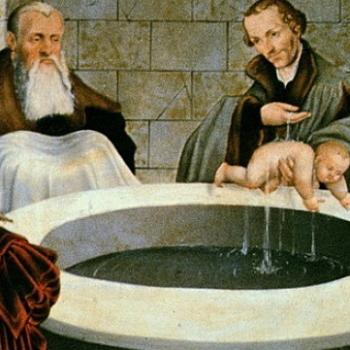
Infant Baptism is Not in the Bible! Answers...
Dear James White: Thanks for the Applause. You...
TRENDING AT PATHEOS Catholic

The Parable Of The Sower And The Word...
One of Christ’s most famous parables is that of the sower who...

Rejecting Doom: Christian Hope And Human Action
Christianity is a religion of hope. We are to have hope and...

Why I Choose the Eucharist Over the Sermon
Choose the Eucharist, Not the Sermon What are we supposed to get...

5 Design Elements Found in Spiritually Rooted Homes
Putting Spirituality Into Home Decor Our homes are more than our living...

Credo: A Story of God Told with the...
About 10 years ago, I began to imagine a personal "Credo" that...

The Anatomy of Divine Revelation in Catholic Thought
The claim that God has made Himself known to human beings is...
view all Catholic blogs
Ad-Free & Subscriber Log-In Subscription Support
- About Us
- 2026 Calendar
- Videos
- Podcasts
- Library of World Religions
- Faith In Media Tracker
- Advertise With Us
- Write for Us
- Privacy Policy
- Terms of Service
- Do Not Sell My Data
- Contact Us
- Radiant Digital
- Manage Newsletter Subscriptions
- Unsubscribe From Notifications
- Sitemap
Copyright 2008-2026, Patheos. All rights reserved.
Subscription Support Ad-Free & Subscriber Log-In
Follow Patheos