
BuddhistCatholicContemplativeEvangelicalGeneral ChristianHinduJewishLatter-day SaintMuslimNew VisionsProgressive Christian
Beliefs
- Buddhist
- Catholic
- Contemplative
- Evangelical
- General Christian
- Hindu
- Jewish
- Latter-day Saint
- More Voices
- Muslim
- New Visions
- Pagan
- Progressive Christian
Topics
- Religion News
- Food and Religion
- Sports and Religion
- Religious Art
- Religious Music and Entertainment
- Religious Events
- History and Religion
- Style and Religion
- Politics and Religion
- Women in Religion
- Recreation Outdoors and Religion
- Business Finance and Religion
- Careers Workplace and Religion
- Education and Religion
- Family Parenting and Religion
- Health Fitness and Religion
- Home and Religion
- Relationships and Religion
- Technology and Religion
- Travel and Religion
Columnists
- Buddhist Columnists
- Business Finance and Religion Columnists
- Careers Workplace and Religion Columnists
- Catholic Columnists
- Contemplative Columnists
- Education and Religion Columnists
- Evangelists Columnists
- Family Parenting and Religion Columnists
- General Christian Columnists
- Health Fitness and Religion Columnists
- Hindu Columnists
- History and Religion Columnists
- Home and Religion Columnists
- Jewish Columnists
- More Voices Columnists
- Latter Day Columnists
- Muslim Columnists
- New Visions Columnists
- Nonreligious Columnists
- Pagan Columnists
- Politics and Religion Columnists
- Progressive Columnists
- Recreation Outdoors and Religion Columnists
- Relationships and Religion Columnists
- Religion News Columnists
- Religious Art Columnists
- Religious Events Columnists
- Religious Music and Entertainment Columnists
- Sports and Religion Columnists
- Style and Religion Columnists
- Technology and Religion Columnists
- Travel and Religion Columnists
- Women in Religion Columnists
Resource Library
- 2026 Calendar
- Library of World Religions
- The 100 Most Holy Places on Earth
- Patheos Answers
- Podcasts
- Videos
- Faith Leaders Database
- Anglican Episcopalian
- Bahai
- Baptist
- Buddhism
- Christianity
- Confucianism
- Eastern Orthodoxy
- Hinduism
- Holiness and Pentecostal
- ISKCON
- Islam
- Judaism
- Lutheran
- Methodist
- The Church of Jesus Christ of Latter-day Saints
- New Age
- Paganism
- Presbytarian and Reformed
- Protestantism
- Religion Behind the Scenes
- Roman Catholic
- Scientology
- Shia Islam
- Sikhism
- Sufism
- Sunni Islam
- Taoism
- Zen
- See all religions
Research Tools
 Ad-Free & Subscriber Log-In Subscription Support
Ad-Free & Subscriber Log-In Subscription Support
Follow Patheos 

- Trending:
- Forgiveness
- |
- Marriage
- |
- Consciousness
- |
- Death Penalty
- |
- Election
- |
- Halloween
 To Give a Defense
- Home
- Catholic
- Constantine founded the Catholic Church! Answers to common objections VII, seriatim.
Constantine founded the Catholic Church! Answers to common objections VII, seriatim.
Last updated on: June 30, 2019 at 10:05 pm by Scott Eric Alt
Constantine founded the Catholic Church! Answers to common objections VII, seriatim. 2019-06-30T22:05:38-04:00 Scott Eric Alt
Patheos Explore the world's faith through different perspectives on religion and spirituality! Patheos has the views of the prevalent religions and spiritualities of the world.
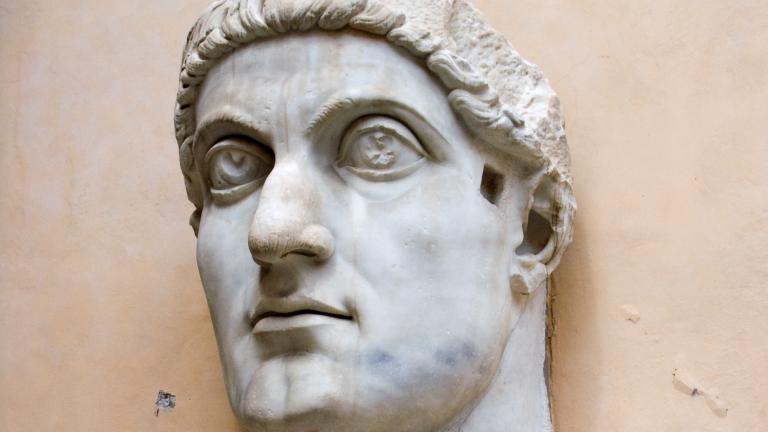
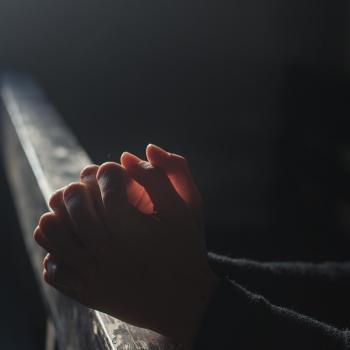
Photo credit: Jean-Christophe Benoit, Creative Commons

This myth is peculiarly intractable despite the fact that it is also peculiarly easy to refute. The claim is an anachronism, like saying Bill Gates invented the telephone when you can find telephones existing well before Gates was born. If we can find an instance of the Church referring to itself as “the Catholic Church” before Constantine lived, we can disprove the claim.
And so we do. To mention just one place, we find it in Ignatius of Antioch. In his Letter to the Smyrnaeans, he writes:
Wherever the bishop shall appear, there let the multitude [of the people] also be; even as, wherever Jesus Christ is, there is the Catholic Church.
This letter was written around the year 110 A.D., and Ignatius died some time in the 130s, perhaps as late as the 140s. But Constantine would not be born until February 27, 272 A.D.
The second thing we can show is that the distinctive doctrines of the Catholic Church were taught before Constantine lived. So, for example, in the same Letter to the Smyrnaeans, St. Ignatius affirms that the Eucharist is indeed the body and blood of Jesus Christ:
Take note of those who hold heterodox opinions on the grace of Jesus Christ which has come to us, and see how contrary their opinions are to the mind of God … They abstain from the Eucharist and from prayer because they do not confess that the Eucharist is the flesh of our Savior Jesus Christ.
Already in 110 A.D.—a full two centuries before Constantine is supposed to have invented Catholicism—St. Ignatius refers to “the Catholic Church” and teaches that the Eucharist is the body and blood of Christ.
And here is a second example. St. Irenaeus, writing around 190 A.D.—eighty-two years before the birth of Constantine—teaches baptismal regeneration:
For as we are lepers in sin, we are made clean, by means of the sacred water and the invocation of the Lord, from our old transgressions, being spiritually regenerated as newborn babes, even as the Lord has declared.
And did you notice that St. Ignatius, in using the term “Catholic Church,” said that what distinguishes it is the headship of a bishop over the “whole Church”? There is no such thing in his thinking as local, independent bodies. He writes this more than 150 years before Constantine drew his first breath.
•••
So how does Constantine get miscredited, as it were, with founding the Catholic Church? Well, what happened is that in the year 313, Constantine issued the Edict of Milan. And what the Edict of Milan did was to stop the suppression of a church that already existed and had been persecuted for some time. It did not create some new Church with Constantine as the first pope. Naturally we will find, after 313, a sudden outpouring of Catholic growth and activity. But this is because persecution has been ended, not because a new Church has been founded and made the official church. In fact, the Edict of Milan did not make Catholicism official at all; it merely made it legal.
And speaking of the related myth that Constantine was the first pope. In the 250s, still twenty years before the emperor was born, there was a huge dispute over who the true pope was. Did you know that? It all happened in the context of persecutions led by the Roman emperor Decius. Pope Fabian was martyred, and for a while no new pope could be elected. Many Catholics renounced their faith.
Then, after the persecutions ended, there arose a dispute about what to do with those who wanted to return to the Church. The new pope, Cornelius, believed penance was enough. But a guy named Novatian argued that they would need to be rebaptized; and in the course of the disagreement, Novatian set himself up as a rival pope. A council had to be called in order to sort it all out; and St. Cyprian of Carthage got a book out of it—On the Unity of the Church—in which he argued that the statements of the bishop of Rome were binding upon the whole Church.
Twenty years before the first pope, Constantine, was born.
Previous Post

June 30, 2019
On the limits of apologetics.
Next Post

July 2, 2019 The desperate need love and mercy, not judgment.
Browse Our Archives
Select a Category Abortion About Me Answers for Calvinists Answers to Media Fictions Answers to Objections Anti-Catholicism Apologetics Apostolic Succession Atonement Authority of the Church Baptism Benedictines Biblical Exegesis Blogging Book Reviews Books & Writing &c. Calvin's Institutes Capital Punishment Catholic Church Chastity Christology Church Fathers Church Social Doctrine Confession Contraception Conversion Stories Crusades Debates Depression & Suicide Deuterocanon Development of Doctrine Ecumenism English Language Eucharistic Adoration Exorcism Extra Ecclesiam Fisks & Rebuttals Freedom of Religion Freedom of Speech Fundamentalism Gender Politics Gender Theory Good Works Homosexuality Humor Idolatry Immaculate Conception In the News Inquisition ISIS Islam Just for Fun Just War Justification LCWR Limbo Liturgical Abuse Liturgical Year Magisterium Marriage and Family Mary Mortal Sin New Evangelization NFP Papacy Papal Documents Papal Infallibility Personal Narrative Politics Pope Francis Pope Francis Derangement Syndrome Population Control Praying to the "Dead" Priesthood Primacy of Peter Protestant Denominations Purgatory Radical Islam Radical Traditionalists Real Presence Right to Conscience RIght to Life Saints Same-Sex "Marriage" Seven Quick Takes Social Justice Social Media Sola Scriptura Spirit of Vatican II SSPX The Eucharist The Mass The Resurrection Traditionalism Vatican II Year of Mercy
Select a Month August 2019 July 2019 June 2019 May 2019 November 2018 October 2018 August 2018 July 2018 June 2018 April 2018 November 2017 October 2017 September 2017 May 2017 April 2017 March 2017 February 2017 November 2016 October 2016 September 2016 August 2016 July 2016 June 2016 May 2016 April 2016 March 2016 February 2016 January 2016 December 2015 November 2015 October 2015 September 2015 July 2015 June 2015 May 2015 April 2015 March 2015 February 2015 January 2015 December 2014 September 2014 August 2014 July 2014 June 2014 May 2014 April 2014 March 2014 February 2014 January 2014 December 2013 November 2013 October 2013 May 2013 April 2013 February 2013 January 2013
Follow Us!
TAKE THE
Religious Wisdom Quiz
Who said, "I have fought the good fight, I have finished the race"?
Select your answer to see how you score.
James John Paul Peter
Related posts from To Give a Defense
"Not Infallible" does not mean "Contains Errors."
Steve Hays posits false dichotomy between authority and...
Do Catholics think God owes them a debt?...
Protestant asks: When would Catholics know they're in...
TRENDING AT PATHEOS Catholic

Rejecting Doom: Christian Hope And Human Action
Christianity is a religion of hope. We are to have hope and...

It’s What Comes From Within Which Matters
One of the most difficult things for us to understand is why...

Why I Choose the Eucharist Over the Sermon
Choose the Eucharist, Not the Sermon What are we supposed to get...

5 Design Elements Found in Spiritually Rooted Homes
Putting Spirituality Into Home Decor Our homes are more than our living...

Credo: A Story of God Told with the...
About 10 years ago, I began to imagine a personal "Credo" that...

The Anatomy of Divine Revelation in Catholic Thought
The claim that God has made Himself known to human beings is...
view all Catholic blogs
Ad-Free & Subscriber Log-In Subscription Support
- About Us
- 2026 Calendar
- Videos
- Podcasts
- Library of World Religions
- Faith In Media Tracker
- Advertise With Us
- Write for Us
- Privacy Policy
- Terms of Service
- Do Not Sell My Data
- Contact Us
- Radiant Digital
- Manage Newsletter Subscriptions
- Unsubscribe From Notifications
- Sitemap
Copyright 2008-2026, Patheos. All rights reserved.
Subscription Support Ad-Free & Subscriber Log-In
Follow Patheos