
BuddhistCatholicContemplativeEvangelicalGeneral ChristianHinduJewishLatter-day SaintMuslimNew VisionsProgressive Christian
Beliefs
- Buddhist
- Catholic
- Contemplative
- Evangelical
- General Christian
- Hindu
- Jewish
- Latter-day Saint
- More Voices
- Muslim
- New Visions
- Pagan
- Progressive Christian
Topics
- Religion News
- Food and Religion
- Sports and Religion
- Religious Art
- Religious Music and Entertainment
- Religious Events
- History and Religion
- Style and Religion
- Politics and Religion
- Women in Religion
- Recreation Outdoors and Religion
- Business Finance and Religion
- Careers Workplace and Religion
- Education and Religion
- Family Parenting and Religion
- Health Fitness and Religion
- Home and Religion
- Relationships and Religion
- Technology and Religion
- Travel and Religion
Columnists
- Buddhist Columnists
- Business Finance and Religion Columnists
- Careers Workplace and Religion Columnists
- Catholic Columnists
- Contemplative Columnists
- Education and Religion Columnists
- Evangelists Columnists
- Family Parenting and Religion Columnists
- General Christian Columnists
- Health Fitness and Religion Columnists
- Hindu Columnists
- History and Religion Columnists
- Home and Religion Columnists
- Jewish Columnists
- More Voices Columnists
- Latter Day Columnists
- Muslim Columnists
- New Visions Columnists
- Nonreligious Columnists
- Pagan Columnists
- Politics and Religion Columnists
- Progressive Columnists
- Recreation Outdoors and Religion Columnists
- Relationships and Religion Columnists
- Religion News Columnists
- Religious Art Columnists
- Religious Events Columnists
- Religious Music and Entertainment Columnists
- Sports and Religion Columnists
- Style and Religion Columnists
- Technology and Religion Columnists
- Travel and Religion Columnists
- Women in Religion Columnists
Resource Library
- 2026 Calendar
- Library of World Religions
- The 100 Most Holy Places on Earth
- Patheos Answers
- Podcasts
- Videos
- Faith Leaders Database
- Anglican Episcopalian
- Bahai
- Baptist
- Buddhism
- Christianity
- Confucianism
- Eastern Orthodoxy
- Hinduism
- Holiness and Pentecostal
- ISKCON
- Islam
- Judaism
- Lutheran
- Methodist
- The Church of Jesus Christ of Latter-day Saints
- New Age
- Paganism
- Presbytarian and Reformed
- Protestantism
- Religion Behind the Scenes
- Roman Catholic
- Scientology
- Shia Islam
- Sikhism
- Sufism
- Sunni Islam
- Taoism
- Zen
- See all religions
Research Tools
 Ad-Free & Subscriber Log-In Subscription Support
Ad-Free & Subscriber Log-In Subscription Support
Follow Patheos 

- Trending:
- Forgiveness
- |
- Marriage
- |
- Consciousness
- |
- Death Penalty
- |
- Election
- |
- Halloween
 To Give a Defense
- Home
- Catholic
- Communion is Only a Symbol! Answers to Common Objections III Seriatim.
Communion is Only a Symbol! Answers to Common Objections III Seriatim.
Last updated on: July 15, 2018 at 11:46 am by Scott Eric Alt
Communion is Only a Symbol! Answers to Common Objections III Seriatim. 2018-07-15T11:46:17-04:00 Scott Eric Alt
Patheos Explore the world's faith through different perspectives on religion and spirituality! Patheos has the views of the prevalent religions and spiritualities of the world.
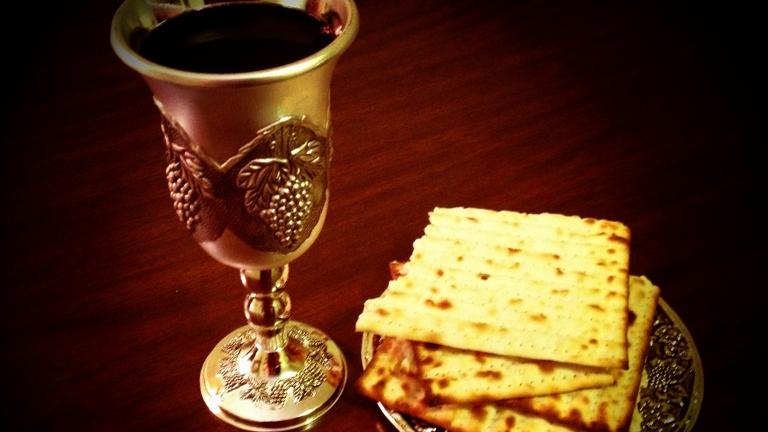
Image via Creative Commons
As it happens, I have already answered this objection before in a two-part exegesis of John 6. That was back in 2014. You can read them here and here. (You ought to, because I go into a lot of detail I won’t repeat below.) But recently an anti-Catholic stated the objection to transubstantiation in a peculiarly absolutist sort of way:
[Communion] is supposed to be done purely has a symbol or metaphor of the body and blood of Christ. However in Catholic mass before everyone participates in the communion, the priests conduct a ritual that they call transubstantiation. They believe this ritual/prayer turns the bread and wine into Christ’s literal body and blood which is not true and this is cannabilistic in nature.
It is supposed to be merely a symbol? Who says? Where can I find this spelled out any such way in the Bible? Is there a text where Christ says, “Now, do this as a symbol of my body and blood?” If the Bible does not spell this out for us in terms like that, then what we have here is an interpretation; and the anti-Catholic I cite above fails to show why it is necessary.
Indeed, in John 6, Christ consistently speaks of this as though he really is being literal:
Then Jesus said unto them, Verily, verily, I say unto you, Except ye eat the flesh of the Son of man, and drink his blood, ye have no life in you.
Whoso eateth my flesh, and drinketh my blood, hath eternal life; and I will raise him up at the last day.
For my flesh is meat indeed, and my blood is drink indeed.
He that eateth my flesh, and drinketh my blood, dwelleth in me, and I in him.
As the living Father hath sent me, and I live by the Father: so he that eateth me, even he shall live by me.
“My body is true food,” Christ says. “My blood is true drink,” he says. And at the Last Supper: “This is my body“; “this is my blood.” He does not say “This represents my body and blood.”
A true believer that the Eucharist is merely a symbol of Christ’s body and blood must show why this is the necessary interpretation that follows from John 6 and from the Last Supper texts in all four gospels.
Why, when Christ’s audience in John 6 objects, “How can this man give us his flesh to eat?” does he not say, “Wait, I am just being symbolic”? Why instead does he repeat himself in the same literal terms he had just used? (If anything, Christ doubles down and becomes even more stark in his literalness. I explain this in my earlier articles.) Why is he willing to let so many abandon him upon a misunderstanding?
And, if the Eucharist is just a symbol, what are we to make of Paul’s words in 1 Corinthians 11:29? For those who eat and drink without discerning the body of Christ eat and drink judgment on themselves.
And how is it that the earliest Christians simply understood that the Eucharist does in fact become the body and blood of Christ?
Here is Justin Martyr in the First Apology 66:
For not as common bread and common drink do we receive these; but in like manner as Jesus Christ our Saviour, having been made flesh by the Word of God, had both flesh and blood for our salvation, so likewise have we been taught that the food which is blessed by the prayer of His word, and from which our blood and flesh by transmutation are nourished, is the flesh and blood of that Jesus who was made flesh.
And here is St. Cyril of Jerusalem in his Catechetical Lectures 19:7 and 22:2:
[T]he Bread and Wine of the Eucharist before the invocation of the Holy and Adorable Trinity were simple bread and wine, [but] after the invocation the Bread becomes the Body of Christ.
***
He once in Cana of Galilee, turned the water into wine, akin to blood, and is it incredible that He should have turned wine into blood?
And explanation for all this is necessary, not just a hit-and-run declaration that we are “supposed” to interpret communion as a symbol. Says who?
As for the charge of cannibalism, anyone who makes such a claim doesn’t quite understand the distinction between substance and accidents which the Church teaches. Substantively (in their essence) the Eucharistic elements become the body and blood of Christ. But the accidents (i.e., the taste, smell, appearance, etc.) remain bread and wine. That is to say, we are not eating Christ’s body or blood in the form of flesh, or the form of blood.
Tim Staples goes into much more detail on this, and I would recommend you read this article. He lays out several ways in which communion and cannibalism are different. Michael Foley notes some other differences:
- Cannibals eat the dead, but Christ is living;
- Cannibals eat the body, but Catholics also receive the soul and divinity of Christ;
- The body and blood, soul and divinity of Christ are infinite, not finite;
- The Eucharist is neither violent nor bloody, as in cannibalism
When people make claims like this, they are really being too clever by half, and haven’t fully thought it through. These two articles are good at explaining important differences between cannibalism and Eucharist.
The only necessary burden of proof is upon the anti-Catholic to show why a metaphorical reading of the texts is the necessary one. It’s not “necessary” just because someone shows up on Facebook and says it is.
***

Next Post

July 15, 2018 Yes, The Term "Social Justice" Can Be Found in Church Encyclicals
Browse Our Archives
Select a Category Abortion About Me Answers for Calvinists Answers to Media Fictions Answers to Objections Anti-Catholicism Apologetics Apostolic Succession Atonement Authority of the Church Baptism Benedictines Biblical Exegesis Blogging Book Reviews Books & Writing &c. Calvin's Institutes Capital Punishment Catholic Church Chastity Christology Church Fathers Church Social Doctrine Confession Contraception Conversion Stories Crusades Debates Depression & Suicide Deuterocanon Development of Doctrine Ecumenism English Language Eucharistic Adoration Exorcism Extra Ecclesiam Fisks & Rebuttals Freedom of Religion Freedom of Speech Fundamentalism Gender Politics Gender Theory Good Works Homosexuality Humor Idolatry Immaculate Conception In the News Inquisition ISIS Islam Just for Fun Just War Justification LCWR Limbo Liturgical Abuse Liturgical Year Magisterium Marriage and Family Mary Mortal Sin New Evangelization NFP Papacy Papal Documents Papal Infallibility Personal Narrative Politics Pope Francis Pope Francis Derangement Syndrome Population Control Praying to the "Dead" Priesthood Primacy of Peter Protestant Denominations Purgatory Radical Islam Radical Traditionalists Real Presence Right to Conscience RIght to Life Saints Same-Sex "Marriage" Seven Quick Takes Social Justice Social Media Sola Scriptura Spirit of Vatican II SSPX The Eucharist The Mass The Resurrection Traditionalism Vatican II Year of Mercy
Select a Month August 2019 July 2019 June 2019 May 2019 November 2018 October 2018 August 2018 July 2018 June 2018 April 2018 November 2017 October 2017 September 2017 May 2017 April 2017 March 2017 February 2017 November 2016 October 2016 September 2016 August 2016 July 2016 June 2016 May 2016 April 2016 March 2016 February 2016 January 2016 December 2015 November 2015 October 2015 September 2015 July 2015 June 2015 May 2015 April 2015 March 2015 February 2015 January 2015 December 2014 September 2014 August 2014 July 2014 June 2014 May 2014 April 2014 March 2014 February 2014 January 2014 December 2013 November 2013 October 2013 May 2013 April 2013 February 2013 January 2013
Follow Us!
TAKE THE
Religious Wisdom Quiz
What was the name of the King who made Esther his queen?
Select your answer to see how you score.
Jeremiah Barnabas Hezekiah Ahasuerus
Related posts from To Give a Defense
Does the Mass crucify Jesus another time? Part...

How much does God hate lying? (Proverbs 6:16-19)
Don't Cite Leviticus 18 If You're Going to...
TRENDING AT PATHEOS Catholic

Rejecting Doom: Christian Hope And Human Action
Christianity is a religion of hope. We are to have hope and...

It’s What Comes From Within Which Matters
One of the most difficult things for us to understand is why...

Why I Choose the Eucharist Over the Sermon
Choose the Eucharist, Not the Sermon What are we supposed to get...

5 Design Elements Found in Spiritually Rooted Homes
Putting Spirituality Into Home Decor Our homes are more than our living...

Credo: A Story of God Told with the...
About 10 years ago, I began to imagine a personal "Credo" that...

The Anatomy of Divine Revelation in Catholic Thought
The claim that God has made Himself known to human beings is...
view all Catholic blogs
Ad-Free & Subscriber Log-In Subscription Support
- About Us
- 2026 Calendar
- Videos
- Podcasts
- Library of World Religions
- Faith In Media Tracker
- Advertise With Us
- Write for Us
- Privacy Policy
- Terms of Service
- Do Not Sell My Data
- Contact Us
- Radiant Digital
- Manage Newsletter Subscriptions
- Unsubscribe From Notifications
- Sitemap
Copyright 2008-2026, Patheos. All rights reserved.
Subscription Support Ad-Free & Subscriber Log-In
Follow Patheos