
BuddhistCatholicContemplativeEvangelicalGeneral ChristianHinduJewishLatter-day SaintMuslimNew VisionsProgressive Christian
Beliefs
- Buddhist
- Catholic
- Contemplative
- Evangelical
- General Christian
- Hindu
- Jewish
- Latter-day Saint
- More Voices
- Muslim
- New Visions
- Pagan
- Progressive Christian
Topics
- Religion News
- Food and Religion
- Sports and Religion
- Religious Art
- Religious Music and Entertainment
- Religious Events
- History and Religion
- Style and Religion
- Politics and Religion
- Women in Religion
- Recreation Outdoors and Religion
- Business Finance and Religion
- Careers Workplace and Religion
- Education and Religion
- Family Parenting and Religion
- Health Fitness and Religion
- Home and Religion
- Relationships and Religion
- Technology and Religion
- Travel and Religion
Columnists
- Buddhist Columnists
- Business Finance and Religion Columnists
- Careers Workplace and Religion Columnists
- Catholic Columnists
- Contemplative Columnists
- Education and Religion Columnists
- Evangelists Columnists
- Family Parenting and Religion Columnists
- General Christian Columnists
- Health Fitness and Religion Columnists
- Hindu Columnists
- History and Religion Columnists
- Home and Religion Columnists
- Jewish Columnists
- More Voices Columnists
- Latter Day Columnists
- Muslim Columnists
- New Visions Columnists
- Nonreligious Columnists
- Pagan Columnists
- Politics and Religion Columnists
- Progressive Columnists
- Recreation Outdoors and Religion Columnists
- Relationships and Religion Columnists
- Religion News Columnists
- Religious Art Columnists
- Religious Events Columnists
- Religious Music and Entertainment Columnists
- Sports and Religion Columnists
- Style and Religion Columnists
- Technology and Religion Columnists
- Travel and Religion Columnists
- Women in Religion Columnists
Resource Library
- 2026 Calendar
- Library of World Religions
- The 100 Most Holy Places on Earth
- Patheos Answers
- Podcasts
- Videos
- Faith Leaders Database
- Anglican Episcopalian
- Bahai
- Baptist
- Buddhism
- Christianity
- Confucianism
- Eastern Orthodoxy
- Hinduism
- Holiness and Pentecostal
- ISKCON
- Islam
- Judaism
- Lutheran
- Methodist
- The Church of Jesus Christ of Latter-day Saints
- New Age
- Paganism
- Presbytarian and Reformed
- Protestantism
- Religion Behind the Scenes
- Roman Catholic
- Scientology
- Shia Islam
- Sikhism
- Sufism
- Sunni Islam
- Taoism
- Zen
- See all religions
Research Tools
 Ad-Free & Subscriber Log-In Subscription Support
Ad-Free & Subscriber Log-In Subscription Support
Follow Patheos 

- Trending:
- Forgiveness
- |
- Marriage
- |
- Consciousness
- |
- Death Penalty
- |
- Election
- |
- Halloween
 To Give a Defense
- Home
- Catholic
- Cardinal Burke Can’t “Correct” the Pope, But the Pope Can Correct Burke
Cardinal Burke Can’t “Correct” the Pope, But the Pope Can Correct Burke
Last updated on: March 9, 2018 at 11:05 pm by Scott Eric Alt
Cardinal Burke Can’t “Correct” the Pope, But the Pope Can Correct Burke 2018-03-09T23:05:58-04:00 Scott Eric Alt
Patheos Explore the world's faith through different perspectives on religion and spirituality! Patheos has the views of the prevalent religions and spiritualities of the world.
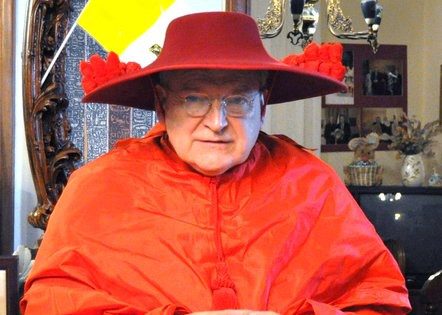
Image via Creative Commons

Lysergic Acid News is blaring trumpets again about the so-called “correction” of the pope by Cardinal Burke, et al. If Pope Francis won’t answer the dubia, “we simply will have to correct the situation.” Ahem.
Sometimes people will ask me, “Alt! Do you still stand by that article you wrote, you know, the one where you said you changed your mind about Pope Francis? Skojec declared that you had seen the light.”
Well, Skojec.
I do stand by my article. Recall I said the pope should answer the dubia, that the questions were fair enough, and that not answering them encouraged confusion (and the leaping of miles on the authority of inches) when the pope could clarify and reign in.
Recall I also said it was “ill-advised” for Burke, et al., to make them public. And any talk of Burke or anyone else “formally correcting” the Holy Father is just impertinent madness. That would be a schismatic act, in my view.
Go with me once more, dear reader, to Donum Veritatis. Let us look at §30.
If, despite a loyal effort on the theologian’s part, the difficulties persist, the theologian has the duty to make known to the Magisterial authorities the problems raised by the teaching in itself, in the arguments proposed to justify it, or even in the manner in which it is presented. [So far so good. This is what dubia are.] He should do this in an evangelical spirit and with a profound desire to resolve the difficulties. His objections could then contribute to real progress and provide a stimulus to the Magisterium to propose the teaching of the Church in greater depth and with a clearer presentation of the arguments.
And you know, this is exactly the spirit in which Burke claims, many a time and oft, that he has acted. The dubia are “honest questions,” he says (as quoted by LSD). “We proposed them very seriously,” he says. It was all done “with great respect,” he says. So Burke has, according to his own careful insistence, acted “with a profound desire to resolve the difficulties.”
And yet Donum Veritatis adds this:
In cases like these, the theologian should avoid turning to the “mass media”, but have recourse to the responsible authority, for it is not by seeking to exert the pressure of public opinion that one contributes to the clarification of doctrinal issues and renders service to the truth.
But you know, that is exactly what has happened—that Burke has “turned to the mass media,” and that the media (all the usual suspects) are using the dubia as a weapon to stir up further strife and dissension against Pope Francis. That sort of atmosphere, according to the CDF, does not achieve the “clarification of doctrinal issues.” It does not “render service to the truth.”
Rather it achieves the opposite—because the discussion has now shifted from clarification to correction. If you say, “I don’t understand, can you clarify?” that is one thing. But when you say, “This papal document is in error, so I will take it upon myself to correct the situation,” that is very different.
There certainly is a tradition in the Church of seeking clarification of the pope through dubia. That the pope has not answered these involving Amoris Laetitia bothers me. I don’t think that was best.
But there is not a tradition in the Church of a “formal correction” of the pope. And don’t talk to me about “Paul corrected Peter.” Paul rebuked Peter for having sinned, for having acted contrary to what Peter had taught to be true. Paul did not correct Peter’s teaching. The pope is, Vatican I points out, the Church’s supreme teacher and supreme legislator. “The sentence of the Apostolic See,” the Council says, is the “highe[st] authority [and] is not subject to revision by anyone, nor may anyone lawfully pass judgment thereupon.” Those who say otherwise” “stray from the genine path of truth.”
So no, Cardinal Burke can’t “correct” the pope.
The pope, however, can correct him. I don’t say he should or he should not. But if you want to talk about “formal correction,” the pope is the only one with the authority to do that. If Burke were to try to issue some “formal correction,” the pope could say, “This has no authority in the Church.” He could say, “This constitutes a schismatic act.” He could discipline Burke in any way he felt appropriate.
I don’t say he should or he should not.
“But Alt!” you say. “Isn’t Cardinal Burke right that “there are some acts that are always and everywhere wrong?”
Indeed there are. And how do I know that? Because Pope Francis said so in Amoris Laetitia:
For the law is itself a gift of God which points out the way, a gift for everyone without exception; it can be followed with the help of grace. (295)
Oh, so Pope Francis means there are no exceptions? Well, why do I need Burke to tell me this, and pretend it’s some sort of necessary “correction”? It’s right there in Amoris Laetitia
“Oh, but Alt! What about the internal forum? What about footnote 351? What about personal discernment?”
Yes. These are all about determining degree of personal culpability as it relates to sacramental discipline. The pope understands some people are not fully culpable for the situation in which they find themselves, can’t extricate themselves, and then pastors have to decide case by case what to do in moving forward. There is no one-size-fits-all solution here.
To recognize that does not entail denying that some acts are always wrong, or that the law can be followed by everyone with the help of grace. Pope Francis himself says that.
How the one relates to the other certainly can be clarified for those who have difficulty, or so as not to encourage bishops to make miles out of inches. I really, really wish the pope would.
But “formal correction”? Stop it with that loose and dangerous talk. That’s more divisive and schism-encouraging than anything the pope has done. Take care the pope does not correct you.
***
Previous Post
March 23, 2017
Dissenting From the Magisterium Causes Great Spiritual Harm
Next Post
March 28, 2017 Stop It Already With "But Paul Corrected Peter"
Browse Our Archives
Select a Category Abortion About Me Answers for Calvinists Answers to Media Fictions Answers to Objections Anti-Catholicism Apologetics Apostolic Succession Atonement Authority of the Church Baptism Benedictines Biblical Exegesis Blogging Book Reviews Books & Writing &c. Calvin's Institutes Capital Punishment Catholic Church Chastity Christology Church Fathers Church Social Doctrine Confession Contraception Conversion Stories Crusades Debates Depression & Suicide Deuterocanon Development of Doctrine Ecumenism English Language Eucharistic Adoration Exorcism Extra Ecclesiam Fisks & Rebuttals Freedom of Religion Freedom of Speech Fundamentalism Gender Politics Gender Theory Good Works Homosexuality Humor Idolatry Immaculate Conception In the News Inquisition ISIS Islam Just for Fun Just War Justification LCWR Limbo Liturgical Abuse Liturgical Year Magisterium Marriage and Family Mary Mortal Sin New Evangelization NFP Papacy Papal Documents Papal Infallibility Personal Narrative Politics Pope Francis Pope Francis Derangement Syndrome Population Control Praying to the "Dead" Priesthood Primacy of Peter Protestant Denominations Purgatory Radical Islam Radical Traditionalists Real Presence Right to Conscience RIght to Life Saints Same-Sex "Marriage" Seven Quick Takes Social Justice Social Media Sola Scriptura Spirit of Vatican II SSPX The Eucharist The Mass The Resurrection Traditionalism Vatican II Year of Mercy
Select a Month August 2019 July 2019 June 2019 May 2019 November 2018 October 2018 August 2018 July 2018 June 2018 April 2018 November 2017 October 2017 September 2017 May 2017 April 2017 March 2017 February 2017 November 2016 October 2016 September 2016 August 2016 July 2016 June 2016 May 2016 April 2016 March 2016 February 2016 January 2016 December 2015 November 2015 October 2015 September 2015 July 2015 June 2015 May 2015 April 2015 March 2015 February 2015 January 2015 December 2014 September 2014 August 2014 July 2014 June 2014 May 2014 April 2014 March 2014 February 2014 January 2014 December 2013 November 2013 October 2013 May 2013 April 2013 February 2013 January 2013
Follow Us!
TAKE THE
Religious Wisdom Quiz
I am a city that comes down from heaven, adorned as a bride. My streets are gold, my gates are pearls. What am I?
Select your answer to see how you score.
New Jerusalem Heaven Bethlehem Zion
Related posts from To Give a Defense

Documentation of Taylor Marshall's attacks on Pope Francis...
Veritatis Splendor: Deportation is intrinsically evil.
God Willed Pope Francis Derangement Syndrome Vol. XXII

Crisis!!! Plays Benedict vs. Francis on Amoris Laetitia
TRENDING AT PATHEOS Catholic

Rejecting Doom: Christian Hope And Human Action
Christianity is a religion of hope. We are to have hope and...

It’s What Comes From Within Which Matters
One of the most difficult things for us to understand is why...

Why I Choose the Eucharist Over the Sermon
Choose the Eucharist, Not the Sermon What are we supposed to get...

5 Design Elements Found in Spiritually Rooted Homes
Putting Spirituality Into Home Decor Our homes are more than our living...

Credo: A Story of God Told with the...
About 10 years ago, I began to imagine a personal "Credo" that...

The Anatomy of Divine Revelation in Catholic Thought
The claim that God has made Himself known to human beings is...
view all Catholic blogs
Ad-Free & Subscriber Log-In Subscription Support
- About Us
- 2026 Calendar
- Videos
- Podcasts
- Library of World Religions
- Faith In Media Tracker
- Advertise With Us
- Write for Us
- Privacy Policy
- Terms of Service
- Do Not Sell My Data
- Contact Us
- Radiant Digital
- Manage Newsletter Subscriptions
- Unsubscribe From Notifications
- Sitemap
Copyright 2008-2026, Patheos. All rights reserved.
Subscription Support Ad-Free & Subscriber Log-In
Follow Patheos