
BuddhistCatholicContemplativeEvangelicalGeneral ChristianHinduJewishLatter-day SaintMuslimNew VisionsProgressive Christian
Beliefs
- Buddhist
- Catholic
- Contemplative
- Evangelical
- General Christian
- Hindu
- Jewish
- Latter-day Saint
- More Voices
- Muslim
- New Visions
- Pagan
- Progressive Christian
Topics
- Religion News
- Food and Religion
- Sports and Religion
- Religious Art
- Religious Music and Entertainment
- Religious Events
- History and Religion
- Style and Religion
- Politics and Religion
- Women in Religion
- Recreation Outdoors and Religion
- Business Finance and Religion
- Careers Workplace and Religion
- Education and Religion
- Family Parenting and Religion
- Health Fitness and Religion
- Home and Religion
- Relationships and Religion
- Technology and Religion
- Travel and Religion
Columnists
- Buddhist Columnists
- Business Finance and Religion Columnists
- Careers Workplace and Religion Columnists
- Catholic Columnists
- Contemplative Columnists
- Education and Religion Columnists
- Evangelists Columnists
- Family Parenting and Religion Columnists
- General Christian Columnists
- Health Fitness and Religion Columnists
- Hindu Columnists
- History and Religion Columnists
- Home and Religion Columnists
- Jewish Columnists
- More Voices Columnists
- Latter Day Columnists
- Muslim Columnists
- New Visions Columnists
- Nonreligious Columnists
- Pagan Columnists
- Politics and Religion Columnists
- Progressive Columnists
- Recreation Outdoors and Religion Columnists
- Relationships and Religion Columnists
- Religion News Columnists
- Religious Art Columnists
- Religious Events Columnists
- Religious Music and Entertainment Columnists
- Sports and Religion Columnists
- Style and Religion Columnists
- Technology and Religion Columnists
- Travel and Religion Columnists
- Women in Religion Columnists
Resource Library
- 2026 Calendar
- Library of World Religions
- The 100 Most Holy Places on Earth
- Patheos Answers
- Podcasts
- Videos
- Faith Leaders Database
- Anglican Episcopalian
- Bahai
- Baptist
- Buddhism
- Christianity
- Confucianism
- Eastern Orthodoxy
- Hinduism
- Holiness and Pentecostal
- ISKCON
- Islam
- Judaism
- Lutheran
- Methodist
- The Church of Jesus Christ of Latter-day Saints
- New Age
- Paganism
- Presbytarian and Reformed
- Protestantism
- Religion Behind the Scenes
- Roman Catholic
- Scientology
- Shia Islam
- Sikhism
- Sufism
- Sunni Islam
- Taoism
- Zen
- See all religions
Research Tools
 Ad-Free & Subscriber Log-In Subscription Support
Ad-Free & Subscriber Log-In Subscription Support
Follow Patheos 

- Trending:
- Forgiveness
- |
- Marriage
- |
- Consciousness
- |
- Death Penalty
- |
- Election
- |
- Halloween
 To Give a Defense
- Home
- Catholic
- Does Canon 194 Provide an Opening to Depose a Heretical Pope?
Does Canon 194 Provide an Opening to Depose a Heretical Pope?
Last updated on: March 6, 2018 at 10:51 pm by Scott Eric Alt
Does Canon 194 Provide an Opening to Depose a Heretical Pope? 2018-03-06T22:51:24-04:00 Scott Eric Alt
Patheos Explore the world's faith through different perspectives on religion and spirituality! Patheos has the views of the prevalent religions and spiritualities of the world.
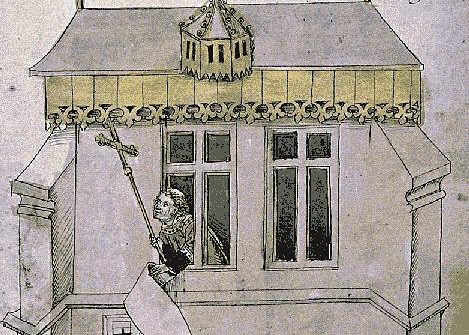

A reader points to Canon 194 as a possible opening for deposing a heretical pope. The canon lists certain conditions under which a person is “removed from an ecclesiastical office by the law itself.” These are:
- A person who has lost the clerical state; [i.e., the priesthood]
- A person who has publicly defected from the Catholic faith or from the communion of the Church
- A cleric who has attempted marriage even if only civilly
The canon adds an important qualification:
The removal mentioned in nn. 2 and 3 can be enforced only if it is established by the declaration of a competent authority.
But assuming the papacy is an “ecclesiastical office,” one first has to consider whether any of these latae sententiae removals apply to a heretical pope.
The first has to do with the loss of the priesthood. Does a heretic pope ipso facto lose the priesthood, and with the priesthood the papacy? Has anyone shown this to be so? Since when does a heretic priest (who is not the pope) lose the priesthood by that fact alone? He’d have to be found a heretic in a canonical trial, right? And then his bishop would have to laicize him? Right? Who has the authority to laicize the pope?
The second deals with the public renunciation of the faith. This seems to me to be a bit larger than simply “being a heretic.” My experience is, there are a large number of heretics in the Church who have not renounced the faith. I would also guess that if a pope were to publicly renounce the faith, he would renounce the papacy along with it. Why go on being pope if you’ve renounced Catholicism? “The papacy is a tradition of men!” he would say, cast down his mitre, and join the Mormon Tabernacle Choir. In this case, we’d be talking about something altogether different from heresy: We’d be talking about apostasy.
The third is simply not at issue. No one is asking, “What if the pope meets some nice lady and wants to get married?”
But even if any of these applied, we would have the stipulation of paragraph 2, which is that the loss of ecclesiastical office needs to be “established by the competent authority.” In the case of the pope, who is “the competent authority”?
And there we come full circle again to Canon 1404: “The first see is judged by no one.”
***
Canon lawyer Dr. Edward N. Peters has written a “Canonical Primer on Popes and Heresy.” And he says that one should not speak lightly of such matters. “Those flirting with such suspicions or engaging in such ruminations,” he says, “should be very clear about what is at issue.”
Heresy, for discussion’s sake, is “the obstinate denial or obstinate doubt after the reception of baptism of some truth that must be believed by divine and catholic faith.” That’s a high bar. “Moreover,” says Dr. Peters,
privately-held heretical views, even if they are leading to certain observable actions, are not in themselves actionable under law (Canon 1330).
That’s true for anyone, not just the pope. And Dr. Peters rightly dismisses as “impossible” any notion that a pope would commit the Church to heresy. That is distinct, however, from saying that a pope could be a heretic and could promote his heresy publicly. (Not everything a pope says publicly binds the Church.)
(Dr. Peters stresses here that the possibility of a pope being a heretic, even apart from binding the Church, is “very remote” [his italics]. He cites Vermeersch-Creusen, who calls it “quite improbable”; Beste, who says that “no example of this can be found”; and Cappello, who says the very notion should be “entirely dismissed.” I agree with Cappello, and I assume that Beste examined the facts about Honorius I and John XXII and found no convincing evidence of actual heresy.)
But in terms of the “what if?” question, Dr. Peters thinks that canon law has “more to offer” than simply Canon 1404. He cites Wrenn:
Canon 1404 is not a statement of personal impeccability or inerrancy of the Holy Father. [Certainly not. And I know of no one who claims that it is.] Should, indeed, the pope fall into heresy, it is understood that he would lose his office.
Yes, but how? Who would determine that a pope had “fallen into heresy”? Surely the pope would have the right to a canonical trial. Who would conduct that trial? I suppose most people would probably say the College of Cardinals, or the CDF. And if he were to be found guilty of heresy, he would automatically forfeit the papacy. But where does Canon law say this? It doesn’t. “It is understood” is not a citation from canon law.
And indeed Wrenn admits that Canon 1404 does not settle the question of who would try a pope for heresy. Dr. Peters adds that there is no other canon that does answer this pertinent question. (Not even canon 194.) “But,” he says (for there is always a but), perhaps the “canonical tradition” would have an answer.
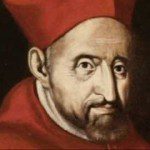
He takes us to Franz Wernz, who seems to do no more than offer a re-presentation of Bellarmine’s discussion in De Romano Pontafice. Wernz accepts Bellarmine’s view that a heretical pope loses his office latae sententiae. Wernz says that a “declaratory criminal sentence” that the pope was “found to be heretical” (by whom?) would be declared by a “general council.” This though he earlier said that a council does not have a higher jurisdiction than the pope. The discussion in Wernz (and in Bellarmine) is circular: No one could try a pope, no one could remove a pope, but a pope would lose his office anyway, because he would, because he would have to.
So while admitting that a heretical pope “must be deprived of his power,” Wernz has no answer at all as to who would do the depriving. He simply says that it “would” happen.
Which more or less leaves us right where we started.
***
Previous Post
April 7, 2017
A Heretic Would Not Cease to Be Pope: Thoughts on Bellarmine
Next Post

April 12, 2017 Sean Spicer Is Right: German Jews Weren't German Citizens
Browse Our Archives
Select a Category Abortion About Me Answers for Calvinists Answers to Media Fictions Answers to Objections Anti-Catholicism Apologetics Apostolic Succession Atonement Authority of the Church Baptism Benedictines Biblical Exegesis Blogging Book Reviews Books & Writing &c. Calvin's Institutes Capital Punishment Catholic Church Chastity Christology Church Fathers Church Social Doctrine Confession Contraception Conversion Stories Crusades Debates Depression & Suicide Deuterocanon Development of Doctrine Ecumenism English Language Eucharistic Adoration Exorcism Extra Ecclesiam Fisks & Rebuttals Freedom of Religion Freedom of Speech Fundamentalism Gender Politics Gender Theory Good Works Homosexuality Humor Idolatry Immaculate Conception In the News Inquisition ISIS Islam Just for Fun Just War Justification LCWR Limbo Liturgical Abuse Liturgical Year Magisterium Marriage and Family Mary Mortal Sin New Evangelization NFP Papacy Papal Documents Papal Infallibility Personal Narrative Politics Pope Francis Pope Francis Derangement Syndrome Population Control Praying to the "Dead" Priesthood Primacy of Peter Protestant Denominations Purgatory Radical Islam Radical Traditionalists Real Presence Right to Conscience RIght to Life Saints Same-Sex "Marriage" Seven Quick Takes Social Justice Social Media Sola Scriptura Spirit of Vatican II SSPX The Eucharist The Mass The Resurrection Traditionalism Vatican II Year of Mercy
Select a Month August 2019 July 2019 June 2019 May 2019 November 2018 October 2018 August 2018 July 2018 June 2018 April 2018 November 2017 October 2017 September 2017 May 2017 April 2017 March 2017 February 2017 November 2016 October 2016 September 2016 August 2016 July 2016 June 2016 May 2016 April 2016 March 2016 February 2016 January 2016 December 2015 November 2015 October 2015 September 2015 July 2015 June 2015 May 2015 April 2015 March 2015 February 2015 January 2015 December 2014 September 2014 August 2014 July 2014 June 2014 May 2014 April 2014 March 2014 February 2014 January 2014 December 2013 November 2013 October 2013 May 2013 April 2013 February 2013 January 2013
Follow Us!
TAKE THE
Religious Wisdom Quiz
How many chapters are in the book of Hebrews?
Select your answer to see how you score.
16 13 15 10
Related posts from To Give a Defense

Documentation of Taylor Marshall's attacks on Pope Francis...
Pope Says Don't Criticize Pope; FaithfulCatholics™ Weep and...
God Willed Pope Francis Derangement Syndrome Vol. XXII
TRENDING AT PATHEOS Catholic

Rejecting Doom: Christian Hope And Human Action
Christianity is a religion of hope. We are to have hope and...

It’s What Comes From Within Which Matters
One of the most difficult things for us to understand is why...

Why I Choose the Eucharist Over the Sermon
Choose the Eucharist, Not the Sermon What are we supposed to get...

5 Design Elements Found in Spiritually Rooted Homes
Putting Spirituality Into Home Decor Our homes are more than our living...

Credo: A Story of God Told with the...
About 10 years ago, I began to imagine a personal "Credo" that...

The Anatomy of Divine Revelation in Catholic Thought
The claim that God has made Himself known to human beings is...
view all Catholic blogs
Ad-Free & Subscriber Log-In Subscription Support
- About Us
- 2026 Calendar
- Videos
- Podcasts
- Library of World Religions
- Faith In Media Tracker
- Advertise With Us
- Write for Us
- Privacy Policy
- Terms of Service
- Do Not Sell My Data
- Contact Us
- Radiant Digital
- Manage Newsletter Subscriptions
- Unsubscribe From Notifications
- Sitemap
Copyright 2008-2026, Patheos. All rights reserved.
Subscription Support Ad-Free & Subscriber Log-In
Follow Patheos