
BuddhistCatholicContemplativeEvangelicalGeneral ChristianHinduJewishLatter-day SaintMuslimNew VisionsProgressive Christian
Beliefs
- Buddhist
- Catholic
- Contemplative
- Evangelical
- General Christian
- Hindu
- Jewish
- Latter-day Saint
- More Voices
- Muslim
- New Visions
- Pagan
- Progressive Christian
Topics
- Religion News
- Food and Religion
- Sports and Religion
- Religious Art
- Religious Music and Entertainment
- Religious Events
- History and Religion
- Style and Religion
- Politics and Religion
- Women in Religion
- Recreation Outdoors and Religion
- Business Finance and Religion
- Careers Workplace and Religion
- Education and Religion
- Family Parenting and Religion
- Health Fitness and Religion
- Home and Religion
- Relationships and Religion
- Technology and Religion
- Travel and Religion
Columnists
- Buddhist Columnists
- Business Finance and Religion Columnists
- Careers Workplace and Religion Columnists
- Catholic Columnists
- Contemplative Columnists
- Education and Religion Columnists
- Evangelists Columnists
- Family Parenting and Religion Columnists
- General Christian Columnists
- Health Fitness and Religion Columnists
- Hindu Columnists
- History and Religion Columnists
- Home and Religion Columnists
- Jewish Columnists
- More Voices Columnists
- Latter Day Columnists
- Muslim Columnists
- New Visions Columnists
- Nonreligious Columnists
- Pagan Columnists
- Politics and Religion Columnists
- Progressive Columnists
- Recreation Outdoors and Religion Columnists
- Relationships and Religion Columnists
- Religion News Columnists
- Religious Art Columnists
- Religious Events Columnists
- Religious Music and Entertainment Columnists
- Sports and Religion Columnists
- Style and Religion Columnists
- Technology and Religion Columnists
- Travel and Religion Columnists
- Women in Religion Columnists
Resource Library
- 2026 Calendar
- Library of World Religions
- The 100 Most Holy Places on Earth
- Patheos Answers
- Podcasts
- Videos
- Faith Leaders Database
- Anglican Episcopalian
- Bahai
- Baptist
- Buddhism
- Christianity
- Confucianism
- Eastern Orthodoxy
- Hinduism
- Holiness and Pentecostal
- ISKCON
- Islam
- Judaism
- Lutheran
- Methodist
- The Church of Jesus Christ of Latter-day Saints
- New Age
- Paganism
- Presbytarian and Reformed
- Protestantism
- Religion Behind the Scenes
- Roman Catholic
- Scientology
- Shia Islam
- Sikhism
- Sufism
- Sunni Islam
- Taoism
- Zen
- See all religions
Research Tools
 Ad-Free & Subscriber Log-In Subscription Support
Ad-Free & Subscriber Log-In Subscription Support
Follow Patheos 

- Trending:
- Forgiveness
- |
- Marriage
- |
- Consciousness
- |
- Death Penalty
- |
- Election
- |
- Halloween
 To Give a Defense
- Home
- Catholic
- New York Times Attempts to Read Tea Leaves Ahead of Amoris Laetitia
New York Times Attempts to Read Tea Leaves Ahead of Amoris Laetitia
Last updated on: March 16, 2018 at 11:42 pm by Scott Eric Alt
New York Times Attempts to Read Tea Leaves Ahead of Amoris Laetitia 2018-03-16T23:42:48-04:00 Scott Eric Alt
Patheos Explore the world's faith through different perspectives on religion and spirituality! Patheos has the views of the prevalent religions and spiritualities of the world.

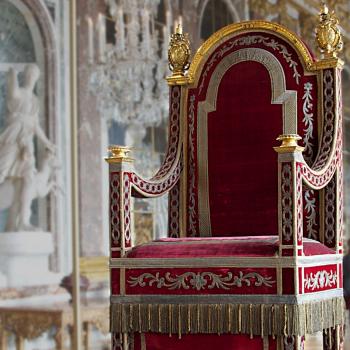
Photo credit: Richard Corner, Creative Commons

At the New York Times, there is an article today optimistically titled “How Pope Francis’ ‘Amoris Laetitia’ Could Affect Families and the Church.” From the article:
In the document, known as an apostolic exhortation, the pope could change church practice on thorny subjects like whether divorced Catholics who remarry without having obtained annulments can receive holy communion.
I think not. Did the New York Times not read the pope’s interview in-flight from Mexico to Rome? He was asked about this wery thing. The pope said:
Integrating in the Church doesn’t mean receiving Communion. I know married Catholics in a second union who go to church, who go to church once or twice a year and say I want Communion, as if joining in Communion were an award. It’s a work towards integration, all doors are open, but we cannot say, “from here on they can have Communion.” This would be an injury also to marriage, to the couple, because it wouldn’t allow them to proceed on this path of integration.
So I don’t expect that. The Times, undaunted, continues:
He might address debates over same-sex relationships, cohabitation and polygamy, an issue in Africa. [Meh.] Or, he could sidestep such divisive topics and stick to broader philosophical statements.
Much more likely.
For the past two years, Francis has guided the church through a sweeping exercise of self-examination that some scholars have compared to the Second Vatican Council.
Really? Methinks “some scholars” doth exaggerate too much. Perhaps it is the result of their own private fantasies of hope and change.
Having led Catholics into such delicate terrain, Francis has stirred hope and fear. Some religious conservatives warn he could destabilize the church and undermine Catholic doctrine. [The sky is falling.] Some liberals, though, are hoping Francis will directly address same-sex marriage and contraception in a way that would make the church more responsive to today’s realities.
By “responsive,” read “obeisant.” That is what the Times hopes. But the conservatives and the liberals are both wrong. (That will not stop either of them, after tomorrow, from claiming vindication; but wrong they are.)
Some who study Francis predict the apostolic exhortation will be a broad statement on universal problems affecting families, like poverty, migration, domestic violence, health care, youth unemployment and the neglect of children and the elderly. Francis’ encyclical on the environment, “Laudato Si’,” released in June, was an enormous study in connecting the dots, and experts are expecting a similar sweep in “Amoris Laetitia.”
That is probably right.
One of the major issues debated was the church policy that bars divorced Catholics who have remarried without seeking a church annulment of their first union from receiving the sacrament of holy communion, a centerpiece of Mass.
Well, I am not sure this question got quite so much attention during the synod as it did in the ventilating media. But I must point out here, to the New York Times, that this is not properly described as a Church “policy”; as though it were something that might be changed. It is Church doctrine that a second union, without annulment of the first, is adultery. The Church has received this teaching from Christ Himself, in Mark 10:11. It is divine revelation; no pope has the authority to change this.
It is likewise Church doctrine that to receive the Eucharist in a state of mortal sin (and adultery is a mortal sin, being a violation of the sixth commandment) is itself a mortal sin. This too is divine revelation, taught by St. Paul in 1 Cor. 11:27. The Church cannot just say: This is no longer a mortal sin; go ahead. No pope has the authority to do so.
This is not “policy”; it is prohibition of mortal sin. The pope can not just wake up one morning and say “Meh!” to mortal sin. He can’t; he won’t.
We can be certain there will be no change in this regard. Ever. Get used to it now, liberals. It will save your frenzied hearts from disappointment after disappointment for generation after generation. It has been 2000 years, you know.
At the synods, many bishops insisted that giving communion to divorced Catholics would undermine a core church doctrine that marriage is indissoluble. But other bishops were intent on finding a way to welcome back the divorced.
Well, it is the divorced and remarried; and that “way” of return has long existed; it is called an annulment. I have one myself. Or adultery can be repented of; yes, in a marriage such repentance does requires sacrifice and the support of the Church, but God gives us the all the grace we need to obey him.
It must also be said that communion for the divorced and remarried does not undermine the indissolubility of marriage so much as it undermines church doctrine about adultery. One can be divorced, without an annulment, and still receive the Eucharist as long as there is no second union.
What the pope can do, as the supreme legislator of the Church, is to make annulments quicker and easier to obtain, in recognition of the peculiar realities of the time we live in. (There may, for example, be more invalid marriages now than at earlier times.) The pope has already made such changes, in a motu proprio entitled Mitis Iudex (here). I suspect that Amoris Laetitia at most will supplement what Pope Francis had already done in that earlier document.
I would not be surprised if the pope laid out steps the Church can take to reaquaint the culture with the proper understanding of marriage, and to help Catholics in the pre-Cana process, so that fewer invalid marriages occur in the future.
Now, everyone is looking to Francis to settle the matter. But he may sidestep it, some experts said, by reaffirming church teaching that marriage is permanent, while encouraging flexibility in pastoral practice toward the remarried.
Well, sure, but any such “flexibility” will need to come with prescribed limits, which can be set forth in this or future documents from this or future popes. The point is not just that marriage is indissoluble as much as that remarriage (assuming validity of the first marriage) is adultery.
Apostolic exhortations are not as authoritative as papal encyclicals, and they do not normally change church doctrine.
This is when you have to wonder what the Times understands. Church doctrine does not change. It never has. Name for me the last Church doctrine that changed. Look long and hard and report back to me.
Francis may want to be a bold reformer, but he knows the church can be pushed only so far, so quickly, especially given differing opinions among church leaders. He needs the world’s bishops to be unified behind him if he wants changes to filter to the parish level.
Church doctrine can only change so fast, you know, it hasn’t in 2000 years, but it is at the very door.
***
Previous Post

April 6, 2016
What You Need To Know Before Friday's Release of Amoris Laetitia
Next Post

April 8, 2016 The Most Important Section of Amoris Laetitia
Browse Our Archives
Select a Category Abortion About Me Answers for Calvinists Answers to Media Fictions Answers to Objections Anti-Catholicism Apologetics Apostolic Succession Atonement Authority of the Church Baptism Benedictines Biblical Exegesis Blogging Book Reviews Books & Writing &c. Calvin's Institutes Capital Punishment Catholic Church Chastity Christology Church Fathers Church Social Doctrine Confession Contraception Conversion Stories Crusades Debates Depression & Suicide Deuterocanon Development of Doctrine Ecumenism English Language Eucharistic Adoration Exorcism Extra Ecclesiam Fisks & Rebuttals Freedom of Religion Freedom of Speech Fundamentalism Gender Politics Gender Theory Good Works Homosexuality Humor Idolatry Immaculate Conception In the News Inquisition ISIS Islam Just for Fun Just War Justification LCWR Limbo Liturgical Abuse Liturgical Year Magisterium Marriage and Family Mary Mortal Sin New Evangelization NFP Papacy Papal Documents Papal Infallibility Personal Narrative Politics Pope Francis Pope Francis Derangement Syndrome Population Control Praying to the "Dead" Priesthood Primacy of Peter Protestant Denominations Purgatory Radical Islam Radical Traditionalists Real Presence Right to Conscience RIght to Life Saints Same-Sex "Marriage" Seven Quick Takes Social Justice Social Media Sola Scriptura Spirit of Vatican II SSPX The Eucharist The Mass The Resurrection Traditionalism Vatican II Year of Mercy
Select a Month August 2019 July 2019 June 2019 May 2019 November 2018 October 2018 August 2018 July 2018 June 2018 April 2018 November 2017 October 2017 September 2017 May 2017 April 2017 March 2017 February 2017 November 2016 October 2016 September 2016 August 2016 July 2016 June 2016 May 2016 April 2016 March 2016 February 2016 January 2016 December 2015 November 2015 October 2015 September 2015 July 2015 June 2015 May 2015 April 2015 March 2015 February 2015 January 2015 December 2014 September 2014 August 2014 July 2014 June 2014 May 2014 April 2014 March 2014 February 2014 January 2014 December 2013 November 2013 October 2013 May 2013 April 2013 February 2013 January 2013
Follow Us!
TAKE THE
Religious Wisdom Quiz
Which book follows Proverbs in the Old Testament?
Select your answer to see how you score.
Psalms Song of Solomon Isaiah Ecclesiastes
Related posts from To Give a Defense

Documentation of Taylor Marshall's attacks on Pope Francis...

Crisis!!! Plays Benedict vs. Francis on Amoris Laetitia
If Pope Francis Resigns, It Will Not Be...

Kwasniewski, Fr. Murray, Death Site News Promote Falsehoods...
TRENDING AT PATHEOS Catholic

Creation, Preservation, and Teleology in Catholic Theology
As I write this, it is very early Monday morning. Like millions...

The Parable Of The Sower And The Word...
One of Christ’s most famous parables is that of the sower who...

Rejecting Doom: Christian Hope And Human Action
Christianity is a religion of hope. We are to have hope and...

Why I Choose the Eucharist Over the Sermon
Choose the Eucharist, Not the Sermon What are we supposed to get...

5 Design Elements Found in Spiritually Rooted Homes
Putting Spirituality Into Home Decor Our homes are more than our living...

Credo: A Story of God Told with the...
About 10 years ago, I began to imagine a personal "Credo" that...
view all Catholic blogs
Ad-Free & Subscriber Log-In Subscription Support
- About Us
- 2026 Calendar
- Videos
- Podcasts
- Library of World Religions
- Faith In Media Tracker
- Advertise With Us
- Write for Us
- Privacy Policy
- Terms of Service
- Do Not Sell My Data
- Contact Us
- Radiant Digital
- Manage Newsletter Subscriptions
- Unsubscribe From Notifications
- Sitemap
Copyright 2008-2026, Patheos. All rights reserved.
Subscription Support Ad-Free & Subscriber Log-In
Follow Patheos