
BuddhistCatholicContemplativeEvangelicalGeneral ChristianHinduJewishLatter-day SaintMuslimNew VisionsProgressive Christian
Beliefs
- Buddhist
- Catholic
- Contemplative
- Evangelical
- General Christian
- Hindu
- Jewish
- Latter-day Saint
- More Voices
- Muslim
- New Visions
- Pagan
- Progressive Christian
Topics
- Religion News
- Food and Religion
- Sports and Religion
- Religious Art
- Religious Music and Entertainment
- Religious Events
- History and Religion
- Style and Religion
- Politics and Religion
- Women in Religion
- Recreation Outdoors and Religion
- Business Finance and Religion
- Careers Workplace and Religion
- Education and Religion
- Family Parenting and Religion
- Health Fitness and Religion
- Home and Religion
- Relationships and Religion
- Technology and Religion
- Travel and Religion
Columnists
- Buddhist Columnists
- Business Finance and Religion Columnists
- Careers Workplace and Religion Columnists
- Catholic Columnists
- Contemplative Columnists
- Education and Religion Columnists
- Evangelists Columnists
- Family Parenting and Religion Columnists
- General Christian Columnists
- Health Fitness and Religion Columnists
- Hindu Columnists
- History and Religion Columnists
- Home and Religion Columnists
- Jewish Columnists
- More Voices Columnists
- Latter Day Columnists
- Muslim Columnists
- New Visions Columnists
- Nonreligious Columnists
- Pagan Columnists
- Politics and Religion Columnists
- Progressive Columnists
- Recreation Outdoors and Religion Columnists
- Relationships and Religion Columnists
- Religion News Columnists
- Religious Art Columnists
- Religious Events Columnists
- Religious Music and Entertainment Columnists
- Sports and Religion Columnists
- Style and Religion Columnists
- Technology and Religion Columnists
- Travel and Religion Columnists
- Women in Religion Columnists
Resource Library
- 2026 Calendar
- Library of World Religions
- The 100 Most Holy Places on Earth
- Patheos Answers
- Podcasts
- Videos
- Faith Leaders Database
- Anglican Episcopalian
- Bahai
- Baptist
- Buddhism
- Christianity
- Confucianism
- Eastern Orthodoxy
- Hinduism
- Holiness and Pentecostal
- ISKCON
- Islam
- Judaism
- Lutheran
- Methodist
- The Church of Jesus Christ of Latter-day Saints
- New Age
- Paganism
- Presbytarian and Reformed
- Protestantism
- Religion Behind the Scenes
- Roman Catholic
- Scientology
- Shia Islam
- Sikhism
- Sufism
- Sunni Islam
- Taoism
- Zen
- See all religions
Research Tools
 Ad-Free & Subscriber Log-In Subscription Support
Ad-Free & Subscriber Log-In Subscription Support
Follow Patheos 

- Trending:
- Forgiveness
- |
- Marriage
- |
- Consciousness
- |
- Death Penalty
- |
- Election
- |
- Halloween

- Home
- Nonreligious
- Scientology Beliefs: What’s True is What’s True for You
Scientology Beliefs: What’s True is What’s True for You
Last updated on: July 26, 2019 at 11:34 am by ScientologyBeliefs
Scientology Beliefs: What’s True is What’s True for You 2019-07-26T11:34:03-07:00 ScientologyBeliefs
Patheos Explore the world's faith through different perspectives on religion and spirituality! Patheos has the views of the prevalent religions and spiritualities of the world.
by Wayne Edward Hanson
What Scientologists believe is best understood through this principle, outlined in the essay “Personal Integrity” by Scientology Founder L. Ron Hubbard: “What is true for you is what you have observed yourself. And when you lose that, you have lost everything.”
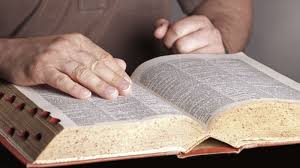 In fourth grade, for example, I asked my teacher the definition of a word. I had a good vocabulary and was a good reader, and she said to me “You’re smart enough to figure it out from context.”
I liked my teacher very much and she was telling me I was smart, which I thought was pretty cool, so from then on, I thought that the exact definitions of words were unimportant, the context was what mattered. And as a result of that conversation, I refused to open a dictionary—only stupid people had to use a dictionary because they weren’t “smart enough to figure it out from context.”
In high school, however, I began to feel less smart. I took Latin and crashed into incomprehensible grammar. I took geometry and had a hard time. I thought perhaps my teacher was wrong, I wasn’t that smart after all, I had run into difficult subjects and my grades dropped.
My fourth-grade teacher’s “truth” that I was smart enough to figure it out from context, no longer worked for me. I still thought that smart people could figure out things from context, I just wasn’t that smart, she had overestimated my abilities. Bummer.
At age 30, after I struggled through university for four years and became a teacher myself, I found Scientology and took a class on how to study. The first datum I read in the study materials was obviously wrong. “The only reason a person gives up a study or becomes confused or unable to learn,” it said, “is because he or she has gone past a word that was not understood.” I told the instructor that idea was just flat wrong, it was context that mattered, not words.
He did not say I was wrong, he just said I should try it out, see if it worked, see if it was true for me. I bought a dictionary, carried it home in a brown paper bag so people couldn’t tell I was a stupid guy, and got out my old geometry textbook. I don’t know why I saved it, maybe it was a war souvenir, sort of like a World War II veteran carrying some shrapnel in his leg. On the cover in big letters, it said “GEOMETRY II.” So I opened my new dictionary and looked up “Geometry.”
“Geometry,” my dictionary said, “is a branch of mathematics that deals with the measurement, properties, and relationships of points, lines, angles, surfaces and solids.” Since there was no one else around, I looked up “mathematics” as well. And something started to click. Mathematics was “The science of numbers and their operations,” the dictionary said. So numbers were quantities, and operations were what you did with them. Quantities and actions–pretty simple! I felt a little smarter, somehow. So back to geometry. Geometry has lines and angles and so on, OK, and there are rules to figure out how much space there is in a triangle for example. But why would anybody want to know that?
Geometry, according to my dictionary, comes from the words geo which means Earth, and metry which means measure. Turns out the river Nile used to flood every year, and that washed out property markers, so the Egyptians had to figure out how to mark off property lines after the yearly floods, so neighbors wouldn’t get mad and run over each other with chariots or something. So they “measured the Earth” to do that. And they also used geometry to build the pyramids.
Well, how about that! I got all enthusiastic about geometry and looked up other words like hypotenuse and right angle. And I felt a lot smarter! I still love my fourth-grade teacher, but I won’t use her idea of context anymore.
When I went back to my Scientology class on how to study I had to hide my enthusiasm from the instructor, because I didn’t want to admit that I had been wrong all these years. But I told him in a kind of bored way that yes, it did seem to help, and I would look up words when I studied.
So that’s an example of “What is true for you is what you have observed yourself.” And if you ask a Scientologist what he or she believes, you are likely to get a list of principles on which that person has absolute certainty because they tried them out and they worked for them. Scientology is an applied religious philosophy, which means it is meant to be used in the everyday world to solve problems, build better relationships and improve conditions. Nobody tells you what you must believe in Scientology, and if something does not seem true for you, you are free to say “that’s not true for me.”
Does God exist? Is global warming a threat? Do vaccines cause autism? Scientologists come from every part of the political, religious and social spectrum and there is no orthodoxy of belief, except a shared certainty, from personal observation, that Scientology principles when applied, work predictably and help to improve individuals, families, groups and mankind. And if you have heard otherwise, check it out for yourself. Look up Scientology.org, Scientology.tv, buy a Dianetics book or walk into one of the 11,000 Scientology churches, missions and groups around the world. Look for yourself and see what’s true for you.
Previous Post

January 3, 2019
Inspirational Story
Next Post
August 1, 2019 The Scientology “Mystery” Solved
Browse Our Archives
Select a Category anti-Scientology hate Church of Scientology Citizens Commission on Human Rights Community activities conflict Coronavirus critics David Miscavige Dianetics Discrimination Documentary Showcase Drug Prevention fake news families Florida Foundation for a Drug-Free World Freewinds religious retreat holidays Hollywood Village homeschooling kids during the coronavirus lockdown How I Became a Scientologist human rights I Am a Scientologist Ideal Scientology Organizations Interfaith L. Ron Hubbard media Meet a Scientologist Neighborhood Cleanups Psychiatry Religion Religious Freedom Religious Studies Scientologist Scientologists Scientology Scientology Beliefs Scientology cathedral Scientology celebration Scientology Humanitarian Campaigns Scientology Media Productions Scientology Mission Scientology Network Scientology Parent Scientology TV Scientology Volunteer Ministers STAND Stay Well The Way to Happiness tolerance Truth About Scientology Uncategorized Voices for Humanity What is Scientology? What Scientology is all a out Youth for Human Rights
Select a Month March 2025 October 2024 July 2024 May 2024 April 2024 February 2024 January 2024 December 2023 September 2023 April 2023 March 2023 February 2023 January 2023 December 2022 November 2022 September 2022 August 2022 July 2022 June 2022 May 2022 April 2022 March 2022 February 2022 November 2021 September 2021 August 2021 June 2021 May 2021 April 2021 March 2021 December 2020 November 2020 October 2020 August 2020 June 2020 May 2020 April 2020 March 2020 February 2020 January 2020 December 2019 November 2019 October 2019 September 2019 August 2019 July 2019 January 2019 November 2018 October 2018 September 2018 August 2018 July 2018 June 2018 May 2018 April 2018 March 2018 February 2018 January 2018 December 2017 November 2017 October 2017 August 2017 July 2017 June 2017 May 2017 April 2017 March 2017 January 2017 December 2016 November 2016 October 2016 February 2016 April 2015 March 2015 February 2015 October 2014 August 2014 July 2014 June 2014 May 2014 April 2014 December 2013 August 2013 December 2012 October 2012 September 2012 August 2012 July 2012 June 2012 May 2012 April 2012 March 2012 February 2012 January 2012 December 2011 November 2011 October 2011 September 2011 August 2011 July 2011 June 2011 May 2011
TAKE THE
Religious Wisdom Quiz
Blessed is the one who perseveres under trial because, having stood the test, that person will receive the ____ of life that the Lord has promised to those who love him.
Select your answer to see how you score.
Crown Gift Blessing Reward
Related posts from Scientology Beliefs

Five Things You May Not Know About David Miscavige

Why Am I Still Involved in Scientology?

What Do New Year's Resolutions Mean to Scientologists?

What Do Scientologists Believe?
TRENDING AT PATHEOS Nonreligious

International Women’s Day Marathon Is a Global Celebration
Scientology Network is featuring extraordinary women from across the globe on an...

Five Things You May Not Know About David Miscavige
Thousands of Scientologists are alive today who personally met, interacted and worked...
view all Nonreligious blogs
Ad-Free & Subscriber Log-In Subscription Support
- About Us
- 2026 Calendar
- Videos
- Podcasts
- Library of World Religions
- Faith In Media Tracker
- Advertise With Us
- Write for Us
- Privacy Policy
- Terms of Service
- Do Not Sell My Data
- Contact Us
- Radiant Digital
- Manage Newsletter Subscriptions
- Unsubscribe From Notifications
- Sitemap
Copyright 2008-2026, Patheos. All rights reserved.
Subscription Support Ad-Free & Subscriber Log-In
Follow Patheos