
BuddhistCatholicContemplativeEvangelicalGeneral ChristianHinduJewishLatter-day SaintMuslimNew VisionsProgressive Christian
Beliefs
- Buddhist
- Catholic
- Contemplative
- Evangelical
- General Christian
- Hindu
- Jewish
- Latter-day Saint
- More Voices
- Muslim
- New Visions
- Pagan
- Progressive Christian
Topics
- Religion News
- Food and Religion
- Sports and Religion
- Religious Art
- Religious Music and Entertainment
- Religious Events
- History and Religion
- Style and Religion
- Politics and Religion
- Women in Religion
- Recreation Outdoors and Religion
- Business Finance and Religion
- Careers Workplace and Religion
- Education and Religion
- Family Parenting and Religion
- Health Fitness and Religion
- Home and Religion
- Relationships and Religion
- Technology and Religion
- Travel and Religion
Columnists
- Buddhist Columnists
- Business Finance and Religion Columnists
- Careers Workplace and Religion Columnists
- Catholic Columnists
- Contemplative Columnists
- Education and Religion Columnists
- Evangelists Columnists
- Family Parenting and Religion Columnists
- General Christian Columnists
- Health Fitness and Religion Columnists
- Hindu Columnists
- History and Religion Columnists
- Home and Religion Columnists
- Jewish Columnists
- More Voices Columnists
- Latter Day Columnists
- Muslim Columnists
- New Visions Columnists
- Nonreligious Columnists
- Pagan Columnists
- Politics and Religion Columnists
- Progressive Columnists
- Recreation Outdoors and Religion Columnists
- Relationships and Religion Columnists
- Religion News Columnists
- Religious Art Columnists
- Religious Events Columnists
- Religious Music and Entertainment Columnists
- Sports and Religion Columnists
- Style and Religion Columnists
- Technology and Religion Columnists
- Travel and Religion Columnists
- Women in Religion Columnists
Resource Library
- 2026 Calendar
- Library of World Religions
- The 100 Most Holy Places on Earth
- Patheos Answers
- Podcasts
- Videos
- Faith Leaders Database
- Anglican Episcopalian
- Bahai
- Baptist
- Buddhism
- Christianity
- Confucianism
- Eastern Orthodoxy
- Hinduism
- Holiness and Pentecostal
- ISKCON
- Islam
- Judaism
- Lutheran
- Methodist
- The Church of Jesus Christ of Latter-day Saints
- New Age
- Paganism
- Presbytarian and Reformed
- Protestantism
- Religion Behind the Scenes
- Roman Catholic
- Scientology
- Shia Islam
- Sikhism
- Sufism
- Sunni Islam
- Taoism
- Zen
- See all religions
Research Tools
 Ad-Free & Subscriber Log-In Subscription Support
Ad-Free & Subscriber Log-In Subscription Support
Follow Patheos 

- Trending:
- Forgiveness
- |
- Marriage
- |
- Consciousness
- |
- Death Penalty
- |
- Election
- |
- Halloween

- Home
- Nonreligious
- On the Single Source of Conflict
On the Single Source of Conflict
Last updated on: January 4, 2018 at 1:48 pm by ScientologyBeliefs
On the Single Source of Conflict 2018-01-04T13:48:26-08:00 ScientologyBeliefs
Patheos Explore the world's faith through different perspectives on religion and spirituality! Patheos has the views of the prevalent religions and spiritualities of the world.
Scientologist Wayne Hanson writes about conflict and the discovery by Scientology Founder L. Ron Hubbard that there is a single source of conflicts and a simple way to resolve them*. Published courtesy of STAND: Scientologists Taking Action Against Discrimination.*
Who doesn’t love a good fight? I still remember junior-high cries of “Fight! Fight!” as kids rushed to circle two combatants. But while conflict rivets attention, finding the cause of the conflict is much more useful than watching it.
What if there was a common source of all conflict? Seems pretty impossible doesn’t it? After all, fights start because of bullying, name-calling, threats, accusations, jealousy, and hundreds of real or imagined slights or offenses. How could there be a single cause?
soldiers by Getmilitaryphotos/Shutterstock
Well, try this on for size, it’s called the Third Party Law, and it was discovered by L. Ron Hubbard. It says: “While it is commonly believed to take two to make a fight, a third party must exist and must develop it for actual conflict to occur.”
Here’s an example. Mother and father have a boy, age 10. They accept an eight-year-old foster child, a girl. The boy is resentful of having to share his parents with this “outsider,” so he tells the girl that his parents don’t like her, that the only reason she’s there is because they get money for keeping her. He then tells his mother that the girl doesn’t like her new family, she liked it better at an earlier foster family and wants to go back there. The girl feels unwanted, the mother—who has tried to make the girl feel welcome—feels hurt, and the friendliness that previously existed evaporates. Arguments ensue. Other disputes and upsets are added to the conflict until the girl is sent elsewhere. The upsets seem to be between two parties—the mother and the girl. However, the boy (the third party), unseen and unsuspected, actually caused the conflict.
The first impulse is to look at the issues involved—the sense of alienation on the part of the girl, the mother’s hurt feelings and the things said while angry or challenged, the issue of money, the history of the girl, the mother’s motivation for accepting a foster child, and so on. But that will not resolve the conflict, for the resolution in this case hinges not on “issues” but on a person. To find the source of the conflict one must look for the person who created and developed it in the first place.
To identify the third party, one asks the mother and the girl questions such as: “In this family, have you been told you were in trouble? Have you been told someone was bad? Have you been told someone was doing wrong? Have you been told a group was bad?” For each question, one finds out what was said and who said it. One then writes down the answers from both parties, compares the answers and the person who appears most often in the answers is the third party.
When the culprit is located and exposed, the conflict disappears as if by magic.
Recently, Lady Gaga said something quite interesting that relates to the subject of conflict. Hate is “an invisible snake,” she said, “that while it’s planning to make its attack, it is thinking to itself ‘I am going to divide my enemy into smaller, less strong groups. And then I’m going to make them hate each other, so that it’s easier to take them down.’” She is right about the outcome, but “hate” is a generality. If one accepts the Third Party Law, it is not the elusive force of “hate,” but rather third parties—individuals and groups covertly bent on harm—that spark the flames of conflict, and make them grow.
Today, religious conflicts rage in many areas of the world. Muslims and Buddhists in conflict in Myanmar, with half a million Rohingya Muslims seeking asylum in Bangladesh, the continuing Israeli-Palestinian conflict, even conflict between two main branches of Islam—the Shia and the Sunni—which sparked the Syrian civil war.
Ironically, Jews, Christians and Muslims share many things. Most importantly, they worship the same God—the God of Adam, Abraham and Moses—and they see man as essentially spiritual.
So can this “dividing of an enemy into smaller less-strong groups that hate each other,” as Lady Gaga says, be at the heart of many racial, political, social and economic conflicts and can those be resolved using the Third Party Law? If so, who are the third parties that create and perpetuate those conflicts?
Media news outlets know “conflict” attracts readers and viewers—just as a schoolyard fight attracts students. So media will often slant their coverage to increase the perception of conflict.
When artist Frederic Remington went to Cuba to cover a revolution in 1895, he cabled back to his office that there was no war and he should return home. His boss, New York Journal Publisher William Randolph Hearst—who had been pushing for the United States to enter the conflict and was spreading anti-Spanish propaganda to inflame the public—cabled back: “You furnish the pictures, I’ll furnish the war.”
Then the U.S. Battleship Maine mysteriously blew up in Havana Harbor—the cause was never discovered—but Americans, spurred on by Hearst and other journalists, were itching for a fight. So on April 25, 1898, the Spanish-American War began with the battle cry “Remember the Maine.” It sold lots of newspapers.
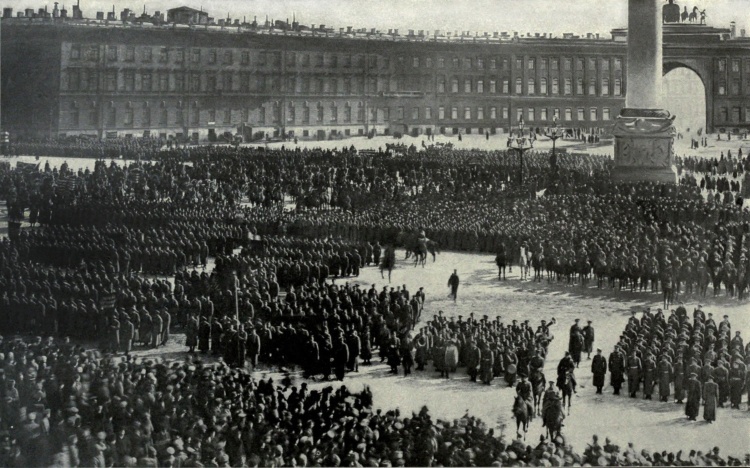
Russian Revolution by Everett Historical/ Shutterstock
Even the Russian Revolution had a third party: Germany. German officials sent Russian revolutionary Vladimir Lenin in a sealed railroad train (since Germany and Russia were at war and this would avoid having to declare who or what was on the train) into Russia. Germany wanted Russia in revolt and weak so Russia would stop fighting and pull out of World War I. It worked. The Czar was overthrown by Lenin’s forces and Lenin withdrew from the war.
So if everything from schoolyard fistfights to outright wars can be explained by the Third Party Law, wouldn’t it be worthwhile to make it known and use it to resolve conflicts?
The Korean conflict has continued for nearly 70 years. Who is the third party that keeps creating it?
The United States invaded Afghanistan in 2001 and it continues today, 16 years later. Who is the third party?
Democrats and Republicans have been polarized with little or no cooperation across the aisle. Who benefits from that?
Bombings, mass shootings, chaos. Who benefits from a nation divided, suspicious and at war with itself?
I have a modest proposal. Let’s send journalists into conflicts armed with knowledge of the Third Party Law. Instead of reporting on the suffering, death, wasted efforts, hostile communications, and “the futility of it all,” their job is to sit with the combatants and ask the following questions: “Have you been told you were in trouble? Have you been told someone was bad? Have you been told someone was doing wrong? Have you been told a group was bad?” Ask what was said, who said it, and write down the answers, then do the same with the other side of the conflict.
The reporters then take the results to their editors who tally the results, spot the third party—or send the reporters back in to get more information—and then edit and publish the results.
Democrats, Republicans and Independents would once again invite one another over for dinner, get together for golf and send holiday cards. They would cooperate or not based on the issues, and not on some hidden animosity fueled by a third party bent on creating rage and hostility. They might even laugh at the same jokes.
Instead of being, in some cases, the third party or exacerbating conflict, journalists would spread oil upon troubled waters and everyone would clamor to buy information as to who was behind the latest conflict. Marriages in trouble would suddenly respond to counseling once their third parties were spotted. Families could assemble for Thanksgiving without heated arguments beyond the usual joking as to which is the best team, Oregon or Oregon State and the Astros or the Dodgers.
Reality shows could also dig into conflicts, expose the third party in front of a live studio audience and see legal, marital and economic disputes unravel.
Minus third-party meddling, international conflicts between religions, countries, philosophies and economic systems could be debated on the actual issues and progress made.
Throughout the world, old conflicts and rivalries would fall, the third parties scorned by all, and conflict would become unfashionable. And finally, after many, many decades, Cold War nuclear-tipped missiles could finally go to sleep.
Previous Post

January 4, 2018
On Raising a Son and Being a Scientology Dad
Next Post
January 9, 2018 The Truth About Scientology—and the Lies
Browse Our Archives
Select a Category anti-Scientology hate Church of Scientology Citizens Commission on Human Rights Community activities conflict Coronavirus critics David Miscavige Dianetics Discrimination Documentary Showcase Drug Prevention fake news families Florida Foundation for a Drug-Free World Freewinds religious retreat holidays Hollywood Village homeschooling kids during the coronavirus lockdown How I Became a Scientologist human rights I Am a Scientologist Ideal Scientology Organizations Interfaith L. Ron Hubbard media Meet a Scientologist Neighborhood Cleanups Psychiatry Religion Religious Freedom Religious Studies Scientologist Scientologists Scientology Scientology Beliefs Scientology cathedral Scientology celebration Scientology Humanitarian Campaigns Scientology Media Productions Scientology Mission Scientology Network Scientology Parent Scientology TV Scientology Volunteer Ministers STAND Stay Well The Way to Happiness tolerance Truth About Scientology Uncategorized Voices for Humanity What is Scientology? What Scientology is all a out Youth for Human Rights
Select a Month March 2025 October 2024 July 2024 May 2024 April 2024 February 2024 January 2024 December 2023 September 2023 April 2023 March 2023 February 2023 January 2023 December 2022 November 2022 September 2022 August 2022 July 2022 June 2022 May 2022 April 2022 March 2022 February 2022 November 2021 September 2021 August 2021 June 2021 May 2021 April 2021 March 2021 December 2020 November 2020 October 2020 August 2020 June 2020 May 2020 April 2020 March 2020 February 2020 January 2020 December 2019 November 2019 October 2019 September 2019 August 2019 July 2019 January 2019 November 2018 October 2018 September 2018 August 2018 July 2018 June 2018 May 2018 April 2018 March 2018 February 2018 January 2018 December 2017 November 2017 October 2017 August 2017 July 2017 June 2017 May 2017 April 2017 March 2017 January 2017 December 2016 November 2016 October 2016 February 2016 April 2015 March 2015 February 2015 October 2014 August 2014 July 2014 June 2014 May 2014 April 2014 December 2013 August 2013 December 2012 October 2012 September 2012 August 2012 July 2012 June 2012 May 2012 April 2012 March 2012 February 2012 January 2012 December 2011 November 2011 October 2011 September 2011 August 2011 July 2011 June 2011 May 2011
TAKE THE
Religious Wisdom Quiz
What did the Israelites grumble about after crossing the Red Sea?
Select your answer to see how you score.
Boredom Wild animals Lack of water Too much sun
Related posts from Scientology Beliefs


A Jewish Scientologist Speaks Out About the Erosion...

The Type That Rages Against Scientology

Scientology Church Presents Religious Freedom Awards Promoting Tolerance...
TRENDING AT PATHEOS Nonreligious

International Women’s Day Marathon Is a Global Celebration
Scientology Network is featuring extraordinary women from across the globe on an...

Five Things You May Not Know About David Miscavige
Thousands of Scientologists are alive today who personally met, interacted and worked...
view all Nonreligious blogs
Ad-Free & Subscriber Log-In Subscription Support
- About Us
- 2026 Calendar
- Videos
- Podcasts
- Library of World Religions
- Faith In Media Tracker
- Advertise With Us
- Write for Us
- Privacy Policy
- Terms of Service
- Do Not Sell My Data
- Contact Us
- Radiant Digital
- Manage Newsletter Subscriptions
- Unsubscribe From Notifications
- Sitemap
Copyright 2008-2026, Patheos. All rights reserved.
Subscription Support Ad-Free & Subscriber Log-In
Follow Patheos