
BuddhistCatholicContemplativeEvangelicalGeneral ChristianHinduJewishLatter-day SaintMuslimNew VisionsProgressive Christian
Beliefs
- Buddhist
- Catholic
- Contemplative
- Evangelical
- General Christian
- Hindu
- Jewish
- Latter-day Saint
- More Voices
- Muslim
- New Visions
- Pagan
- Progressive Christian
Topics
- Religion News
- Food and Religion
- Sports and Religion
- Religious Art
- Religious Music and Entertainment
- Religious Events
- History and Religion
- Style and Religion
- Politics and Religion
- Women in Religion
- Recreation Outdoors and Religion
- Business Finance and Religion
- Careers Workplace and Religion
- Education and Religion
- Family Parenting and Religion
- Health Fitness and Religion
- Home and Religion
- Relationships and Religion
- Technology and Religion
- Travel and Religion
Columnists
- Buddhist Columnists
- Business Finance and Religion Columnists
- Careers Workplace and Religion Columnists
- Catholic Columnists
- Contemplative Columnists
- Education and Religion Columnists
- Evangelists Columnists
- Family Parenting and Religion Columnists
- General Christian Columnists
- Health Fitness and Religion Columnists
- Hindu Columnists
- History and Religion Columnists
- Home and Religion Columnists
- Jewish Columnists
- More Voices Columnists
- Latter Day Columnists
- Muslim Columnists
- New Visions Columnists
- Nonreligious Columnists
- Pagan Columnists
- Politics and Religion Columnists
- Progressive Columnists
- Recreation Outdoors and Religion Columnists
- Relationships and Religion Columnists
- Religion News Columnists
- Religious Art Columnists
- Religious Events Columnists
- Religious Music and Entertainment Columnists
- Sports and Religion Columnists
- Style and Religion Columnists
- Technology and Religion Columnists
- Travel and Religion Columnists
- Women in Religion Columnists
Resource Library
- 2026 Calendar
- Library of World Religions
- The 100 Most Holy Places on Earth
- Patheos Answers
- Podcasts
- Videos
- Faith Leaders Database
- Anglican Episcopalian
- Bahai
- Baptist
- Buddhism
- Christianity
- Confucianism
- Eastern Orthodoxy
- Hinduism
- Holiness and Pentecostal
- ISKCON
- Islam
- Judaism
- Lutheran
- Methodist
- The Church of Jesus Christ of Latter-day Saints
- New Age
- Paganism
- Presbytarian and Reformed
- Protestantism
- Religion Behind the Scenes
- Roman Catholic
- Scientology
- Shia Islam
- Sikhism
- Sufism
- Sunni Islam
- Taoism
- Zen
- See all religions
Research Tools
 Ad-Free & Subscriber Log-In Subscription Support
Follow Patheos 

- Trending:
- Advent
- |
- Forgiveness
- |
- Thanksgiving
- |
- Election
- |
- Seasonal Holidays
- |
- Marriage

- Home
- Nonreligious
- Alhambra Cinema in Jaffa reopens as Scientology center
Alhambra Cinema in Jaffa reopens as Scientology center
Last updated on: October 24, 2017 at 5:13 am by scientologyb
Alhambra Cinema in Jaffa reopens as Scientology center 2017-10-24T05:13:49-07:00 scientologyb
Patheos Explore the world's faith through different perspectives on religion and spirituality! Patheos has the views of the prevalent religions and spiritualities of the world.
Jaffa landmark undergoes thorough renovation, joining a fleet of some 9,000 Scientology centers around the world.
By Keshet Rosenblum | Aug.30, 2012 | 5:28 AM

The Jaffa neighbors of the legendary Alhambra Cinema rubbed their eyes in amazement last week at the sight of the gleaming white building in the heart of the sooty boulevard. The elegant theater, decorated with flags and blue ribbons, has now been opened to the general public after two years of renovation. In honor of the opening a crowd of about 2,000 Scientologists from 27 countries, including government officials and religious leaders, gathered there. At nightfall the name “Alhambra” was illuminated once again in the skies of the port city.
The building’s origins as a movie theater were much happier. Designed in 1937 by Lebanese architect Elias Al-Mor, the Alhambra immediately became very popular, like the other movie theaters built on Jerusalem Boulevard – the Nabil, Apollo and Rashid. The Alhambra was a meeting place for the masses who filled its 1,100 seats and celebrated the technological progress represented by the art of cinema in those years. The building’s art deco style, with its abstract geometrical lines, represented elegance and modernity in its time and separated the theater from the neighboring residential buildings with their commercial facades.
But from now on, the Alhambra Cinema will be called the Ideal Center of Scientology for the Middle East.
Hadar Burstein, president of the center, says that with the opening of the new building, the neighbors’ reactions have been warm and positive.
She believes that the building, in spite of the luxury, will not deter the general public, but just the opposite.
“The place is open to the public and everyone enters it – young people and older people who remember the building when it was still used as a cinema and afterwards as a theater. They tell us how they used to polish their shoes at the entrance and they remember the red chairs. It’s very moving for all of us,” says Burstein. “Slowly but surely they’ll feel that it has become their home, and that’s what I would want it to become.”
Since last Tuesday the place has joined a fleet of some 9,000 Scientology centers around the world. The largest of them are called “Ideal Organizations” and include centers in Johannesburg, Berlin, Washington and Moscow. The center in Los Angeles is called a “Community Center,” in St. Paul, Minnesota it looks like any church, and in New York like another branch of Barnes and Noble.
Burstein explains that Scientologists tend not to put up new buildings, but to blend into the existing environment. “Usually it’s just much easier. When the people arrive here and get an explanation about Scientology, they are also exposed to a broader system of connections. We searched for a long time, and here it looks as though everything worked out, the place, the surroundings, the people. It looks perfect to us,” said Burstein.
As a main branch in the Middle East, the center is meant to serve the members of the organization in the region. Entry is free of charge. Anyone who enters the gates of the Scientology Center is treated as a welcome guest. An energetic gatekeeper operates the automatic doors from her seat and a polite young man in a starched shirt approaches quickly, offering help in getting oriented. All you have to do is leave your full name “to maintain order,” explains the young man pleasantly, and to fill out a short introduction form.
To the right of the gatekeeper is a row of seats attached to individual computer stands. Everything is spanking clean. The city outside is burning hot, the marble inside is cool; wouldn’t you stay?
An office for the late founder
The building renovated by the Scientologists with a lot of time and effort and a great deal of money, is breathtakingly beautiful. For years it was impossible to imagine that such a creation was hiding behind the cheap building additions and the filth that adhered to the structure. In 2008 the purchase was completed after difficult negotiations with its collection of various owners – a bank, a pharmacy chain and two independent theaters. The new buyers found an asset in bad shape, full of changes made by all its previous tenants in the 75 years of its existence.
The rehabilitation, preservation and renovation project was given to architect Eyal Ziv, who worked with interior designer Yair Matalon and the American firm Gertner. Working in the area is nothing new for Ziv: From his office next to the Jaffa flea market he designed the train station complex in Manshiya, and also worked with the municipality and Tourism Ministry in the rehabilitation project of the Clock Square.
When asked how an architect approaches such a complex project, Ziv replies: “The initial needs included documentation and historical research, which was done by the architect Ilan Keidar. That was done to discover the [building’s] past and to understand its various components. Our objective was accurate preservation, as close to the original as possible.”
Interior designer Matalon says he found a building in a “very neglected” condition. “It was inhabited by hundreds of pigeons and other creatures, and the place was dusty, filthy and half ruined. We started to clean, we removed trash, and slowly but surely we discovered the space and the original elements that could be preserved.”
The meticulous preservation work included a hunt for pieces of the past – lintels, window panes, ceilings and coverings. Also, up-to-date measurements were taken and compared with old plans to decide what belonged to the original construction and which were later additions. But the architects agree that the main challenge was to adapt the old building to its new use: Changing a 1930s movie theater to meet the needs of a Scientology Center. These needs included a long and inflexible list of defined spaces, including classrooms, lecture halls, a convention hall and dozens of offices. All these were supposed to fit into 5,500 square meters. A series of surgical actions was required to install the air condition and pipes so the original structure would not be harmed. “We didn’t want to emphasize beams and trenches as can be seen in contemporary buildings, because we wanted nothing to stand out or to cloud the legacy of the site,” says Matalon.
Ziv and Matalon say they overcame all the many obstacles thanks to the Scientology Association, which they say was a considerate, tolerant and generous client. Ziv says that even though municipal records show that additional floors can be added to the Alhambra, the Scientologists decided not to make it taller but to leave it in its original condition to preserve its historical values. The client even agreed to reconstruct the Alhambra’s old sign – the letters on the sides of the building’s turret.
The elderly Alhambra proved highly adaptable to the needs of the Scientologists. The unique window bars, originally from wood, were artistically molded with iron based on vestiges found at the site. These were integrated as a central element that adorns the building, and appears once again in the center’s publications. Next to them appears the official symbol of the organization, two interlocking triangles with the letter S woven in.
The most impressive space in the new center is the auditorium, which is located in the old theater. This is an oval room on the third floor, close to the original ceiling. While the old movie theater reached a height of 15 meters and the audience sat on the ground floor, in the present hall there is no need for such a high ceiling, which made it possible to allocate additional area to the lower floors. A delicate mosaic was included at the entrance and art deco metalwork adorns its walls, alongside proverbs and adages. The original red chairs and covers, which were an allusion to the Spanish palace after which the theater is named (Alhambra is Arabic for “red fortress” ), have been replaced by shades of blue and turquoise that are identified with Scientology.
Deceased leader’s office
Opposite the entrance to the hall is a cafeteria, and inside the rounded corner at the side is an office that was built for the founder of the organization, L. Ron Hubbard. The office is a room built uniformly in all the “Ideal Centers” in the world, so that Hubbard, who died in 1986, has an office waiting in every port.
In the lobby, a lot of space is devoted to a display of the various activities of Scientology, with a large book store next to it.
For the Scientologists, the opening of the center is an important and happy occasion. Burstein says the opening event, with the participation of representatives from all over the world, is the fulfillment of a dream. “While other organizations fail to [unite] and operate energetically to fulfill a common vision,” she says, “the Scientologists are definitely continuing to work until they create an influence on their surroundings. There is still a lot of work to do in the Middle East, and we are waiting to see what will happen on the ground.”
The Alhambra Cinema saw its share of tribulations from the time it was opened in the 1930s by the Cinema Palestine movie theater company. With the British Mandate in force, the boulevard was named after King George V. It was built in 1915 by Hassan Bek, military governor of Jaffa, after the construction of Rothschild Boulevard in Ahuzat Bayit, which became Tel Aviv. The residents of Jaffa used to stroll along the boulevard, a focus of the city’s cultural life with theaters, cinemas and cafes, as well as governmental and religious buildings. Alhambra became a cultural center that attracted the greats of Arab music, including Farid al-Atrash and Umm Kulthum.
Over the years the splendor of the cinema dimmed, and with the establishment of the State of Israel and the imposition of a military administration in Jaffa, it was transferred to Israeli hands, like many other local buildings. Israelis continued to operate it as a movie theater called Yafor. The cinema flourished until it was leased in 1963 to Giora Godik, who turned it into an independent theater. In order to adapt the cinema to its new use, renovations were made in the building, mainly by widening the stage area up to the back of the building on Hatekuma Street, by architects Andrei Leitersdorf and Ilya Balzitsman.
The glory of the theater disappeared entirely when it was designated to become a commercial center. In a major renovation designed by architect Gad Stern, the center space that had served as the theater auditorium was to be eliminated and divided into three commercial floors. But that design was not completed, either.
Until 2007 the magnificent entrance to the building served as a branch of Bank Discount facing the boulevard. The decorative ceiling of the main auditorium has overseen the ups and downs of the Alhambra, which has survived the vicissitudes of time.
Ideal Scientology Organization
Previous Post

August 29, 2012
Scientology Video: The Emotional Tone Scale
Next Post
September 3, 2012 Labor Day: Acknowledging the Contribution of Workers
Browse Our Archives
Select a Category anti-Scientology hate Church of Scientology Citizens Commission on Human Rights Community activities conflict Coronavirus critics David Miscavige Dianetics Discrimination Documentary Showcase Drug Prevention fake news families Florida Foundation for a Drug-Free World Freewinds religious retreat holidays Hollywood Village homeschooling kids during the coronavirus lockdown How I Became a Scientologist human rights I Am a Scientologist Ideal Scientology Organizations Interfaith L. Ron Hubbard media Meet a Scientologist Neighborhood Cleanups Psychiatry Religion Religious Freedom Religious Studies Scientologist Scientologists Scientology Scientology Beliefs Scientology cathedral Scientology celebration Scientology Humanitarian Campaigns Scientology Media Productions Scientology Mission Scientology Network Scientology Parent Scientology TV Scientology Volunteer Ministers STAND Stay Well The Way to Happiness tolerance Truth About Scientology Uncategorized Voices for Humanity What is Scientology? What Scientology is all a out Youth for Human Rights
Select a Month March 2025 October 2024 July 2024 May 2024 April 2024 February 2024 January 2024 December 2023 September 2023 April 2023 March 2023 February 2023 January 2023 December 2022 November 2022 September 2022 August 2022 July 2022 June 2022 May 2022 April 2022 March 2022 February 2022 November 2021 September 2021 August 2021 June 2021 May 2021 April 2021 March 2021 December 2020 November 2020 October 2020 August 2020 June 2020 May 2020 April 2020 March 2020 February 2020 January 2020 December 2019 November 2019 October 2019 September 2019 August 2019 July 2019 January 2019 November 2018 October 2018 September 2018 August 2018 July 2018 June 2018 May 2018 April 2018 March 2018 February 2018 January 2018 December 2017 November 2017 October 2017 August 2017 July 2017 June 2017 May 2017 April 2017 March 2017 January 2017 December 2016 November 2016 October 2016 February 2016 April 2015 March 2015 February 2015 October 2014 August 2014 July 2014 June 2014 May 2014 April 2014 December 2013 August 2013 December 2012 October 2012 September 2012 August 2012 July 2012 June 2012 May 2012 April 2012 March 2012 February 2012 January 2012 December 2011 November 2011 October 2011 September 2011 August 2011 July 2011 June 2011 May 2011
TAKE THE
Religious Wisdom Quiz
What does "Jubilee" mean?
Select your answer to see how you score.
Blessed year Ram's horn Offering Restoration
Related posts from Scientology Beliefs
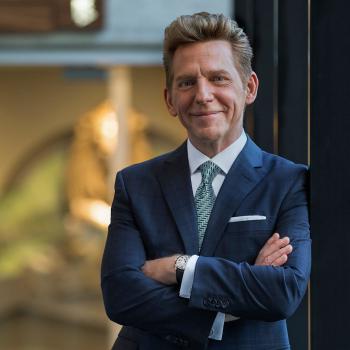
Five Things You May Not Know About David Miscavige

The Self-Evident Truth of Scientology

The Scientology “Mystery” Solved

TRENDING AT PATHEOS Nonreligious

International Women’s Day Marathon Is a Global Celebration
Scientology Network is featuring extraordinary women from across the globe on an...
Five Things You May Not Know About David Miscavige
Thousands of Scientologists are alive today who personally met, interacted and worked...
view all Nonreligious blogs
Ad-Free & Subscriber Log-In Subscription Support
- About Us
- 2026 Calendar
- Videos
- Podcasts
- Library of World Religions
- Faith In Media Tracker
- Advertise With Us
- Write for Us
- Privacy Policy
- Terms of Service
- Do Not Sell My Data
- Contact Us
- Radiant Digital
- Manage Newsletter Subscriptions
- Unsubscribe From Notifications
- Sitemap
Copyright 2008-2026, Patheos, part of the Radiant Digital network of media brands. All rights reserved.
Subscription Support Ad-Free & Subscriber Log-In
Follow Patheos