
BuddhistCatholicContemplativeEvangelicalGeneral ChristianHinduJewishLatter-day SaintMuslimNew VisionsProgressive Christian
Beliefs
- Buddhist
- Catholic
- Contemplative
- Evangelical
- General Christian
- Hindu
- Jewish
- Latter-day Saint
- More Voices
- Muslim
- New Visions
- Pagan
- Progressive Christian
Topics
- Religion News
- Food and Religion
- Sports and Religion
- Religious Art
- Religious Music and Entertainment
- Religious Events
- History and Religion
- Style and Religion
- Politics and Religion
- Women in Religion
- Recreation Outdoors and Religion
- Business Finance and Religion
- Careers Workplace and Religion
- Education and Religion
- Family Parenting and Religion
- Health Fitness and Religion
- Home and Religion
- Relationships and Religion
- Technology and Religion
- Travel and Religion
Columnists
- Buddhist Columnists
- Business Finance and Religion Columnists
- Careers Workplace and Religion Columnists
- Catholic Columnists
- Contemplative Columnists
- Education and Religion Columnists
- Evangelists Columnists
- Family Parenting and Religion Columnists
- General Christian Columnists
- Health Fitness and Religion Columnists
- Hindu Columnists
- History and Religion Columnists
- Home and Religion Columnists
- Jewish Columnists
- More Voices Columnists
- Latter Day Columnists
- Muslim Columnists
- New Visions Columnists
- Nonreligious Columnists
- Pagan Columnists
- Politics and Religion Columnists
- Progressive Columnists
- Recreation Outdoors and Religion Columnists
- Relationships and Religion Columnists
- Religion News Columnists
- Religious Art Columnists
- Religious Events Columnists
- Religious Music and Entertainment Columnists
- Sports and Religion Columnists
- Style and Religion Columnists
- Technology and Religion Columnists
- Travel and Religion Columnists
- Women in Religion Columnists
Resource Library
- 2026 Calendar
- Library of World Religions
- The 100 Most Holy Places on Earth
- Patheos Answers
- Podcasts
- Videos
- Faith Leaders Database
- Anglican Episcopalian
- Bahai
- Baptist
- Buddhism
- Christianity
- Confucianism
- Eastern Orthodoxy
- Hinduism
- Holiness and Pentecostal
- ISKCON
- Islam
- Judaism
- Lutheran
- Methodist
- The Church of Jesus Christ of Latter-day Saints
- New Age
- Paganism
- Presbytarian and Reformed
- Protestantism
- Religion Behind the Scenes
- Roman Catholic
- Scientology
- Shia Islam
- Sikhism
- Sufism
- Sunni Islam
- Taoism
- Zen
- See all religions
Research Tools
 Ad-Free & Subscriber Log-In Subscription Support
Ad-Free & Subscriber Log-In Subscription Support
Follow Patheos 

- Trending:
- Forgiveness
- |
- Marriage
- |
- Consciousness
- |
- Death Penalty
- |
- Election
- |
- Halloween

- Home
- Nonreligious
- Scales and Scientology
Scales and Scientology
Last updated on: October 24, 2017 at 5:17 am by jere
Scales and Scientology 2017-10-24T05:17:46-07:00 jere
Patheos Explore the world's faith through different perspectives on religion and spirituality! Patheos has the views of the prevalent religions and spiritualities of the world.
 The basic books of Scientology contain many scales that people can use.
Not the dreaded music scales that aspiring musicians have to practice, practice, practice, until they just come out of their fingers without thinking. Personally, I loathed practicing music scales as a child, when I did not understand the scales and did not want to practice them. I think the whole fascination of young boys with baseball and other sports, is simply a response to being made to sit and do something one truly despises, for hours on end. I know I would much rather have been out in center field, myself!
But the scales of Scientology are useful tools, worth studying, worth memorizing, and worth figuring out how to apply them to life.
The scales are called “gradient scales” because they mark the gradients (gradual amounts of more or less quantity) of some observable thing.
The first scale one usually learns in Scientology, and the most useful, is the Emotional Tone Scale. When I first started studying this scale, my understanding of human emotions was (an understatement) very confused. A better description might be that I viewed human emotions as a chaotic, dangerous mystery, something that could not be understood. Certainly nothing I had ever read in college textbooks on psychology shed any light on them.
Yes, I knew that some people were apathetic, and some people were sad, some were angry, some were bored, and some were cheerful. It’s never hard to think of examples of people that are pretty much manifesting one of those emotions most of the time.
My maternal grandfather was chronically angry. My mother was chronically sad. My older sister was, when young, bored most of the time. But when she hit puberty she became apathetic.
But I never considered that these emotions formed any kind of a *scale*.
And I always wondered what made people move from one emotion to another, or fail to do so when they ought to. If you give someone who is bored some really good news, it ought to make them happy, right? But it doesn’t always.
What L. Ron Hubbard L. Ron Hubbard, the founder of Scientology, did was to actually observe people moving through the whole gamut of human emotions, and see that it formed a pattern. He was the first person to actually make that careful observation, and write it down, so that others could understand it.
- The scale (which you can read for yourself at the link above) starts at the bottom, down near Death.
- Then it goes up slightly from there to Apathy. (To a person in apathy, it seems nothing can be done about anything. It’s all “too much”. They feel completely overwhelmed by the smallest things.)
- The next level up is Grief.
- From Grief the scale goes up to Fear.
- From Fear up to Anger.
- From Anger up to Antagonism.
- From Antagonism up to Boredom.
- From Boredom up to Conservatism.
- From Conservatism up to Cheerfulness.
- From Cheerfulness up to Enthusiasm.
There are many little steps between these bigger ones, such as “sympathy”, the tone that resides between grief and fear.
There’s a whole book about these various emotional tone levels, called book about the emotional tone scale Science of Survival that I highly recommend to anyone wishing to know more about what makes people tick, and how to *predict* what someone in a particular emotional tone level will say and do, whether they can be trusted with your car or your kids, whether they will be act responsibly or be a jerk.
After a study of the emotional tone scale, the subject of human emotions is not so mysterious any more. Anybody can understand it, and use it.
Scientologists USE the tone scale to figure out weighty issues like, “Should I take on this prospect as a client?” or “Should I hire this person?” or “Is this babysitter going to be okay to leave in charge of my kids?” or “Do I want a job working with that woman as boss?” or “Should I marry this person?” or even mundane things like “Is this actress going to be able to play this role in the school play?”
From studying the Emotional Tone Scale, and observing the people one comes into contact with, and figuring out which tone level they are at, and knowing what to expect from that tone level, one knows ahead of time the answers to such questions. One can predict how things will turn out in the hands of someone at a particular emotional tone level.
The emotional tone scale would be extremely useful to know, even if one just used it for the purpose of figuring out to whom you want to be connected in daily life.
But the really good news is, it’s not a static scale. It is very possible for someone to MOVE on this emotional tone scale. Among other factors, good news (“You got the promotion!”) will elevate one a bit on the scale. Bad news (“You’re being laid off!”) will push one down the scale. Severely bad news (“Your mother died, I’m leaving you and taking the kids and the dog with me!”) can really push one down, sometimes to a new chronic lower level.
As a young man, studying this emotional tone scale closely for the first time, I was appalled and embarrassed to spot my own chronic emotional tone level as being between fear and anger, at a little stepping-stone called “covert hostility”.
I was angry, for reasons that I did not then understand, and I was also at the same time too afraid of others to really express my anger, so it came out as sarcasm, ridicule, sniping comments, and cutting innuendo (very much like the anonymous comments you will find on so many blogs and Youtube videos these days). There was no filter between my thoughts and what came out of my mouth. The result was something of a mixture of fear and anger, and that was “covert hostility” in a nutshell. That was me then.
That level on the emotional tone scale was where I *lived*.
Nobody ever said to me, “Hey, you’re covertly hostile! Knock it off!” but I figured it out myself by observing what I was saying to others, and noticing the effects it had on them. Over the course of the next few months, as a direct result of doing some drills on a communication course, making a bunch of friends, and participating in some fun and interesting activities, I observed that my chronic emotional tone level had risen to Cheerfulness.
I can say with absolute confidence that cheerfulness is a much better place to live one’s life than covert hostility. And enthusiasm is an even better place to live.
All of Scientology is geared to helping people actually move up that scale and stay up at the top. And it is just one of the many scales we Scientologists study and try to apply in daily life.
So, from now on, whenever someone tells you to “cheer up!” – you know what they mean by “up!”
Next Post

June 20, 2011 Communication Relieves Stress in Dentistry
Browse Our Archives
Select a Category anti-Scientology hate Church of Scientology Citizens Commission on Human Rights Community activities conflict Coronavirus critics David Miscavige Dianetics Discrimination Documentary Showcase Drug Prevention fake news families Florida Foundation for a Drug-Free World Freewinds religious retreat holidays Hollywood Village homeschooling kids during the coronavirus lockdown How I Became a Scientologist human rights I Am a Scientologist Ideal Scientology Organizations Interfaith L. Ron Hubbard media Meet a Scientologist Neighborhood Cleanups Psychiatry Religion Religious Freedom Religious Studies Scientologist Scientologists Scientology Scientology Beliefs Scientology cathedral Scientology celebration Scientology Humanitarian Campaigns Scientology Media Productions Scientology Mission Scientology Network Scientology Parent Scientology TV Scientology Volunteer Ministers STAND Stay Well The Way to Happiness tolerance Truth About Scientology Uncategorized Voices for Humanity What is Scientology? What Scientology is all a out Youth for Human Rights
Select a Month March 2025 October 2024 July 2024 May 2024 April 2024 February 2024 January 2024 December 2023 September 2023 April 2023 March 2023 February 2023 January 2023 December 2022 November 2022 September 2022 August 2022 July 2022 June 2022 May 2022 April 2022 March 2022 February 2022 November 2021 September 2021 August 2021 June 2021 May 2021 April 2021 March 2021 December 2020 November 2020 October 2020 August 2020 June 2020 May 2020 April 2020 March 2020 February 2020 January 2020 December 2019 November 2019 October 2019 September 2019 August 2019 July 2019 January 2019 November 2018 October 2018 September 2018 August 2018 July 2018 June 2018 May 2018 April 2018 March 2018 February 2018 January 2018 December 2017 November 2017 October 2017 August 2017 July 2017 June 2017 May 2017 April 2017 March 2017 January 2017 December 2016 November 2016 October 2016 February 2016 April 2015 March 2015 February 2015 October 2014 August 2014 July 2014 June 2014 May 2014 April 2014 December 2013 August 2013 December 2012 October 2012 September 2012 August 2012 July 2012 June 2012 May 2012 April 2012 March 2012 February 2012 January 2012 December 2011 November 2011 October 2011 September 2011 August 2011 July 2011 June 2011 May 2011
TAKE THE
Religious Wisdom Quiz
Who said: "His divine power has given us everything we need for a godly life through our knowledge of him"?
Select your answer to see how you score.
Paul Peter James John
Related posts from Scientology Beliefs
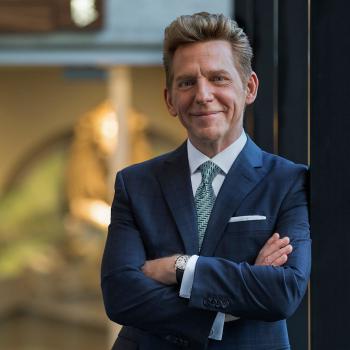
Five Things You May Not Know About David Miscavige

The Self-Evident Truth of Scientology

The Scientology “Mystery” Solved
TRENDING AT PATHEOS Nonreligious

International Women’s Day Marathon Is a Global Celebration
Scientology Network is featuring extraordinary women from across the globe on an...

Five Things You May Not Know About David Miscavige
Thousands of Scientologists are alive today who personally met, interacted and worked...
view all Nonreligious blogs
Ad-Free & Subscriber Log-In Subscription Support
- About Us
- 2026 Calendar
- Videos
- Podcasts
- Library of World Religions
- Faith In Media Tracker
- Advertise With Us
- Write for Us
- Privacy Policy
- Terms of Service
- Do Not Sell My Data
- Contact Us
- Radiant Digital
- Manage Newsletter Subscriptions
- Unsubscribe From Notifications
- Sitemap
Copyright 2008-2026, Patheos. All rights reserved.
Subscription Support Ad-Free & Subscriber Log-In
Follow Patheos