
BuddhistCatholicContemplativeEvangelicalGeneral ChristianHinduJewishLatter-day SaintMuslimNew VisionsProgressive Christian
Beliefs
- Buddhist
- Catholic
- Contemplative
- Evangelical
- General Christian
- Hindu
- Jewish
- Latter-day Saint
- More Voices
- Muslim
- New Visions
- Pagan
- Progressive Christian
Topics
- Religion News
- Food and Religion
- Sports and Religion
- Religious Art
- Religious Music and Entertainment
- Religious Events
- History and Religion
- Style and Religion
- Politics and Religion
- Women in Religion
- Recreation Outdoors and Religion
- Business Finance and Religion
- Careers Workplace and Religion
- Education and Religion
- Family Parenting and Religion
- Health Fitness and Religion
- Home and Religion
- Relationships and Religion
- Technology and Religion
- Travel and Religion
Columnists
- Buddhist Columnists
- Business Finance and Religion Columnists
- Careers Workplace and Religion Columnists
- Catholic Columnists
- Contemplative Columnists
- Education and Religion Columnists
- Evangelists Columnists
- Family Parenting and Religion Columnists
- General Christian Columnists
- Health Fitness and Religion Columnists
- Hindu Columnists
- History and Religion Columnists
- Home and Religion Columnists
- Jewish Columnists
- More Voices Columnists
- Latter Day Columnists
- Muslim Columnists
- New Visions Columnists
- Nonreligious Columnists
- Pagan Columnists
- Politics and Religion Columnists
- Progressive Columnists
- Recreation Outdoors and Religion Columnists
- Relationships and Religion Columnists
- Religion News Columnists
- Religious Art Columnists
- Religious Events Columnists
- Religious Music and Entertainment Columnists
- Sports and Religion Columnists
- Style and Religion Columnists
- Technology and Religion Columnists
- Travel and Religion Columnists
- Women in Religion Columnists
Resource Library
- 2026 Calendar
- Library of World Religions
- The 100 Most Holy Places on Earth
- Patheos Answers
- Podcasts
- Videos
- Faith Leaders Database
- Anglican Episcopalian
- Bahai
- Baptist
- Buddhism
- Christianity
- Confucianism
- Eastern Orthodoxy
- Hinduism
- Holiness and Pentecostal
- ISKCON
- Islam
- Judaism
- Lutheran
- Methodist
- The Church of Jesus Christ of Latter-day Saints
- New Age
- Paganism
- Presbytarian and Reformed
- Protestantism
- Religion Behind the Scenes
- Roman Catholic
- Scientology
- Shia Islam
- Sikhism
- Sufism
- Sunni Islam
- Taoism
- Zen
- See all religions
Research Tools
 Ad-Free & Subscriber Log-In Subscription Support
Ad-Free & Subscriber Log-In Subscription Support
Follow Patheos 

- Trending:
- Forgiveness
- |
- Marriage
- |
- Consciousness
- |
- Death Penalty
- |
- Election
- |
- Halloween
 Science On Religion
- Home
- Religion News
- Gods Are Everywhere Because It’s Hard to Bargain With Them
Gods Are Everywhere Because It’s Hard to Bargain With Them
Last updated on: January 10, 2019 at 10:20 am by Connor Wood
Gods Are Everywhere Because It’s Hard to Bargain With Them 2019-01-10T10:20:33-05:00 Connor Wood
Patheos Explore the world's faith through different perspectives on religion and spirituality! Patheos has the views of the prevalent religions and spiritualities of the world.
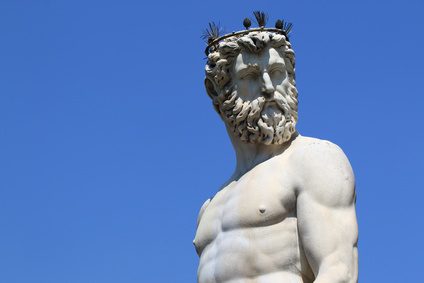 Why do so many people worship invisible beings, accept the authority of millennia-old texts, or or congregate on weekends in buildings for no apparently practical reason? The cognitive and bio-cultural sciences of religion are burgeoning as researchers attempt to answer these questions in the context of our secularizing culture. According to one popular hypothesis, people naturally tend to be religious because our brains, evolved to survive in the dangerous Paleolithic era, are hyper-sensitive to signals of agency, or personhood – and as a result, we’re constantly “seeing” signs of disembodied agents everywhere around us. In a new paper, my colleague John Shaver and I advance a different possibility: gods and spirits are ubiquitous because it’s really, really hard to bargain with them.
The paper was published the other week in the journal Evolutionary Studies in Imaginative Culture (ESIC), which I recently mentioned here.* Our investigation comes at the question of how religious beliefs and behaviors evolved in the human species from a somewhat unusual angle. First, we survey the existing cognitive and evolutionary explanations, highlighting what we think their strengths and weaknesses are. We start with cognitive byproduct theories, which posit that the form and prevalence of religious beliefs are accidental functions of the evolved human mind. The “hyperactive agency detection device” (HADD) hypothesis is the usual name for the byproduct account I mentioned above: people are religious because our brains are hardwired to over-impute signs of agency around us, so that we sense invisible spirits or personalities everywhere.
Another byproduct theory, “minimal counterintuitiveness” (MCI) theory, describes religious beliefs as unique combinations of intuitively natural and surprising concepts. It assumes that our brains come hardwired with certain templates for ontological categories – that is, we have certain prepackaged expectations for what constitutes a “person,” a “plant,” an “object,” and so forth. While we expect persons to have intentions, goals, and intelligence, we don’t intuitively expect that plants or inanimate objects have those things. Similarly, we expect that persons are constrained by basic physical limitations: they’re susceptible to gravity, can’t move through walls, etc. But religious beliefs often violate just a few of these intuitive expectations. For example, in the Book of Acts, the resurrected Jesus ascends bodily into heaven. This is not normal behavior for physical human beings. So we have a mismatch between our intuitive templates and the supernatural story. According to MCI theory, this kind of slightly mismatched story is particularly memorable, and so tends to spread quickly through populations. Thus, we worship beings who look like humans but don’t die, or who have human personalities but know everything.
Another attempt to naturalistically explain the features of religion is found in cultural evolution theory, which posits that religious beliefs and rituals facilitate in-group cooperation and prosociality. Thus, groups with prosocial religions are more competitive, and tend to win out over other groups over the long haul. Prosocial religions – religious traditions that teach people to treat one another fairly, sacrifice for the in-group, and so forth – therefore grow to become the predominant type of religion. This theory is compatible with the cognitive byproduct theories. It suggests that the basic features of religious concepts were indeed byproducts of basic cognition, but that cultural evolution then acted on them to select for the most adaptive and useful supernatural beliefs.
A third and final family of theories is adaptationist accounts, which suggest that humans have religious instincts and drives precisely because those traits have been selected for: ancestors who had “religious” personalities or tendencies lived longer and had more offspring than ancestors who didn’t. The most common type of adaptationist model argues that religious beliefs and rituals are credible signals of commitment to group norms and identity. So, over time, human beings have come to have an evolved predisposition to perform ritualized displays of commitment to unfalsifiable beliefs.
There are problems with each family of theories. Byproduct theories give a good account of the relationship between religious beliefs and intuitive cognitive defaults, but they don’t always do a good job of explaining why religious beliefs are so hemmed in with ritual expectations, norms, and taboos. Cultural evolutionary theory often depends on group selection models of evolution, which are controversial among biologists. And adaptationist theories haven’t always successfully articulate precisely which concrete phenotypes are being selected for – that is, they haven’t adequately defined “religion” (although, as I’ve discussed here recently, nobody else has, either).
A New Tack: Religion and Imagination
So John and I took things in a new direction. We looked at the similarity between religious beliefs and imagination. Say that you’re in your room, praying. (If you’re not the praying type, imagine that you are.) Unless you’re having a very unusual sort of day, you probably don’t actually see whatever god or spirit you’re praying to in front of you. Rather, you act as if you were speaking to a real being. This isn’t too cognitively different from playing make-believe, where, say, one child decides that she’s a princess and the other pretends to be her lady-in-waiting. Neither child changes in physiological appearance when the game starts. No – both kids have to use their imaginations to envision the role of “princess” and the role of “lady-in-waiting,” and then they have to adjust their actual behavior to those roles.
It might sound like we’re dismissing religion as just child’s play. But it turns out that our human capacity for imagination isn’t just about inconsequential make-believe games. In fact, it’s a vital tool for taking part in entire sphere of very serious, grownup human affairs: the sphere of institutions.
Institutions are entities like universities, marriage, nation-states, court systems, and landlord-lessee relations. They’re different from basic physical entities like rocks, tigers, and the Pacific Garbage Patch in that they only exist because we say they exist. They consist of binding agreements between participants that constrain our behavior, impose obligations, and stipulate roles. For example, Boston University exists because it has a charter with the State of Massachusetts. If you walk around campus, it seems real enough. It’s got buildings, students, professors, and some sculptures.** But those things only come together to form a “university” because we say that they do. Buildings are just brick, mortar, and asbestos. A charter is just a piece of paper. None of those is a university. A university is an abstract entity that encompasses various physical things but isn’t reducible to any of them. It’s an invisible thing that we agree to treat as if it were real. That is, in order to interact with Boston University, you literally have to imagine it, since you’ll never be able to engage with it as a physical object. Because it’s not a physical object.

John and I argue, then, that religious beliefs have more in common with institutional facts than with gut-level intuitions or inferences. That is, they take work to create and sustain. That’s why religions have liturgies, creeds, and rituals. For example, many Christian churches recite the Nicene or Apostle’s Creeds each Sunday. Creeds and rituals are how we turn beliefs “on,” how we activate them despite the lack of external evidence. But nobody ever wrote a creed about gravity. That’s because gravity is obviously on, all the time. We don’t have to exercise our imaginations to produce a mental representation of coffee mugs sitting fixed to the surface of our desk. They just stand there, motionless and needing cleaning. Why? Because gravity is a thing.
By contrast, religious traditions are something like massive, centuries-long exercises in bending the human imagination to new and unique ends: imagining God as a Trinity, imagining Muhammad as the Seal of the Prophets, imagining Krishna as the lover of the Gopi cow herder girls. These imaginative enterprises require work. They require shared commitment to the rites and rituals that make them seem real. From our article:
we argue that there is no strict category distinction between the cognitive processes that enable the representation of extra-empirical or institutional propositions (“This is the state border”) and those that enable representations of religious propositions (“God is three in one”).
Why Does the Imagination Converge on Spirits and Gods?
But why, then, do religious traditions seem to converge on supernatural persons, like gods or spirits? That is, if we’re capable of imagining all kinds of non-visible entities, from international borders to chartered universities, then why do invisible persons – like God, bodhisattvas, Allah, ancestor spirits, or Saint Michael – specifically seem to find their way to the center of religious traditions, regardless of different doctrines and practices?
John and I argue that supernatural agents are very similar to social roles, such as “queen,” “elder,” “wife,” or “chief.” We draw on the anthropologist Maurice Bloch to point out that many social roles are “transcendental,” which just means that we mentally represent them in a way that’s separable from any particular person who happens to occupy them. For example, our village might have a particular chief, but we also know that “chiefdom” is something that different individuals can embody. So the idea of “chief” comes to have a life of its own. We can imagine how a generic chief might respond in a given situation, without having to think about any particular, living chief. Bloch argues, and John and I agree, that this ability is based on language, and so is unique in the animal kingdom. Other animals have social structures, but not transcendental social roles. It takes symbolic language to imagine and then tell one another about concepts like “elder,” “priest,” “husband,” “professor,” or “sergeant.”
Gods and spirits, then, are an extension of the suite of roles that are available in any given society. Like other social roles, we can mentalize about them – imagine their responses to actions, envision their motivations, etc. – without having to interact with a tangible person who actually holds that role. In fact, the roles of gods and spirits are unique, because they don’t need to have concrete people to hold them.
John and I conclude by arguing that the reason gods and spirits become the center of cults and religious traditions is that, because gods and spirits aren’t embodied, they can’t take part in normal transactional social life. That is, you can’t easily trade favors with them. If Sally has the role of professor and Bob has the role of student, then there are certain normative expectations for how each person is supposed to behave toward the other. Bob is supposed to be respectful and to obey Sally’s requests for homework. Sally is supposed to be benevolent and authoritative, and to enforce proper professional boundaries. These roles are defined by obligatory social norms.
But because Sally and Bob are both also real, physical people, they can also interact on a non-normative basis – that is, they’re often tempted to behave in ways that don’t abide by the norms of their respective roles. Sally might know that, if Bob writes her a good teacher evaluation, her chances for tenure will increase. So she might feel the urge to give Bob a higher grade than he deserves – thus breaking the normative standards of her role.
But supernatural beings don’t offer those same kinds of strategic incentives. You can’t get anything out of a god by breaking the rules for whatever role you happen to occupy. So, according to our paper, gods and spirits tend to become central in religious traditions precisely because the only way to interact with them is according to obligations, not strategic incentives. You pray before meals simply because that’s what you’re supposed to do. You don’t hunt in the forest during the rainy season because the spirits will get angry. All over the world, religious worship is filled with taboos, obligatory requirements, and strict rules. In human affairs, rules often get broken because we face strategic incentives to break them. But in interactions with gods, those incentives aren’t valid. So, if we interact with gods at all, we tend to do so according to the rules.*** Consequently, god and spirit “roles” play a key function in stabilizing cooperation with norms in general. They provide a core locus in the social structure where strategic self-interest isn’t as operative, and so they anchor the norms that characterize the rest of the structure’s periphery.
For this reason, all or nearly all religious traditions are centered on invisible but personal beings. But this isn’t just because our brains are hardwired to over-perceive intentional agency in our environments. It’s because we’re institutional beings, living in institutional worlds. Even so-called egalitarian foraging cultures without permanent settlements or government are institutional to the core, chock-full of natural and supernatural roles and institutions: totem groups, moieties, adolescent initiations, marriage norms, and spirits. Our imaginations allow us to interact with beings who won’t reward us if we defect from cooperative, normative obligations, and so our imaginative (grownup) institutional worlds end up centering on these unique, imagined beings.
This paper is the first to come out of my current project at the Center for Mind and Culture. I plan to keep following this line of reasoning, and exploring in more depth the cognitive similarities between institutional life and religion. (In fact, I already have a followup paper ready to submit, which I’ll post about when and if it gets past peer review.) Importantly, John and I aren’t arguing that previous scientific approaches to religion are wrong. Byproduct, cultural evolutionary, and adaptationist theories each make important contributions, and in principle they’re all compatible with our “institutional cognition model.” We’re just arguing that the role of imagination needs to be taken more seriously, particularly by cognitive scientists – who, after all, study mental processes. If imagination doesn’t fit that bill, I’m not sure what does.
____
Thanks to a generous grant by a donor, our article has unexpectedly been made open-access. Woohoo! You can download it here, or from my ResearchGate account.
____
* I probably should have made a full disclosure in that post that I had a paper coming out in this journal. Looking back on it, not doing so could have made it look like I was just trying to prep for telling everybody about my own article. Sorry. But I really am excited about ESIC’s mission and the editors’ hopes for a better integration of evolutionary theory with the humanities, so it seemed natural to write up Joe Carroll’s work – in fact, I was inspired to do so because I’d stumbled across other coverage of his work elsewhere.
** And an army of obscurely titled but very well-remunerated administrators large enough to conquer large swaths of France.
*** This doesn’t mean that people don’t try to get favors from God or the gods. As the sociologist Christian Smith points out, they do, all the time. But the logic of the transaction just isn’t the same as it is for interacting with another concrete person. This is why even supplications and petitionary prayer – asking God or the spirits for help – nearly always takes the form of an obligatory ritual. For example, Christian parents often teach their children to pray before bed. Bedtime prayers are stereotypically petitionary: you’re supposed to ask for health, healing for Grandma, freedom from that bully at school, and so forth. But at the same time, those same bedtime prayers are normative. Devout parents teach their kids that they’re expected and supposed to do them. And kids often don’t want to do them – they want to get into bed. So the deontic (normative) and petitionary (transactional) components of interactions with gods and spirits are entwined. John and I are just arguing that the normative component comes first.
Evolutionary Studies in Imaginative Culture"
Previous Post

December 22, 2018
How to "Grow" Shamanism in a Computer Model
Next Post

January 23, 2019 What Is Postmodernism? And Why Does It Matter for Science?
Browse Our Archives
Select a Category Atheism Cognitive Science of Religion Costly investment theory Cultural psychology Editorial Evolution Evolution of Religion Evolution of religion series Evolutionary psychology Ideology and religion Modeling Religion Project Modern culture and religion Most Popular Practice of science Religion and education Religion and ethics Religion and health Religion and perception Religion and prejudice Religious violence Religious ways of thinking Science and religion Scientific study of religion Secularization Spirituality Uncategorized
Select a Month July 2022 February 2022 December 2021 October 2021 August 2021 July 2021 June 2021 May 2021 April 2021 March 2021 February 2021 January 2021 December 2020 November 2020 October 2020 September 2020 August 2020 July 2020 June 2020 May 2020 April 2020 March 2020 February 2020 January 2020 November 2019 October 2019 September 2019 August 2019 July 2019 June 2019 May 2019 April 2019 March 2019 February 2019 January 2019 December 2018 November 2018 October 2018 September 2018 August 2018 July 2018 June 2018 May 2018 April 2018 March 2018 February 2018 January 2018 December 2017 November 2017 October 2017 September 2017 August 2017 July 2017 June 2017 May 2017 April 2017 March 2017 February 2017 January 2017 December 2016 November 2016 September 2016 August 2016 June 2016 April 2016 March 2016 February 2016 January 2016 November 2015 October 2015 September 2015 August 2015 July 2015 June 2015 May 2015 April 2015 March 2015 February 2015 January 2015 December 2014 November 2014 October 2014 September 2014 August 2014 July 2014 June 2014 May 2014 April 2014 March 2014 February 2014 January 2014 December 2013 November 2013 October 2013 September 2013 August 2013 July 2013 June 2013 May 2013 April 2013 March 2013 February 2013 January 2013 December 2012 November 2012 October 2012 September 2012 August 2012 July 2012 June 2012 May 2012 April 2012 March 2012 February 2012
Follow Us!
TAKE THE
Religious Wisdom Quiz
What does "Immanuel" mean?
Select your answer to see how you score.
God leads God with us God rules God redeems
Related posts from Science On Religion

Why Rites of Passage Are Painful


The Catholic Latin Mass is a Strong Credibility-Enhancing...

The Myth of the Egalitarian Noble Savage
TRENDING AT PATHEOS Religion News

Catholic Integralists believe that religious values – specifically Christian ones – should...

Electing A Virtuous President Would Make Immunity Irrelevant
Presidential immunity can bring with it many risks. So how can we...

Why The Olympic Games Are A ‘Civil Religious’...
Sporting events form a vital space where Americans display their 'civil religious...

After more than a decade of news, research updates, and insights on...

Q: Why do Southern Baptists and like-minded Protestants...
THE RELIGION GUY’S ANSWER: Why? Simple. Because they believe that’s what the...

THE QUESTION: Is gambling evil? THE RELIGION GUY’S ANSWER: Analysts anticipate a...
view all Religion News blogs
Ad-Free & Subscriber Log-In Subscription Support
- About Us
- 2026 Calendar
- Videos
- Podcasts
- Library of World Religions
- Faith In Media Tracker
- Advertise With Us
- Write for Us
- Privacy Policy
- Terms of Service
- Do Not Sell My Data
- Contact Us
- Radiant Digital
- Manage Newsletter Subscriptions
- Unsubscribe From Notifications
- Sitemap
Copyright 2008-2026, Patheos. All rights reserved.
Subscription Support Ad-Free & Subscriber Log-In
Follow Patheos