
BuddhistCatholicContemplativeEvangelicalGeneral ChristianHinduJewishLatter-day SaintMuslimNew VisionsProgressive Christian
Beliefs
- Buddhist
- Catholic
- Contemplative
- Evangelical
- General Christian
- Hindu
- Jewish
- Latter-day Saint
- More Voices
- Muslim
- New Visions
- Pagan
- Progressive Christian
Topics
- Religion News
- Food and Religion
- Sports and Religion
- Religious Art
- Religious Music and Entertainment
- Religious Events
- History and Religion
- Style and Religion
- Politics and Religion
- Women in Religion
- Recreation Outdoors and Religion
- Business Finance and Religion
- Careers Workplace and Religion
- Education and Religion
- Family Parenting and Religion
- Health Fitness and Religion
- Home and Religion
- Relationships and Religion
- Technology and Religion
- Travel and Religion
Columnists
- Buddhist Columnists
- Business Finance and Religion Columnists
- Careers Workplace and Religion Columnists
- Catholic Columnists
- Contemplative Columnists
- Education and Religion Columnists
- Evangelists Columnists
- Family Parenting and Religion Columnists
- General Christian Columnists
- Health Fitness and Religion Columnists
- Hindu Columnists
- History and Religion Columnists
- Home and Religion Columnists
- Jewish Columnists
- More Voices Columnists
- Latter Day Columnists
- Muslim Columnists
- New Visions Columnists
- Nonreligious Columnists
- Pagan Columnists
- Politics and Religion Columnists
- Progressive Columnists
- Recreation Outdoors and Religion Columnists
- Relationships and Religion Columnists
- Religion News Columnists
- Religious Art Columnists
- Religious Events Columnists
- Religious Music and Entertainment Columnists
- Sports and Religion Columnists
- Style and Religion Columnists
- Technology and Religion Columnists
- Travel and Religion Columnists
- Women in Religion Columnists
Resource Library
- 2026 Calendar
- Library of World Religions
- The 100 Most Holy Places on Earth
- Patheos Answers
- Podcasts
- Videos
- Faith Leaders Database
- Anglican Episcopalian
- Bahai
- Baptist
- Buddhism
- Christianity
- Confucianism
- Eastern Orthodoxy
- Hinduism
- Holiness and Pentecostal
- ISKCON
- Islam
- Judaism
- Lutheran
- Methodist
- The Church of Jesus Christ of Latter-day Saints
- New Age
- Paganism
- Presbytarian and Reformed
- Protestantism
- Religion Behind the Scenes
- Roman Catholic
- Scientology
- Shia Islam
- Sikhism
- Sufism
- Sunni Islam
- Taoism
- Zen
- See all religions
Research Tools
 Ad-Free & Subscriber Log-In Subscription Support
Ad-Free & Subscriber Log-In Subscription Support
Follow Patheos 

- Trending:
- Forgiveness
- |
- Marriage
- |
- Consciousness
- |
- Death Penalty
- |
- Election
- |
- Halloween
 Science On Religion
- Home
- Religion News
- Why Do Societies Differ Psychologically?
Why Do Societies Differ Psychologically?
Last updated on: May 17, 2018 at 5:09 pm by Connor Wood
Why Do Societies Differ Psychologically? 2018-05-17T17:09:44-04:00 Connor Wood
Patheos Explore the world's faith through different perspectives on religion and spirituality! Patheos has the views of the prevalent religions and spiritualities of the world.
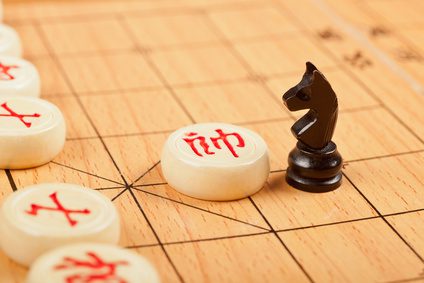
If someone asked what defines your identity, your answer might depend on where you grew up. If you’re from New Jersey or Germany, you might list your personality traits, talents, aspirations, and preferences like favorite bands. But South Korea or Japan? You’d be more likely to list your father, mother, siblings, and other relationships. Cultural psychologists have long found that inhabitants of Western Europe and North America tend to construe themselves as being independent of their social environment, whereas residents of East Asian societies have an interdependent self-construal. A forthcoming paper in the journal Psychological Review argues that this kind of psychological difference might result from “adaptive phenotype plasticity” – the body’s ability to flexibly change how it expresses genetic traits in response to the environment.
Specifically, the paper’s authors – led by Oliver Sng, a social psychologist at the University of Michigan – argue that the field of behavioral ecology offers useful tools for understanding cultural differences in psychology. Behavioral ecology looks at behavior from an evolutionary perspective, helping researchers explain what sorts of ecological selection pressures might lead to particular animal or human behaviors. For example, why does one species of bird warn others when predators are nearby, but another doesn’t? Why do some species engage in cannibalism but others don’t?
Researchers in behavioral ecology are especially interested in cost-benefit tradeoffs. For example, schooling helps individual fish avoid predators by coordinating movement. But schooling is also energetically costly – in a school, fish can’t use the energy-efficient strategy of swimming in short bursts and long glides. So if there aren’t many predators around, schooling isn’t worth it, and individual fish disperse. The fact that all forms of behavior have both costs and potential benefits means that animals of all kinds – including humans – are constantly forced to make choices about what tradeoffs to make. Behavioral ecology allows us to make predictions about these tradeoffs: if we’re kayaking around a lake and huge schools of fish are swirling below our oars, we can be pretty sure that the water – the fishes’ environment – contains a lot of hungry predators.
But ecologies aren’t perfectly stable. Climates change, predator-prey balances shift, and social landscapes morph. Animals need to be able to adapt to these alterations in the environment. That’s where phenotype plasticity comes in. Phenotype plasticity allows organisms with the same genes to produce different phenotypes depending on the environment. Sng and his co-authors offer one particularly gripping example: the tiger salamander. Tiger salamander larvae can take one of two forms, typical and cannibalistic. In high-population density environments, larvae are more likely to activate the cannibalistic morph – but there’s no difference in the genes between the two forms.
Okay, great. What does all this have to do with human psychology? Well, as I mentioned above, a growing body of research shows that cultural and ecological factors play a significant role in causing (trend-level) psychological differences between societies. For example, in areas of China where rice farming historically predominated, people think more collectivistically and holistically, whereas residents of Chinese wheat-growing regions think more individualistically and analytically. Other research suggests that the prevalence of pathogens, like parasites or bacteria, leads societies to be more xenophobic and conservative than societies in less illness-ridden environments. Sng and his colleagues argue that this research suggests that human social and psychological behavior is adaptively flexible, responding to a environmental pressures in ways that don’t depend on genetic differences. They specifically argue that six “ecological dimensions” drive variation in psychology and behavior:
1. Population Density
Among animals, high population density tends to lead to more careful, high-investment mating strategies, also known as a “slow life history.” Organisms with slow life history begin reproducing later in life and usually invest more in offspring. By contrast, creatures with fast life histories have an “as often and as much as you can” approach, entering sexual maturity early and not investing much in offspring. Higher population densities lead to more competition for resources, and animals have better chances of successfully reproducing if they work to build up resources and invest in themselves (and their offspring), rather than running around trying to mate. And sure enough, among humans, signals of population density seem to encourage an orientation to long-term romantic relationships, later childbearing, and fewer children.
2. Genetic Relatedness (and Proxies Thereof)
Animals that live near a lot of close genetic relatives tend to be more prosocial, or willing to sacrifice for the good of others. Accordingly, Sng and his colleagues suggest that human societies with many cues of relatedness should be especially cooperative. But for humans, it’s not just about genetic relatedness. Humans have many ways of hacking our brains into thinking the people around us are more closely related than they are. For example, in many religious and traditional communities, people call each other by names such as “brother,” “sister,” and “father” even if they’re not related. This “fictive kinship” may be an important strategy for increasing average cooperativeness by hijacking the adaptive flexibility of human behavior.*
3. Sex Ratios (Specifically, Operational Sex Ratios)
It’s an unpleasant but important fact: sex is many things, but one of those things is a brutal competition. Males have to compete for females, and females have to compete for males. Not only that, but females and males have to compete against each other – what’s best for the female in a mating arrangement often isn’t what’s best for the male, and vice-versa. It’s a mess, and, as the physiologist and geographer Jared Diamond points out in his useful but painfully unromantic little book Why Is Sex Fun?, it causes, like, 93% of the pain we experience in life. (Most of Shakespeare’s comedies derive from this paradox, so at least we get something out of it.) One of the factors that most heavily influences how sexual competition plays out in human communities is the sex ratio, or the ratio of reproductive-age men to women. When males outnumber females, there’s a higher risk of violence and homicide. Why? Because having 115 marriageable men for every 100 young women means that 15 men don’t get a wife. Those 15 will be very frustrated. But at the same time, a higher proportion of males also means that men have to compete rigorously for women. As a result, in both hunter-gatherer societies and within the United States, male-biased sex ratios are associated with less divorce, more monogamy, and more paternal investment in children.
4. Resource Availability and “Patchiness”
Where resources are scare, organisms begin reproducing later and reproduce less. This makes sense, because reproduction is energetically costly. But there’s a more complex story, too. Where resources are “patchy,” or concentrated in discrete locations or spaces, both animals and humans tend to become more clustered, hierarchical, and territorial. Resource patchiness makes resources easier to monopolize and defend, which leads to the erecting of group barriers. In human societies, Sng and his colleagues suggest that wealth inequality or class segregation might be a form of resource patchiness. This could ignite a feedback cycle in which concentrated resources produce behavior – hierarchical social organization, competitiveness, social exclusion – that keep things unequal.
5. Mortality Rates
In general, higher overall danger of mortality leads to faster life history, or increased reproduction, earlier sexual maturity, and less investment in offspring. For most animals, environmental (“extrinsic”) mortality is a function of climate, predators, and other features of the ecology, but for humans one of the biggest sources of mortality is…other humans. Accordingly, Sng and colleagues point out that societies with higher levels of warfare show lower levels of parental investment in children.†
6. Pathogens. Mmmmmmm
A growing body of (somewhat controversial) evidences suggests that higher levels of parasite and pathogen load leads people to behave more xenophobically, to be less open to novelty, and to more strictly adhere to cultural traditions. In other words, environments with lots of germs produce conservatives. Why? Well, the theory is, in part, that conservative values and behaviors erect boundaries between in-groups. And what’s one thing that diseases need to spread like itchy, disgusting wildfire? Trade, communication, and contact between different communities. Conservative, traditionalistic behaviors cut down the amount of contact between in-groups, thereby mitigating the danger of contracting a nasty bug from the neighbors.
Conclusion: We really are animals.
According to Sng and his colleagues, these six dimensions of ecological variation intersect to produce subtly different environments with different pressures. These different pressures mold human behavior to be as well-adapted to the local environment as possible. But because environments are different, different cultures end up deploying different strategies based on their local ecological predicaments. To make things even more complicated, humans are niche constructors – we alter our environments so decisively that a hefty percentage of the “environment” that we have to contend with isn’t just the physical ecology, but the cultural ecology around us.
These are stupendously useful and important points. But Sng and his co-authors sometimes overplay their hand a bit, threatening to reduce every cultural difference to behavioral ecology. For example, in asking why Greek philosophy came to dominate Western societies but Confucian philosophies ruled East Asia, they write:
Why, then, is the East philosophically Confucian and the West philosophically Greek? …It seems likely that a range of philosophies emerged in both the East and the West, but that the ones that ultimately persisted were those congruent with the psychologies triggered by the specific ecologies.
For example, they suggest that ancient East Asian cultures had higher average genetic relatedness than ancient Greek societies, causing the collectivistic philosophies of Confucianism to resonate more in the East. It’s relevant that Chinese thinkers did produce individualistic philosophies that would have been right at home in ancient Athens – the Chinese philosopher Mozi argued against respect for tradition and for ethical individualism, for instance. But Confucius and his followers, who advocated instead for obedience to traditional authority, carried the day in China. By contrast, more individualistic, universalistic philosophers like Aristotle rose to preeminence in the West.
But reducing these cultural differences to ecological variables eliminates the role of contingent historical happenstance – or of philosophers themselves. It also overlooks the extent to which everything in human social life and psychology (or, really, in ecology in general) happens in feedback loops. There’s always a chicken-and-egg question: was China more collectivistic, and so more predisposed to Confucian philosophy, or did Confucian philosophy help make China more collectivistic? The real answer to questions like this is always, “Yes. Both. For the love of all that’s holy, please stop trying to reduce complex systems to linear causal effects.”
But despite this weakness, Sng and colleagues have advanced an important new framework for understanding why and how societies differ (on average, not universally) on key psychological and behavioral traits. Importantly, their reasoning is drawn from evolutionary theory. This evolutionary grounding allows researchers to make crucial connections between findings about non-human animals and about human psychology and behavior. It’s a well-articulated little reminder that, whatever else we human beings may be – stardust, spiritual beings, embodied souls, lumps of carbon, liberated individual Benthamian autonomists – we’re also enmeshed in the dangerous and beautiful warp and weft of the animal world, fighting the same battles and facing the same struggles every day as cats, badgers, birds, and schools of fish.††
____
* Personal note that just occurred to me right now while writing that paragraph: In the Sufi community my dad belonged to when I was a kid, I was encouraged to call many of the adults “Aunt” and “Uncle,” despite the facts that (1) my father was the only person in the fellowship I was actually related to, and (2) many members of the fellowship were from Sri Lanka and therefore could not even remotely plausibly be mistaken as being genetically related to my very white, American settler-frontier family. I think it worked – I remember many of those “aunts” and “uncles” quite fondly (and not only for introducing me at a young age to Indian food, although that is objectively the best food there is**).
** Yes, objectively. I know what that word means.
† This conclusion seems questionable to me. One thing war does is disrupt things. When things (food production, relationships, the economy) are disrupted, it gets harder to care for kids. So, personally, I’d want to see some better evidence that the inverse correlation between warfare and parental investment isn’t due to a simple inability to care for children under conditions of warfare.
† Five points for knowing which Hebrew Bible book says the same thing, except more tersely.
Previous Post

April 18, 2018
Why Is Shamanism So Common?
Next Post

May 25, 2018 Cognitive Style, Religious Beliefs, and Individualism
Browse Our Archives
Select a Category Atheism Cognitive Science of Religion Costly investment theory Cultural psychology Editorial Evolution Evolution of Religion Evolution of religion series Evolutionary psychology Ideology and religion Modeling Religion Project Modern culture and religion Most Popular Practice of science Religion and education Religion and ethics Religion and health Religion and perception Religion and prejudice Religious violence Religious ways of thinking Science and religion Scientific study of religion Secularization Spirituality Uncategorized
Select a Month July 2022 February 2022 December 2021 October 2021 August 2021 July 2021 June 2021 May 2021 April 2021 March 2021 February 2021 January 2021 December 2020 November 2020 October 2020 September 2020 August 2020 July 2020 June 2020 May 2020 April 2020 March 2020 February 2020 January 2020 November 2019 October 2019 September 2019 August 2019 July 2019 June 2019 May 2019 April 2019 March 2019 February 2019 January 2019 December 2018 November 2018 October 2018 September 2018 August 2018 July 2018 June 2018 May 2018 April 2018 March 2018 February 2018 January 2018 December 2017 November 2017 October 2017 September 2017 August 2017 July 2017 June 2017 May 2017 April 2017 March 2017 February 2017 January 2017 December 2016 November 2016 September 2016 August 2016 June 2016 April 2016 March 2016 February 2016 January 2016 November 2015 October 2015 September 2015 August 2015 July 2015 June 2015 May 2015 April 2015 March 2015 February 2015 January 2015 December 2014 November 2014 October 2014 September 2014 August 2014 July 2014 June 2014 May 2014 April 2014 March 2014 February 2014 January 2014 December 2013 November 2013 October 2013 September 2013 August 2013 July 2013 June 2013 May 2013 April 2013 March 2013 February 2013 January 2013 December 2012 November 2012 October 2012 September 2012 August 2012 July 2012 June 2012 May 2012 April 2012 March 2012 February 2012
Follow Us!
TAKE THE
Religious Wisdom Quiz
What Christian holiday celebrates Jesus’ birth?
Select your answer to see how you score.
Easter Christmas Pentecost Good Friday
Related posts from Science On Religion


Faith and the Evolutionary Predicament

Music and Dance in Human Evolution
The Myth of the Egalitarian Noble Savage
TRENDING AT PATHEOS Religion News

Catholic Integralists believe that religious values – specifically Christian ones – should...

Electing A Virtuous President Would Make Immunity Irrelevant
Presidential immunity can bring with it many risks. So how can we...

Why The Olympic Games Are A ‘Civil Religious’...
Sporting events form a vital space where Americans display their 'civil religious...

After more than a decade of news, research updates, and insights on...

Q: Why do Southern Baptists and like-minded Protestants...
THE RELIGION GUY’S ANSWER: Why? Simple. Because they believe that’s what the...

THE QUESTION: Is gambling evil? THE RELIGION GUY’S ANSWER: Analysts anticipate a...
view all Religion News blogs
Ad-Free & Subscriber Log-In Subscription Support
- About Us
- 2026 Calendar
- Videos
- Podcasts
- Library of World Religions
- Faith In Media Tracker
- Advertise With Us
- Write for Us
- Privacy Policy
- Terms of Service
- Do Not Sell My Data
- Contact Us
- Radiant Digital
- Manage Newsletter Subscriptions
- Unsubscribe From Notifications
- Sitemap
Copyright 2008-2026, Patheos. All rights reserved.
Subscription Support Ad-Free & Subscriber Log-In
Follow Patheos