
BuddhistCatholicContemplativeEvangelicalGeneral ChristianHinduJewishLatter-day SaintMuslimNew VisionsProgressive Christian
Beliefs
- Buddhist
- Catholic
- Contemplative
- Evangelical
- General Christian
- Hindu
- Jewish
- Latter-day Saint
- More Voices
- Muslim
- New Visions
- Pagan
- Progressive Christian
Topics
- Religion News
- Food and Religion
- Sports and Religion
- Religious Art
- Religious Music and Entertainment
- Religious Events
- History and Religion
- Style and Religion
- Politics and Religion
- Women in Religion
- Recreation Outdoors and Religion
- Business Finance and Religion
- Careers Workplace and Religion
- Education and Religion
- Family Parenting and Religion
- Health Fitness and Religion
- Home and Religion
- Relationships and Religion
- Technology and Religion
- Travel and Religion
Columnists
- Buddhist Columnists
- Business Finance and Religion Columnists
- Careers Workplace and Religion Columnists
- Catholic Columnists
- Contemplative Columnists
- Education and Religion Columnists
- Evangelists Columnists
- Family Parenting and Religion Columnists
- General Christian Columnists
- Health Fitness and Religion Columnists
- Hindu Columnists
- History and Religion Columnists
- Home and Religion Columnists
- Jewish Columnists
- More Voices Columnists
- Latter Day Columnists
- Muslim Columnists
- New Visions Columnists
- Nonreligious Columnists
- Pagan Columnists
- Politics and Religion Columnists
- Progressive Columnists
- Recreation Outdoors and Religion Columnists
- Relationships and Religion Columnists
- Religion News Columnists
- Religious Art Columnists
- Religious Events Columnists
- Religious Music and Entertainment Columnists
- Sports and Religion Columnists
- Style and Religion Columnists
- Technology and Religion Columnists
- Travel and Religion Columnists
- Women in Religion Columnists
Resource Library
- 2026 Calendar
- Library of World Religions
- The 100 Most Holy Places on Earth
- Patheos Answers
- Podcasts
- Videos
- Faith Leaders Database
- Anglican Episcopalian
- Bahai
- Baptist
- Buddhism
- Christianity
- Confucianism
- Eastern Orthodoxy
- Hinduism
- Holiness and Pentecostal
- ISKCON
- Islam
- Judaism
- Lutheran
- Methodist
- The Church of Jesus Christ of Latter-day Saints
- New Age
- Paganism
- Presbytarian and Reformed
- Protestantism
- Religion Behind the Scenes
- Roman Catholic
- Scientology
- Shia Islam
- Sikhism
- Sufism
- Sunni Islam
- Taoism
- Zen
- See all religions
Research Tools
 Ad-Free & Subscriber Log-In Subscription Support
Ad-Free & Subscriber Log-In Subscription Support
Follow Patheos 

- Trending:
- Forgiveness
- |
- Marriage
- |
- Consciousness
- |
- Death Penalty
- |
- Election
- |
- Halloween
 Science On Religion
- Home
- Religion News
- Why meaning is more important for humans than comfort
Why meaning is more important for humans than comfort
Last updated on: January 11, 2018 at 3:04 pm by Connor Wood
Why meaning is more important for humans than comfort 2018-01-11T15:04:28-05:00 Connor Wood
Patheos Explore the world's faith through different perspectives on religion and spirituality! Patheos has the views of the prevalent religions and spiritualities of the world.
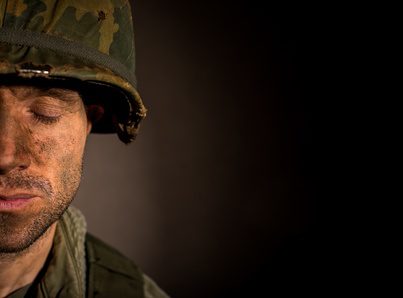 Religion does many things. It can form bonds between people, foment conflicts, and inspire people to sacrifice for higher causes. But one of the most important things that religions do is create meaning. Meaning in life is difficult to define, but people who report more meaning in their lives are psychologically healthier and less likely to suffer from mental illness than those who don’t. Consider the profound distress that many returning veterans face when returning to civilian society from a military world that, despite its many hardships, is suffused with meaning. Understanding how military life creates meaning – and why modern society often fails at creating it – reveals some of the deepest secrets of human culture.
I don’t often cite TED talks here, but a couple of recent talks are so good that I’m breaking that rule. The first is by Adam Driver, the actor who portrays Kylo Ren in the recent Star Wars films The Force Awakens and The Last Jedi. Before becoming a famous movie person,* Driver was an enlisted U.S. Marine. An injury prevented him from deploying to war with his platoon and led to a discharge. You’d think that injury was a great stroke of luck, since it sent him off on his current career trajectory – but Driver still maintains that becoming a Marine was one of his life’s proudest accomplishments.
What’s fascinating is Driver’s powerfully articulate description of why it was challenging to re-integrate with civilian life. It wasn’t the memories of combat, since – remember– Driver never saw any fighting. Instead, it was the fact that everything in the military, from the smallest details to the biggest decisions, has a meaning and a reason:
I was surprised by how complex the transition was from military to civilian.…I struggled to find meaning. In the military, everything has meaning. Everything you do is either steeped in tradition or has a practical purpose. You can’t smoke in the field because you don’t want to give away your position. You don’t touch your face, because you have to maintain a personal level of health and hygiene. You face this way when “Colors” plays out of respect to those people who went before you. You walk this way because of this, you talk this way because of that.
So, although “meaning” is a tricky thing to define, Driver helps us understand where meaning comes from. Our shared choices about how to do things, from standing in a certain way to decorating a uniform with a particular pattern, can be random, or they can be intentional. The things we do for a reason are those that have “meaning.” They fit into a pattern of human intentions and purpose.
For example, there are thirteen stripes on the American flag for a reason (to represent the thirteen original American colonies). During a Passover seder, participants spill or place drops of wine on their plates for a reason (to remember the plagues that heralded the Exodus from Egypt). And in the Marines, practically everything – down to the smallest detail – is done for a reason, whether that reason is a practical one or simply tradition.
Of course, the everyday world isn’t completely lacking in meaning. But the sheer density of meaning in military life is striking. Even the smallest details about, say, how to stand during ceremonial music are carefully taught and passed down, pounded into recruits’ heads during training. So when a Marine stands at attention during morning colors, it’s not just rote rule-following. It’s an intentional act that evokes a whole web of particular associations – the people who came before in the Corps, the history of the military, memories of boot camp training. In a world filled with meaning, each thing refers to everything else.
But here’s the secret: it’s all invented.
This isn’t the same as saying it it’s not real. The rules and regulations, the ceremonies and the music – all the details and decisions that infuse military life with meaning are absolutely real. But they’re not raw objective facts in the same way that, say, the strong nuclear force or the mass of the Earth are. The strong nuclear force doesn’t vary from culture to culture. It doesn’t emerge out of social convention. It’s just there – constant, aloof, holding the atoms of the universe together.
By contrast, the rules, rituals, and symbols that define and generate meaning within a particular culture – say, the culture of the U.S. Marines, or of the Roman Catholic Church – are the products of human agreement. In terms of natural laws, the Marine uniform could be designed any old way. It’s only because of convention and tradition that it happens to be laid out the way it is. And yet the arbitrariness is exactly what makes the uniform – like so much of military life – so deeply meaningful to the people who wear it. Rank insignia go here, ribbons go there. The scarlet trousers stripe is one width for generals, another for non-commissioned officers. Every detail is intentional. Everything means something.
So the way that highly ritualistic cultures – like the military or traditional religions – generate meaning is simple: they add a thick, complex layer of intentional decisions on top of pure physical reality.
What’s more, in a meaning-rich culture, many decisions about how to do things – like celebrate holidays, decorate buildings, or maintain uniforms – are relatively coherent. They each make sense in relation to each other, and there’s an overall logic that unites them as a whole.
Of course, nobody lives in a perfectly meaningful world. But some worlds are more meaningful than others. And for many of its members, the military is more filled with meaning – in the sense of a thick layer of details, rituals, and traditions that all roughly cohere together – than the civilian society they left behind.
Now, here’s the thing: in general, the more meaning a culture offers, the tighter its communities will be. Meaning is a social thing, after all. It takes a community to come up with the basic tools for generating meaning – standards, conventions, and traditions. (The very word “tradition” comes from a Latin root meaning “to hand over” or “to hand down,” which implies a relationship between at least two people.)
Accordingly, psychologists have found that meaning in life has a lot to do with relationships. People who care for family members report feeling a lot of meaning, even if they’re not as happy as people with fewer responsibilities. Working toward a shared goal evokes meaning. So does being religious.
In short, you could say that “meaning” is what happens when symbols overlap with sociality.
Which means that lack of meaning can result when there are fewer relationships and fewer coherent symbols. So it’s not too surprising that Adam Driver had trouble finding meaning in life after he rejoined civilian society. In the military,
…Your rank said something about your history and the respect you had earned. In the civilian world there’s no rank. Here, you’re just another body. …There didn’t seem to be a sense of community. Whereas in the military I felt this sense of community.
You’re just another body.
When meaning is stripped away – when the culturally invented layer of symbols, rituals, and conventions is removed – then, by definition, the only thing left is the physical layer. And so community becomes harder to maintain. Human communities depend on symbols and traditions, after all. They’re not physical “natural kinds” like water or the strong nuclear force. In a real sense, communities are made of symbols, rituals, traditions, and conventions.
But in civilian American culture, a lot of those traditions and symbols are pretty weak. This isn’t too surprising, since we’re one of the most individualistic societies in the world. But the disjunct between military and civilian life raises some big questions.
Sebastian Junger, a war correspondent and award-winning journalist, informs us in another TED talk that post-traumatic stress disorder (PTSD) is going up among U.S. military veterans, even though the actual amount and intensity of combat is going down:
(With) every war that we have fought as a country, starting with the Civil War, the intensity of the combat has gone down. As a result, the casualty rates have gone down. But disability rates have gone up.…About 10% of the U.S. military is actively engaged in combat. …But about half of our military has filed for some sort of PTSD compensation from the government.
Why would psychological trauma be so sky-high among modern veterans, when the vast majority of them don’t actually see combat? Well, as Driver articulated, when soldiers are with their units, meaning is everywhere. Everything has its place. And, Junger reminds us, soldiers in a unit are focused on a shared goal:
Maybe they had an experience of sort of tribal closeness in their unit when they were overseas. They were eating together, sleeping together, doing tasks and missions together. They were trusting each other with their lives. And then they come home, and they have to give all of that up.
So the current epidemic of military PTSD may have more to do with the shock of leaving a world that’s rich with meaning – in both the social and the symbolic senses – than with the rigors of combat:
Maybe what determines the rate of long-term PTSD isn’t what happened out there, but the kind of society you come back to. And maybe if you come back to a close, cohesive, tribal society, you can get over trauma pretty quickly. And if you come back to an alienating modern society, you might remain traumatized your entire life. In other words, maybe the problem isn’t them, the vets. Maybe the problem is us.
I don’t want to romanticize or oversimplify anything here. I’m sure plenty of people don’t find military life meaningful, and plenty of civilians enjoy a rich sense of meaning. But these two TED talks powerfully illustrate how humans work together to generate meaning using rituals, traditions, and symbols – and how community is impossible to disentangle from this. The military just happens to offer an especially potent version of this meaning-making process.
Religion, too, is a distilled form of cultural meaning-making. If you sit down at a Passover seder table, nearly every detail is intentional. It means something. The same is true for the liturgy of a Catholic mass, or the structure of a mosque, or the rules of behavior inside a Buddhist temple.
In a way, “religion” is a word we use to describe the ways that humans add imaginative content – symbols, traditions, rituals – onto physical reality. You could say that the military uses “religious” tools abundantly to create meaning, but modern, secular, civilian society uses them much less consistently. As a result, modern cultures can suffer a vacuum of meaning.
Humans are animals, but we’re not just bodies. We’re cultural creatures, programmed from birth to expect cultural guidance and input, and to be surrounded by symbols and traditions. Our lives lose meaning when we don’t get those things. Adam Driver’s and Sebastian Junger’s talks remind us that what we want out of life, as human animals, is a lot more than just comfort. We want meaning. In fact, we’ll sacrifice a lot of comfort to get a world full of meaning – even if it means getting yelled at by a drill instructor, or fasting for Lent.
________
If you’re interested in learning more about how culture creates meaning, check out the books below. The fact that their titles are almost identical is not intentional, but it is funny. The author of the first book is an analytic philosopher, while the authors of the second book were sociologists, which means that they almost certainly looked down on each other. But they’re both worth reading anyway.
The Construction of Social Reality, by John Searle
The Social Construction of Reality, by Peter Berger and Thomas Luckmann
_______
* Yes, “famous movie person” is the technical professional title
Previous Post

December 13, 2017
Elitism Is a Problem. Being Elite Is the Solution.
Next Post

January 25, 2018 Can secular societies sustain themselves?
Browse Our Archives
Select a Category Atheism Cognitive Science of Religion Costly investment theory Cultural psychology Editorial Evolution Evolution of Religion Evolution of religion series Evolutionary psychology Ideology and religion Modeling Religion Project Modern culture and religion Most Popular Practice of science Religion and education Religion and ethics Religion and health Religion and perception Religion and prejudice Religious violence Religious ways of thinking Science and religion Scientific study of religion Secularization Spirituality Uncategorized
Select a Month July 2022 February 2022 December 2021 October 2021 August 2021 July 2021 June 2021 May 2021 April 2021 March 2021 February 2021 January 2021 December 2020 November 2020 October 2020 September 2020 August 2020 July 2020 June 2020 May 2020 April 2020 March 2020 February 2020 January 2020 November 2019 October 2019 September 2019 August 2019 July 2019 June 2019 May 2019 April 2019 March 2019 February 2019 January 2019 December 2018 November 2018 October 2018 September 2018 August 2018 July 2018 June 2018 May 2018 April 2018 March 2018 February 2018 January 2018 December 2017 November 2017 October 2017 September 2017 August 2017 July 2017 June 2017 May 2017 April 2017 March 2017 February 2017 January 2017 December 2016 November 2016 September 2016 August 2016 June 2016 April 2016 March 2016 February 2016 January 2016 November 2015 October 2015 September 2015 August 2015 July 2015 June 2015 May 2015 April 2015 March 2015 February 2015 January 2015 December 2014 November 2014 October 2014 September 2014 August 2014 July 2014 June 2014 May 2014 April 2014 March 2014 February 2014 January 2014 December 2013 November 2013 October 2013 September 2013 August 2013 July 2013 June 2013 May 2013 April 2013 March 2013 February 2013 January 2013 December 2012 November 2012 October 2012 September 2012 August 2012 July 2012 June 2012 May 2012 April 2012 March 2012 February 2012
Follow Us!
TAKE THE
Religious Wisdom Quiz
What was a "phylactery," criticized by Jesus in Matthew 23?
Select your answer to see how you score.
A robe A small box with Scripture A lamp A fishing net
Related posts from Science On Religion

Why Rites of Passage Are Painful



TRENDING AT PATHEOS Religion News

Catholic Integralists believe that religious values – specifically Christian ones – should...

Electing A Virtuous President Would Make Immunity Irrelevant
Presidential immunity can bring with it many risks. So how can we...

Why The Olympic Games Are A ‘Civil Religious’...
Sporting events form a vital space where Americans display their 'civil religious...

After more than a decade of news, research updates, and insights on...

Q: Why do Southern Baptists and like-minded Protestants...
THE RELIGION GUY’S ANSWER: Why? Simple. Because they believe that’s what the...

THE QUESTION: Is gambling evil? THE RELIGION GUY’S ANSWER: Analysts anticipate a...
view all Religion News blogs
Ad-Free & Subscriber Log-In Subscription Support
- About Us
- 2026 Calendar
- Videos
- Podcasts
- Library of World Religions
- Faith In Media Tracker
- Advertise With Us
- Write for Us
- Privacy Policy
- Terms of Service
- Do Not Sell My Data
- Contact Us
- Radiant Digital
- Manage Newsletter Subscriptions
- Unsubscribe From Notifications
- Sitemap
Copyright 2008-2026, Patheos. All rights reserved.
Subscription Support Ad-Free & Subscriber Log-In
Follow Patheos